THE HONEY FIELD GUIDE
Infused Honey: Flavors, Uses and Safe Preparation
FLAVOR, CRAFT AND FOOD-SAFE TECHNIQUE
This evidence-led guide explains what infused honey is, how flavor develops, which combinations work, how to buy it and the safety rules that matter.
What is infused honey?
It is honey flavored by contact with another culinary ingredient. For home infusions, university food-safety guidance identifies thoroughly dried herbs, spices, fruits and chiles as the dependable category because they add little available moisture.
On this page
THE ESSENTIAL DEFINITION
Infusion changes flavor—not the floral origin of the honey
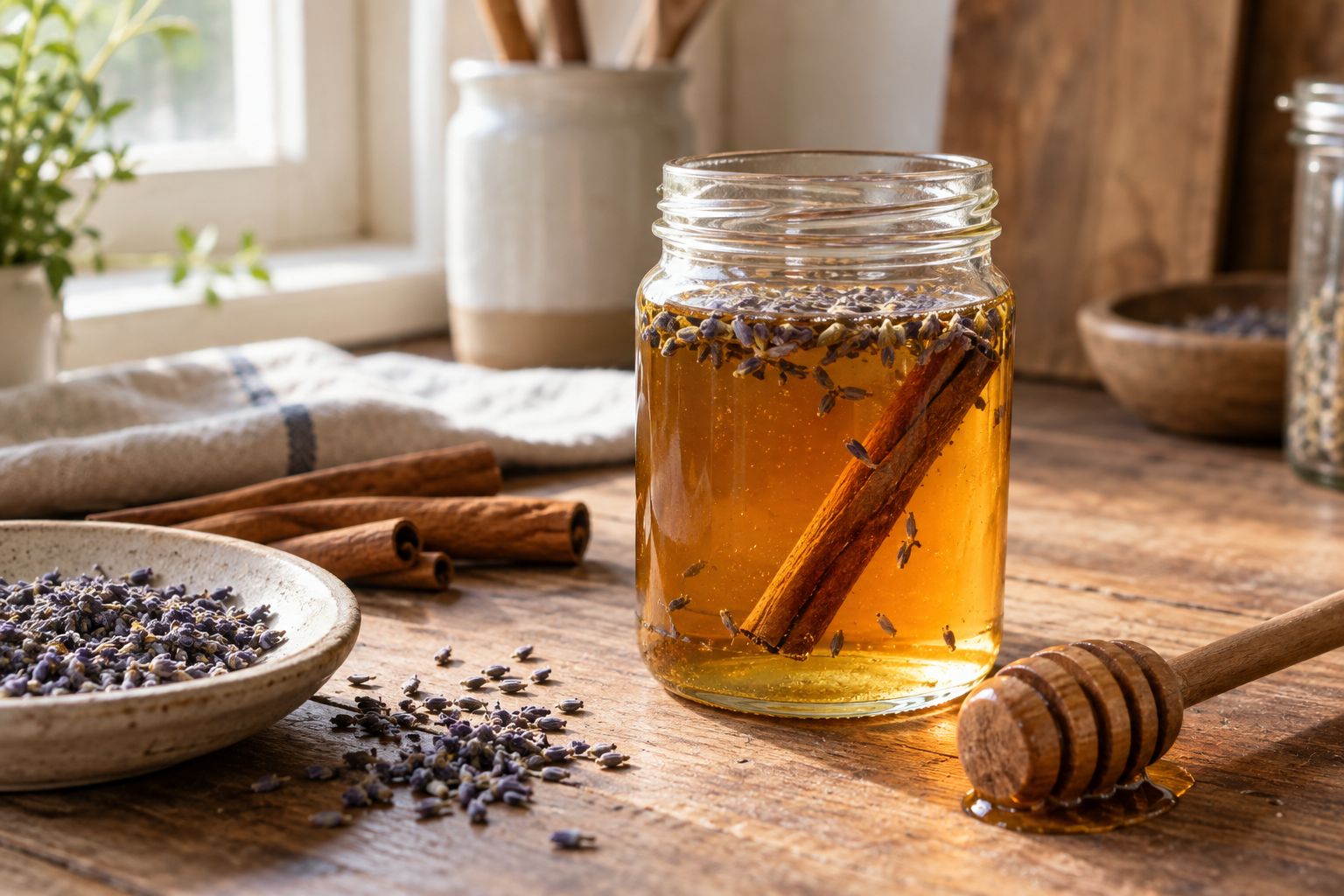
Bees create varietal honeys by gathering nectar from particular flowers. A beekeeper or food producer creates infused honey after harvest by placing culinary ingredients in finished honey or blending in a prepared flavor component. Lavender-infused honey is therefore different from lavender honey produced from lavender nectar.
Infusion is an extraction process: aromatic compounds move from the added ingredient into the honey over time. Temperature, particle size, ingredient amount and contact time affect strength. Gentle warmth can make honey easier to mix and accelerate extraction, but excessive heat can flatten aroma and alter color.
Varietal honey
Flavor comes primarily from the nectar source visited by bees.
Infused honey
Flavor is added after harvest through contact with another ingredient.
Flavored honey product
May contain extracts, powders, oils or other ingredients; read the label closely.
SAFETY BEFORE FLAVOR
Moisture is the dividing line
Honey is naturally low in available water, which helps limit microbial growth. Adding a moist ingredient changes that protective environment. Oregon State University Extension’s current guidance separates additions into dry, wet and acidified categories and identifies properly dried herbs, spices, fruit and chiles as suitable for cold or warm infusion.
Use clean, dry equipment and jars. Water droplets, damp ingredients or repeatedly dipping a wet spoon into the jar can introduce moisture. Commercial producers must also meet their jurisdiction’s process, labeling and food-business requirements.
Infant warning: No type of honey—pasteurized or unpasteurized, plain or infused—should be given to a child under 12 months.
BUILD A FLAVOR PROFILE
Ingredients that pair naturally with honey
Mild clover or acacia-style honey lets delicate flavors show. Darker buckwheat or forest honeys can stand up to robust spices. Begin with the honey’s existing aroma instead of treating it as a neutral syrup.
| Ingredient category | Examples | Flavor character | Safety and quality note |
|---|---|---|---|
| Whole dried spices | Cinnamon, cloves, cardamom, star anise | Warm, fragrant, rounded | Use clean, fully dry spices; whole pieces are easier to strain. |
| Dried culinary herbs | Rosemary, thyme, mint | Green, savory, cooling | Herbs should be brittle and crisp, not flexible or damp. |
| Dried edible flowers | Lavender, rose, chamomile | Floral and aromatic | Use food-grade material intended for consumption, not florist products. |
| Dried fruit or peel | Orange peel, lemon peel, apple | Bright, citrusy or mellow | Fruit should be fully dried with no moist pockets. |
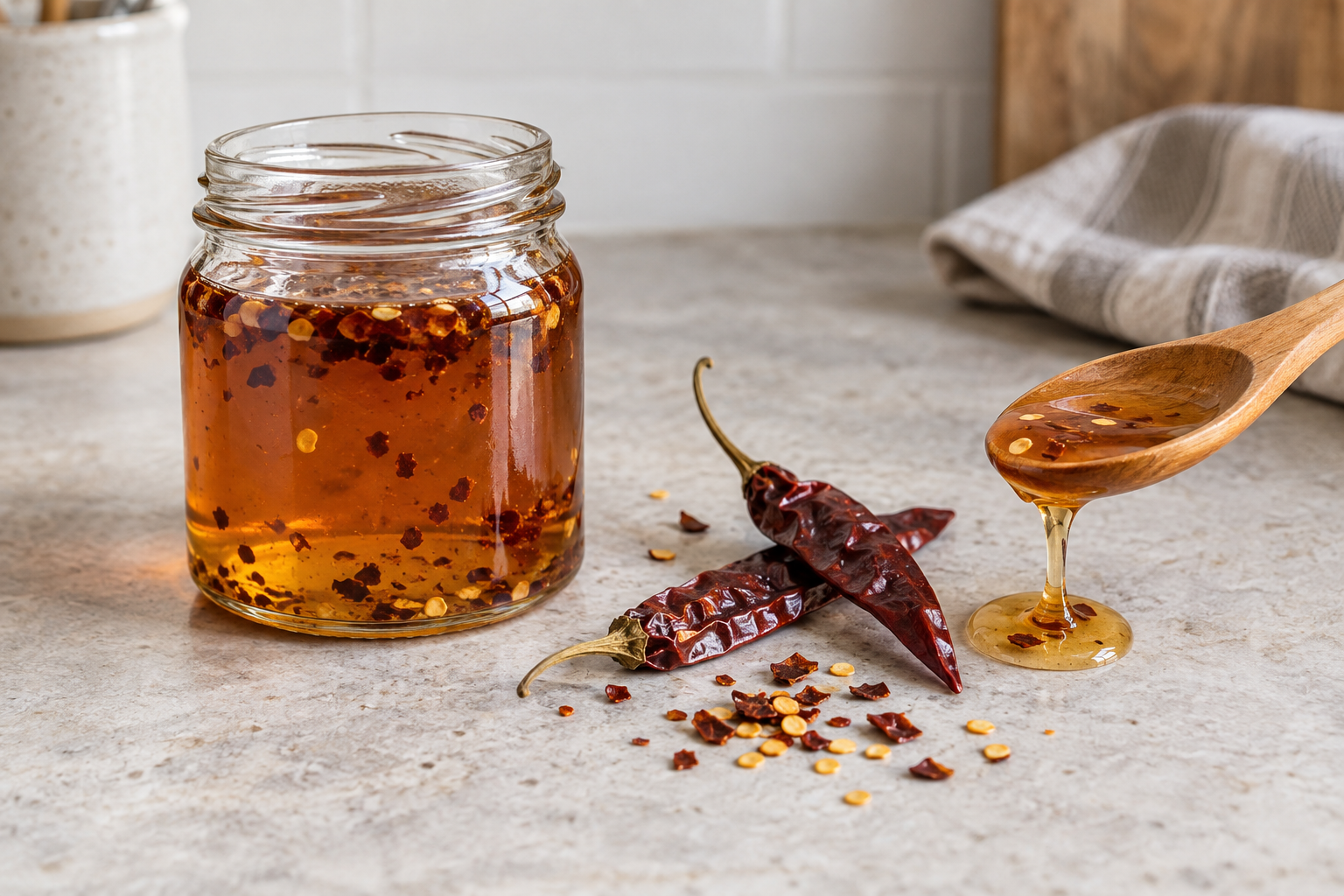
| Dried chiles | Chile flakes or whole dried peppers | Sweet heat | Heat intensifies with time; avoid touching eyes and wash hands after handling. |
| Fresh or wet additions | Fresh berries, herbs, citrus or garlic | Fresh, vivid flavors | Not interchangeable with dry ingredients; use only a validated refrigerated or commercial process. |
A RESEARCH-BASED HOME APPROACH
How a dry-ingredient infusion works
The safest general approach for a home guide is to stay within the dry-addition category described by Oregon State University Extension and follow its complete directions. The overview below explains the workflow without replacing the source’s process controls.
- Choose honey and a dry culinary ingredient. Confirm herbs and chiles are brittle, spices are dry, and dried fruit has no moisture pockets.
- Prepare clean, completely dry equipment. The jar, lid, spoon and strainer should contain no visible moisture.
- Combine according to a tested extension method. Cold infusion preserves delicate aromas; controlled gentle warmth speeds extraction. Avoid overheating.
- Keep ingredients submerged and monitor flavor. Extraction continues during contact, so strong spices and chiles should be tasted thoughtfully.
- Strain when the balance is right. Fine particles may require a food-safe fine strainer; never add water to make straining easier.
- Transfer to a clean, dry container and label it. Record the honey, ingredient and preparation date.
FROM BREAKFAST TO DINNER
Ways to use infused honey
Treat infused honey as a concentrated finishing ingredient. A modest amount often gives more flavor than a large pour, especially with cloves, lavender, rosemary or hot peppers.
Toast, oats and yogurt
Use floral, cinnamon or citrus-peel infusions where a small drizzle can provide both sweetness and aroma.
Tea and warm drinks
Stir into warm—not fiercely boiling—drinks when you want the added aroma to remain noticeable.
Cheese and roasted foods
Rosemary, thyme and chile combinations can bridge sweet, salty and savory flavors.
Glazes and batters
Account for honey’s moisture, acidity and browning rather than replacing dry sugar without recipe adjustment.
Fruit and desserts
A small amount of cardamom, lavender or dried citrus infusion can add aroma without a separate sauce.
Clearly labeled jars
List every ingredient, preparation date, storage direction and the warning not to serve honey to infants.
SHOP WITH A LABEL-READER’S EYE
How to choose a quality infused honey
- Look for a complete ingredient list. “Natural flavor” provides less information than named herbs, spices, fruit or chile.
- Identify the honey. Better producers disclose floral or regional origin where traceability supports the claim.
- Check whether pieces remain in the jar. Attractive visible ingredients can continue intensifying flavor and may complicate storage.
- Read storage directions. A refrigerated product is not automatically inferior; it may use a formulation that requires cold storage.
- Notice unsupported health promises. Infused honey is a sweetener and culinary product, not a substitute for medical care.
- Consider packaging. A clean, well-sealed container, lot information and producer contact details support accountability.
KEEP WATER OUT
Storage, crystallization and signs of trouble
Store a dry-ingredient infusion in a tightly closed, clean container away from heat and direct light, following the tested method or product label. Refrigeration can speed crystallization in many honeys, but a product made with wet ingredients may require refrigeration for safety. Never ignore the maker’s directions.
Crystallization is normally a texture change, not spoilage. Honey may become opaque, grainy or firm as glucose forms crystals. Gentle warming can reliquefy it, but repeated high heat reduces aroma.
Discard a product if it develops obvious mold, uncontrolled foaming, pressure, leakage, an unexpectedly fermented odor or other signs that it no longer matches the expected product. Do not taste suspicious food to decide whether it is safe. Because dangerous contamination cannot always be detected by sight, smell or taste, safe ingredients and a validated method matter from the beginning.
CONTINUE LEARNING
Related honey guides
Connect infused honey with honey forms, authenticity and storage.
Different Forms of Honey
Compare liquid, raw, comb, creamed, crystallized and other honey formats.
Fake Honey and Adulteration
Learn what authenticity claims can—and cannot—tell you about a jar.
Does Honey Expire?
Understand moisture, fermentation, crystallization and responsible storage.
FROM THE FIELD JOURNAL
Latest honey and beekeeping guides
Continue with current Hive To Honey articles covering honey quality, storage, bee biology and responsible sourcing.
READER QUESTIONS
Frequently asked questions
Is infused honey the same as flavored honey?
Infused honey gains flavor through contact with an added ingredient. “Flavored honey” is broader and may use an extract, powder, oil or prepared flavoring. Labels should identify what was added.
Can fresh herbs or fruit be placed in honey?
Fresh ingredients add water and change the food-safety conditions. Do not treat them as interchangeable with thoroughly dried ingredients or assume the result is shelf-stable. Use a validated process with the required storage controls.
What honey is best for infusing?
Mild honey showcases delicate flowers and herbs, while robust honey suits strong spices and chiles. Quality, traceability and the flavor pairing matter more than one universal variety.
Does heating honey make infusion faster?
Controlled gentle warmth can improve flow and extraction. Excessive heat can reduce aroma and change color, so follow a tested process rather than heating by guesswork.
Why did infused honey crystallize?
Honey crystallizes when glucose forms crystals. Floral source, temperature and seed crystals affect the rate. Crystallization alone is not evidence that honey has spoiled.
Can babies have infused honey?
No. No honey should be given to infants under 12 months, including pasteurized, cooked, baked, flavored or infused honey.
EVIDENCE BASE
Research and food-safety sources
- Oregon State University Extension Service. Infusing honey safely.
- Health Canada. Infant botulism and honey.
- University of Minnesota Extension. Preserving food at home: drying.
- National Center for Home Food Preservation. Research-based home food preservation guidance.
This guide is educational and does not replace local public-health requirements or a validated commercial process. Food-business rules differ by jurisdiction.
Explore honey with confidence
Understand the floral source, added ingredients, storage and evidence behind every jar.
Explore the complete honey guide →