
Honey and Athletic Performance: Fuel, Recovery and What the Evidence Says
Honey is a carbohydrate-rich food that may fit some athletes’ fueling plans before, during or after exercise. It is not a uniquely proven performance enhancer, and the best choice depends on exercise demands, digestion, hydration, convenience and the athlete’s complete diet.
Honey can provide fuel—but it is one option, not a shortcut
- Honey is mainly glucose and fructose, making it a concentrated carbohydrate food.
- Carbohydrate availability matters most during longer or demanding exercise—not every short workout.
- Small studies suggest honey can perform similarly to conventional carbohydrate sources in some settings, but results are limited and not universally positive.
- Honey contains little sodium and is not a complete sports drink or recovery meal.
- Individual gastrointestinal tolerance and practical handling matter.
- Personalized plans should come from a qualified sports dietitian or healthcare professional.
Understand honey’s realistic role in sports nutrition
Does honey improve athletic performance?
Carbohydrate is the established factor
Honey-specific evidence is still limited
Results are mixed
What does honey provide an athlete?
| Component | What it means | Important limitation |
|---|---|---|
| Glucose and fructose | Digestible carbohydrate that can contribute to exercise fuel | The exact sugar profile varies among honeys |
| Water | Honey contains some water but remains highly concentrated | It does not replace adequate fluid intake |
| Trace compounds | Small amounts of plant-derived compounds vary by floral source | Honey is not a major micronutrient source in typical portions |
| Very little protein | Honey can accompany protein-rich recovery foods | It cannot provide meaningful muscle-repair protein by itself |
| Low sodium | May suit ordinary meals and short activities | It is not automatically an electrolyte product for heavy sweating |
Honey’s practical sports-nutrition role comes mainly from its carbohydrate—not from enzymes, pollen or marketing terms such as “raw,” “natural” or “superfood.”
Honey before exercise
Before longer or higher-demand activity, carbohydrate-containing food may help athletes begin with fuel available. Honey can be included as part of a familiar meal or snack when it suits the individual.
Pair it with everyday food
Allow time to digest
Match the session
Practice before competition
Remember the whole meal
Avoid universal “best time” claims
Honey during endurance exercise
Formal carbohydrate and fluid targets depend on duration, intensity, body size, environment and the athlete’s plan. Honey should be counted as part of that plan rather than added without context.
Honey after exercise and recovery
Replenishing carbohydrate
Protein still matters
Rehydration is separate
Total recovery pattern wins
Examples of balanced combinations include honey with yogurt and fruit, honey on toast with eggs, or honey stirred into oatmeal with milk or an appropriate alternative. Individual dietary needs and allergies still apply.
Honey vs. gels, sports drinks and everyday foods
Where honey may fit
Honey is familiar, compact and carbohydrate-rich. It may appeal to athletes who prefer a recognizable food and can manage its sticky texture, packaging and sweetness.
Its glucose-fructose mixture is relevant because modern endurance strategies often use more than one transportable carbohydrate, although composition varies by honey.
Where sports products may be easier
Commercial gels and drinks offer standardized carbohydrate amounts, portable packaging and—in some products—fluid or sodium. That consistency can simplify planning during long events.
Bananas, dried fruit, bread and other foods can also supply carbohydrate. No option is automatically “cleaner,” healthier or more effective in every setting.
Practical ways athletes can evaluate honey
Read the nutrition label
Choose secure packaging
Take fluid into account
Notice digestive comfort
For organized or elite sport, athletes should also consider team rules, event logistics, dental care, food hygiene and anti-doping risk from multi-ingredient supplements. Plain honey is food, but flavored or fortified products may contain additional ingredients.
How honey’s role differs by activity
Limits, safety and responsible use
Honey is an added sugar and should be considered within the athlete’s complete eating pattern. More is not automatically better, and fueling advice should never encourage under-eating, overtraining or replacing balanced meals.
Never for infants
Diabetes and glucose management
Allergy and intolerance
Dental exposure
Medical symptoms are not a fueling problem
Professional support
Frequently asked questions about honey and sport
Is honey good for athletes?
Honey can be a useful carbohydrate food for some athletes, particularly around prolonged or demanding activity. It is optional and should fit the complete nutrition and hydration plan.
Does honey increase athletic performance?
Carbohydrate can support performance in relevant exercise settings. Honey-specific trials are limited and mixed, so honey should not be described as universally performance-enhancing or superior to other carbohydrate sources.
Is honey good before a workout?
It can contribute carbohydrate before exercise when it is familiar and well tolerated. The need depends on the session, previous meals and the individual.
Can runners use honey instead of energy gels?
Some runners may use honey as a food-first alternative, but gels provide standardized amounts and convenient packaging. Trial either choice in training and include adequate fluid.
Is honey good after a workout?
Honey can help provide carbohydrate, but it contains little protein and does not replace fluid or electrolytes. Pair it with other foods as appropriate.
Is raw honey better for athletic performance?
There is no strong evidence that raw honey provides a meaningful performance advantage over other honey. Its main sports-fueling contribution remains carbohydrate.
How much honey should an athlete use?
There is no universal amount. Use the label to understand carbohydrate content and seek individualized advice for long events, diabetes, youth sport or high-performance training.
Can honey replace a sports drink?
Not automatically. Honey provides carbohydrate but little sodium and does not provide enough fluid by itself. The right comparison depends on the activity and conditions.
Latest evidence-led honey guides
Continue exploring honey’s nutrition, processing, storage and potential uses without exaggerated health claims.
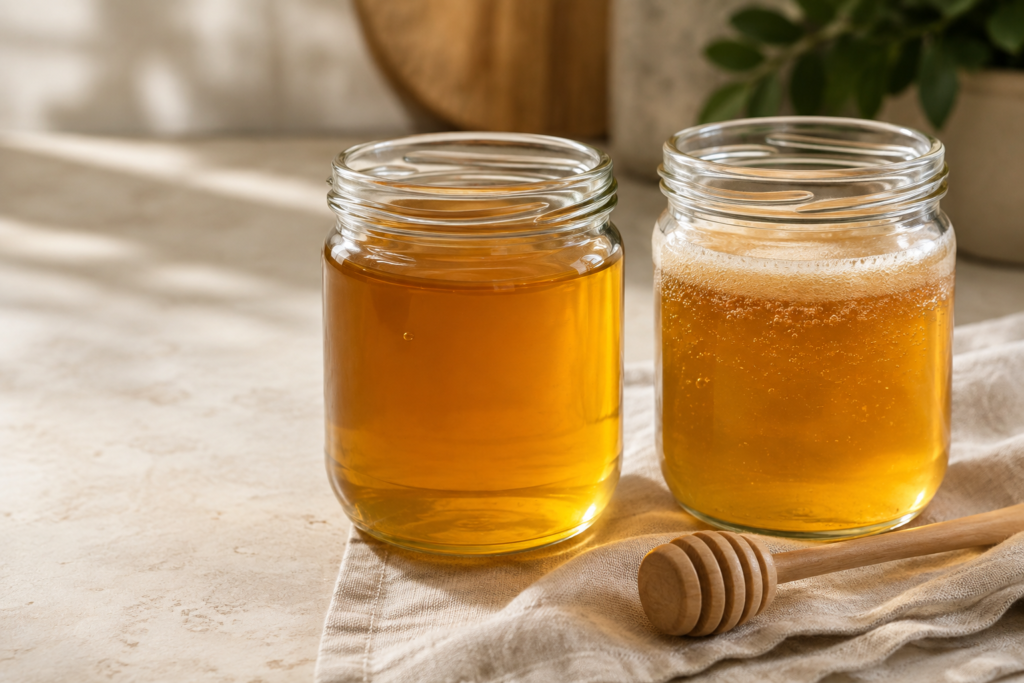
Why Is My Honey Foamy? Bubbles, Wax or Fermentation Explained
THE COMPLETE HONEY FOAM GUIDE Why Is My Honey Foamy? Bubbles, Wax or Fermentation Explained Foam on honey is not automatically spoilage.
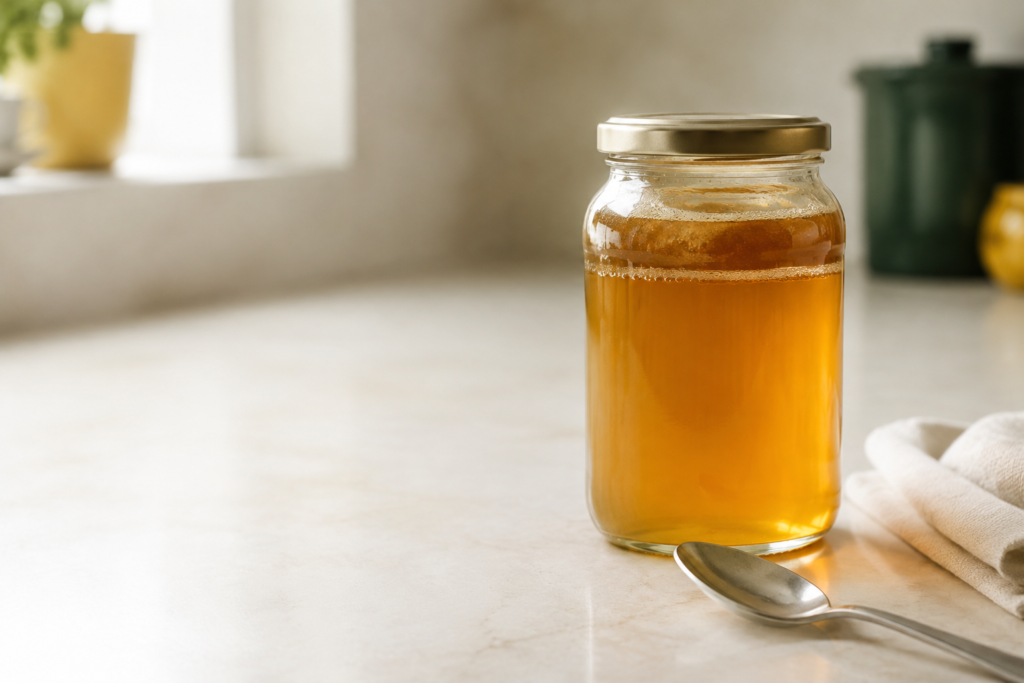
Why Does Honey Ferment? Signs, Causes and Prevention
THE COMPLETE HONEY FERMENTATION GUIDE Why Does Honey Ferment? Signs, Causes and Prevention Unintended honey fermentation usually begins when yeasts can use
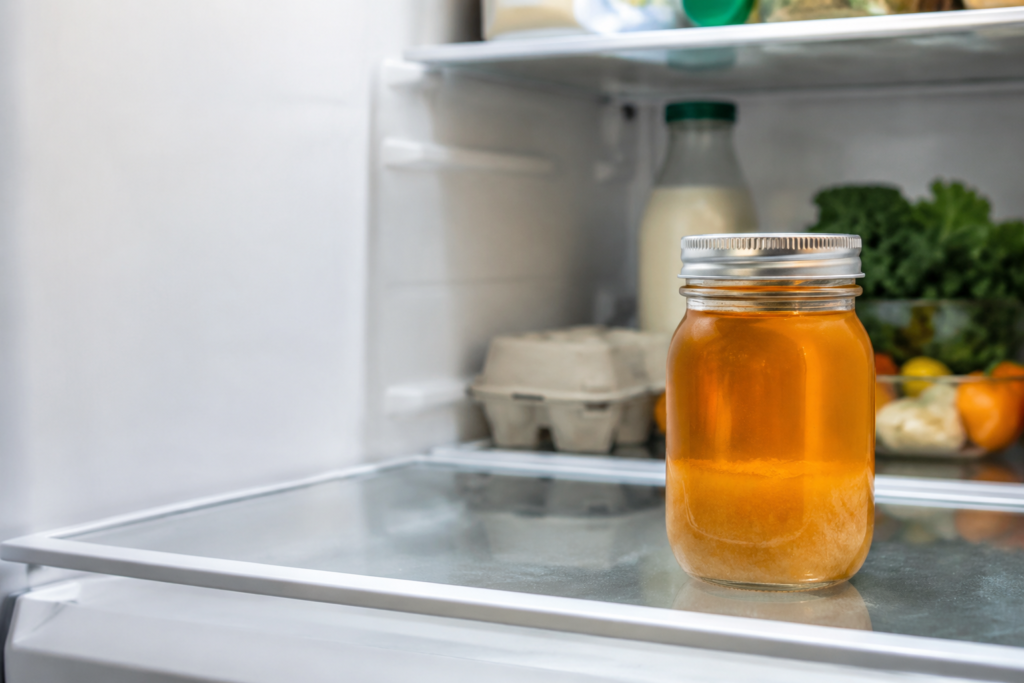
Does Honey Need to Be Refrigerated? What Happens in the Fridge
THE COMPLETE COLD-STORAGE GUIDE Does Honey Need to Be Refrigerated? What Happens in the Fridge Plain honey usually belongs in a dry
Explore the honey knowledge library
How this athletic-performance page was researched
This page prioritizes sports-medicine organizations, sports-nutrition frameworks and peer-reviewed research. Honey-specific findings are presented cautiously because studies differ in design, participants, exercise tests and comparison products.
- American College of Sports Medicine: Carbohydrate and recovery guidance
- ACSM/GSSI: Energy demands and sport nutrition
- Australian Institute of Sport: Nutrition
- Australian Institute of Sport: Sports foods framework
- International Society of Sports Nutrition: Nutrient timing position stand
- Food-first carbohydrate options for exercise: narrative review
- Honey-sweetened beverage and soccer simulation trial
- Honey and dextrose during endurance cycling trial
- Post-exercise honey drink trial
Honey can fuel movement—but the full plan matters more
Use honey as an optional carbohydrate food when it suits the activity, digestion and logistics. Pair it with adequate fluid, protein and balanced meals as appropriate, and test sport-specific strategies during training.