Beeswax and Its Uses: From Honeycomb to Candles, Cosmetics and Craft
Beeswax is the structural material of the honey bee nest—and one of humanity’s most adaptable natural waxes. Explore how worker bees produce it, how beekeepers recover and refine it, where it is used, how quality differs and what responsible buyers should know.
A hive material with hundreds of practical applications
- Worker honey bees secrete wax from glands on the underside of the abdomen.
- Bees shape wax into comb for brood rearing and storage of honey and pollen.
- Recovered wax is commonly cleaned, melted, filtered and formed into blocks, sheets or pellets.
- Major uses include candles, cosmetics, polishes, art materials, food-contact coatings and pharmaceutical manufacturing.
- Color and aroma vary with age, source, processing and contact with hive materials.
- Food, cosmetic and pharmaceutical applications require the appropriate grade, purity and regulatory compliance.
Follow beeswax from the hive to finished products
What is beeswax?
A biological wax
The architecture of the colony
A renewable hive product
How do honey bees make beeswax?
| Step | What happens | Why it matters |
|---|---|---|
| Wax secretion | Wax-producing worker bees release small translucent scales from abdominal glands | The wax begins as a body secretion, not a plant wax |
| Manipulation | Workers collect, soften and shape the scales with their mouthparts and legs | Many bees contribute to comb construction |
| Comb building | Wax walls are extended and remodeled into adjoining cells | Comb becomes the colony’s nursery, pantry and communication surface |
| Reuse and repair | Bees move and add wax as colony needs change | Comb is a dynamic structure rather than inert packaging |
Wax production is closely connected to colony growth, temperature, food availability and the need for new comb. Simple “honey-to-wax” conversion claims vary widely and should not be treated as a fixed biological cost.
Beeswax properties, colors and grades
Fresh wax scales are pale, but comb becomes yellow, amber or brown as it contacts pollen oils, propolis, brood cocoons and other hive material. Refining can lighten and standardize wax.
Natural aroma
Melting behavior
Water resistance
Firmness and pliability
Yellow and white wax
Grade follows the application
How beeswax is harvested and refined
Beekeepers must manage heat and fire risk carefully. Wax should never be heated unattended or directly over an open flame, and equipment used for non-food materials should not be assumed suitable for food-contact wax.
What is beeswax used for?
Candles
Cosmetics
Food contact
Polishes and protection
Other documented uses include encaustic painting, lost-wax casting, sewing and thread conditioning, musical-instrument care, pharmaceutical formulations, modeling, conservation and specialized industrial processes.
Beeswax candles: characteristics and care
Why candle makers use it
Beeswax is firm enough for tapers and molded shapes, blends with other candle waxes and can retain a natural golden appearance. Finished behavior depends on wax purity, candle diameter, wick selection and manufacturing quality.
Claims that beeswax candles “clean the air,” release medically meaningful negative ions or eliminate allergens are not supported well enough to present as established benefits.
Safe candle use
Every candle is an open flame. Follow the manufacturer’s instructions, use a stable heat-resistant holder, keep the flame away from drafts and combustible objects, and never leave it unattended.
Keep burning candles away from children and pets. Candle making involves hot wax and should be approached with appropriate supervision, equipment and fire precautions.
Beeswax wraps and food-contact uses
How wraps work
Use the correct material
Cleaning limits
Know when not to use them
Reusable does not mean permanent. Replace wraps that are heavily cracked, contaminated, cannot be cleaned appropriately or no longer seal as intended. Local food-contact requirements and product instructions take precedence.
Beeswax in cosmetics and pharmaceuticals
Beeswax for wood, leather, art and craft
Beeswax can create a low-gloss protective finish, reduce friction, hold pigments and preserve delicate surfaces—but suitability depends on the object and formulation.
Wood finishes
Leather care
Encaustic art
Lost-wax casting
Thread and tools
Conservation caution
Frequently asked questions about beeswax
What is beeswax made from?
Worker honey bees secrete wax scales from abdominal glands. Chemically, beeswax is a variable natural mixture containing many esters, hydrocarbons and fatty components.
What are the most common uses of beeswax?
Major uses include candles, cosmetics, polishes, art materials, food-contact coatings, pharmaceutical manufacturing and many craft or industrial applications.
Can you eat beeswax?
Food-grade beeswax is used in regulated food applications, and comb honey includes edible wax comb. That does not make craft or cosmetic wax suitable for eating.
Why is some beeswax yellow and some white?
Natural wax gains color from hive contact and age. White wax has generally been further refined or bleached for applications requiring a pale material.
Does beeswax expire?
Beeswax is stable when clean and stored well, but heat, light, odors, contamination and pests can reduce quality. Product formulations containing oils or other ingredients may have shorter shelf lives.
Are beeswax candles healthier?
Beeswax is a useful candle material, but broad claims that burning it cleans indoor air or provides medical benefits are not established. Any candle produces combustion emissions and requires ventilation and fire safety.
Is beeswax vegan?
Beeswax is produced by animals, so it is generally excluded by vegan definitions. Ethical purchasing questions may also consider colony management, traceability and harvesting practices.
How can I tell if beeswax is pure?
Color, scent and texture cannot reliably prove purity. For important food, cosmetic, pharmaceutical or commercial uses, buy documented material from a traceable supplier and use appropriate analytical testing.
Latest beehive product guides
Continue exploring beeswax, honey, propolis, pollen and other materials produced or collected by honey bees.
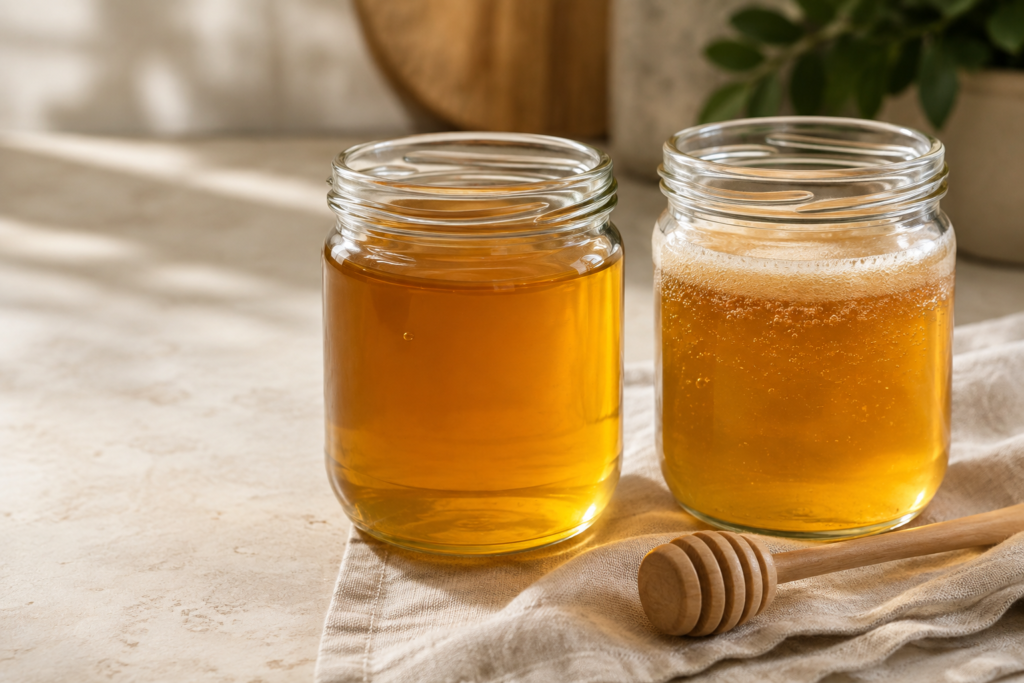
Why Is My Honey Foamy? Bubbles, Wax or Fermentation Explained
THE COMPLETE HONEY FOAM GUIDE Why Is My Honey Foamy? Bubbles, Wax or Fermentation Explained Foam on honey is not automatically spoilage.
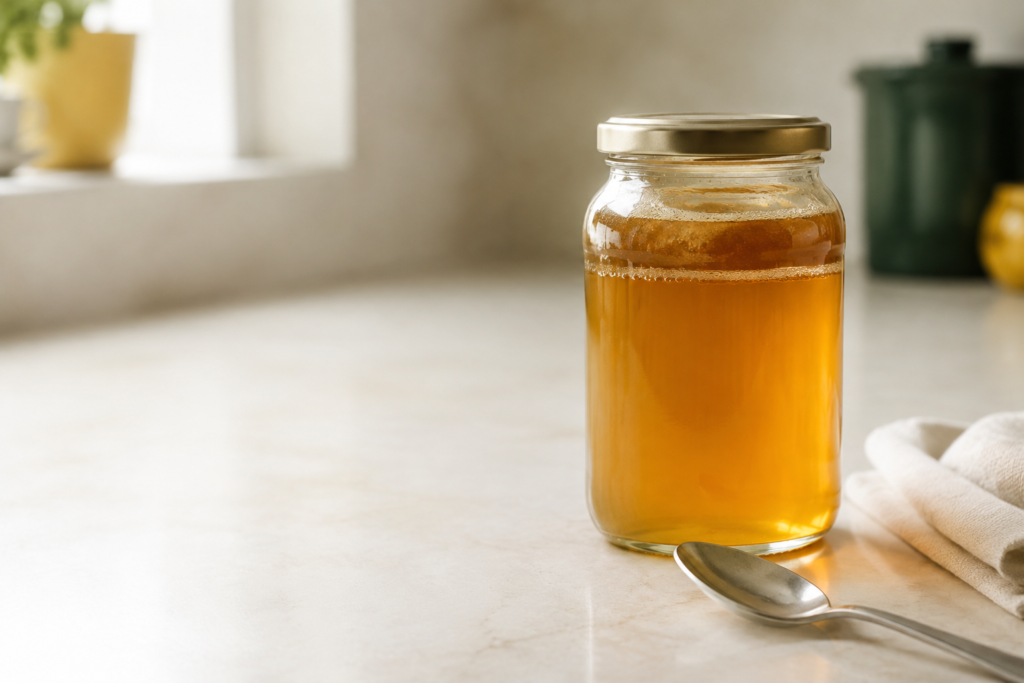
Why Does Honey Ferment? Signs, Causes and Prevention
THE COMPLETE HONEY FERMENTATION GUIDE Why Does Honey Ferment? Signs, Causes and Prevention Unintended honey fermentation usually begins when yeasts can use
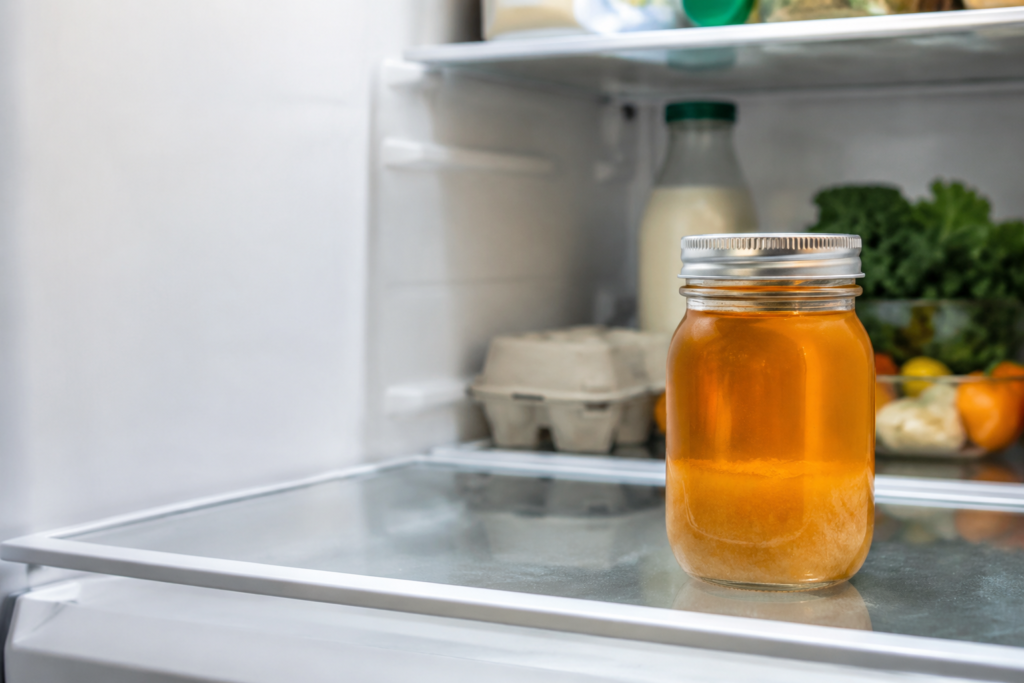
Does Honey Need to Be Refrigerated? What Happens in the Fridge
THE COMPLETE COLD-STORAGE GUIDE Does Honey Need to Be Refrigerated? What Happens in the Fridge Plain honey usually belongs in a dry
Continue through the beehive products library
How this beeswax guide was researched
This guide prioritizes international apiculture references and current regulatory information. It separates documented functional uses from health or environmental claims that require stronger evidence.
- FAO: Beeswax—production, composition, properties and uses
- FAO: Bees and their role in forest livelihoods
- FAO: Honey and beeswax statistics and trade
- U.S. FDA: Honey bees and beeswax uses
- U.S. eCFR: Food labeling and beeswax-based coatings
- U.S. FDA: Cosmetics labeling guide
- Penn State Extension: Beekeeping and hive products
Beeswax connects colony biology with global craft and industry
From a translucent scale on a worker bee to comb, candles, coatings and conservation materials, beeswax remains useful because it combines structure, pliability and water resistance. Choosing the right grade and using it safely matter as much as the application.