How fine crystals form
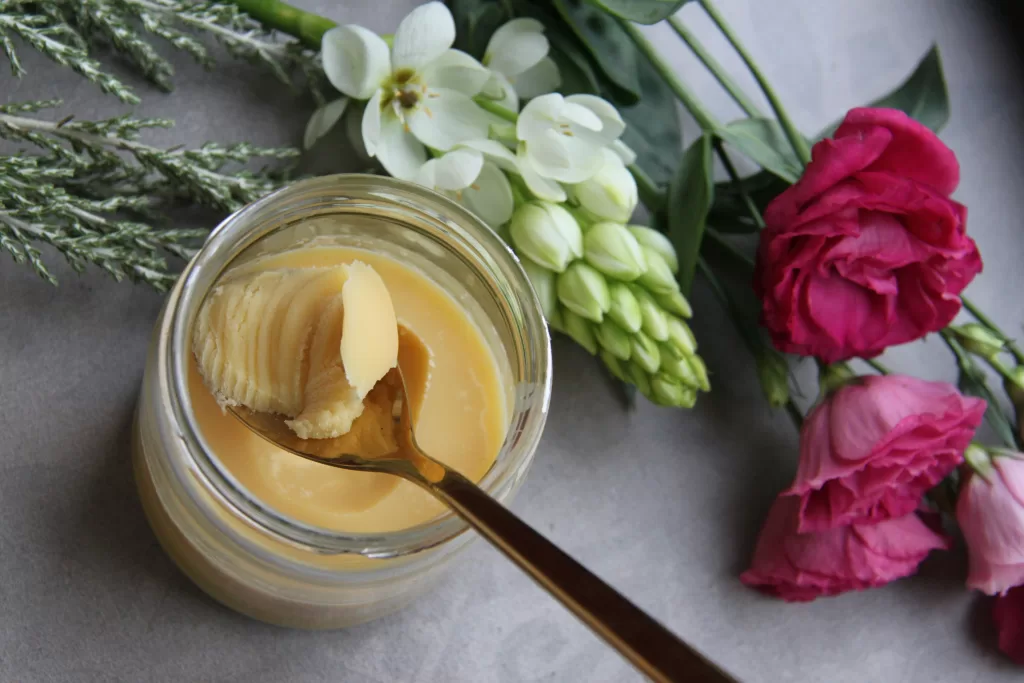
Producers commonly mix finely crystallized seed honey into suitable liquid honey, then hold the mixture under controlled conditions so small crystals develop throughout. The aim is an even texture instead of large, gritty crystals. Handling, starting composition and temperature affect the result. Plain creamed honey needs no cream or butter; check ingredients separately when flavors or other additions are sold.
Floral source and texture
Creamed honey is a processing style that can be made from different floral-source honeys. A national origin does not establish how smooth a jar will be or what it will taste like. Compare three attributes before buying:
1. Floral source: the honey used to make the product shapes its aroma and flavor. Creaming does not turn every starting honey into one identical taste. Ask for the source description if you prefer a gentle or pronounced style.
2. Origin: where honey was harvested is separate from where it was packed or creamed. Check the producer and harvest information if locality matters to you.
3. Handling: ask whether the product is plain honey and what heating or other processing the producer uses. Creamed does not automatically mean raw or unheated.
Choosing a spreadable honey
The main advantage is practical: a fine crystal structure can make honey easier to spread and less prone to running off food. It does not create a special nutritional category or guarantee a longer shelf life.
1. Spreading: try it on toast, a bagel or a biscuit. Use a clean, dry utensil and add a small amount first, especially if you are pairing it with a delicate food.
2. Storage: controlled crystallization manages texture; it is not a preservation treatment that automatically makes honey last longer than liquid honey. Keep the lid closed and moisture out, follow the producer’s storage directions and avoid excessive heat that can soften the texture.
3. Texture: the goal is small, evenly distributed crystals. A gritty or separated jar may have a less pleasing texture, but crystallization itself is not proof of spoilage or added sugar.
4. Measuring: a spoonful holds its shape more easily than liquid honey. For a precise recipe or portion, use weight rather than assuming a heaped spoon gives an exact amount.
5. Nutrition: plain creamed honey remains predominantly a sugar-containing sweetener. Creaming does not remove sugar or turn it into a significant vitamin supplement. Ingredients added to a flavored product need separate consideration.
Cooking with creamed honey
Use the actual honey’s aroma and texture to choose a pairing. The following ideas are serving suggestions, not a promise that creaming changes the flavor or nutritional value:
1. Spreads and Dips: Spread creamed honey on warm toast, bagels, or muffins for a delightful breakfast treat. It can also be used as a dip for fresh fruit, pretzels, or crackers.
2. Baking: weigh the honey and follow a recipe designed for honey. Creamed honey softens or dissolves during preparation, so its spreadable texture will not necessarily remain in the finished bake.
3. Drinks: stir until dissolved. It may take more mixing in a cold drink; the texture that makes it useful on toast is not a special advantage once dissolved.
4. Cheese Pairings: Pair creamed honey with a selection of cheeses for a delightful combination of sweet and savory. Soft cheeses like Brie or tangy blue cheeses are particularly complementary to the smoothness of creamed honey.
Choose creamed honey when you enjoy a neat spread and a fine texture. Keep a note of the floral source and producer, and use the jar with foods that let its aroma show. Its appeal is a different way to serve honey, with the same need to manage portions and keep moisture out.
Choose the form for the task
A floral name describes source; creamed describes texture. Neither is a nutrition grade. Buy the form you will enjoy using and check added ingredients separately.
| Form or claim | Useful for | Keep in mind |
|---|---|---|
| Liquid honey | Drizzling and mixing | Can crystallize over time |
| Creamed honey | Spreading and spooning | Fine crystals; no dairy required |
| Naturally set honey | Spreading if the texture suits you | Crystal size may be uneven |
| Flavored creamed product | A specific added flavor | Read ingredients and storage directions |
Which jar works best at breakfast?
For toast, try a thin layer on bread that has cooled slightly. Fine crystals let the honey hold a ridge where the knife passes. On very hot toast the same spoonful softens and begins to run.
For a cold dressing, loosen a spoonful with the vinegar before adding the oil. Liquid honey is easier to drizzle straight from the jar. Once either form dissolves, choose by flavour.
If you like the texture but want a different taste, look for a floral name alongside “creamed”. Clover and wildflower can both be sold this way. On a flavoured spread, check the ingredient list for additions.
Practical reader questions
Is there cream in creamed honey?
Plain creamed honey does not require dairy. Check ingredients on flavored preparations.
Is creamed honey always raw?
No. Ask about the producer’s heating and processing separately.
Does creaming guarantee longer shelf life?
No. Fine crystallization controls texture, not every factor affecting keeping quality.
Is it lower in sugar than liquid honey?
Creaming plain honey does not remove its sugar. Compare portions by weight.
Sources and context
Sources distinguish botanical identity, processing or food safety. Sensory descriptions vary by harvest and handling. Laboratory composition is not a clinical treatment claim. Honey contributes dietary sugar, and no form of honey is suitable for infants under 12 months.