
Section 1: Hive Preparation
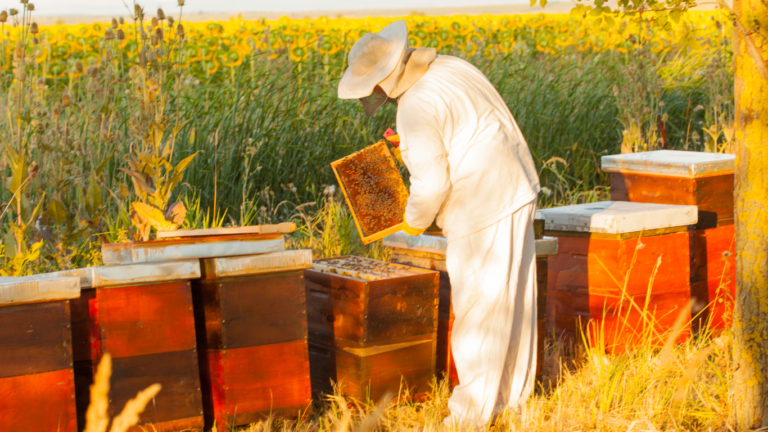
Begin by assessing colony health and the stores the bees need for their location and season. Harvest a genuine surplus, not a fixed amount from every colony. Select suitable honey supers, keep brood and suspect contaminated comb out of the food harvest, and identify the apiary and lot before moving frames. Cappings are useful clues to ripeness but are not a substitute for checking moisture with an appropriate calibrated refractometer. Use apiary handling methods and protective equipment suited to your bees and conditions. Smoke belongs to careful hive management, not a smoke-filled extraction room.
Section 2: Uncapping the Honeycomb
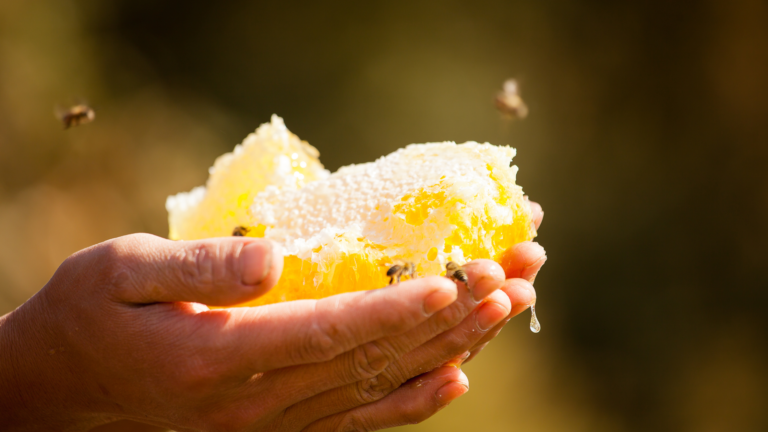
In a clean processing area protected from bees and other pests, inspect the extractor, uncapping surface and collecting containers. Food-contact materials must be suitable, intact and clean; follow the relevant cleaning and sanitation procedure and avoid introducing wash water into honey. Support the frame securely over a collecting tray and remove the wax seal with a suitable uncapping knife or fork. Work away from hands, follow instructions for heated tools and open the cells without unnecessarily cutting into comb. Collect cappings separately and keep them protected from contamination.
Section 3: Extracting the Honey
An extractor uses centrifugal force to move honey out of opened cells while retaining the comb. Match frames to the machine, balance the load and secure its cover before operating it. Follow the manufacturer’s speed and loading instructions; start gently where appropriate to reduce comb damage, and stop the machine fully before adjusting frames. Some small harvests use a crush-and-strain method instead, which breaks the comb and requires a different setup. Keep different lots identifiable and avoid unnecessary prolonged exposure to heat or moist air.
Section 4: Filtering and Straining
Coarse straining removes larger wax pieces and other visible material. Finer filtration is a separate operation that should not be confused with heating, pasteurization or authentication. Use clean food-grade strainers and suitable collecting vessels, keep them covered and allow bubbles to settle when appropriate for the process. Straining does not turn unripe honey into a stable product, remove every hazard or prove purity. Recheck moisture on a representative sample using the instrument’s instructions and an appropriate process specification; do not rely on a visual thickness test.
Section 5: Storing the Honey
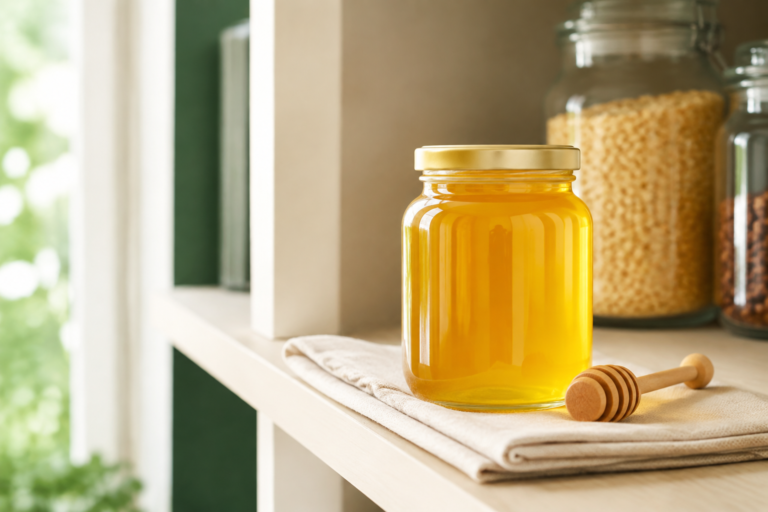
Move honey into clean, dry, sound food-grade containers with suitable tight-fitting lids. Protect it from moisture, pests and contamination while settling, storing and filling. Use gentle handling when warming is necessary for the equipment, and avoid unnecessary prolonged heat. Record the lot and moisture result so a storage problem can be traced back to the harvest. Crystallization is a physical change that can occur in sound honey; it is different from fermentation. If a lot shows signs of fermentation or contamination, set it aside and seek appropriate assessment rather than blending it into sound honey.
Section 6: Labeling and Enjoying
Keep a batch record linking the apiary or source, harvest date, extraction date and containers filled. Use an accurate product name and support any specific floral-source claim with evidence; a guess based only on nearby flowers is not enough. Check the labelling and food-handling requirements that apply where you produce and sell the honey. A private record and a retail label serve different purposes, so a harvest date alone does not establish a compliant label. Taste and describe the actual batch without adding medical promises.
A good jar begins before the extractor starts. Readiness, a suitable surplus, food-safe equipment, moisture management and traceability matter more than a promise of perfectly clear liquid honey. Keep the process simple enough to explain and the records complete enough to investigate a problem.
For a first harvest, work with a knowledgeable local beekeeper or instructor. This overview helps organize the workflow; equipment instructions and local production requirements still determine the detailed process.
A harvest-day decision checklist
Make each check before moving to the next stage. An attractive jar at the end cannot compensate for a problem with the source comb, moisture or equipment earlier in the process.
| Stage | Check before proceeding | Record or action |
|---|---|---|
| At the hive | Healthy source, appropriate surplus and suitable comb | Identify apiary and harvest lot |
| Readiness | Representative moisture measurement, not cappings alone | Record the result and specification |
| Equipment | Suitable clean food-contact surfaces and safe setup | Follow cleaning and operating instructions |
| Extraction | Correct loading, protected collecting and lot separation | Keep batches identifiable |
| Packing | Sound dry containers and accurate product description | Connect each jar to its batch |
Follow one lot from the super to the shelf
At collection. Suppose you collect surplus frames from Hive A on 14 August. Give the covered carrier a working code such as A-0814. Enter the date, hive, frames collected and your actual moisture readings in the harvest record.
At extraction. Copy A-0814 onto the receiving bucket record. If frames from Hive B join the same extraction run, record both inputs under a combined lot code. Once their honey has mixed, a jar from that bucket can no longer be traced to Hive A alone.
At filling. Record the filling date, number of jars and code used on those jars. Pick one finished jar and work backwards through the entries. Can you identify the bucket and every hive that contributed? That is a useful test even for a harvest you give away.
Practical reader questions
Do capped cells guarantee a suitable moisture content?
No. Cappings are a clue; check representative honey with a calibrated refractometer and the applicable process specification.
Does straining make honey pure or pasteurized?
No. Removing larger particles is different from authentication, finer filtration or heat treatment.
Should I fill the extraction room with smoke?
No. Manage bees at the apiary appropriately and keep bees and smoke out of the clean food-processing area.
Does crystallization mean the batch failed?
No. Crystal formation is a physical change. Fermentation and contamination are separate issues that need assessment.
Sources and context
The sources explain botanical identity, handling or food use. Tasting notes are common impressions, not a guarantee for every harvest. Honey contributes dietary sugar and is never suitable for infants under 12 months.