How Do Bees Make Honey? The Complete Step-by-Step Process
Honey begins as nectar or honeydew, but it becomes shelf-stable colony food only through the coordinated work of thousands of bees. Foragers collect the liquid, receiver bees process it, colony airflow removes water and wax-producing workers seal ripened stores in the comb.
Follow the journey from a flower, through a worker’s crop and across the honeycomb, to the finished food people recognize as honey.
A colony transforms nectar into stable food
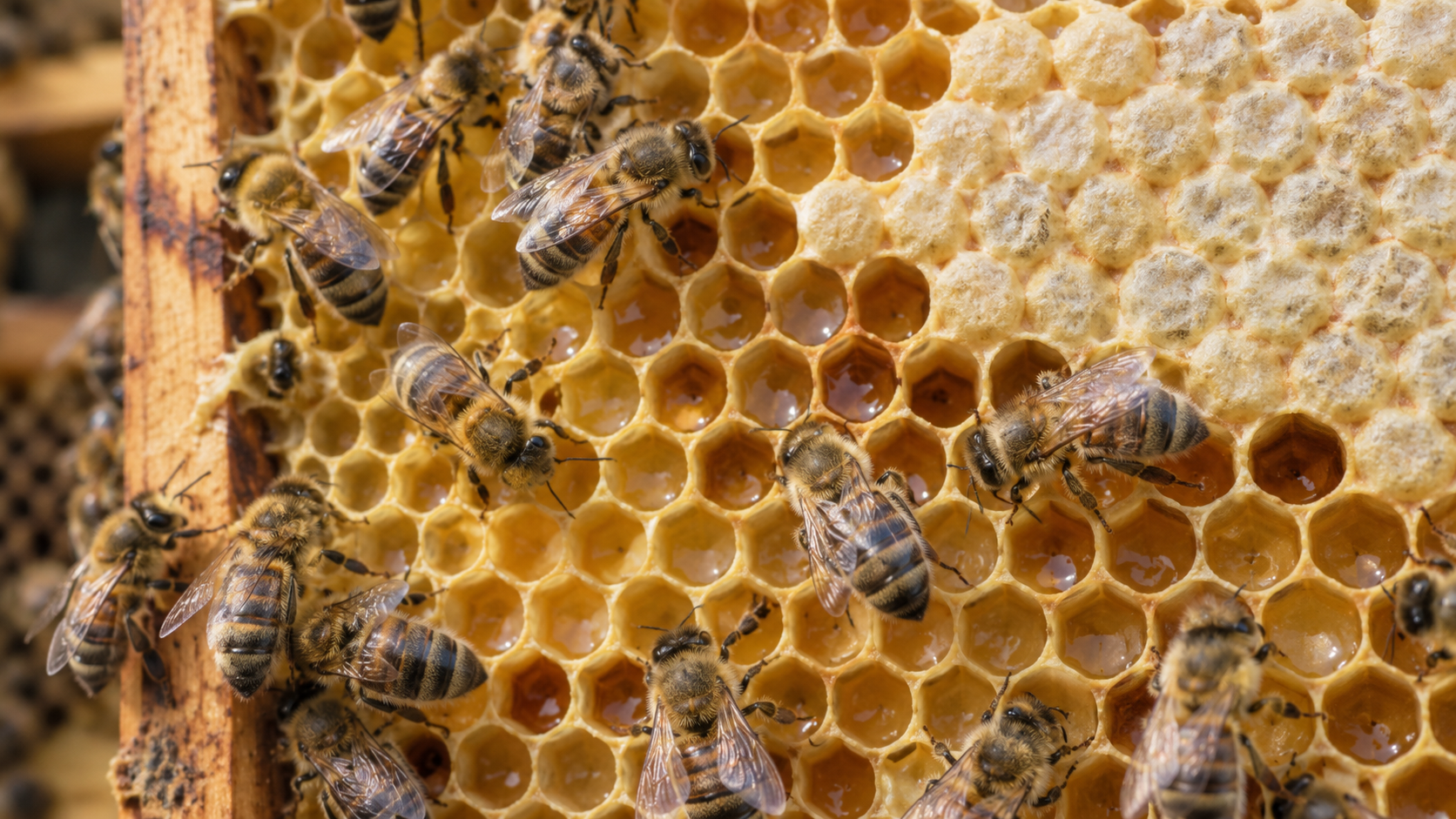
Worker honey bees tend open cells containing ripening stores beside capped honey. Nectar processing is a colony-scale job involving collection, transfer, enzymes, evaporation and storage.
How bees make honey—from nectar collection to capped comb
Contents
The process at a glance
Collect
Thousands of workers divide the work rather than one bee completing every stage alone.
Transform
Foragers locate nectar or honeydew and carry it in the crop, commonly called the honey stomach.
Preserve
Workers add glandular secretions, alter sugars and repeatedly expose tiny droplets to air while the colony removes excess water.
Ripened honey is stored in wax cells and commonly sealed beneath a wax cap until the colony needs it.
How bees make honey, step by step
How Bees Turn Nectar Into Honey
| Stage | What the Bees Do | Why It Matters |
|---|---|---|
| 1. Find a source | Foragers assess flowers or honeydew for concentration, abundance and distance. | Efficient colonies focus their labor on profitable resources. |
| 2. Collect nectar | A worker draws nectar through her proboscis and stores it temporarily in her crop, often called the honey stomach. | The nectar can be carried home without entering the digestive midgut. |
| 3. Begin concentration | Enzymes are introduced, and some water may be removed at the mouthparts. | Processing can begin before the forager returns to the colony. |
| 4. Transfer the load | Foragers pass the liquid to receiver bees through trophallaxis. | Food and information move throughout the colony. |
| 5. Work the droplets | House bees manipulate the droplets and add more secretions. | Increasing the exposed surface area helps water evaporate. |
| 6. Fill open cells | Small amounts are spread through wax cells and may be moved between cells. | Thin layers expose more liquid to the hive’s circulating air. |
| 7. Ventilate the hive | Wing fanning and airflow through the nest support evaporation. | Reducing the water content helps the developing honey become more stable. |
| 8. Cap the honey | Workers cover sufficiently ripened honey with a thin layer of wax. | Capping protects the stored food until the colony needs it. |
The bee biology behind honey-making
A worker bee’s mouthparts, foregut, glands, wings and sensory abilities all contribute. Honey-making is biochemical and physical.
Proboscis
The flexible mouthparts form a feeding tube for nectar and help manipulate droplets during active evaporation.
Crop or honey stomach
This expandable foregut chamber carries liquid. “Second stomach” is memorable but imprecise: it is mainly a transport compartment separated from the digestive midgut by a valve.
Worker glands
Hypopharyngeal and salivary secretions introduce enzymes involved in nectar processing. Gland activity changes as workers age and change tasks.
Wings and airflow
Wings bring foragers home, while fanning by workers supports airflow and water removal inside the nest.
Wax glands
Workers secrete wax scales and shape them into storage cells and protective caps.
Sensory system
Smell, taste, touch and communication help workers evaluate sources, exchange loads and coordinate work.
How nectar becomes different from honey
Fresh nectar: A plant-produced liquid whose water and sugar composition varies greatly among flowers.
During transport: Bee secretions begin altering the load, and research indicates some foragers actively evaporate water from droplets at their mouthparts.
Inside the hive: Receiver bees continue enzymatic processing, droplet exposure and cell-to-cell handling while ventilation removes moisture.
Mature honey: A concentrated food usually dominated by glucose and fructose, with acids, aroma compounds, enzymes and other minor constituents shaped by floral origin.
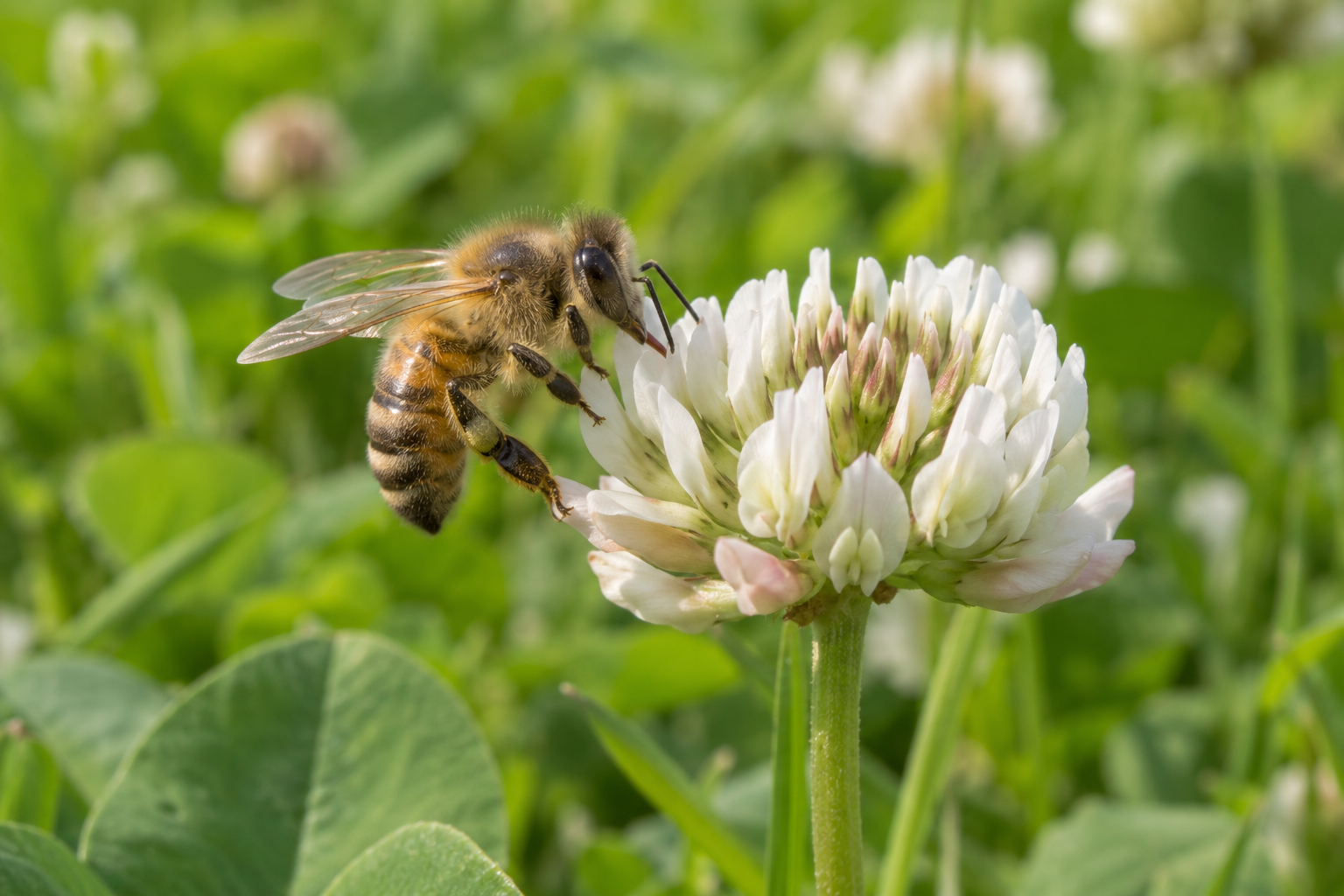
A western honey bee visits white clover florets. Nectar is carried in the crop—commonly called the honey stomach—while pollen is transported separately on specialized leg structures.
Which bees make honey?
Foragers
Honey production is distributed across the worker population. Duties shift with worker age, colony demand, nectar flow and environmental conditions.
Receiver bees
Foragers collect nectar or honeydew, carry loads home and communicate the location of profitable sources.
Comb workers
House bees accept incoming liquid, add secretions, manipulate droplets and distribute ripening stores through the comb.
Ventilating workers
Wax-producing workers build, repair and seal the cells used for long-term food storage.
Fanning workers support airflow. The queen lays eggs and drones serve a reproductive role; neither routinely collects nectar or processes honey.
What determines how much honey bees make?
Available forage
Honey production rises and falls with the landscape. Colonies cannot create honey without suitable carbohydrate sources, and a strong colony does not guarantee a crop when weather or forage fails.
Weather and season
Plant species, bloom density, nectar secretion, competition and flight distance affect the amount and kind of food returning to the hive.
Why finished honeys look and taste different
Floral source
Variation begins before nectar enters the hive. Plants and landscapes influence the sugars, aroma, color, acidity and minor compounds that survive the transformation.
Honeydew source
Clover, acacia, orange blossom, buckwheat, mānuka and thousands of other plants produce different nectar profiles.
Geography
Some bees collect honeydew associated with plant-feeding insects, producing honeys that can be darker, less floral and compositionally distinct.
Season and climate
Soil, elevation, local flora and surrounding land use shape the resources a colony can reach.
Bloom timing, temperature and rainfall alter both the source material and the conditions inside the hive.
Honey-making as collective behavior
Common myths about how bees make honey
Short explanations can be useful, but oversimplification often replaces the fascinating real process with something inaccurate.
“Honey is bee vomit”
Misleading: nectar is carried in the crop and deliberately transferred through normal food-handling behavior; it need not become digestive stomach contents.
“Bees turn pollen into honey”
False: nectar or honeydew is the main starting material. Pollen is a separate, protein-rich colony food.
“One bee makes a batch”
False: individual workers handle portions of the process; the finished reserve results from collective labor.
“Fanning is the entire process”
Incomplete: ventilation helps, but active droplet evaporation, enzymatic change and comb distribution also matter.
“Every capped cell is identical”
False: moisture, botanical source, handling and colony conditions vary across stores and harvests.
“All bees make honey”
False: honey bees and stingless bees store notable honey reserves; most bee species are solitary and do not.
From capped comb to a jar
Check the colony: Responsible beekeepers confirm that the colony has surplus stores appropriate to harvest.
Remove suitable frames: Bees are gently cleared and predominantly ripened comb is selected. A refractometer gives more dependable moisture information than appearance alone.
Open the wax caps: Cappings are cut or scratched so liquid honey can leave the cells.
Extract or package the comb: Centrifugal extractors preserve reusable comb; cut-comb honey keeps the edible wax intact.
Strain and store: Wax particles may be removed before honey is packed in clean, moisture-resistant containers.
Relevant honey-bee and honey guides
Continue with current Hive to Honey articles about bee anatomy, communication, colony life, honey varieties and the different forms sold around the world.
Why Is My Honey Foamy? Bubbles, Wax or Fermentation Explained
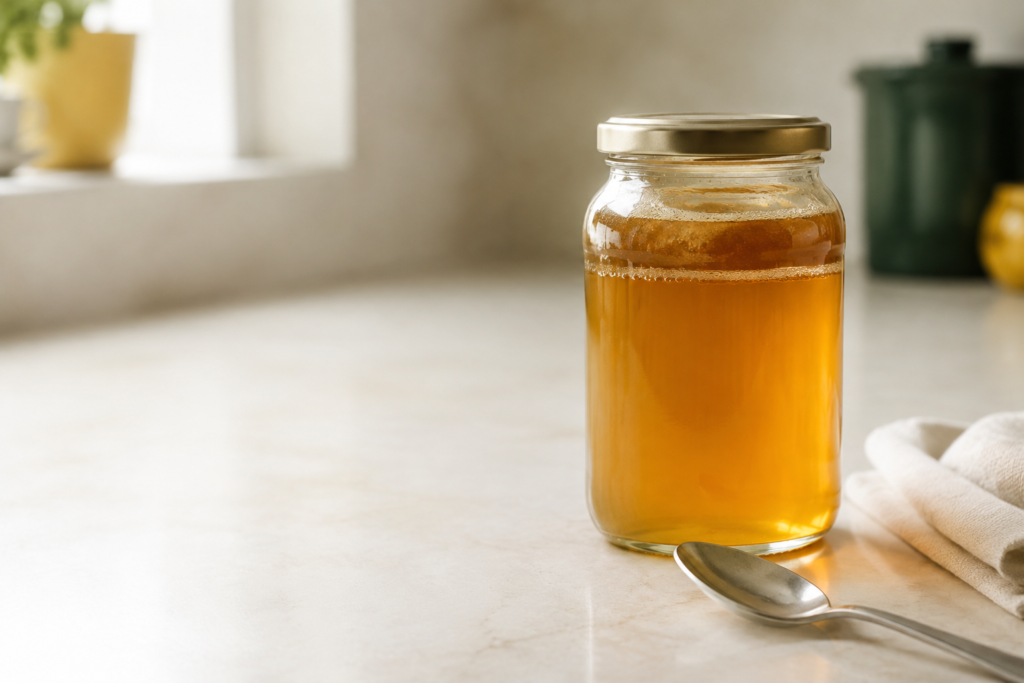
THE COMPLETE HONEY FOAM GUIDE Why Is My Honey Foamy? Bubbles, Wax or Fermentation Explained Foam on honey is not automatically spoilage.
Why Does Honey Ferment? Signs, Causes and Prevention
THE COMPLETE HONEY FERMENTATION GUIDE Why Does Honey Ferment? Signs, Causes and Prevention Unintended honey fermentation usually begins when yeasts can use
Does Honey Need to Be Refrigerated? What Happens in the Fridge
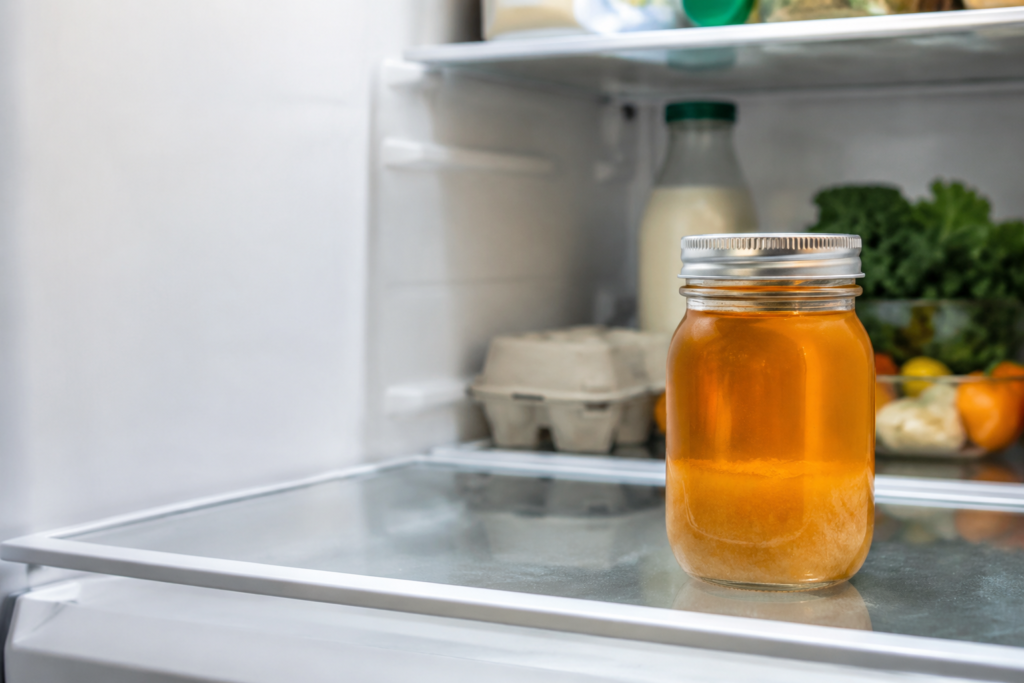
THE COMPLETE COLD-STORAGE GUIDE Does Honey Need to Be Refrigerated? What Happens in the Fridge Plain honey usually belongs in a dry
Frequently asked questions about honey-making
Do bees make honey from pollen?
No. Floral honey begins mainly with nectar, while honeydew honey begins with sugar-rich honeydew. Pollen supplies protein, lipids and other nutrients but is not simply converted into honey.
Is honey bee vomit?
That description is biologically misleading. Nectar is carried in the crop and transferred deliberately during normal food processing; it does not have to become digestive midgut contents first.
Why do bees fan their wings?
Fanning supports airflow and passive evaporation from open cells. It works alongside active droplet evaporation, enzymatic change and the warm nest environment.
How long does it take bees to make honey?
There is no fixed time. Nectar concentration, humidity, temperature, airflow, colony strength and comb space all change the pace.
How do bees know when honey is ready to cap?
Workers respond to the physical and chemical state of stored food and colony conditions. Capping is a useful sign of ripening, but there is no single universal number for every hive and climate.
Do all bees make honey?
No. Honey bees are the best-known large-scale storers, and stingless bees also make honey. Most of the world’s bee species are solitary and do not maintain comparable communal reserves.
Can bees make honey without flowers?
Some honey begins with honeydew rather than nectar. A colony still needs a suitable carbohydrate source; bees cannot produce honey from nothing.
Why is honey capped with wax?
The wax cover protects stored food and limits its contact with humid hive air until the colony needs it.
How this honey-making guide was researched
This guide distinguishes observed honey-bee behavior from simplified folklore. It uses peer-reviewed work on nectar dehydration, enzyme activity, trophallaxis, colony ventilation and comb storage. Timing and measurements vary by source, species, colony and climate.
- Nicolson et al. (2022), Scientific Reports — nectar dehydration during foraging and processing.
- Eyer et al. (2016), PLOS ONE — storage behavior inside comb cells.
- Fernandes et al. (2022) — honey’s nutritional and ecological role in the colony.
- Alaerjani et al. (2022) — enzymes and biochemical changes.
- Yang et al. (2025) — active and passive nectar evaporation.
Keep exploring honey bees and the food they make
Continue from the flower to the colony: explore worker anatomy, communication and the remarkable variety created by landscapes around the world.