
Pasteurized Honey: Processing, Benefits, Safety and How It Compares
Pasteurized honey is deliberately heated under controlled commercial conditions. Producers may use heat to improve flow, dissolve crystals, reduce yeast activity and help honey remain liquid longer—but the term does not describe one universal worldwide temperature-and-time process.
This evidence-led guide explains how pasteurized honey differs from raw and gently warmed honey, what heating changes, why crystallization can still happen, how to read the label and the essential infant-safety rule.
What does pasteurized honey mean?
It generally means honey has received a deliberate heat treatment for processing or stability. It does not automatically prove purity, superior nutrition or safety for infants.
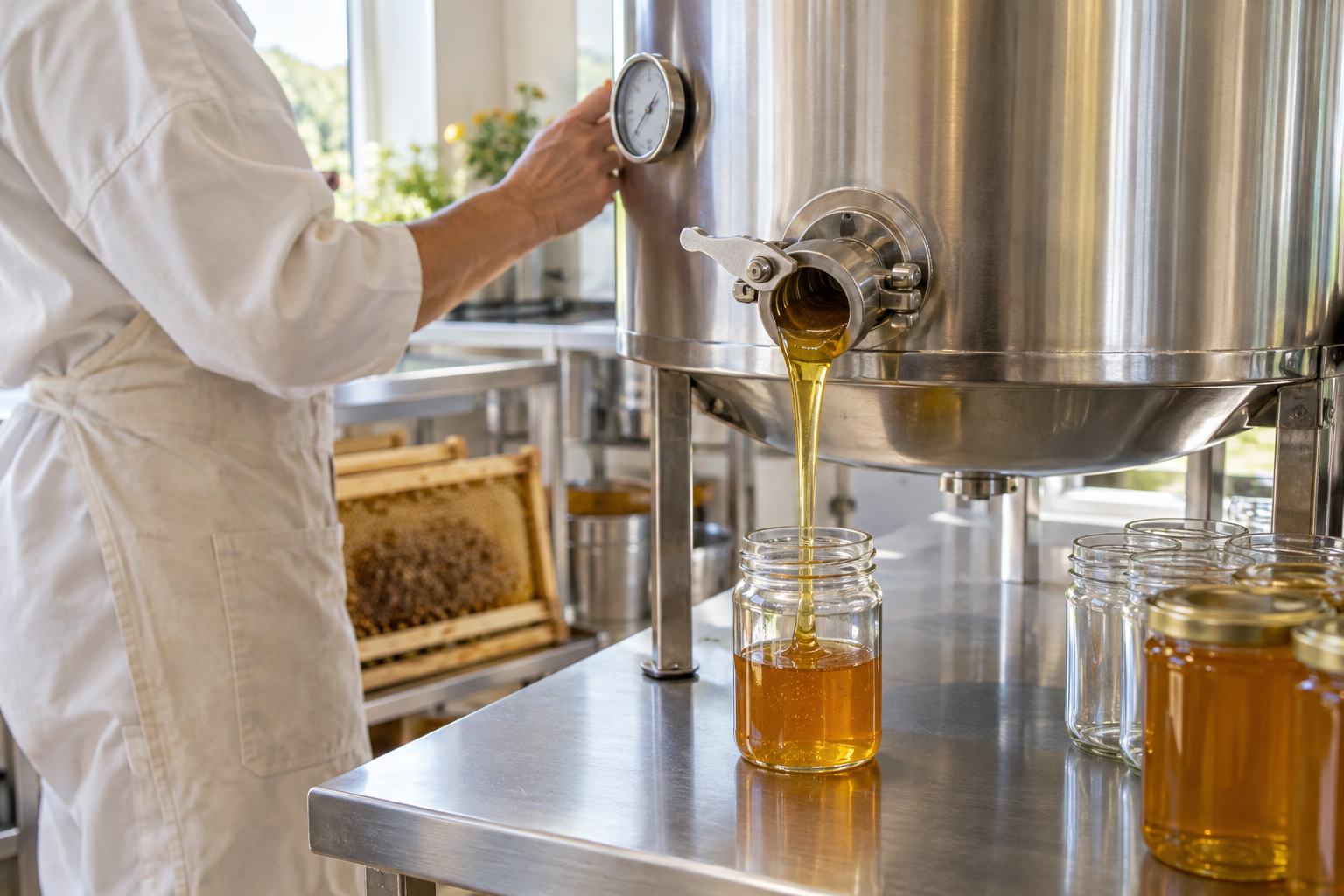
Commercial honey processors may use carefully controlled heat to improve flow, dissolve crystals and support consistent filling. The result depends on both temperature and exposure time.
Pasteurized honey—from controlled heating to the finished jar
Contents
What is pasteurized honey?
Honey sold as pasteurized has been deliberately heated under controlled conditions. Unlike milk pasteurization, the label does not always correspond to one globally standardized retail treatment. Equipment, temperature, holding time, moisture, cooling and filtration all affect the result.
Gentle warming may instead be used only to improve flow or reliquefy crystals. Raw, unpasteurized, unfiltered and local are separate claims; none of them independently proves botanical origin, authenticity or clinical superiority.
Deliberate controlled heat
Usually intended to manage yeast, texture, flow or crystallization.
Limited heat for handling
May improve bottling or dissolve crystals without a pasteurization claim.
Minimally processed style
Definitions vary, so a producer’s actual practices matter more than the halo around the word.
Pasteurized honey versus raw or minimally heated honey
The meaningful comparison is the documented heat and filtration history—not whether one jar looks clearer.
| Feature | Pasteurized honey | Raw or minimally heated honey |
|---|---|---|
| Heat treatment | Deliberately heated under controlled conditions | Usually no deliberate heat or only limited warming |
| Processing goals | Flow, yeast management, liquefaction and crystallization control | Preserve a minimally processed character |
| Appearance | Often clear, fluid and consistent | May be cloudy, textured or naturally variable |
| Filtration | May be filtered or unfiltered | May be strained or filtered; raw does not automatically mean unfiltered |
| Crystallization | May be delayed but can still occur | May crystallize sooner depending on floral source and storage |
| Major nutrients | Primarily sugars and water | Primarily sugars and water |
| Heat-sensitive components | Can change with temperature and exposure time | May retain a different minor-component profile, with natural variation |
| Infant safety | Never for children under 12 months | Never for children under 12 months |
Bottom line: pasteurized honey offers consistency and convenient handling. A raw label offers a different processing style, not automatic proof of purity or health superiority.
Why honey producers use controlled heating
Responsible explanations distinguish each goal instead of treating every warm process as identical. Heat can lower viscosity, dissolve glucose crystals and support efficient pumping, filtration and filling. Suitable commercial treatments may also reduce osmophilic yeast activity and delay renewed crystallization.
Packers may blend lots and manage temperature to create a predictable retail texture. Those are practical benefits, but they do not authenticate floral source or remove the need for traceable sourcing and quality controls.
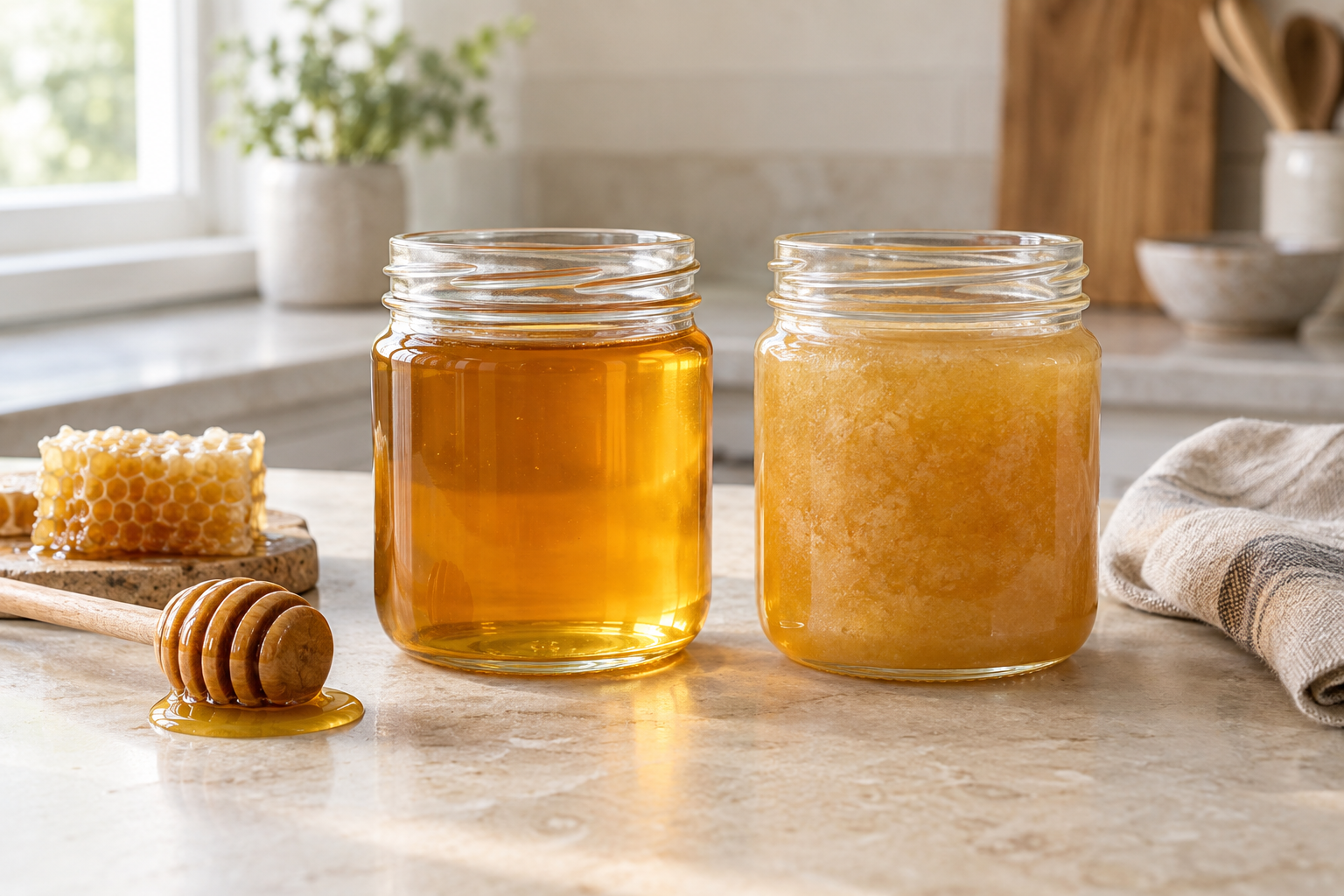
Clear liquid and crystallized honey can have very different textures, but appearance alone cannot prove whether a jar is pasteurized, raw, pure or adulterated.
How processing affects the finished honey
Careful warming is not the same as overheating. Lower temperatures over a long period can still affect heat-sensitive components, while a shorter commercial treatment may limit exposure. Prompt cooling helps prevent unnecessary continuing change.
Processing choices can influence clarity, viscosity, aroma and the time honey remains liquid. Floral source, age and storage history also matter, so a single visual feature or quality measurement cannot tell the entire story.
Enzymes, aroma, color and HMF
Heat and storage can reduce the activity of naturally occurring enzymes such as diastase. They can also increase hydroxymethylfurfural, commonly shortened to HMF. International and national standards use measures such as diastase activity and HMF to help evaluate processing and storage history.
Activity can decline
The extent depends on heat exposure, storage and the honey’s natural starting profile.
A heat-and-age marker
HMF can rise during heating and storage; standards interpret it alongside other evidence.
Delicate notes can soften
Excessive or prolonged heat can reduce volatile floral aromas.
Some honey may darken
Heat, age and storage conditions can influence color as well as clarity.
Crystals can dissolve
Liquefaction improves flow but does not permanently change the floral sugar balance.
Still mostly sugars and water
Minor-component differences should not be turned into unsupported treatment claims.
Why pasteurized honey can still crystallize
Heating can dissolve existing glucose crystals. When combined with fine filtration, it may also reduce particles that act as crystallization sites. This can keep honey liquid longer, but it cannot guarantee permanent fluidity.
- Floral source: the glucose-to-fructose balance strongly influences crystallization.
- Storage temperature: some temperature ranges encourage crystal formation.
- Seed crystals: remaining crystals can guide new growth.
- Moisture and time: composition and storage history affect the rate.
Crystallization is usually a normal texture change—not proof of rawness, purity or spoilage.
Pasteurized honey is still not suitable for infants
Never give pasteurized, unpasteurized, cooked or baked honey to a child younger than 12 months. Canadian public-health guidance warns against honey for infants because of the risk of infant botulism. Ordinary honey processing should not be presented as a guarantee that removes that risk.
- Read the origin: look for the country or countries of harvest and the responsible packer.
- Separate the claims: pasteurized, filtered, liquid, creamed and raw describe different attributes.
- Choose traceability: lot information and a reachable producer provide accountability.
- Store it well: keep the container tightly closed, dry and away from excessive heat.
- Ignore home purity tests: flame, water, thumb and crystallization tricks cannot reliably detect adulteration.
Related honey guides
Compare processing methods, texture changes and quality claims across the honey library.
Raw Honey
Understand what raw means, where definitions vary and how to evaluate a producer.
Filtered vs. Unfiltered Honey
Separate heat treatment from straining, filtering and pollen removal.
Crystallized Honey
Learn why crystals form and what the texture says—and does not say—about quality.
Relevant honey processing, quality and storage guides
Continue with current Hive To Honey articles covering filtration, crystallization, fermentation, authenticity, storage and everyday use.
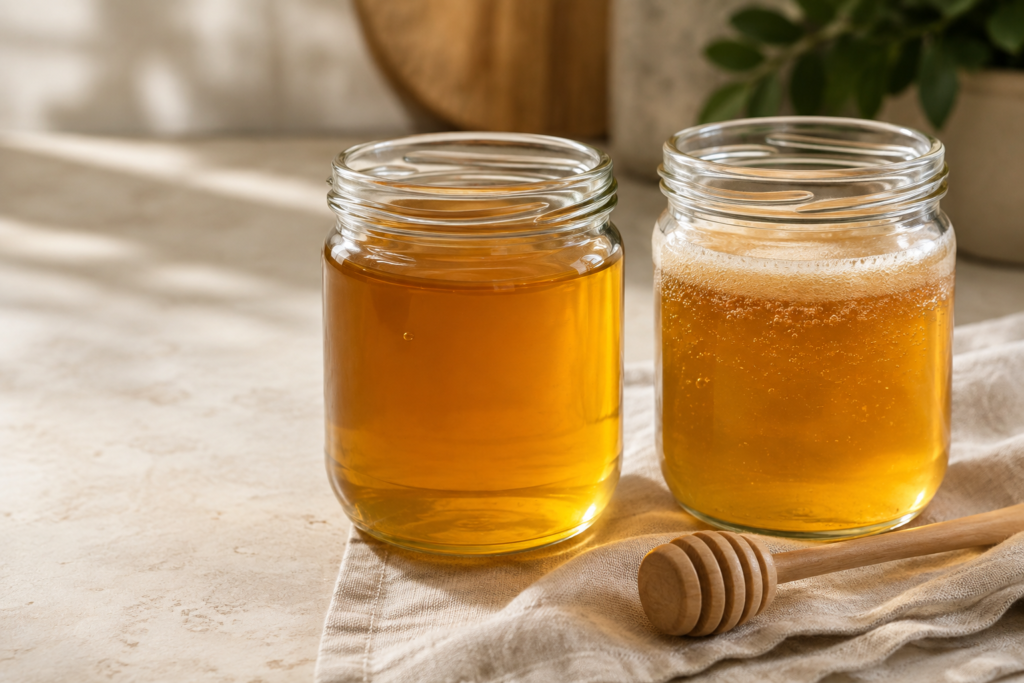
Why Is My Honey Foamy? Bubbles, Wax or Fermentation Explained
THE COMPLETE HONEY FOAM GUIDE Why Is My Honey Foamy? Bubbles, Wax or Fermentation Explained Foam on honey is not automatically spoilage.
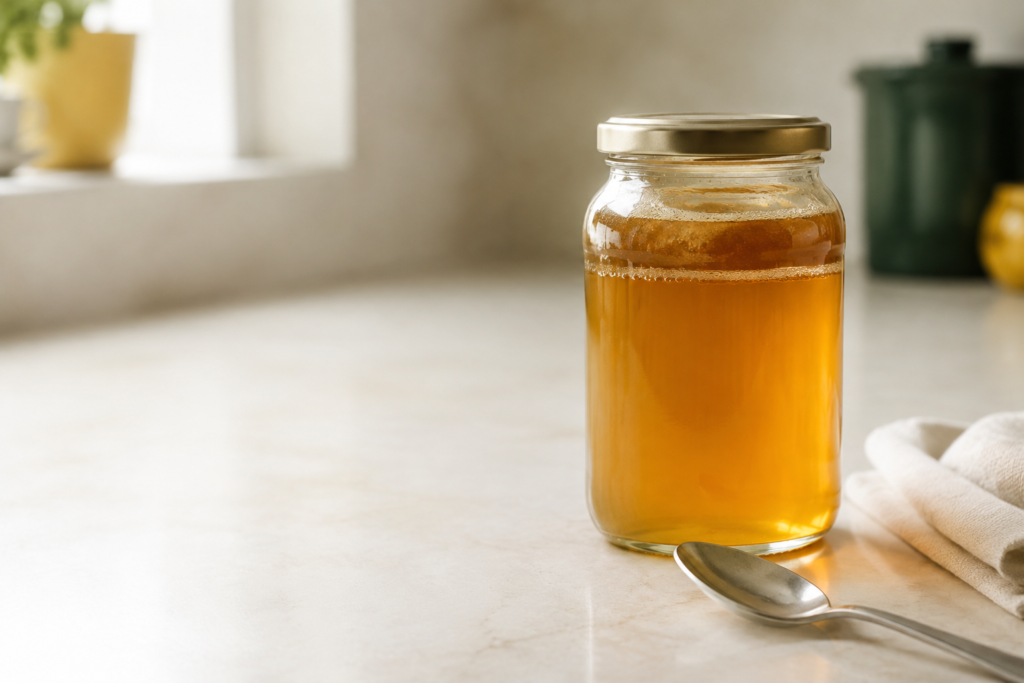
Why Does Honey Ferment? Signs, Causes and Prevention
THE COMPLETE HONEY FERMENTATION GUIDE Why Does Honey Ferment? Signs, Causes and Prevention Unintended honey fermentation usually begins when yeasts can use
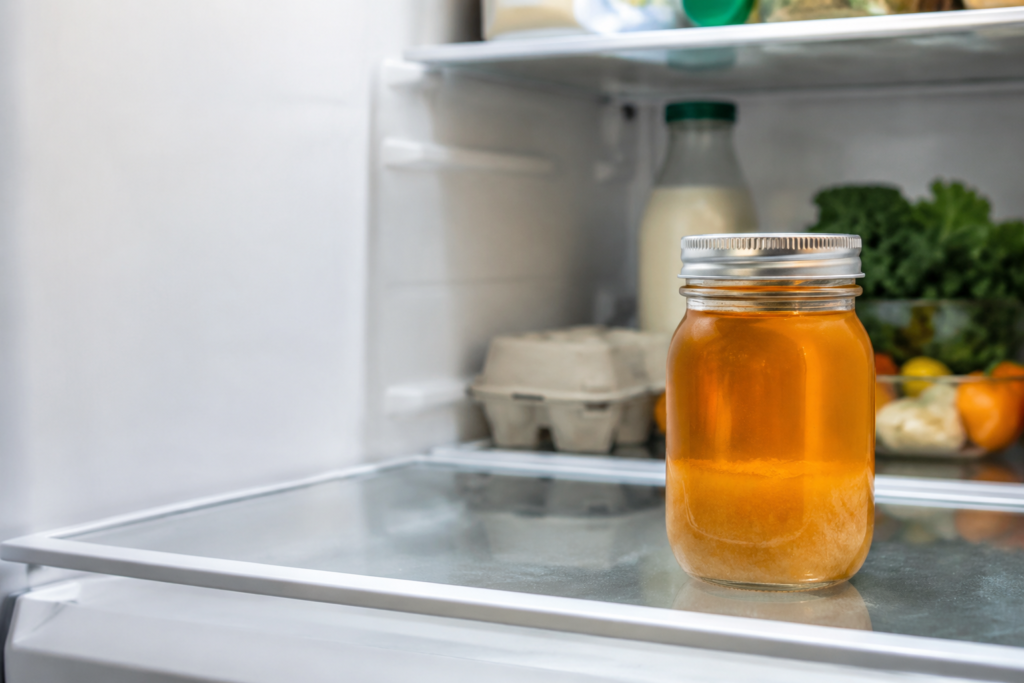
Does Honey Need to Be Refrigerated? What Happens in the Fridge
THE COMPLETE COLD-STORAGE GUIDE Does Honey Need to Be Refrigerated? What Happens in the Fridge Plain honey usually belongs in a dry
Pasteurized honey: frequently asked questions
Is pasteurized honey safe for babies?
No. Never give any honey to a child under 12 months. Pasteurization does not make honey suitable for infants.
Is all store-bought honey pasteurized?
No. Retail honey may be raw, warmed, pasteurized, filtered or processed using a combination of methods. Check the label and producer information.
Is pasteurized honey healthier than raw honey?
Neither label automatically makes a honey healthier. Both are primarily sugars and water. Heating can affect minor heat-sensitive components, while raw status does not establish a clinical advantage.
Does pasteurization remove pollen?
Heating and filtration are separate processes. Fine filtration can remove pollen; pasteurization alone does not define how much pollen remains.
Can pasteurized honey crystallize?
Yes. Heating may delay crystallization by dissolving existing crystals, but floral source, composition, storage and time still matter.
Does heating honey make it toxic?
Normal culinary use and regulated commercial processing should not be described with alarming claims. Excessive heating can reduce quality and raise markers such as HMF, which standards monitor.
Standards, labeling and public-health sources
- Health Canada. Infant botulism and honey guidance.
- Health Canada. Nutrition recommendations for healthy term infants.
- Canadian Food Inspection Agency. Labelling requirements for honey.
- Canadian Food Inspection Agency. Canadian Grade Compendium: Honey.
- Codex Alimentarius Commission. Standard for Honey (CXS 12-1981).
- USDA Agricultural Marketing Service. Extracted Honey Grades and Standards.
Processing terminology and legal requirements vary by market. Commercial decisions should use the current rules for the jurisdiction where the honey is sold.
Choose honey by process, provenance and purpose
Pasteurized honey can offer consistency and convenient handling. Minimally heated honey can preserve a different sensory style. Transparent sourcing matters more than declaring one universally superior.
Compare raw honey →