What Is Honeydew Honey? Flavor, Differences, Benefits and How It Is Made
Honeydew honey is made when bees collect sugary honeydew from plants rather than gathering nectar directly from flowers. The droplets are commonly produced after sap-feeding insects such as aphids or scale insects process plant sap.
This guide follows honeydew from tree to hive, compares it with floral honey, explains its dark color and distinctive flavor, explores major producing regions and separates composition research from proven human-health outcomes.
What is honeydew honey?
Honeydew honey is genuine honey made from plant-associated sugary secretions collected by bees. It is often dark, aromatic, mineral or malty in flavor and relatively low in pollen, but its composition varies by forest, insect, tree species, weather and harvest.
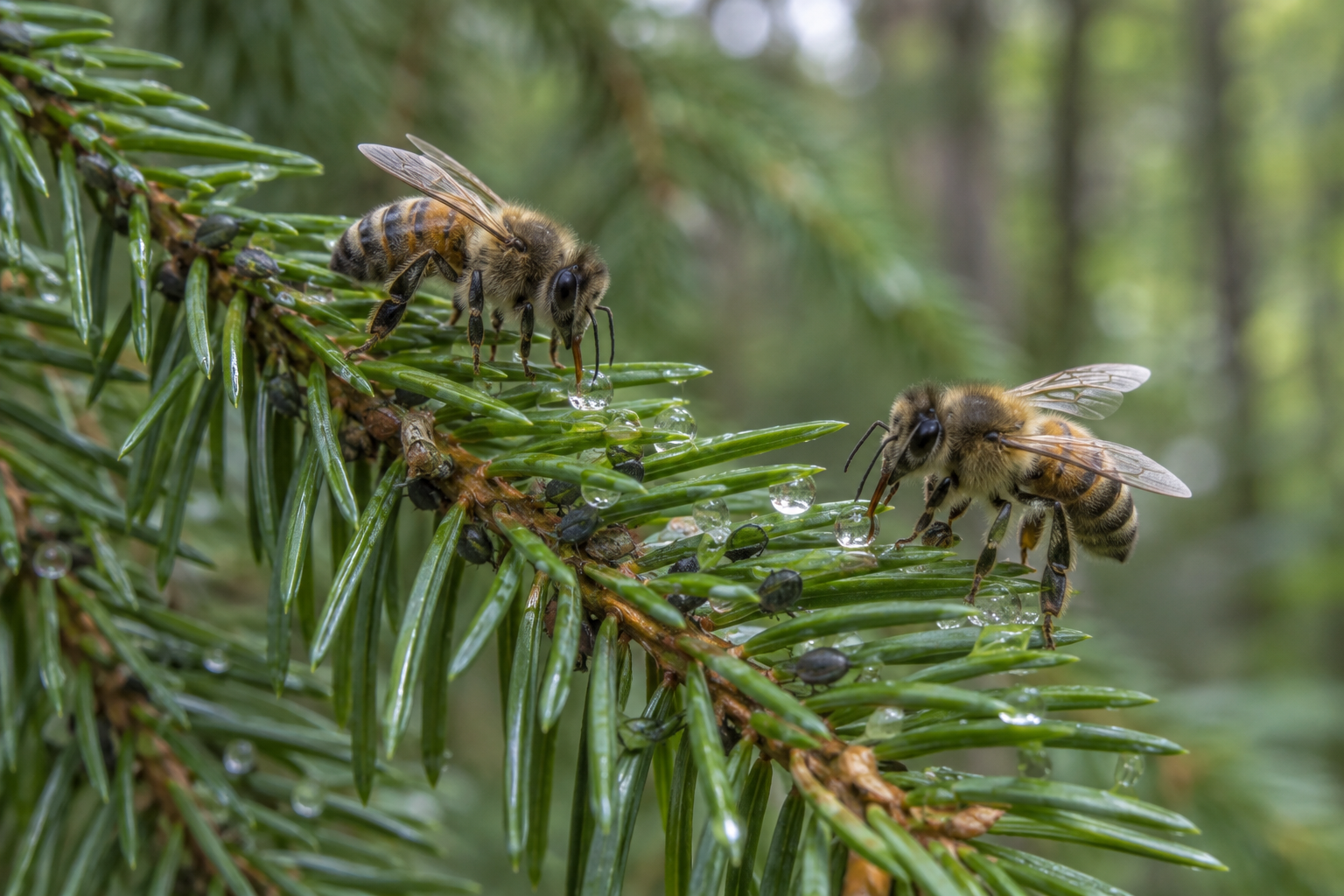
Honey bees can gather clear honeydew droplets from forest vegetation when suitable insect populations, plant hosts and weather conditions align.
Honeydew honey—from forest ecosystem to finished jar
Contents
What honeydew honey is
Aphids, scale insects and related sap feeders tap plant tissues and use nutrients from the sap. They release excess sugar-rich liquid as honeydew. Honey bees may collect those droplets from leaves, bark or needles, carry them home and process them into honey.
Although its path differs from flower nectar, the resulting food meets the basic definition of honey when it is collected, transformed and stored by bees without added ingredients.
Sap provides the starting sugars
Host trees influence the available material and eventual character.
Sap feeders produce honeydew
Aphids and scale insects are common partners in the pathway.
Workers make honey
Bees collect, enzymatically process, concentrate and store the liquid.
How bees make honeydew honey
Honeydew flows are unpredictable because trees, sap-feeding insects, predators, rain, temperature and bee foraging conditions all interact.
| Stage | What happens | What controls it |
|---|---|---|
| Plant sap | A host tree moves sugar-rich sap through its tissues | Tree species, health and season |
| Honeydew production | Sap-feeding insects release excess sugary liquid | Insect species and population |
| Collection | Foragers gather droplets from plant surfaces | Weather and competing forage |
| Hive processing | Workers add enzymes and reduce water | Colony activity and humidity |
| Storage | Ripened honey is placed in comb and may be capped | Moisture and colony needs |
Honeydew honey vs. floral honey
No single trait identifies every sample, but the patterns below are common.
| Feature | Honeydew honey | Floral honey |
|---|---|---|
| Immediate source | Honeydew on living plants | Flower nectar |
| Common color | Amber to very dark brown | Water-white to very dark |
| Typical flavor direction | Malty, woody, resinous or mineral | Floral, fruity, herbal, spicy or caramel-like |
| Pollen content | Often relatively low or indirect | Usually connected to visited flowers |
| Electrical conductivity | Often higher | Often lower, with botanical exceptions |
| Minor compounds | Frequently higher in some minerals and oligosaccharides | Highly variable by flower source |
Forest honeydew honeys are often dark amber to mahogany, with woody, malty, resinous or mineral notes rather than an overtly floral aroma.
What honeydew honey tastes like
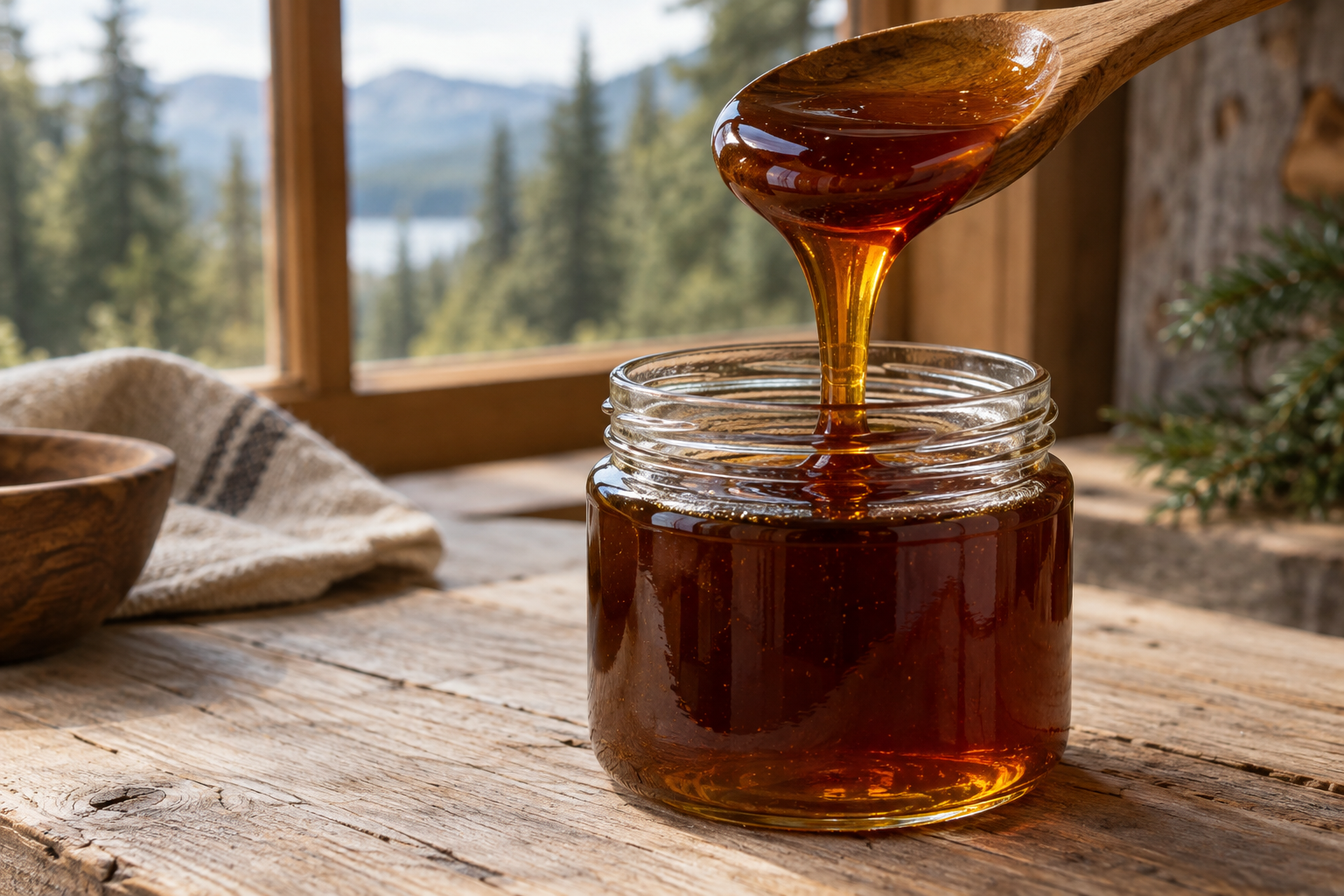
Many honeydew honeys taste less conventionally sweet than blossom honeys because malt, resin, caramel, dried-fruit, molasses or mineral impressions balance the sugar. Texture can be dense and slow-flowing, while aroma may recall woodland, bark or cooked sugar.
Color and flavor are not quality grades. A lighter forest honey may be authentic, and a dark jar is not proof of honeydew origin. Sensory assessment works best alongside traceability and laboratory markers.
Woodland and malt
Often less floral and more savory or resinous.
Amber to mahogany
Darkness varies with source, region and storage.
Long and complex
Mineral, caramel or dried-fruit impressions may linger.
Dense and glossy
Crystallization behavior depends on the sugar profile.
Trees, insects and important producing regions
Honeydew honey is associated with conifer and broadleaf forests across Europe, the Mediterranean, New Zealand and other suitable landscapes. Producers may use names such as forest honey, fir honey, spruce honey, pine honey, oak honey, beech honeydew honey or metcalfa honey, depending on origin and local rules.
Examples include fir and spruce forest honeys in Central Europe, pine honey from Türkiye and Greece, oak-associated honeys in Mediterranean regions and New Zealand beech honeydew honey. These names are not interchangeable: each describes a distinct ecological and geographic system.
Nutrients, antioxidants and possible benefits
Studies often find that honeydew honeys contain more minerals, electrical conductivity, certain oligosaccharides and phenolic compounds than many blossom honeys. Laboratory antioxidant or antimicrobial measurements can also be comparatively high.
Those findings describe composition and test-tube activity. They do not prove that eating honeydew honey prevents or treats disease in people, and composition varies widely among samples.
How to buy, store and use honeydew honey
Look for a named region or forest source, producer identity, harvest information and an honest description of whether the honey is single-origin or blended. Where protected geographical names or national standards apply, check that the label follows them.
- Storage: keep tightly closed in a dry cupboard at room temperature.
- Crystallization: normal and not proof of spoilage or adulteration.
- Kitchen use: pair with rye bread, yogurt, aged cheese, roasted vegetables, sauces or marinades where its savory depth can stand out.
- Infant safety: never give any honey to a child younger than 12 months.
Related honey guides
Explore the wider systems behind honey identity and authenticity.
What Is Honey?
Understand composition, production, processing and storage.
Types of Honey
Compare floral, forest, regional and specialty honeys.
Honey Grades Explained
Learn what grading can—and cannot—tell you about a jar.
Latest honey variety, flavor and authenticity guides
Continue with current Hive To Honey articles covering botanical origin, regional honeys, quality, storage and beekeeping.
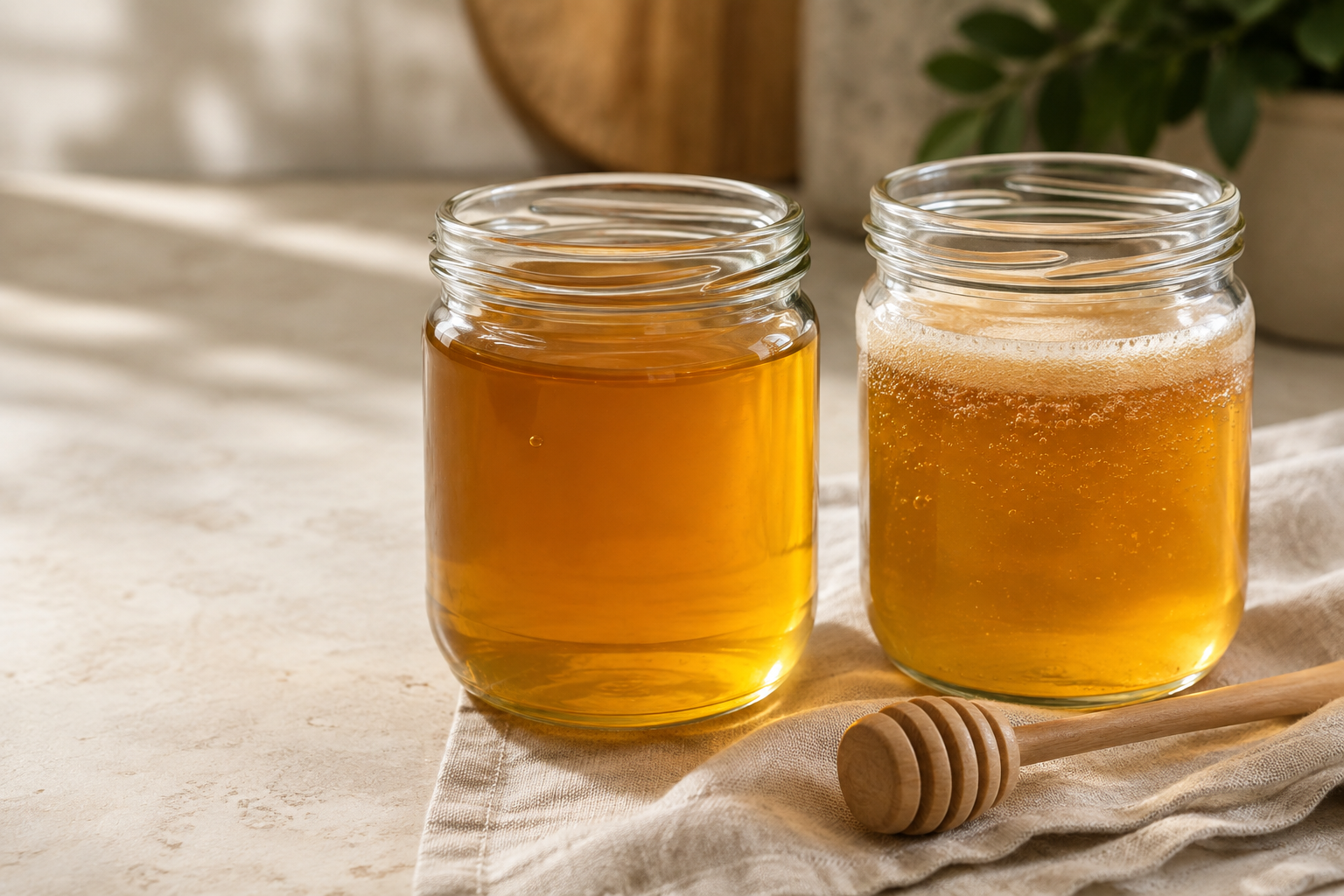
Why Is My Honey Foamy? Bubbles, Wax or Fermentation Explained
THE COMPLETE HONEY FOAM GUIDE Why Is My Honey Foamy? Bubbles, Wax or Fermentation Explained Foam on honey is not automatically spoilage.
Why Does Honey Ferment? Signs, Causes and Prevention
THE COMPLETE HONEY FERMENTATION GUIDE Why Does Honey Ferment? Signs, Causes and Prevention Unintended honey fermentation usually begins when yeasts can use
Does Honey Need to Be Refrigerated? What Happens in the Fridge
THE COMPLETE COLD-STORAGE GUIDE Does Honey Need to Be Refrigerated? What Happens in the Fridge Plain honey usually belongs in a dry
Honeydew honey: frequently asked questions
Is honeydew honey made from flowers?
Not directly. Bees collect sugary honeydew from plant surfaces rather than nectar from flower nectaries.
Do bees make honeydew honey from aphid waste?
Sap-feeding insects process plant sap and release excess sugar-rich liquid. Bees collect and transform that honeydew into honey.
What does honeydew honey taste like?
It is often malty, woody, resinous, caramel-like or mineral, although flavor varies by source and region.
Is forest honey the same as honeydew honey?
Often, but labeling traditions differ. Some forest honeys may include both honeydew and floral nectar, so the producer’s definition matters.
Is honeydew honey healthier than floral honey?
It may contain higher levels of certain minerals and phenolic compounds than some floral honeys, but human health advantages are not established and it remains high in sugars.
Can babies eat honeydew honey?
No honey should be given to children younger than 12 months because of the risk of infant botulism.
Honeydew honey ecology, composition and standards sources
- Codex Alimentarius Commission. International Standard for Honey.
- European Commission. Geographical indications and quality schemes.
- National Library of Medicine, PubMed. Research on honeydew honey composition.
- Food and Agriculture Organization of the United Nations. Global beekeeping and honey resources.
- Centers for Disease Control and Prevention. Infant botulism prevention.
Characteristics vary by host plant, insect species, geography, year, climate, bee colony and analytical method.
Explore honey’s extraordinary global diversity
Compare forest, floral, regional and specialty honeys from around the world.
Discover types of honey →