What Do Bees Eat? Nectar, Pollen, Honey and How Bees Get Their Food
Adult honey bees obtain most of their energy from nectar and honey, while pollen supplies much of the protein, lipids, vitamins and minerals needed for brood rearing. Inside the colony, workers transform, store and share these materials as honey, bee bread and glandular brood food.
This complete guide follows food from flower to forager to comb, explains how diets change by life stage and caste, and compares honey bees with bumble bees, solitary bees and other bee groups.
What do honey bees eat?
Honey bees eat nectar, honey and pollen-derived foods. Foragers drink nectar and collect pollen; workers convert nectar into honey and store pollen as bee bread. Nurse bees produce glandular food for larvae, while queens and drones receive diets suited to their roles.
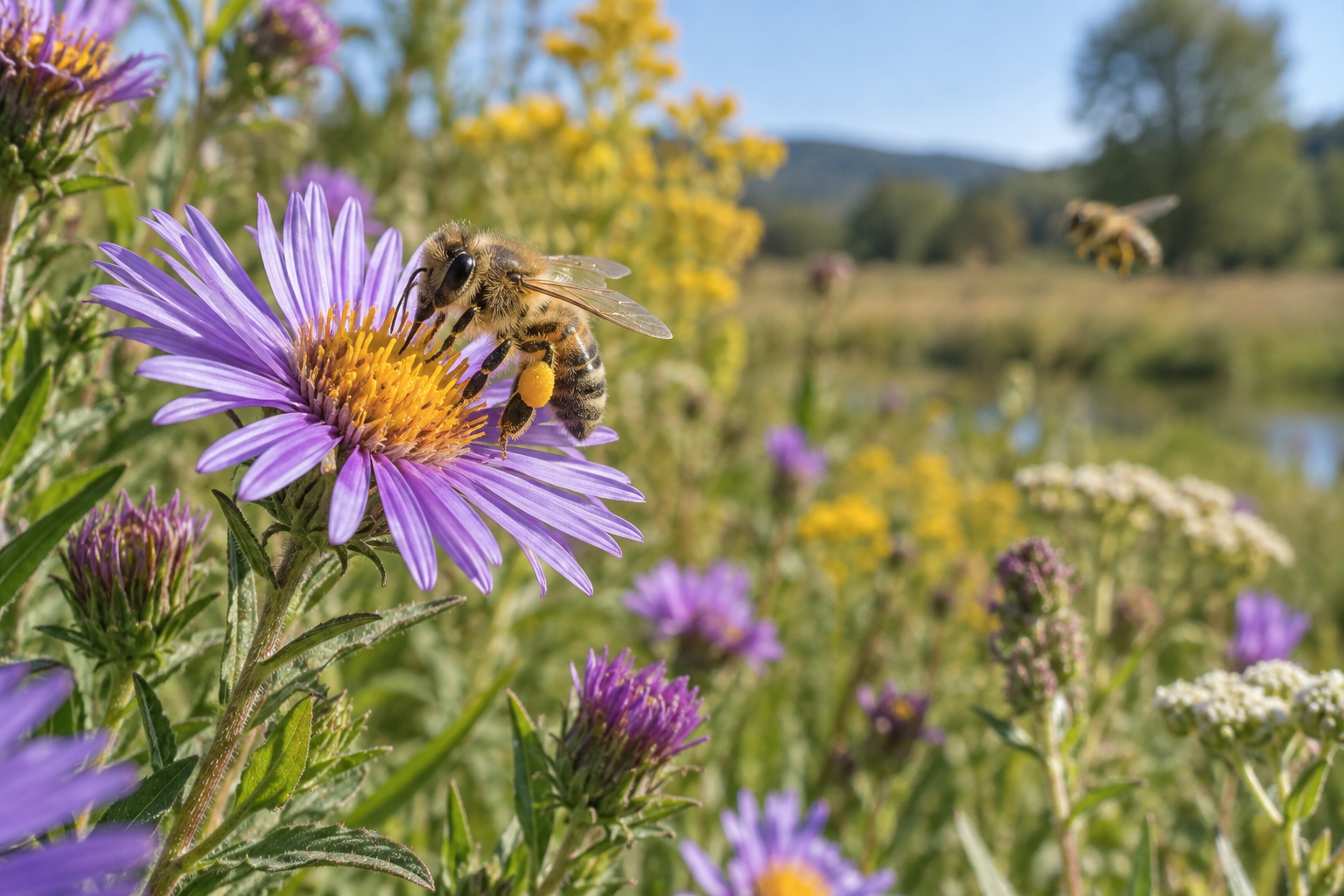
A worker honey bee can collect nectar with her proboscis while carrying compact pollen loads on her hind-leg corbiculae. Nectar primarily provides carbohydrate energy; pollen supplies essential building materials for colony growth.
Bee nutrition—from flower to forager to growing colony
Contents
The honey bee diet in brief
Nectar is a dilute sugar solution produced by flowers. Foragers drink it into the crop, often called the honey stomach, and carry it home. Honey is the colony’s concentrated, stored carbohydrate reserve. Workers use it for flight, heat production and daily activity.
Pollen contains proteins, amino acids, lipids and micronutrients. Colonies need varied, good-quality pollen to rear brood and support nurse bees. Water is also essential for cooling, food preparation and maintaining conditions inside the nest.
Nectar and honey
Sugars fuel flight, movement, thermoregulation and other metabolic work.
Pollen and bee bread
Protein- and lipid-rich plant material supports nurses, glands and developing brood.
Water and shared food
Water supports cooling, dilution and food preparation; trophallaxis distributes resources.
Nectar, pollen, honey, bee bread and brood food compared
Bee foods overlap, but they are not interchangeable. Their role also changes with age and colony conditions.
| Food or resource | Main origin | Primary contribution | Who uses it |
|---|---|---|---|
| Nectar | Flower nectaries | Immediate carbohydrate and raw material for honey | Foragers, receivers and other adults |
| Honey | Processed and concentrated nectar or honeydew | Stored carbohydrate reserve | Adults and colony food preparation |
| Pollen | Flower anthers | Proteins, lipids, vitamins and minerals | Collected by foragers; consumed especially by young workers |
| Bee bread | Pollen packed into comb with added nectar or honey and secretions | Stored pollen-based food | Nurse-age workers and colony food system |
| Glandular brood food | Secretions from nurse workers | Nutrition for developing larvae | Worker, drone and queen-destined larvae in differing patterns |
| Water | Puddles, droplets and other sources | Cooling, dilution and humidity regulation | Collected by water foragers and distributed in the colony |
Important distinction: bees collect pollen, but most larvae are fed processed glandular food by nurse workers rather than being handed raw pollen grains.
How bees collect nectar, pollen, water and honeydew
Foragers assess profitability based on sugar concentration, abundance, handling time, distance and colony demand. They draw nectar through the proboscis into the crop. Pollen is groomed from the body, moistened and packed into the corbiculae on the hind legs of honey bee workers.
Some foragers specialize temporarily in water, resin or particular floral resources. Honey bees may also collect honeydew—sugary secretions found on living plants—which can be transformed into honeydew honey.
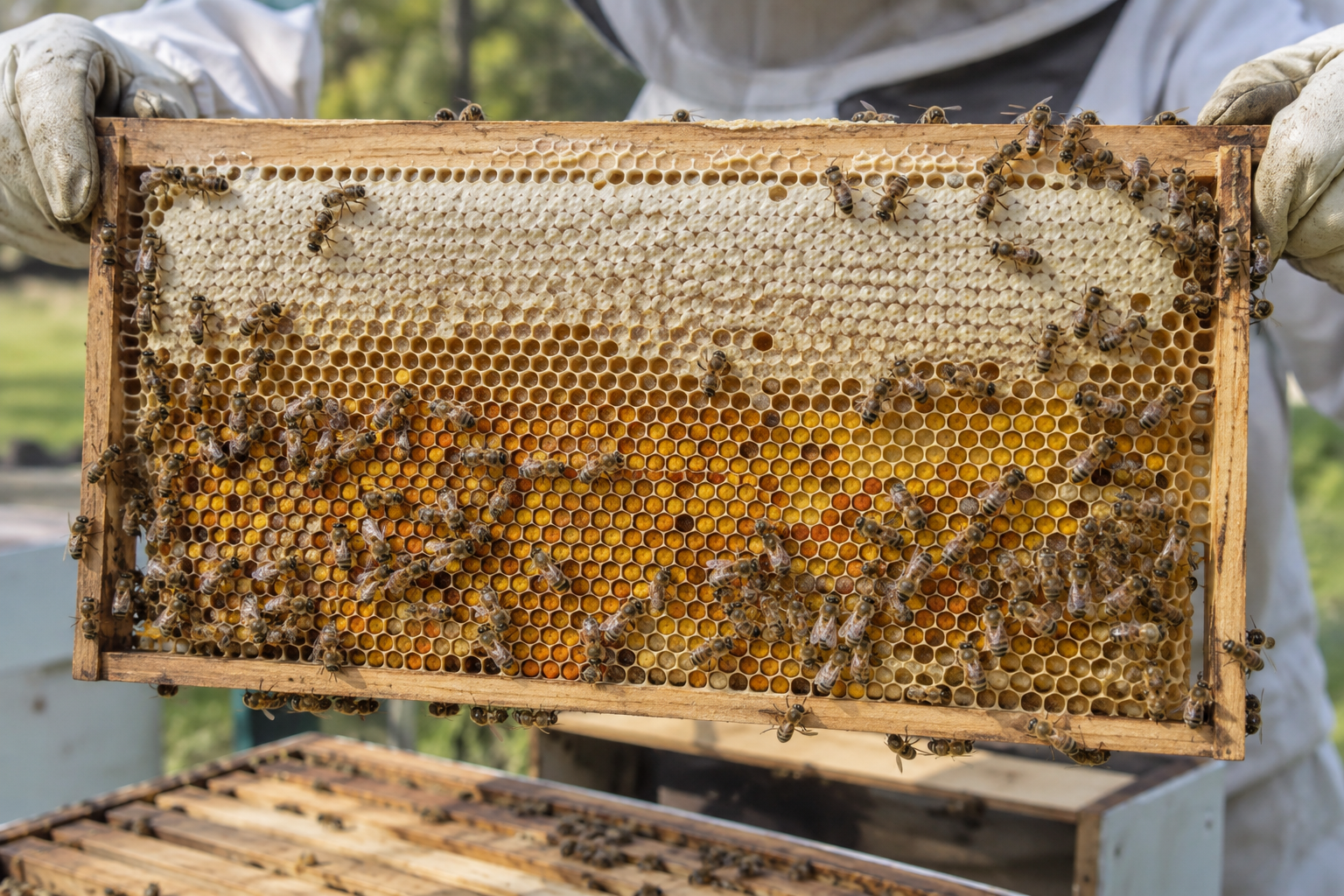
A colony stores carbohydrates and pollen-based food in different comb areas. Pale wax cappings protect ripe honey, while open cells can hold pollen loads in yellow, orange and brown shades.
What happens to food inside the hive
Returning nectar foragers transfer liquid to receiver bees through trophallaxis. Workers repeatedly handle droplets, add secretions and expose the liquid to airflow as water evaporates. Once sufficiently ripened, honey is stored and capped for later use.
Pollen foragers deposit loads in cells. Workers pack the material and add nectar or honey and secretions, forming stored bee bread. Young nurse workers consume pollen-derived food and produce secretions used for larval feeding and adult food exchange.
Trophallaxis
Liquid food and chemical information move between adult bees.
Nectar becomes honey
Enzymatic processing and water loss create a stable energy reserve.
Pollen becomes bee bread
Packed pollen is altered inside the cell and used within the colony nutrition system.
Nurses provision brood
Glandular secretions connect adult diet with larval development.
Demand changes foraging
Colony stores, brood and receiver availability influence resource collection.
Capped honey bridges gaps
Stored carbohydrate supports nights, bad weather and seasons without bloom.
What queens, workers, drones and larvae eat
Honey bee nutrition is a social system. Age and role matter as much as the ingredient itself.
| Bee or stage | Main nutrition pattern | Why it matters |
|---|---|---|
| Young larvae | Receive glandular brood food from nurse bees | Rapid growth occurs before cells are capped |
| Queen-destined larvae | Provisioned abundantly in queen cells with royal-jelly-rich food | Diet, cell environment and gene regulation support queen development |
| Nurse workers | Consume substantial pollen-derived nutrition plus carbohydrates | Supports brood-food gland activity |
| Forager workers | Rely heavily on nectar and honey for flight energy | Long-distance flight has high carbohydrate demand |
| Adult drones | Receive and consume carbohydrate-rich food within the colony | Supports maintenance and mating flights |
| Adult queen | Fed by attendant workers | Continuous care supports egg laying and colony communication |
Simplified claims that “queens eat royal jelly and workers eat honey” miss the changing, shared nature of colony nutrition.
Seasonal food needs, shortages and supplementation
Spring brood expansion increases demand for pollen and carbohydrates. Summer nectar flows may build honey stores, while drought or a gap between blooms can sharply reduce intake. Colonies in temperate climates rely on stored honey through winter, when flight and floral resources are limited.
Beekeepers sometimes provide sugar syrup or pollen substitutes when colonies face specific shortages. These are management tools, not complete replacements for diverse natural forage, and timing, formulation and disease precautions matter.
What bumble bees, solitary bees and stingless bees eat
Adult bumble bees and many solitary bees also drink nectar for energy and collect pollen to provision young. Bumble bee colonies store relatively small food reserves compared with honey bees. Solitary females build individual brood cells and leave each larva a pollen-and-nectar provision.
- Bumble bees: adults collect nectar and pollen for a seasonal colony.
- Solitary bees: females provision separate brood cells rather than maintaining a shared honey store.
- Stingless bees: many tropical species store honey and pollen in wax-resin pots.
- Specialist bees: some species depend on pollen from a narrow range of plants.
- Male bees: typically visit flowers mainly for nectar and do not provision offspring.
Related bee nutrition and behavior guides
Explore the connected systems that turn floral resources into colony food.
How Do Bees Make Honey?
Follow nectar collection, transfer, evaporation, storage and capping.
Pollen and Its Nutritional Value
Learn what pollen contains and how colonies use it.
How Far Do Bees Travel?
Understand how distance, energy cost and forage quality influence collection.
Latest bee food, foraging and colony biology guides
Continue with current Hive To Honey articles covering nectar, pollen, honey production, communication, colony roles and seasonal behavior.
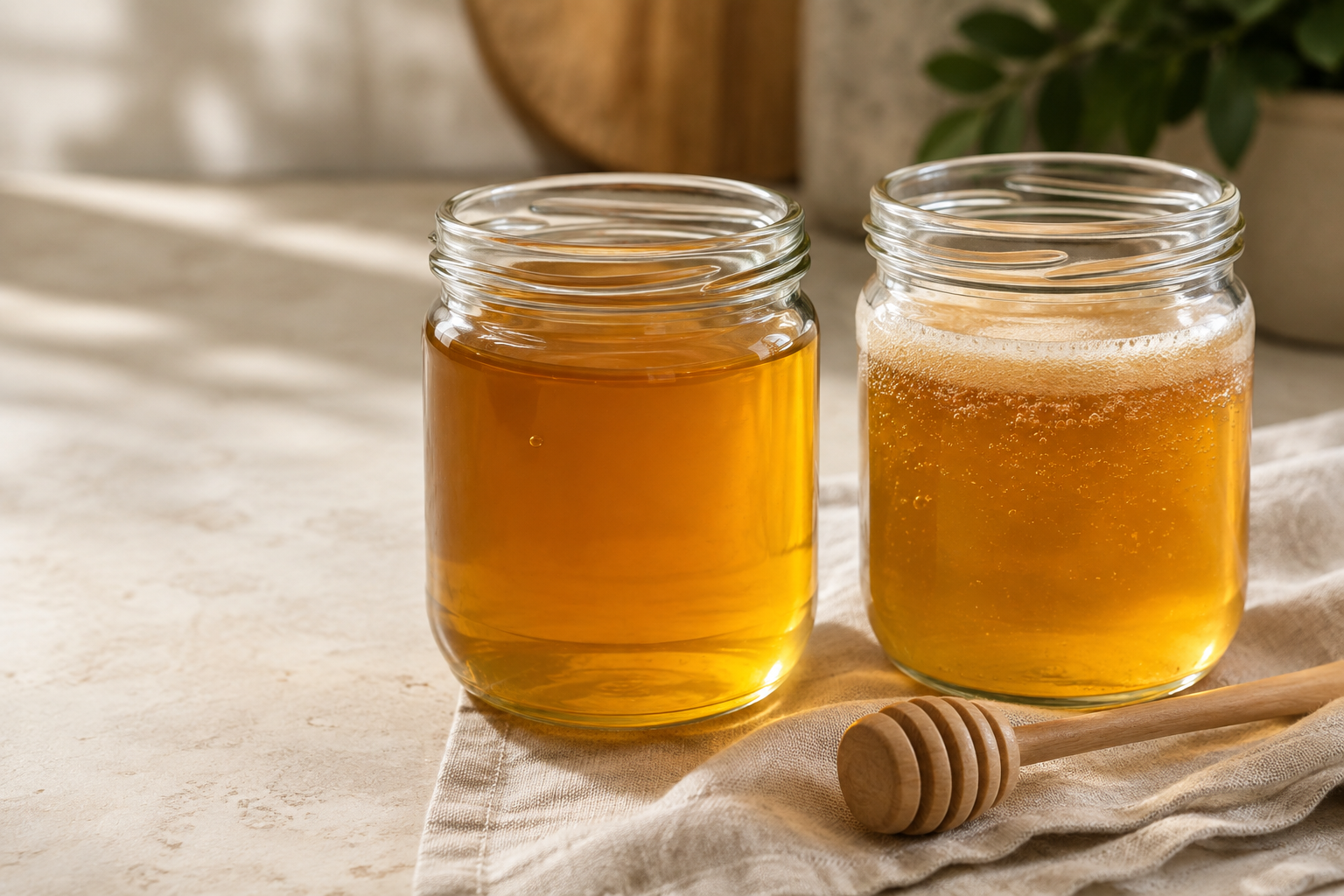
Why Is My Honey Foamy? Bubbles, Wax or Fermentation Explained
THE COMPLETE HONEY FOAM GUIDE Why Is My Honey Foamy? Bubbles, Wax or Fermentation Explained Foam on honey is not automatically spoilage.
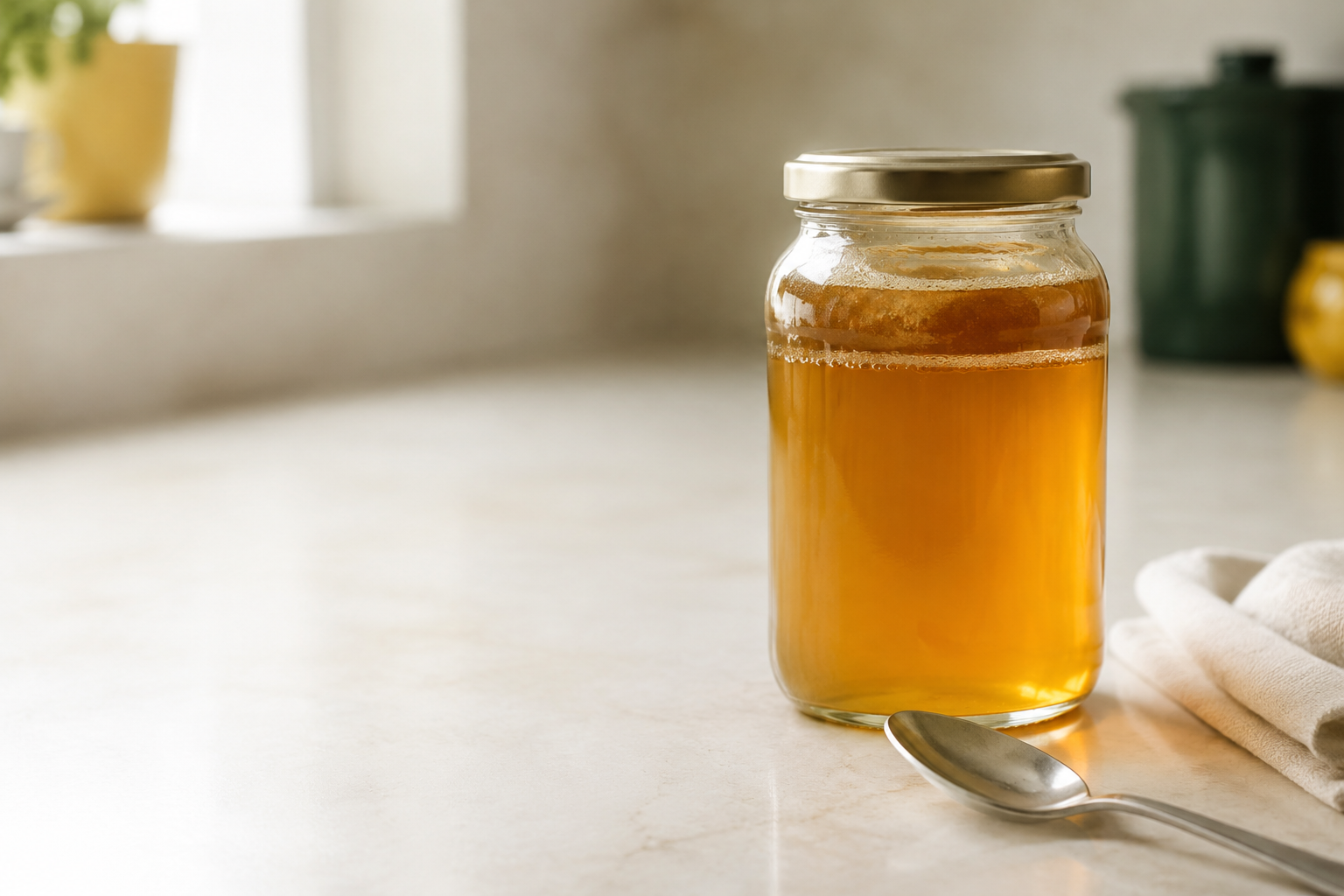
Why Does Honey Ferment? Signs, Causes and Prevention
THE COMPLETE HONEY FERMENTATION GUIDE Why Does Honey Ferment? Signs, Causes and Prevention Unintended honey fermentation usually begins when yeasts can use
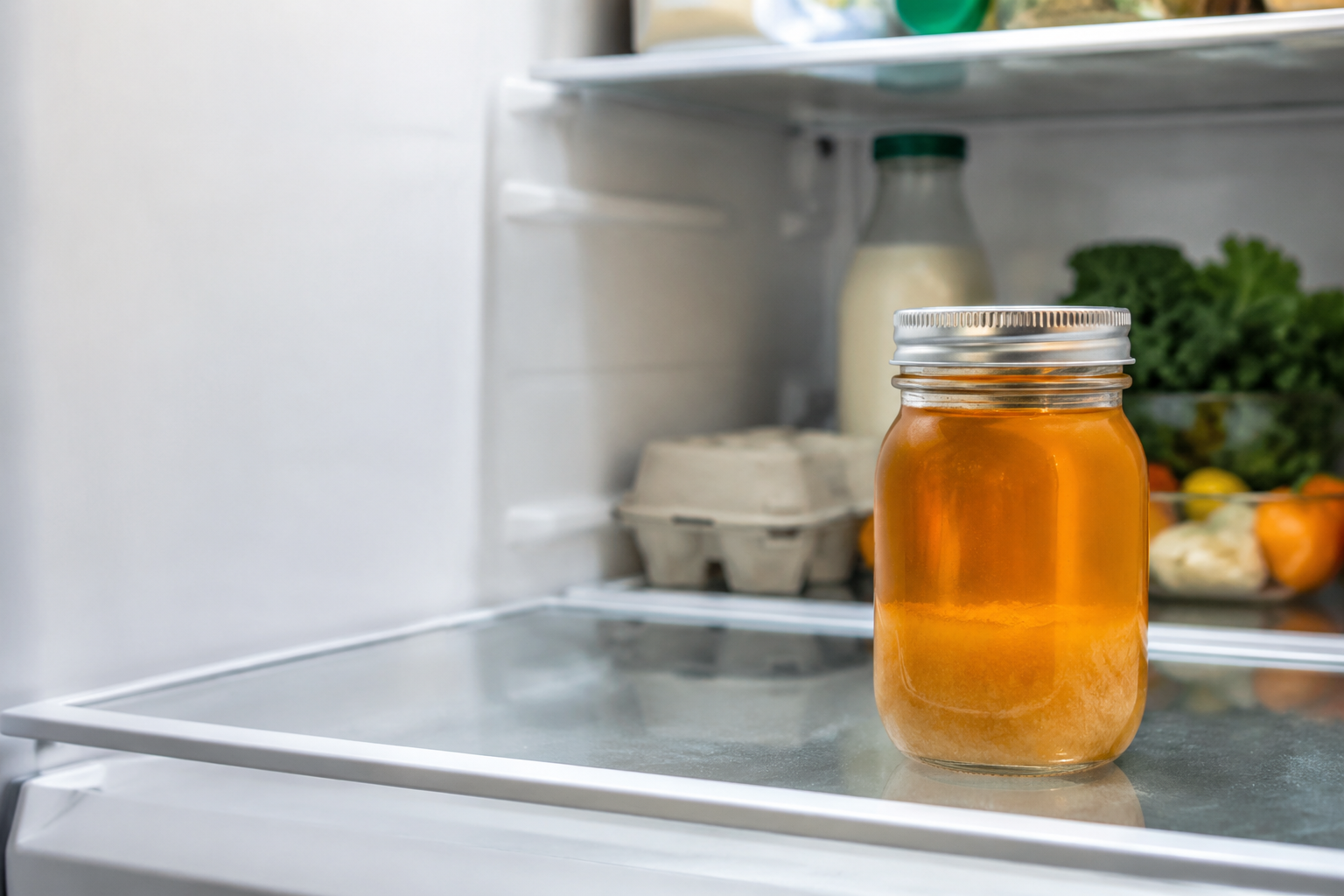
Does Honey Need to Be Refrigerated? What Happens in the Fridge
THE COMPLETE COLD-STORAGE GUIDE Does Honey Need to Be Refrigerated? What Happens in the Fridge Plain honey usually belongs in a dry
What bees eat: frequently asked questions
Do bees eat honey?
Yes. Honey is the colony’s concentrated carbohydrate reserve and fuels adult activity, heat production and food preparation when fresh nectar is unavailable.
Do bees eat pollen?
Young adult workers consume pollen-derived food extensively. Pollen supplies protein, lipids and micronutrients and supports brood-food production.
What is bee bread?
Bee bread is pollen packed into comb cells with added nectar or honey and bee secretions. It is stored and altered within the cell before use.
Do all bees make and eat honey?
No. Honey bees and some stingless bees store honey, but many solitary and bumble bee species rely mainly on nectar and pollen without building large long-term honey reserves.
Do bees drink water?
Yes. Honey bees collect water for cooling, dilution and maintaining conditions inside the nest.
Should people feed bees sugar water?
Routine public feeding is not recommended. Flowers and habitat are a better long-term resource. Managed colonies should be fed only for a defined need using appropriate beekeeping guidance.
Honey bee nutrition, foraging and colony-food sources
- U.S. Department of Agriculture, Agricultural Research Service. Honey bee health and nutrition.
- Food and Agriculture Organization of the United Nations. Beekeeping and sustainable livelihoods.
- USDA National Agricultural Library. Apiculture and beekeeping resources.
- National Library of Medicine, PubMed. Research literature on honey bee nutrition and pollen.
- USDA. Pollinators, forage and agricultural systems.
Bee diets vary by species, life stage, colony condition, season and local forage. This guide summarizes broad patterns rather than prescribing colony feeding.
Follow nectar and pollen all the way home
See how honey bees collect, transform and store the foods that power colony life.
Explore how bees make honey →