
Why Do Bees Make Honey? The Real Reason Bees Produce Honey
Honey bees make honey to store concentrated carbohydrate energy for times when fresh nectar is scarce or unavailable. The reserve powers flight, daily activity, brood care and heat production through nights, rain, drought and winter.
This guide explains why storing nectar as honey is such a successful survival strategy, how colony demand changes through the year and why most other bee species do not maintain the same large reserves.
Why do honey bees make honey?
Honey lets a colony save the energy of a temporary flower bloom for later. By concentrating nectar and sealing it in comb, bees create a stable food reserve that supports thousands of adults and developing brood when foraging is impossible.
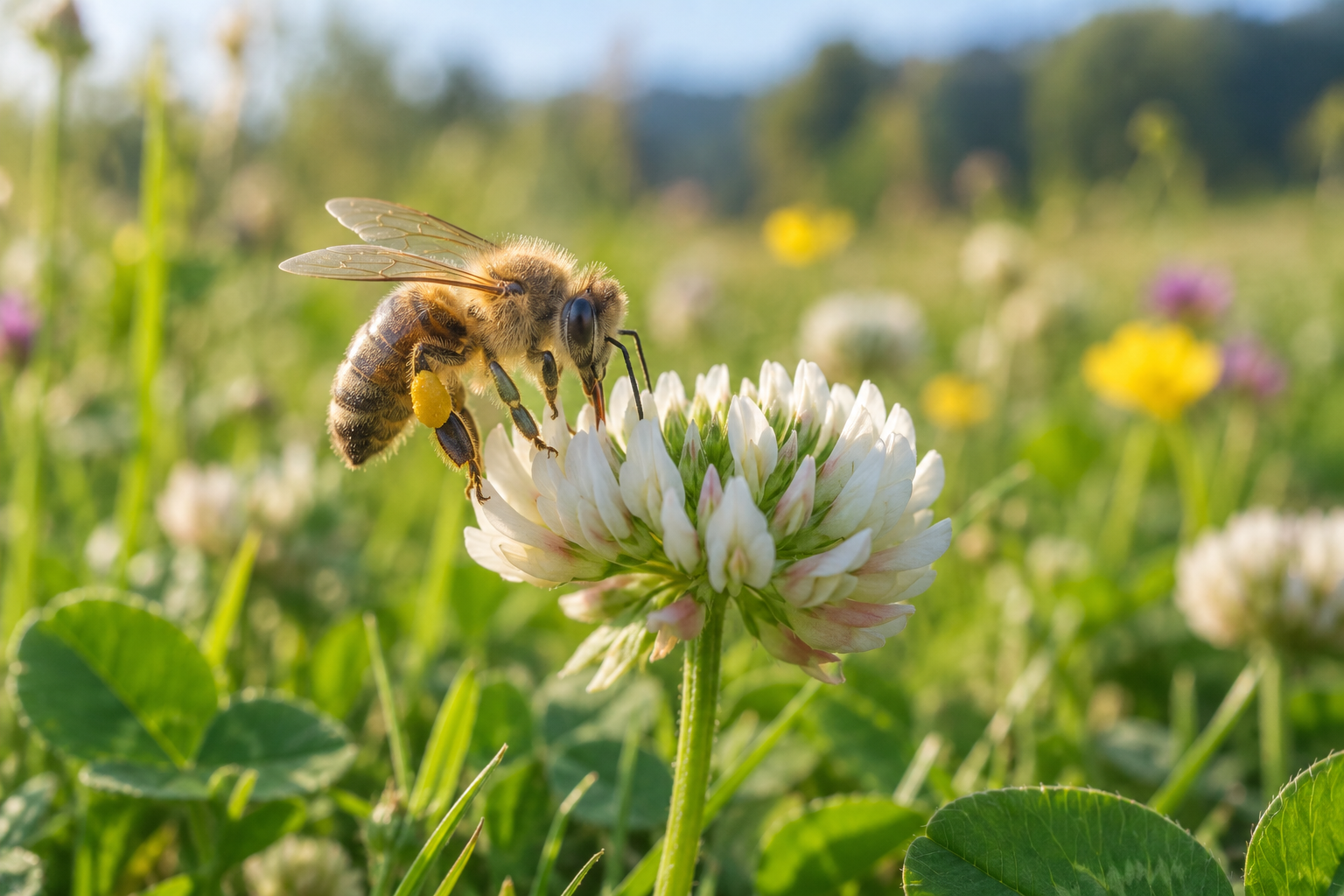
A worker honey bee gathers nectar when flowers are productive. The colony converts part of that short-lived flow into honey that can be used long after the bloom ends.
Why honey bees store energy—from summer flowers to winter survival
Contents
The real reason honey bees make honey
Flowers can be abundant for days or weeks and then disappear. A honey bee colony, however, contains a long-lived queen, developing brood and thousands of workers whose energy needs continue after a nectar flow ends.
Transforming watery nectar into concentrated honey allows the colony to store more usable energy in limited comb space while reducing the instability associated with high-moisture food.
Flowers are temporary
Bloom periods, weather and daylight restrict when bees can forage.
Honey keeps energy available
Concentrated stores bridge nights, storms and seasonal gaps.
Thousands share one reserve
A communal pantry supports adults, brood care and thermoregulation.
Why bees turn nectar into honey
Nectar is often mostly water. Carrying it home is only the beginning: workers add enzymes, exchange and manipulate droplets, spread liquid across cells and use nest airflow to remove water.
| Challenge | Colony response | Survival advantage |
|---|---|---|
| Nectar is dilute | Workers evaporate much of its water | More energy fits into the comb |
| Flowers are seasonal | Honey is stored and capped | Food remains available after bloom |
| Flight is energy-intensive | Adults consume carbohydrate-rich food | Workers can forage, ventilate and defend |
| Cold limits foraging | The cluster accesses nearby stores | Muscle activity generates heat |
| Brood demand changes | Shared stores support nurse activity | Colony growth can continue when intake fluctuates |
What honey powers inside the hive
Adult workers use honey and nectar primarily as carbohydrate fuel. Energy from these sugars supports flight muscles, walking, wax production, ventilation, guarding and the muscular activity that warms the brood nest.
Honey also enters the colony’s food-sharing network. Workers can dilute it, pass liquid food among adults and use it alongside pollen-derived nutrition in brood care. Honey supplies energy; pollen and bee bread supply much of the protein and lipids required for growth.
Foraging energy
Rapid wing movement demands continuous carbohydrate fuel.
Heating and cooling
Workers consume energy while shivering, fanning and moving water.
Wax and comb work
Building and maintaining the nest requires metabolic energy.
Nurse activity
Honey supplies energy while pollen-derived food provides growth nutrients.
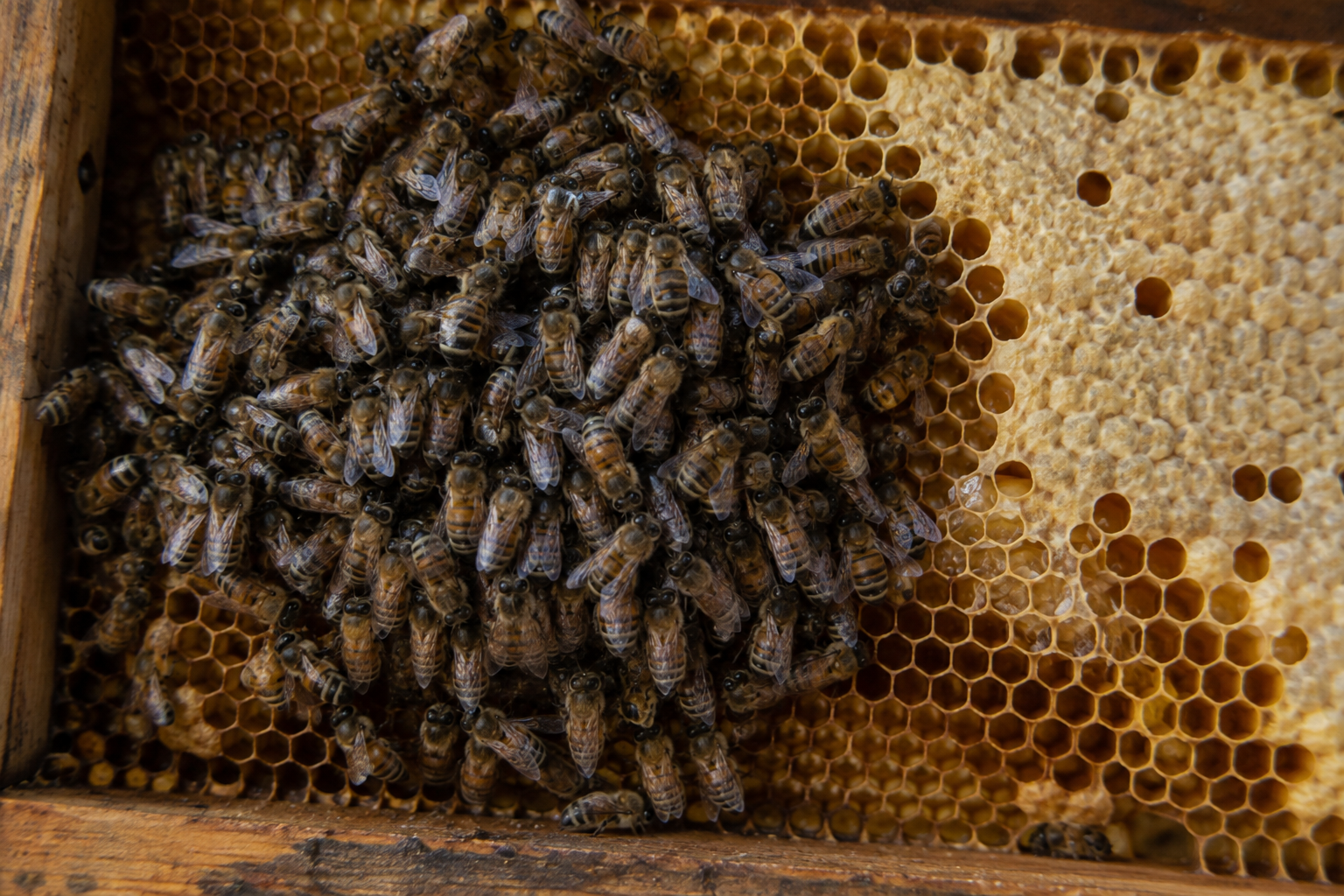
During cold weather, a honey bee colony forms a living cluster and gradually consumes nearby stores. Honey fuels the muscular activity that helps the cluster maintain a survivable temperature.
How honey demand changes through the year
A colony’s energy budget follows climate, forage and brood production rather than a fixed calendar.
| Period | Typical colony pattern | Role of honey |
|---|---|---|
| Spring buildup | Brood rearing and foraging expand | Old stores bridge gaps before strong nectar flows |
| Main nectar flow | Forager force and incoming nectar peak | Surplus is concentrated and stored |
| Summer dearth or drought | Flowers may decline despite warm weather | Stored energy supports daily activity |
| Autumn preparation | Brood often contracts in temperate regions | Accessible stores become critical |
| Winter cluster | Flight is limited and workers generate heat | Honey is the principal stored fuel |
How honey helps bees survive winter
Honey bees do not truly hibernate. In cold climates, workers form a cluster around the queen and any brood. Bees on the dense outer layer conserve heat while workers inside can activate their flight muscles without flying, releasing metabolic heat.
The cluster shifts across the comb as stores are consumed. A colony can have honey elsewhere in the hive yet starve if severe cold, poor store placement or a small cluster prevents bees from reaching it.
Why bees sometimes store more honey than they immediately need
A colony cannot predict the exact length of winter, the next drought or how many rainy days will prevent flight. Storing heavily during profitable nectar flows provides insurance against uncertain future conditions.
Surplus also supports reproduction. A swarm leaves with carried food but must rapidly build comb and establish a new nest, while the parent colony must continue raising workers and a replacement queen. Strong energy reserves improve both colonies’ options.
Do all bees make honey?
No. Honey bees are unusual because their perennial colonies overwinter as large groups and therefore require extensive communal food stores. Some stingless bees also produce and store honey, though in different nest structures.
- Bumble bees: maintain seasonal colonies and store smaller quantities of nectar-based food.
- Solitary bees: provision individual brood cells with pollen and nectar rather than operating a shared winter pantry.
- Stingless bees: many tropical species store honey in wax-resin pots.
- Wasps: some species collect sugary foods, but they do not generally create the large ripened honey stores associated with honey bees.
Related honey bee guides
Continue with the processes and foods behind colony survival.
How Do Bees Make Honey?
Follow nectar through collection, evaporation, storage and capping.
What Do Bees Eat?
Compare nectar, honey, pollen, bee bread and water.
What Is Honey?
Understand composition, varieties, processing and storage.
Latest honey bee biology and behavior guides
Continue with current Hive To Honey articles covering colony food, foraging, winter survival, swarming and honey production.
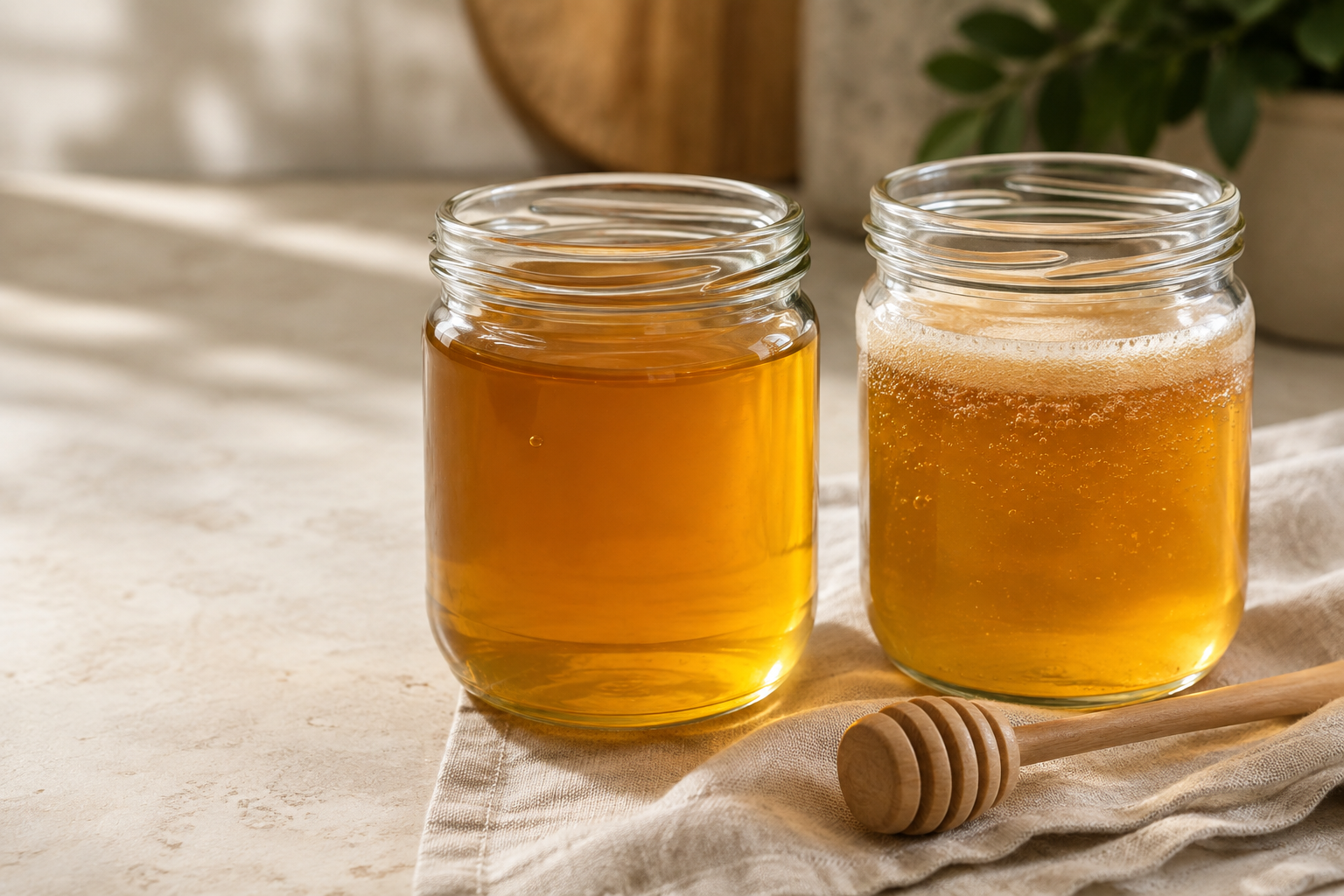
Why Is My Honey Foamy? Bubbles, Wax or Fermentation Explained
THE COMPLETE HONEY FOAM GUIDE Why Is My Honey Foamy? Bubbles, Wax or Fermentation Explained Foam on honey is not automatically spoilage.
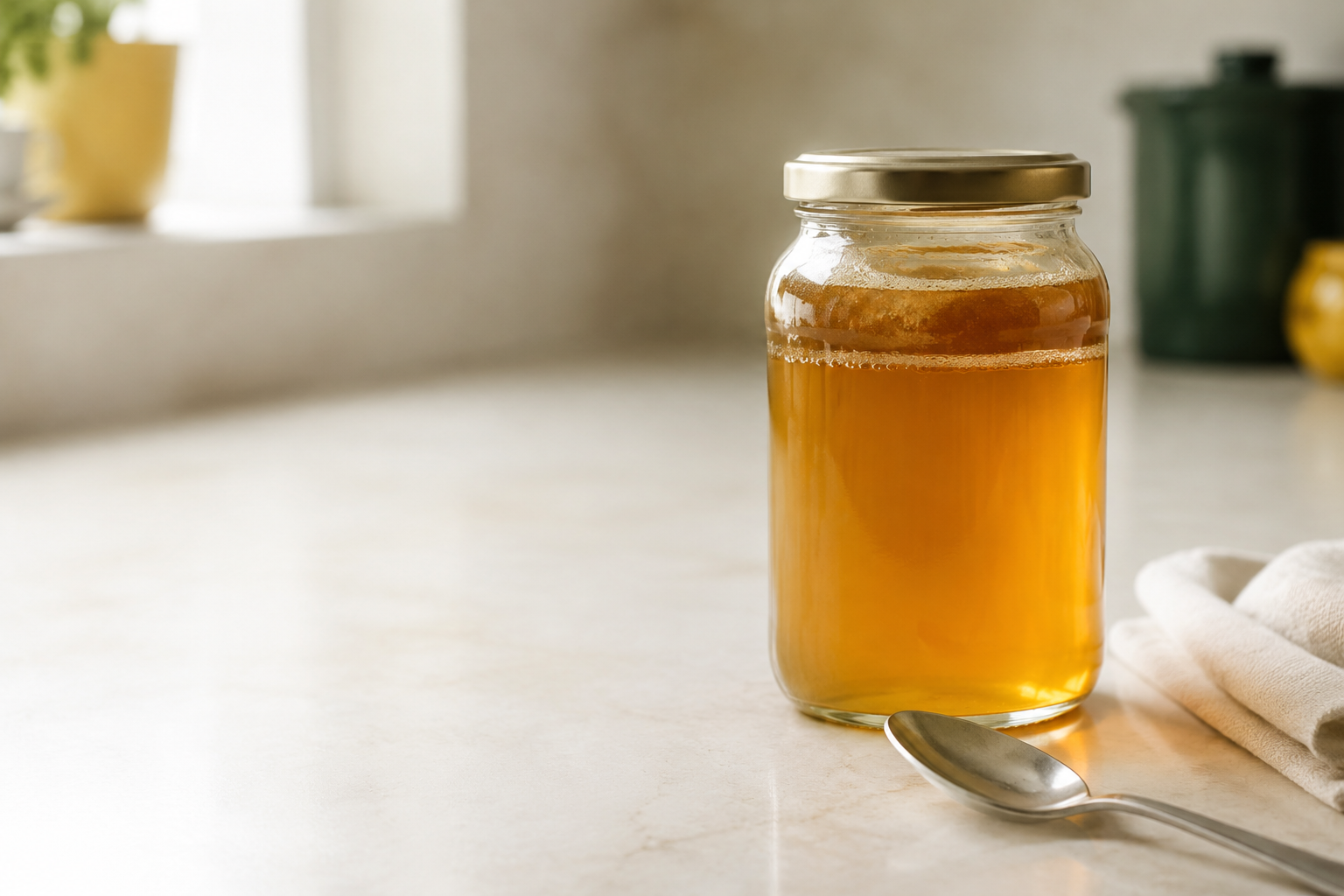
Why Does Honey Ferment? Signs, Causes and Prevention
THE COMPLETE HONEY FERMENTATION GUIDE Why Does Honey Ferment? Signs, Causes and Prevention Unintended honey fermentation usually begins when yeasts can use
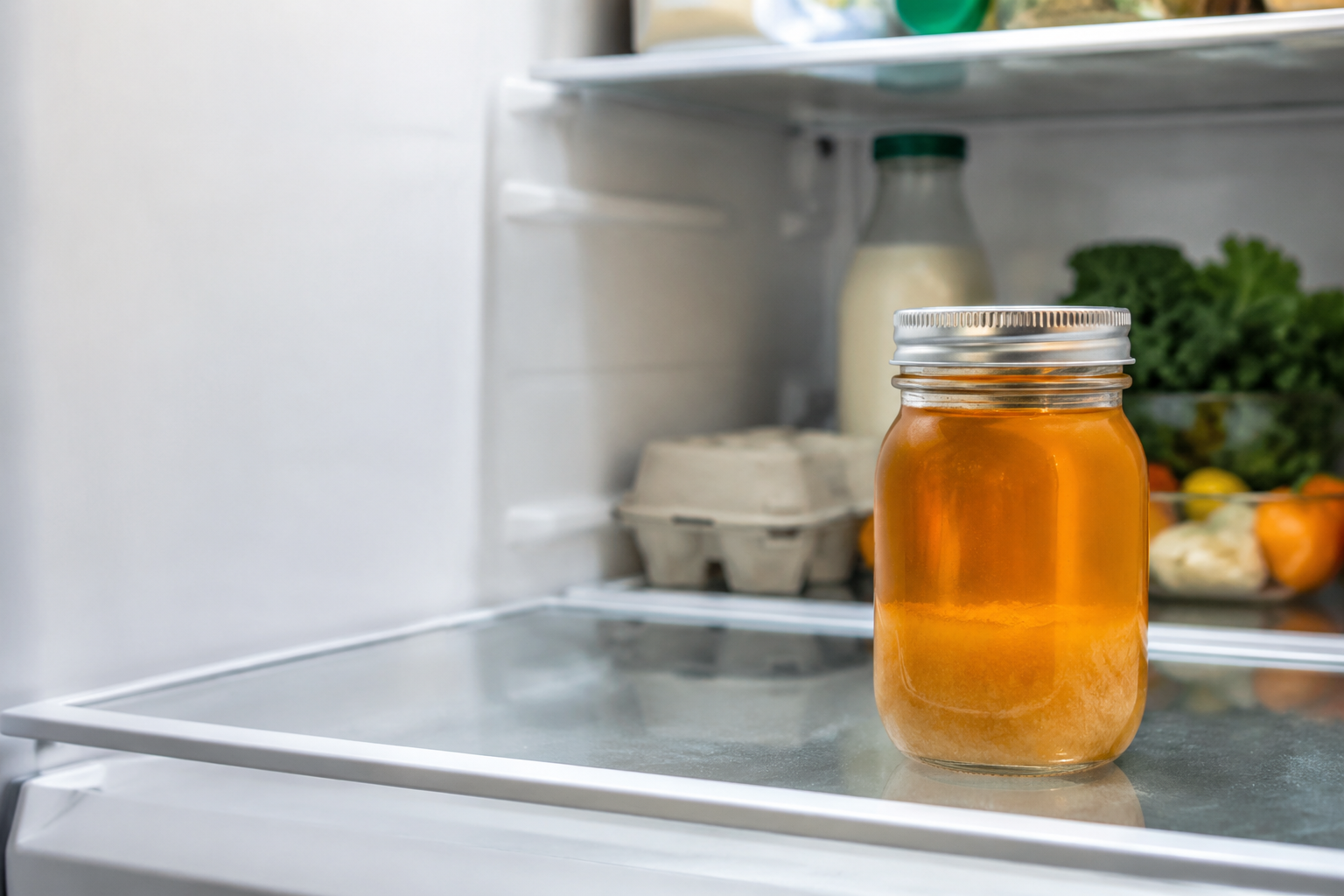
Does Honey Need to Be Refrigerated? What Happens in the Fridge
THE COMPLETE COLD-STORAGE GUIDE Does Honey Need to Be Refrigerated? What Happens in the Fridge Plain honey usually belongs in a dry
Why bees make honey: frequently asked questions
Do bees make honey for winter?
Winter is a major reason in temperate climates, but honey also bridges nights, storms, droughts and other periods when nectar is unavailable.
Do bees eat the honey they make?
Yes. Adult honey bees use honey as a concentrated carbohydrate fuel for activity and heat production.
Why not store nectar without changing it?
Nectar contains substantial water. Concentrating it saves comb space and creates a more stable reserve.
Do bees make honey for humans?
No. Honey is colony food. People harvest it through beekeeping, ideally only after the colony’s needs are protected.
Why do bees cap honey?
Wax cappings protect sufficiently ripened stores from environmental moisture and contamination.
Do all bees make honey?
No. Large long-term honey stores are characteristic of honey bees and some stingless bees, not most solitary bees or bumble bees.
Honey bee energetics, nutrition and overwintering sources
- U.S. Department of Agriculture, Agricultural Research Service. Honey bee health and nutrition resources.
- USDA National Agricultural Library. Apiculture and beekeeping resources.
- Food and Agriculture Organization of the United Nations. Beekeeping and sustainable livelihoods literature.
- National Library of Medicine, PubMed. Research on winter clustering and energetics.
- National Library of Medicine, PubMed. Research on nectar foraging and colony stores.
Colony behavior varies with honey bee subspecies, climate, forage, health, management and season.
See exactly how nectar becomes honey
Follow the workers, enzymes, airflow and comb storage behind every capped cell.
Explore how bees make honey →