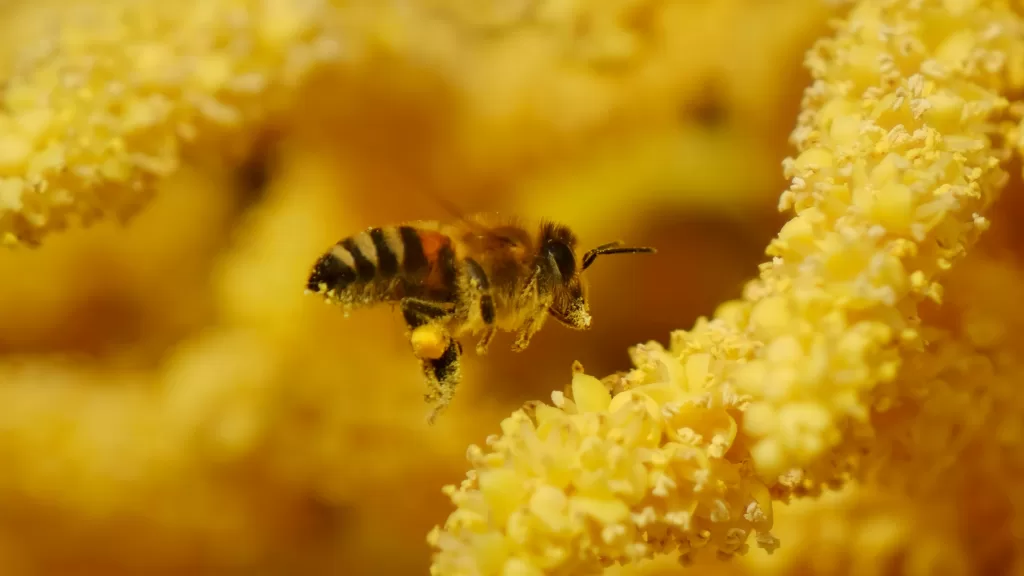
At first glance, bees appear to be constantly active. They fly from flower to flower collecting nectar, build honeycomb, care for larvae, and work tirelessly inside the hive. Because bees are always busy, many people wonder whether bees ever sleep.
The answer is yes — bees do sleep. Just like many other animals, bees need rest to function properly. Sleep plays an important role in memory, communication, navigation, and overall hive health.
Scientists studying honeybees have discovered that bees enter sleep-like states that closely resemble sleep in other animals. During these periods, their movement slows, their antennae droop, and their responsiveness decreases.
In this guide, we’ll explore:
Whether bees really sleep
How scientists discovered bee sleep
Where bees sleep inside the hive
Why sleep is important for bees
How sleep affects honey production and pollination
Understanding bee sleep helps reveal just how complex and sophisticated bee behavior truly is.
Do Bees Actually Sleep?
Yes, honeybees do sleep.
Researchers studying bee behavior have observed clear sleep patterns in worker bees. When bees sleep, their bodies become still, their antennae droop, and their responsiveness to external stimuli decreases.
These sleep periods allow bees to recover energy and maintain important brain functions.
Sleep in bees is not identical to human sleep, but it serves many of the same purposes. Just like people, bees need rest to maintain cognitive performance and memory.
Without adequate rest, bees become less effective at tasks such as navigation and communication.
How Scientists Discovered Bees Sleep
For many years, scientists assumed bees might not sleep because of their constant activity. However, detailed observations eventually revealed clear sleep-like behaviors.
Researchers studying honeybee colonies noticed that certain bees would become motionless for extended periods. During these periods:
These behaviors closely matched sleep states seen in other animals.
Further research confirmed that bees experience periods of inactivity that function as true sleep.
When Do Bees Sleep?
Unlike humans, bees do not sleep in a single long period.
Instead, bees take many short sleep periods throughout the day and night.
Worker bees typically rest for short intervals lasting from a few minutes to half an hour.
The timing of sleep often depends on the bee’s role within the hive.
Forager Bees
Bees that leave the hive to collect nectar usually rest at night after a day of foraging.
Nurse Bees
Younger worker bees that care for larvae often sleep in shorter intervals throughout the day.
These different sleep patterns help ensure the hive remains active around the clock.
Where Do Bees Sleep?
Bees sleep inside the hive in various locations depending on their role.
Worker bees often rest in:
Forager bees sometimes sleep inside honeycomb cells where they remain partially sheltered.
Because thousands of bees live inside a hive, sleep must occur in small pockets of calm activity rather than complete silence.
Why Sleep Is Important for Bees
Sleep plays several important roles in bee health and colony function.
Memory and Navigation
Bees rely heavily on memory to locate flowers and return to the hive.
Sleep helps bees consolidate spatial memories, allowing them to remember the location of nectar sources.
Without sleep, bees struggle to navigate efficiently.
Communication Through the Waggle Dance
Bees communicate food locations using a behavior known as the waggle dance.
Sleep deprivation can interfere with this communication. When tired bees perform the waggle dance, their directions become less accurate.
This can make it harder for other bees to find food sources.
Learning and Decision Making
Sleep also helps bees process new information about their environment.
Foraging bees learn which flowers provide the best nectar. Sleep helps strengthen these learned associations.
This improves foraging efficiency for the entire colony.
How Bee Sleep Affects Pollination
Because bees rely on memory and navigation when visiting flowers, sleep plays an indirect role in pollination.
Well-rested bees are better able to:
These abilities increase pollination success across ecosystems.
Healthy bee sleep patterns therefore contribute to the pollination of many crops and wild plants.
How Sleep Relates to Honey Production
Sleep also affects the hive’s ability to gather nectar and produce honey.
Worker bees must travel long distances to collect nectar, which later becomes honey through a complex process inside the hive.
If bees become sleep-deprived, their foraging efficiency drops, which can reduce nectar collection.
You can learn more about this transformation in our guide explaining how bees make honey.
The Role of Nectar and Pollen in Bee Energy
Bees depend on nectar and pollen for nutrition.
Nectar provides carbohydrates that fuel flight and hive activity, while pollen provides proteins and nutrients needed for growth.
These food sources are essential for maintaining the energy levels bees need for both work and rest cycles.
If you want to learn more about bee nutrition, see our guide explaining what bees eat.
Do Queen Bees Sleep?
Queen bees also experience rest periods, though their sleep patterns are less studied.
Because the queen spends most of her time laying eggs inside the hive, she is constantly surrounded by worker bees that care for her.
Her periods of rest are likely shorter and less noticeable compared to worker bees.
Do All Bees Sleep?
Most bee species appear to experience sleep-like states.
Solitary bees and bumblebees have also been observed resting during nighttime hours.
However, sleep patterns vary depending on species, environmental conditions, and activity levels.
The Complexity of Bee Behavior
The discovery that bees sleep is just one example of how complex bee behavior can be.
Bee colonies operate through intricate systems of communication, cooperation, and environmental awareness.
These systems allow thousands of bees to function as a coordinated superorganism.
Sleep helps maintain the mental performance needed for this complex social structure.
Despite their constant activity, bees do sleep. Their sleep helps maintain memory, communication, navigation, and overall colony health.
Short rest periods throughout the day and night allow bees to remain productive while still maintaining essential brain functions.
The discovery of bee sleep highlights the incredible complexity of honeybee behavior and reminds us that even the smallest creatures rely on rest to function effectively.
Understanding bee sleep provides yet another glimpse into the remarkable world inside a beehive.