Bee bread is one of the most important foods inside a beehive, yet many people have never heard of it. While honey is widely known as the sweet product bees make from nectar, bee bread plays an equally vital role in the survival and health of a bee colony.
Bee bread is created when bees collect pollen from flowers and store it inside honeycomb cells. Over time, the pollen mixes with nectar, enzymes, and beneficial microbes, undergoing a natural fermentation process that transforms it into a nutrient-rich food source.
This fermented pollen becomes bee bread, a substance that feeds developing larvae and provides essential nutrients to the colony.
In this guide, we’ll explore:
What bee bread is
How bees make bee bread
Why bee bread is important to the hive
How bee bread differs from pollen and honey
The role bee bread plays in bee nutrition
Understanding bee bread offers a deeper look into the remarkable systems that allow honeybee colonies to thrive.
What Exactly Is Bee Bread?
Bee bread is fermented pollen stored inside honeycomb cells.
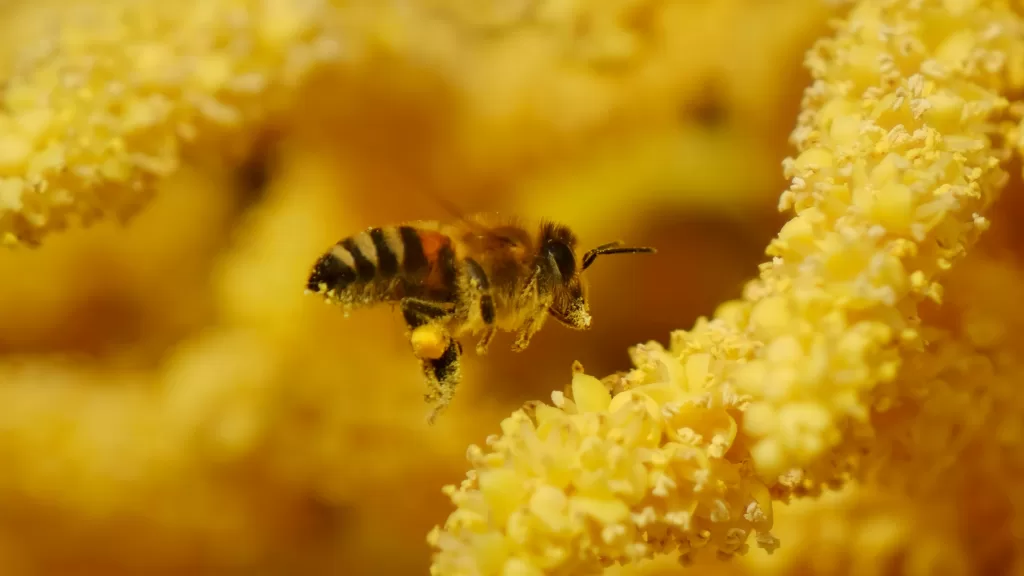
Worker bees collect pollen from flowers and transport it back to the hive using specialized structures on their hind legs called pollen baskets.
Once inside the hive, the pollen is packed tightly into honeycomb cells and mixed with small amounts of nectar and enzymes.
Microorganisms naturally present in the hive begin fermenting the pollen. This fermentation preserves the pollen and makes its nutrients easier for bees to digest.
The final result is bee bread — a stable, nutrient-dense food source used throughout the colony.
How Bees Make Bee Bread
The process of making bee bread involves several steps carried out by worker bees.
Step 1: Bees Collect Pollen From Flowers
Bees gather pollen while visiting flowers for nectar.
As bees move between flowers, pollen grains stick to the hairs covering their bodies. Bees then brush the pollen into compact pellets and store it in their pollen baskets.
Each pellet can contain pollen from multiple plants.
Step 2: Pollen Is Transported Back to the Hive
Once their pollen baskets are full, worker bees return to the hive.
Inside the hive, they deposit the pollen pellets into honeycomb cells located near the brood area.
These cells will later become storage areas for bee bread.
Step 3: Bees Pack the Pollen Into Cells
Worker bees pack the pollen tightly into the honeycomb using their heads.
Packing the pollen removes air pockets and creates ideal conditions for fermentation.
During this process, bees add small amounts of nectar and enzymes.
Step 4: Fermentation Begins
Once stored, microorganisms begin breaking down the pollen.
This fermentation process produces bee bread.
Fermentation has several important benefits:
This process turns raw pollen into a much more usable food source for bees.
Why Bee Bread Is Important for the Hive
Bee bread provides essential nutrients that honey alone cannot supply.
While honey is mainly a carbohydrate source, bee bread contains:
proteins
amino acids
fatty acids
vitamins
minerals
These nutrients are essential for:
larval development
immune system support
colony growth
worker bee health
Without bee bread, bee colonies would struggle to raise new generations of bees.
Bee Bread Feeds Developing Larvae
One of the most important uses of bee bread is feeding young bees.
Worker bees mix bee bread with honey and glandular secretions to create food for larvae.
This mixture provides the proteins and nutrients required for proper growth.
Young bees rely heavily on bee bread during their early stages of development.
Bee Bread vs Honey
Although both bee bread and honey are stored inside honeycomb, they serve different purposes.
| Feature | Bee Bread | Honey |
|---|
| Main ingredient | Pollen | Nectar |
| Nutritional role | Protein and nutrients | Energy source |
| Produced by | Fermentation of pollen | Transformation of nectar |
| Used for | Feeding larvae | Energy for adult bees |
Honey provides energy for bees, while bee bread provides the nutrients required for growth and development.
To understand how nectar becomes honey, see our guide explaining how bees make honey.
Bee Bread vs Raw Pollen
Bee bread is often confused with raw pollen, but the two are not identical.
Raw pollen is freshly collected from flowers, while bee bread is fermented pollen stored inside the hive.
Fermentation improves pollen in several ways:
increases nutrient availability
makes pollen easier to digest
preserves pollen for long-term storage
Because of this fermentation process, bee bread is considered more nutritionally complete for bees than raw pollen alone.
How Bee Bread Supports the Entire Colony
Bee bread plays a central role in the health of the colony.
A healthy hive typically maintains large stores of bee bread near brood cells so worker bees can easily feed developing larvae.
These nutrient stores help ensure the colony can grow quickly during the spring and summer months.
The availability of bee bread also influences how many larvae the queen can successfully raise.
The Relationship Between Bee Bread and Bee Diet
Bees rely on several different food sources inside the hive.
Their diet typically includes:
nectar
pollen
honey
bee bread
Each food plays a different role in maintaining colony health.
To learn more about bee nutrition, you can read our guide explaining what bees eat.
Can Humans Eat Bee Bread?
Bee bread is sometimes consumed by humans as a nutritional supplement.
Because it contains fermented pollen, bee bread is rich in nutrients such as:
proteins
antioxidants
vitamins
beneficial microbes
However, bee bread is far less commonly harvested than honey because it is more difficult to collect without disrupting the hive.
Bee bread is one of the most essential foods inside a beehive. Created through the fermentation of pollen, bee bread provides the proteins and nutrients needed for larval development and colony growth.
While honey supplies energy for adult bees, bee bread supports the nutritional foundation of the hive. Together, these foods allow bee colonies to survive, reproduce, and continue pollinating plants across ecosystems.
Understanding bee bread reveals yet another example of the incredible biological systems that exist within a honeybee colony.