How Far Do Bees Travel? Flight Distance, Foraging Range and Navigation
There is no single distance that every bee travels. Honey bees commonly work within a few kilometers of the colony when good forage is available, yet they can recruit nestmates to more distant resources when nearby flowers become scarce.
This evidence-led guide separates normal foraging, exceptional flights and experimental homing—and compares honey bees with bumble bees and solitary bees.
Honey bees often fly kilometers—but not without a reason
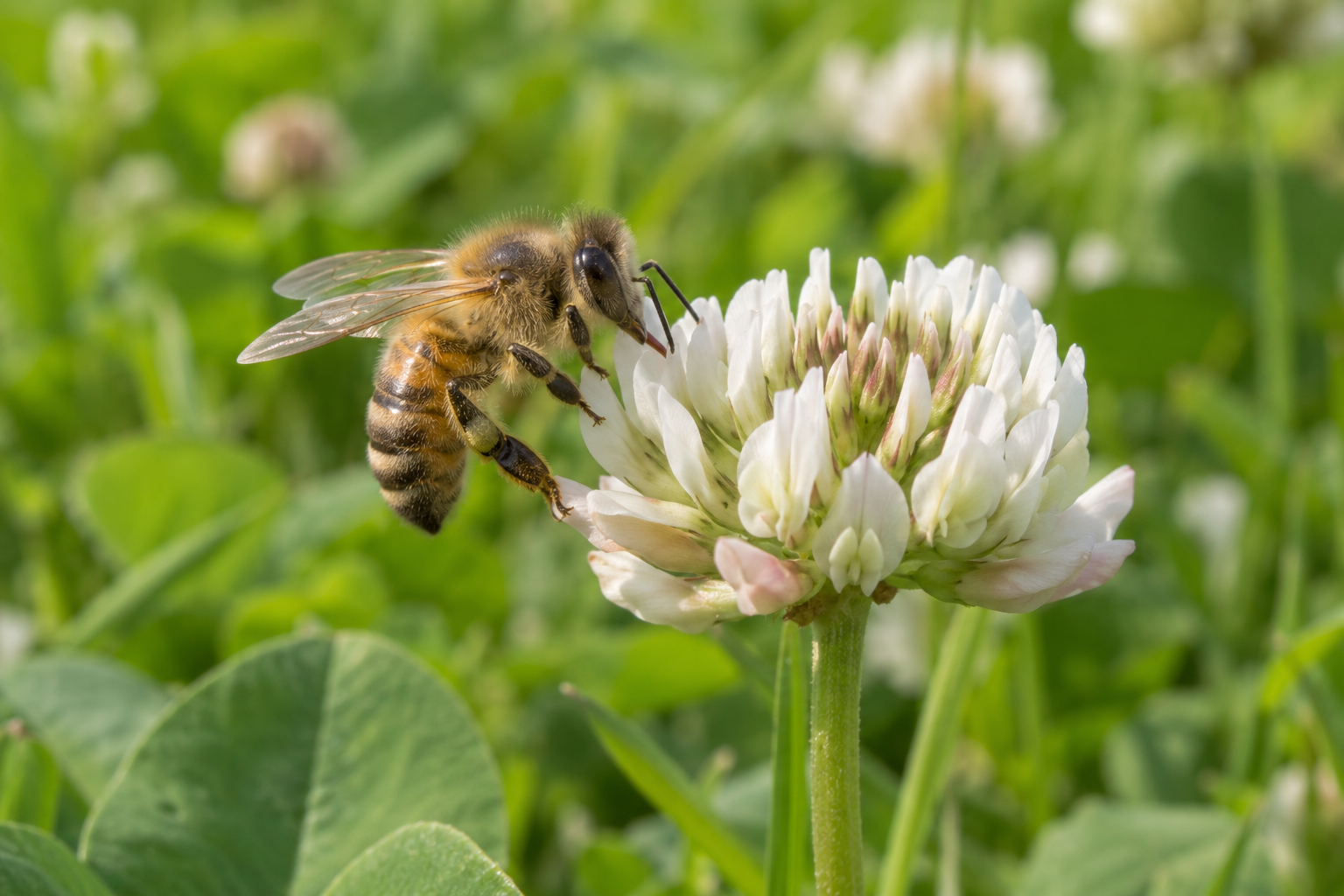
A worker honey bee approaches white clover with an apiary in the distant landscape. Bees generally favor profitable resources that reduce unnecessary flight, but their working range expands when nearby forage becomes scarce.
Bee travel—from nearby flowers to long-distance flights
Contents
How far will a honey bee normally travel?
Nearby first
Foragers continually balance energy spent flying against the value of nectar, pollen, water or resin they can bring home.
Farther when necessary
A rich, reliable patch close to the hive can be more profitable than equally good flowers several kilometers away.
Capability is not routine
As nearby forage declines, dances can recruit workers to more distant patches. Seasonal travel therefore reflects landscape difficulty.
Long homing or feeder-training distances demonstrate what bees can sometimes accomplish, but they should not be presented as the distance every bee flies each day.
Bee flight distances in context
| Measurement | Research example | What it means |
|---|---|---|
| Honey bee—spring mean | About 493 m / 0.31 mi | Abundant nearby spring forage reduced travel in one UK landscape. |
| Honey bee—summer mean | About 2,156 m / 1.34 mi | Workers ranged farther when the landscape became more challenging. |
| Honey bee—autumn mean | About 1,275 m / 0.79 mi | Mean dance distance fell again as seasonal resources changed. |
| Experimental honey bee homing | Maximums around 6–9.2 km reported in earlier studies | Homing capacity is not the same as everyday profitable foraging. |
| Radio-tracked bumble bees | Species examples reached roughly 1.3–2.5 km | Results depend on species, individual and study landscape. |
| Solitary bee studies | Often tens to hundreds of meters; larger species may go farther | Shorter typical ranges make nearby nesting and forage especially important. |
Why foraging distance changes
The same colony can use a different portion of the landscape from week to week. Flight range is an outcome of changing costs and rewards.
Resource abundance
Dense flowers near the nest can support short trips; scattered flowers force broader searching and longer routes.
Nectar quality
A concentrated, reliable nectar source can justify travel that a weak or rapidly depleted patch cannot.
Season
Bloom succession changes the map. The well-known spring-to-summer increase in dance distance reflects fewer rewarding options nearby.
Weather
Temperature, wind, rain and light limit when bees can fly and raise the energetic or navigational cost of a trip.
Competition
Other honey bee colonies, wild bees and many flower visitors draw from the same changing resource base.
Colony needs
Demand for nectar, pollen, water or propolis varies with brood rearing, heat, stores and colony condition.
Why bees generally favor efficient trips
Flight requires fuel: A worker powers her flight muscles with carbohydrates and must return enough value to justify the journey.
Loads change performance: Nectar, pollen and water add mass. A returning bee is not flying under the same conditions as an empty searching bee.
Time matters: Longer travel leaves less time for repeated collection and exposes the bee to weather, predators and navigation error.
Patch quality matters: A distant source may still win when it offers dense flowers, rich nectar or less competition.
How bees find their way home
Sun compass
Honey bees combine several sensory systems rather than following one invisible line between the hive and flowers.
Polarized light
The sun’s position helps provide directional information, and bees compensate for its movement through the day.
Landmarks
Patterns of polarized skylight can offer compass information even when parts of the sky are obscured.
Odor and local cues
Hedgerows, tree lines, buildings, field edges and other visual features help experienced foragers recognize routes and places.
Floral odors, hive scent and close-range cues help with final source recognition and locating the colony entrance.
How the waggle dance extends the colony’s reach
Direction
Successful honey bee foragers can advertise a profitable location on the comb. Recruits do not blindly follow the dancer through the air; they decode spatial information and search for the advertised odor and resource.
Distance
The angle of the waggle run relative to gravity corresponds to the direction of travel relative to the sun.
Honey bees, bumble bees and solitary bees
Honey bees
Flight distance cannot be transferred casually from one species to another. Body size, nest organization, food storage and recruitment behavior all matter.
Bumble bees
Colonies can deploy many foragers and use waggle dances to recruit nestmates. Workers often range hundreds of meters to a few kilometers and can sometimes travel farther.
Small solitary bees
Workers forage from a shared nest but do not use the honey bee waggle dance. Tracking studies show species- and landscape-dependent movement from local trips to kilometer-scale flights.
Large solitary bees
Many small solitary females must repeatedly commute between a nest and flowers to provision individual brood cells. Their realized distances are often comparatively short.
Larger species generally have greater potential ranges, but nest fidelity, floral specialization, habitat and individual decisions still shape realized travel.
How landscape and weather shape bee movement
Why bee travel distance matters
A bee that can cross a depleted landscape is not proof that the landscape is healthy. Long-distance capability may mask a shortage of nearby resources and impose additional energy and time costs.
For gardeners: Provide overlapping bloom from early spring through fall, avoid pesticide use on open flowers and include regionally appropriate plants.
For land managers: Protect nesting habitat as well as flowers. A forage patch beyond the practical range of a small solitary bee may not support reproduction.
For beekeepers: Evaluate resources across seasons, not only during one spectacular crop bloom. Water access, competition and forage gaps matter.
For conservation planning: Connected habitat and repeated flower patches can reduce the distance between nests and food.
“Honey cures strep throat”
False: suspected strep throat may need testing and appropriate treatment; honey cannot confirm or eradicate it.
“Antibacterial means antibiotic”
False: laboratory antimicrobial properties do not make swallowed honey equivalent to a prescribed antibiotic.
“Raw is always stronger”
Unproven: raw honey has not been established as superior for ordinary throat relief.
“More honey works faster”
False: larger or repeated servings add sugar and do not guarantee stronger relief.
“Boiling water activates it”
False: very hot liquid creates burn risk and is not required.
“Children of every age can have it”
Dangerous: honey is not safe for infants younger than one.
Common myths about bee travel
Travel facts become misleading when one result is turned into a rule for every bee, place and season.
What readers can do
Plant in groups: Dense patches are easier to find and more rewarding than isolated individual flowers.
Extend the season: Combine early-, middle- and late-blooming plants instead of creating one brief abundance.
Think small-bee scale: Add forage and nesting opportunities throughout the landscape rather than relying on one distant pollinator garden.
Keep flowers safe: Avoid spraying open blooms and follow all product directions and local restrictions.
Provide nesting diversity: Preserve some bare soil, hollow stems, dead wood and undisturbed habitat where appropriate.
Do not use honey bee range as a universal standard: Managed honey bees cannot represent the needs of thousands of wild bee species.
Why Is My Honey Foamy? Bubbles, Wax or Fermentation Explained
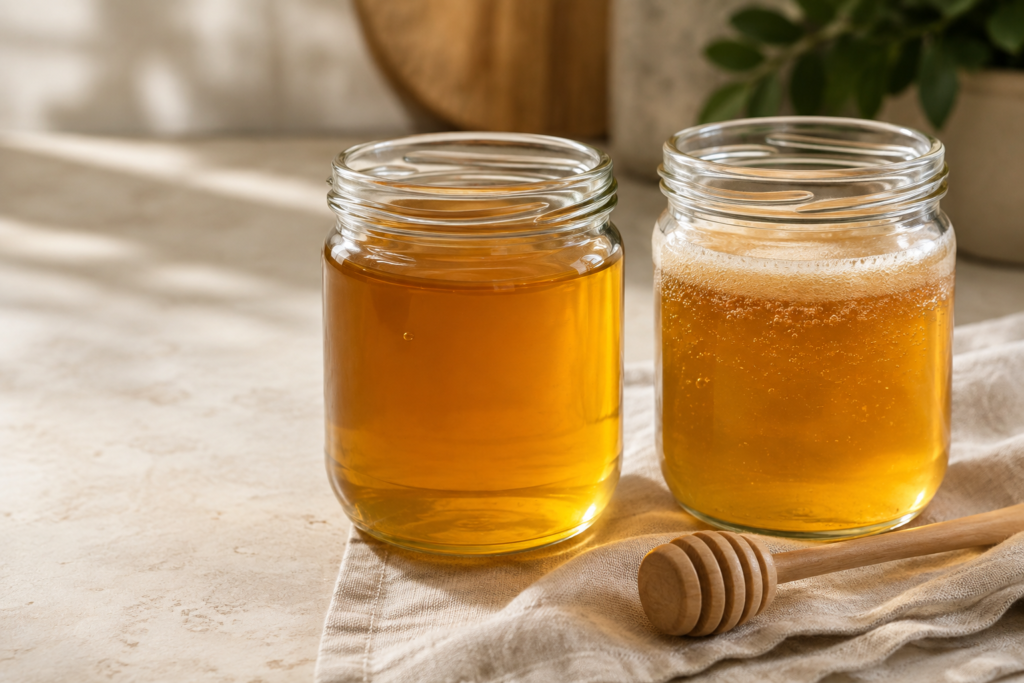
THE COMPLETE HONEY FOAM GUIDE Why Is My Honey Foamy? Bubbles, Wax or Fermentation Explained Foam on honey is not automatically spoilage.
Why Does Honey Ferment? Signs, Causes and Prevention
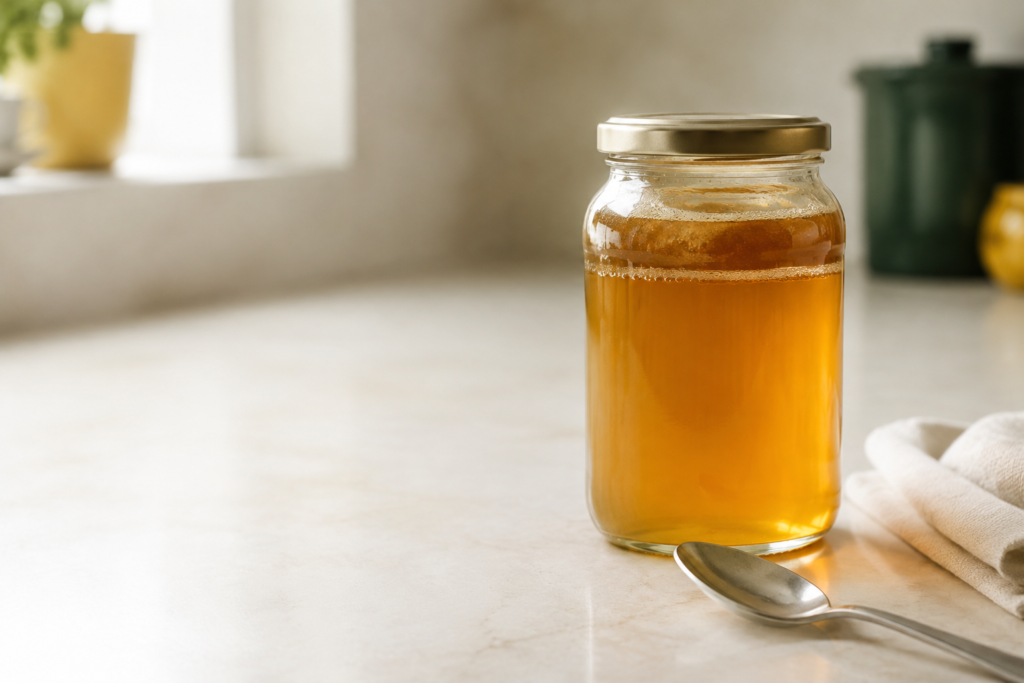
THE COMPLETE HONEY FERMENTATION GUIDE Why Does Honey Ferment? Signs, Causes and Prevention Unintended honey fermentation usually begins when yeasts can use
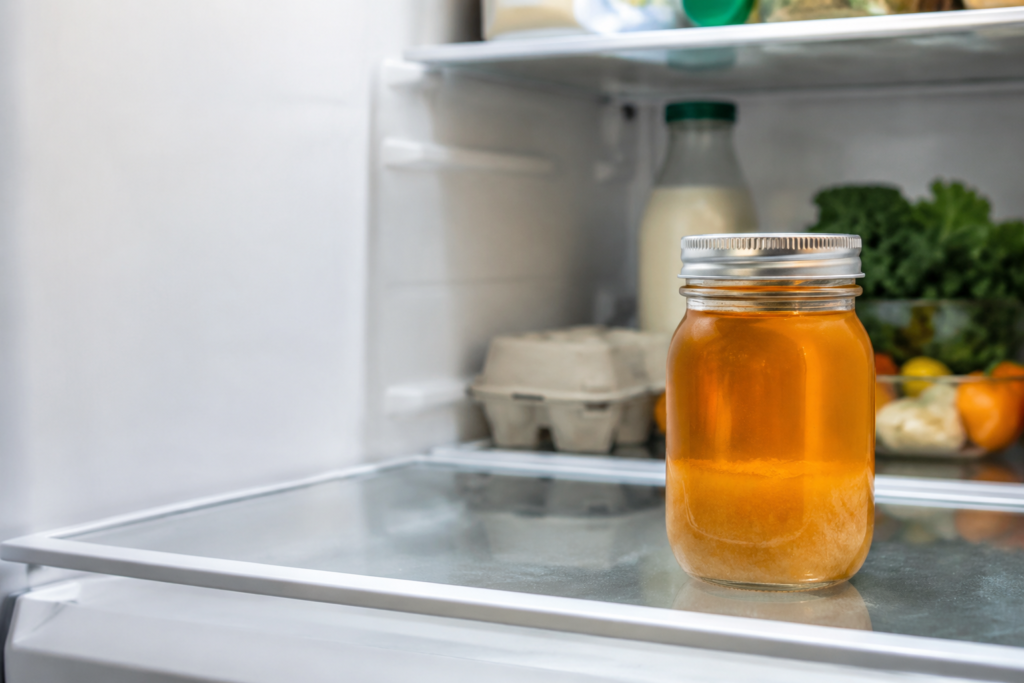
Does Honey Need to Be Refrigerated? What Happens in the Fridge
THE COMPLETE COLD-STORAGE GUIDE Does Honey Need to Be Refrigerated? What Happens in the Fridge Plain honey usually belongs in a dry
Relevant bee behavior and conservation guides
Continue with current Hive to Honey articles about navigation, communication, bee species, foraging, pollination and creating more connected habitat.
Frequently asked questions about bee travel
How far do honey bees travel from their hive?
They frequently forage from hundreds of meters to a few kilometers away. The same colony may fly much farther in one season than another as forage conditions change.
Can a honey bee fly five miles?
A honey bee may be capable of flights on that scale under some conditions, but five miles is not a universal normal daily distance. Maximum, homing and routine foraging distances should not be confused.
How far do bees fly in one day?
There is no single daily total. A forager may complete many round trips, and total distance depends on source location, number of trips, weather and time spent collecting.
Do bees visit flowers close to the hive?
Yes. Bees readily use profitable nearby resources. A rich patch close to home reduces travel cost, although competition and flower quality affect the choice.
How do honey bees find their way home?
They combine sun-compass information, polarized light, visual landmarks, odors and learned spatial memory.
Do bumble bees travel as far as honey bees?
Sometimes individual bumble bees make kilometer-scale flights, but range varies by species and study. They should not be assigned the same universal radius as honey bees.
How far do solitary bees travel?
Many studied solitary bees forage over tens to hundreds of meters, although larger species and exceptional individuals can go farther. Local nesting and forage remain especially important.
Why do bees fly farther in summer?
That pattern appears in some landscapes when abundant spring flowers fade and remaining resources become more scattered. It is not guaranteed in every climate or habitat.
How this bee-distance guide was researched
This guide distinguishes routine foraging, decoded dance distance, direct tracking, feeder experiments and displaced-bee homing. Those methods answer different questions and should not be combined into one universal radius.
- Couvillon, Schürch & Ratnieks (2014), PLOS ONE — seasonal honey bee foraging distances decoded from dances.
- Pahl et al. (2011), PLOS ONE — experimental large-scale honey bee homing.
- Hagen, Wikelski & Kissling (2011), PLOS ONE — bumble bee space use measured with radio telemetry.
- Gathmann & Tscharntke (2002), Journal of Animal Ecology — foraging ranges of solitary bees.
- Hofmann et al. (2020), Journal of Hymenoptera Research — observed distances in six solitary bee species.
- Kendall et al. (2022) — synthesis of potential and realized movement across bee species.
Explore bee movement, behavior and habitat
Travel ability is remarkable, but connected habitat is better than forcing every bee to fly to its limit. Continue with the guides that explain how bees navigate and how landscapes can support them.