
Different Forms of Honey: Liquid, Comb, Creamed, Crystallized and More
Honey reaches the table in more forms than a clear liquid jar. It may remain sealed in the comb, be extracted, drain naturally, be pressed, crystallize on its own or be deliberately creamed. This evidence-led guide separates physical form from floral variety and processing so you can compare labels, textures, uses and storage with confidence.
Three different questions belong on every label
- Form: Is the honey liquid, crystalline, creamed or still in its comb?
- Harvest method: Was it extracted, drained or pressed from the comb?
- Processing: Was it strained, finely filtered or heated?
- Source: Clover, acacia and manuka describe botanical origin—not physical form.
- A single jar can fit several descriptions, such as raw, extracted, unfiltered clover honey.
- No form of honey is safe for an infant younger than 12 months.
Compare the forms, methods and label terms
Form, source and processing are not interchangeable
Physical form
Botanical source
Handling history
How international standards describe honey styles
The Codex Standard for Honey recognizes honey in liquid or crystalline form, comb honey, and cut-comb or chunk honey. It also distinguishes honey obtained by draining, centrifuging or pressing broodless combs. These categories overlap: extracted honey can be liquid today and crystallized later.
For floral and geographic varieties, continue to our complete guide to types of honey.
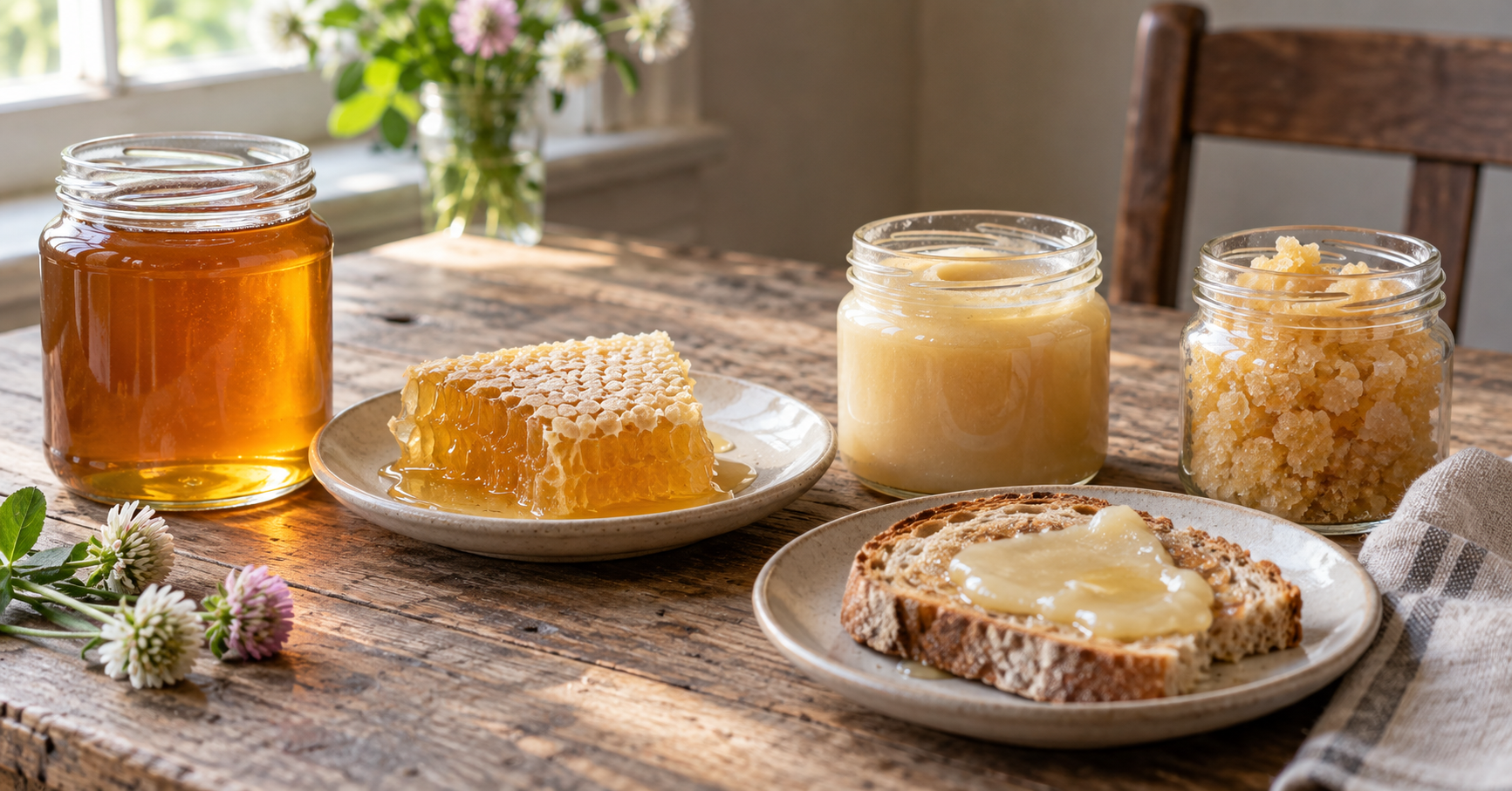
Liquid honey
Liquid honey has no dominant crystal network at the time you use it. It pours easily, dissolves quickly and works well in drinks, dressings, marinades and baking.
Why it stays liquid
What it does not prove
What happens next
Best uses
Buying clue
Storage clue
Comb, cut-comb and chunk honey
Comb presentation minimizes removal from the wax cells, but “comb” does not automatically establish floral source, organic status or every producer practice. Read the full comb honey guide.
Crystallized, granulated and creamed honey
Naturally crystallized honey
Creamed honey
Granulated or set honey
Not automatic spoilage
All creamed honey is crystallized, but not all crystallized honey is creamed. Compare our guides to crystallized honey and creamed honey.
Extracted, drained and pressed honey
Three recognized removal methods
Extracted honey is removed from uncapped broodless combs by centrifugal force. Drained honey flows from uncapped broodless combs largely by gravity. Pressed honey is obtained by pressing broodless combs, with or without moderate heat permitted by the applicable standard.
The removal method does not, by itself, tell you whether the finished honey was finely filtered, pasteurized or sold raw.
Why the distinction matters
Extraction can preserve reusable comb; pressing may sacrifice more comb and can carry more fine wax or pollen unless later clarified. Draining is gentle but slower. None is a universal guarantee of better flavor or nutrition.
Ask producers for concrete details—temperatures, filtration and origin—rather than inferring an entire process from one marketing term.
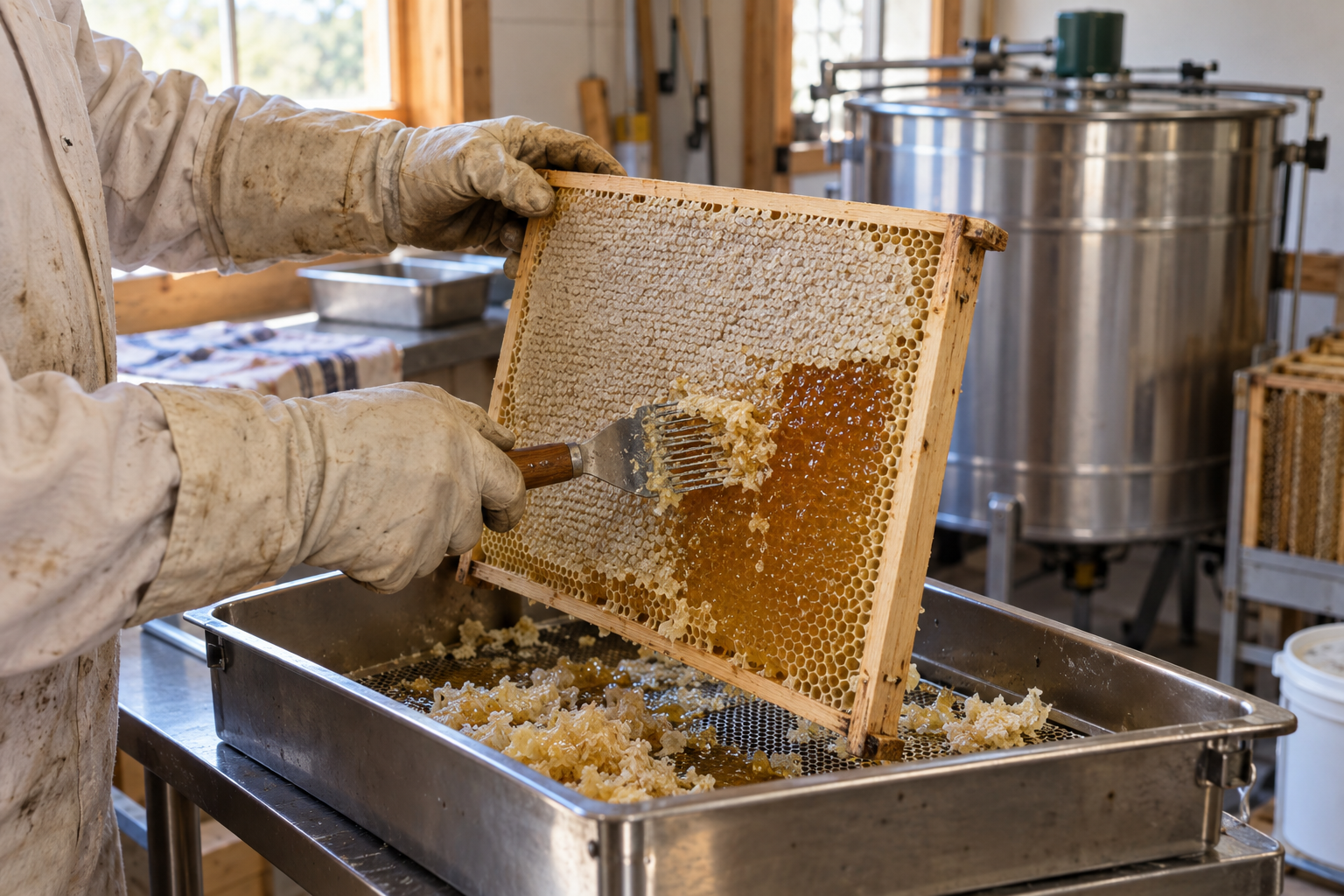
Raw, unfiltered, filtered and pasteurized honey
Raw
Unfiltered
Filtered
Pasteurized
Explore the distinctions in our guides to raw honey, filtered versus unfiltered honey and pasteurized honey.
Honey forms comparison chart
How to choose, use and store each form
Choose texture for the intended use, then verify source and handling separately. No kitchen test reliably proves authenticity.
Read the complete name
Check ingredients
Inspect the seal
Expect natural variation
Store it dry
Know discard signs
Storage and practical troubleshooting
Should every form be refrigerated?
Usually no. A stable, cool room temperature is suitable for most commercial honey. Refrigeration can make liquid honey crystallize faster and creamed honey firmer. Follow specific label directions.
Can crystallized honey become liquid again?
Yes. Place the closed container in gently warm water and stir if appropriate. Avoid scorching or repeated strong heating, which can diminish aroma and recreate coarse crystals later.
How should comb honey be stored?
Keep it well sealed, dry and protected from heat, sunlight, pests and strong odors. Follow the producer’s best-before and storage information.
What causes a liquid layer?
Partial crystallization or temperature cycling can produce separation. Examine the seal and aroma; a clean liquid layer alone is not the same as fermentation.
Is foam always fermentation?
No. Air bubbles, wax particles and pollen can collect at the surface. Persistent expanding foam with pressure or a sour or alcoholic odor is more concerning.
Who must avoid honey?
Never give any form of honey, including cooked foods containing honey, to an infant younger than 12 months because of infant botulism risk.
Relevant honey form and processing guides
Continue with current articles about crystallization, raw and pasteurized honey, storage, filtration, comb honey and responsible buying.
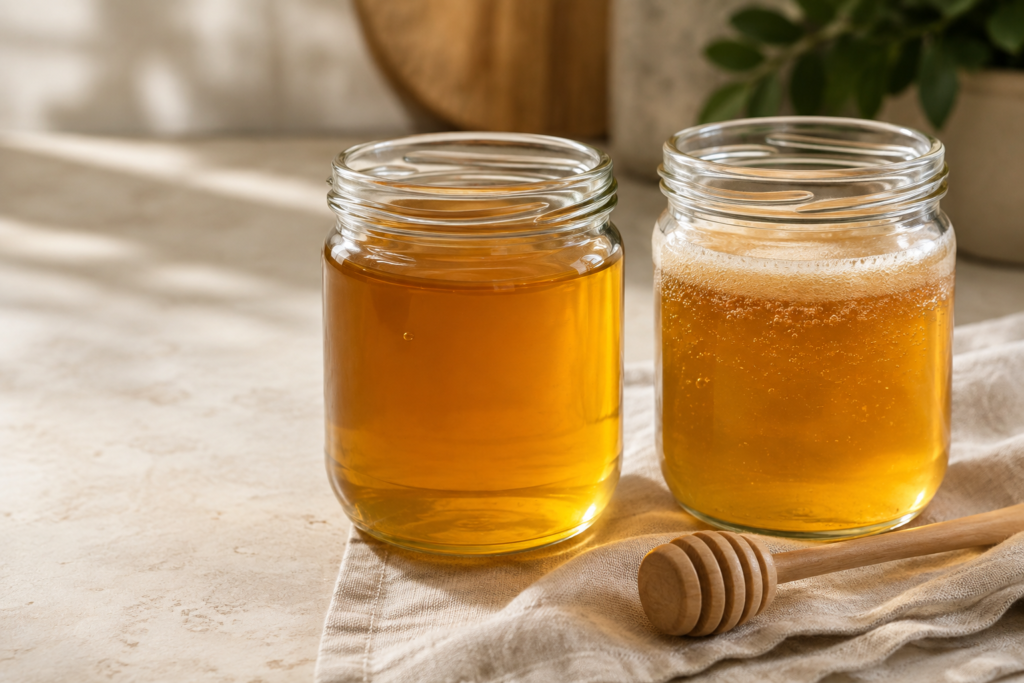
Why Is My Honey Foamy? Bubbles, Wax or Fermentation Explained
THE COMPLETE HONEY FOAM GUIDE Why Is My Honey Foamy? Bubbles, Wax or Fermentation Explained Foam on honey is not automatically spoilage.
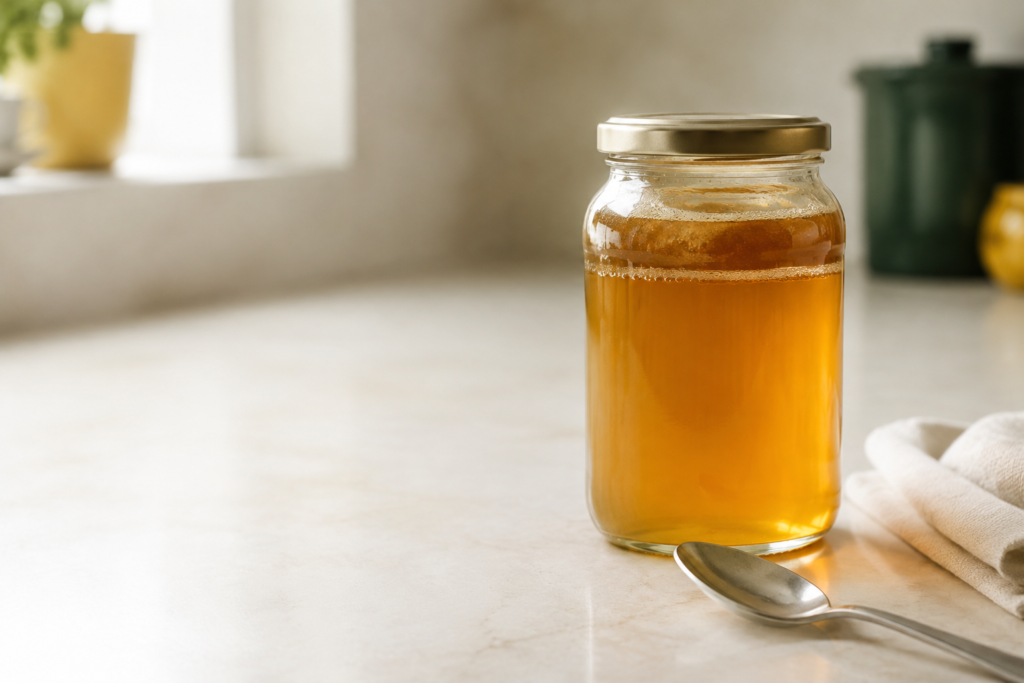
Why Does Honey Ferment? Signs, Causes and Prevention
THE COMPLETE HONEY FERMENTATION GUIDE Why Does Honey Ferment? Signs, Causes and Prevention Unintended honey fermentation usually begins when yeasts can use
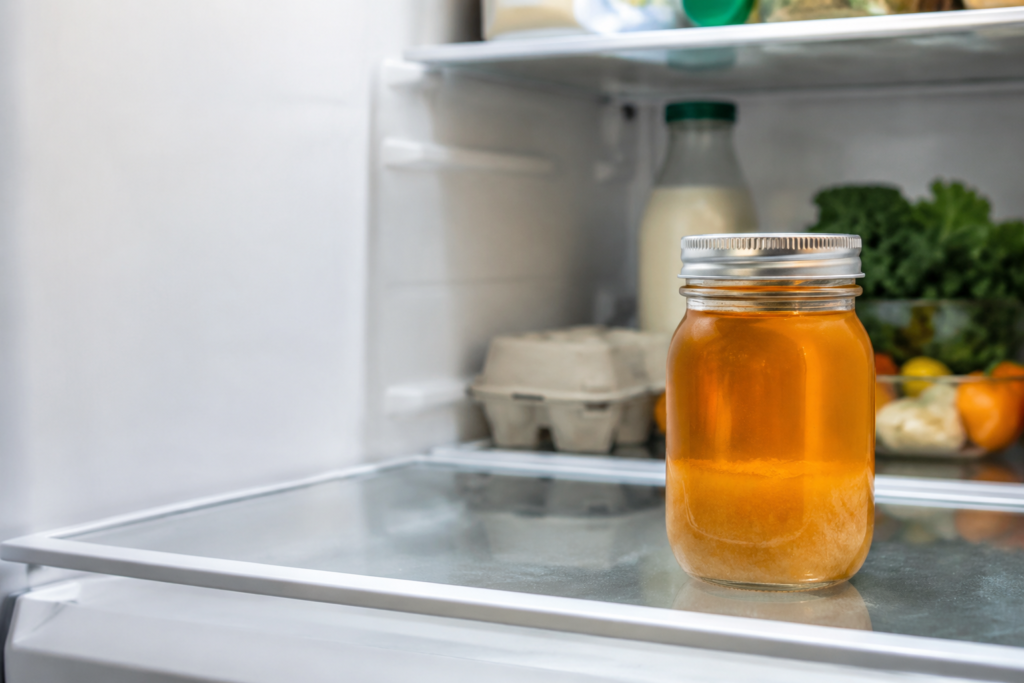
Does Honey Need to Be Refrigerated? What Happens in the Fridge
THE COMPLETE COLD-STORAGE GUIDE Does Honey Need to Be Refrigerated? What Happens in the Fridge Plain honey usually belongs in a dry
Frequently asked questions
What are the main forms of honey?
Common consumer forms include liquid, crystalline or granulated, creamed or soft-set, comb, cut-comb and chunk honey. Extracted, drained and pressed describe how honey was removed from comb.
Is liquid honey raw?
Not necessarily. Liquid describes physical state; raw describes handling. Liquid honey may be raw, gently warmed or pasteurized.
Is crystallized honey spoiled?
No. Crystallization is a normal physical change. Spoilage concerns include mold, contamination, pressure, persistent expanding foam or a sour or alcoholic odor.
Does creamed honey contain dairy?
Plain creamed honey normally does not. “Creamed” describes the fine crystal texture, but always verify the ingredient list.
Can you eat honeycomb wax?
Yes, clean food-grade honeycomb wax is edible, although some people chew it and discard the remaining wax.
Is unfiltered honey the same as raw honey?
No. Filtration and heat treatment are different processing questions, and the word “raw” is not defined identically everywhere.
Which form of honey is healthiest?
No physical form is universally healthiest. All honey is sugar-rich; composition varies with source and handling, while texture mainly changes how it is used.
Can pasteurized honey be comb honey?
Comb honey is normally sold in its wax cells, while pasteurization is generally applied to honey removed for liquid packaging. Always rely on the actual label and producer information.
How this honey-forms guide was researched
This guide prioritizes international food standards, technical apiculture material and public-health guidance. Terms can vary by jurisdiction, so local labeling rules and the producer’s specific process still matter.
- Codex Alimentarius: Standard for Honey—styles and processing designations
- FAO: controlled crystallization and honey processing equipment
- FAO: composition and physical characteristics of honey
- Canadian Food Inspection Agency: honey labeling requirements
- CDC: honey before 12 months
Explore the full honey library
Compare global floral varieties, understand comb presentation and learn how stable storage preserves every form of honey.