
Honey vs Sugar: Nutrition, Blood Sugar, Taste and Everyday Use
Honey and table sugar both sweeten food and both count as free sugars. They differ in chemical form, water content, flavor, density and recipe behavior—but neither becomes consequence-free because of how it is marketed.
This practical guide compares calories, carbohydrates, glycemic response, trace compounds, baking performance and realistic serving sizes.
Different ingredients—same need for moderation
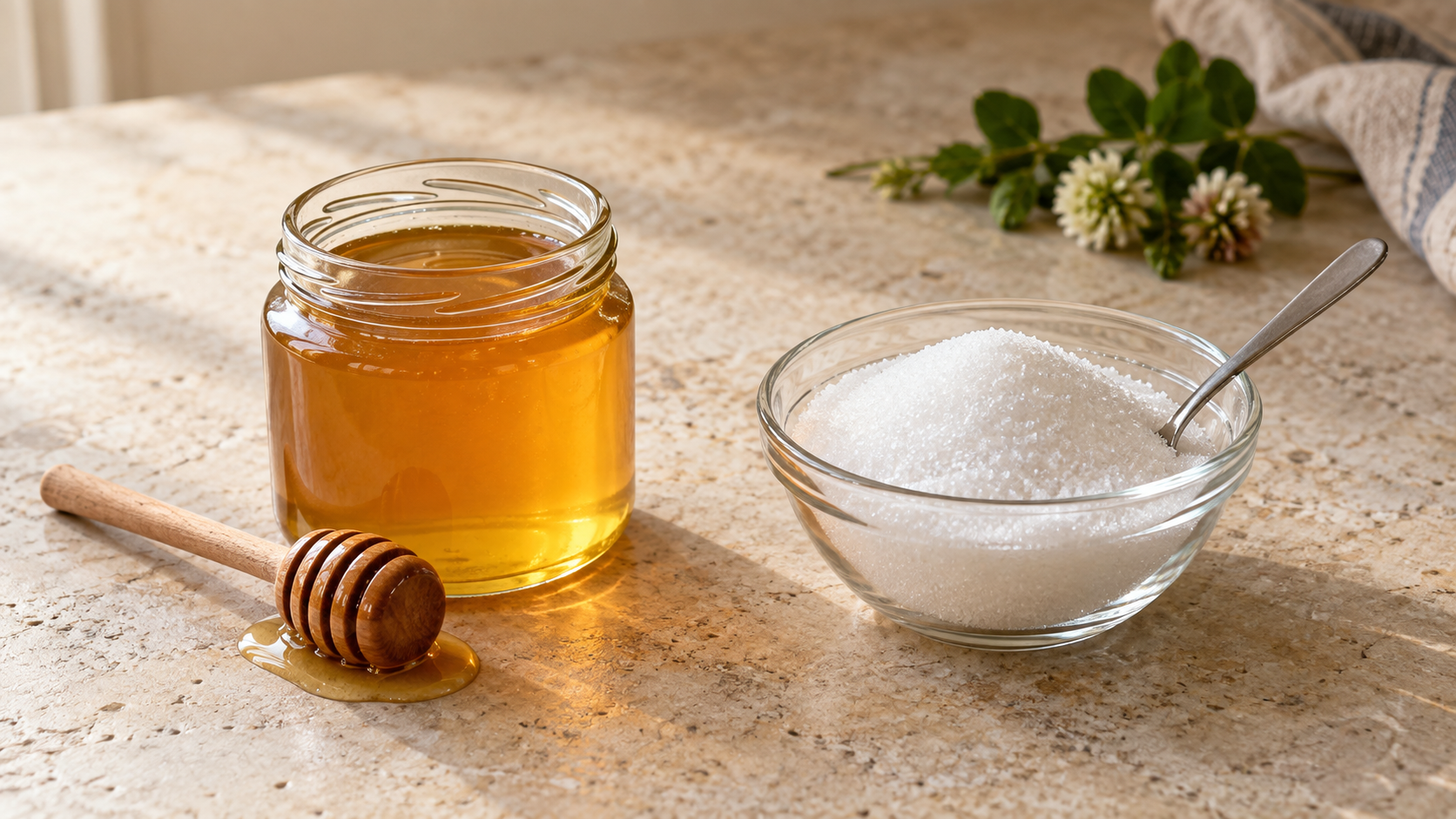
Honey and granulated sugar differ in composition, flavor and kitchen performance, but both contribute free sugars. Compare realistic portions rather than relying on “natural” or “refined” labels alone.
Honey vs sugar—what actually changes?
Contents
The practical verdict
Both are free sugars
There is no universal winner. The better choice depends on the recipe, the portion and why sweetness is being added.
Honey brings flavor
Public-health definitions include sugars naturally present in honey alongside sugars added to foods and drinks.
Sugar is predictable
Floral origin can add aroma, acidity and character, sometimes making a smaller quantity satisfying.
Granulated sucrose offers neutral sweetness, dry bulk and consistent structure in baking.
Honey vs sugar at a glance
| Feature | Honey | Granulated sugar |
|---|---|---|
| Main carbohydrates | Mostly fructose and glucose | Almost entirely sucrose |
| Water content | Typically around one-sixth to one-fifth | Very little |
| Energy per 100 g | About 304 calories | About 387 calories |
| Typical tablespoon | About 21 g and 64 calories | About 12.5 g and 49 calories |
| Flavor | Botanical, variable and aromatic | Clean and neutral |
| Effect in recipes | Adds moisture, acidity and browning | Adds dry bulk, structure and predictable crystallization |
Why Spoon Comparisons Can Be Confusing
Honey contains water and therefore provides fewer calories than granulated sugar when compared by equal weight. However, a tablespoon of dense liquid honey weighs more than a tablespoon of granulated sugar. For accurate nutritional or recipe comparisons, compare equal weights in grams rather than equal spoonfuls.
What honey and table sugar contain
Origin and processing describe important qualities, but they do not erase the underlying carbohydrate.
Honey
A concentrated mixture dominated by fructose and glucose, plus water, acids, aroma compounds, enzymes and small amounts of other constituents that vary by source.
Table sugar
Nearly pure sucrose, a disaccharide produced primarily from sugar cane or sugar beet and purified into dry crystals.
Glucose
A monosaccharide used throughout the body and an important contributor to blood-glucose response.
Fructose
A monosaccharide often present at a higher proportion in honey; its relative amount influences sweetness and crystallization.
Sucrose
One glucose joined to one fructose. Digestion splits that bond before absorption.
Water and minor compounds
Honey’s water and minor compounds influence texture, acidity, aroma and storage behavior, but modest servings are not major vitamin or mineral sources.
Calories, carbohydrates and nutrients
By weight: Honey generally has fewer calories per 100 grams than dry sugar because it contains water.
By tablespoon: Honey usually has more calories because the spoon holds a heavier mass of liquid.
Micronutrients: Honey may contain trace minerals and plant-derived compounds, but typical culinary portions supply small amounts.
Carbohydrate: Both ingredients are overwhelmingly carbohydrate and both contribute free sugars.
Blood sugar and glycemic response
Why honey varies
Both honey and table sugar can raise blood glucose. Honey does not have one universal glycemic index.
Why the meal matters
Floral source, fructose-to-glucose ratio, processing and serving size can change the measured response.
What research suggests
Protein, fat, fiber, preparation and the rest of the meal alter how quickly carbohydrate is absorbed.
Practical guidance
Small trials report variation among honey types, while controlled comparison of substantial carbohydrate doses from honey, sucrose and high-fructose corn syrup found broadly similar effects on several metabolic measures.
Anyone following a diabetes care plan should count honey as carbohydrate and use individualized advice from a qualified clinician or registered dietitian.
Is honey healthier than sugar?
Free-sugar guidance
Honey contains constituents that purified white sugar does not, but this difference should not be inflated into a blanket health claim. At culinary portions, total free-sugar exposure remains the more important issue.
Dental health
The World Health Organization includes honey in its definition of free sugars and recommends keeping free sugars below 10% of total energy, with a further reduction toward 5% offering additional benefits.
Honey vs sugar in cooking and baking
Tea, yogurt and oatmeal
Honey adds water, acidity, aroma, color and humectancy. Granulated sugar adds dry bulk and contributes to aeration, crispness, crystallization and structure.
Glazes and marinades
Honey dissolves easily and adds floral character; sugar provides neutral sweetness without changing flavor.
Cookies and cakes
Honey provides adhesion, browning and rounded flavor. Watch heat carefully because sugar-rich coatings can scorch.
Candy and preserves
Honey often creates a softer, moister result. Sugar is usually more reliable for creaming with butter, cookie spread, crispness and cake structure.
Use tested recipes. Sweetener concentration and crystallization affect safety and texture, especially in preserves and confectionery.
How to replace sugar with honey
Common honey vs sugar myths
Neither ingredient needs to be demonized, but both are commonly misrepresented.
“Natural means unlimited”
False: natural origin does not remove calories, carbohydrate or dental exposure.
“Honey is sugar-free”
False: honey is predominantly sugars, especially glucose and fructose.
“Honey never raises glucose”
False: honey can raise blood glucose, and responses vary by honey and individual.
“Trace minerals make it nutrient-dense”
Misleading: useful nutrients occur only in small amounts at ordinary servings.
“One tablespoon is an equal comparison”
False: a tablespoon of honey weighs considerably more than a tablespoon of granulated sugar.
“Honey works in every recipe”
False: liquid, acidity, browning and structure must be considered when substituting.
Which sweetener fits the job?
Choose honey when botanical flavor, aroma, moisture or a glossy glaze adds value.
Choose granulated sugar when you need neutral sweetness, precise dry measurement, creaming, crisp texture or predictable confectionery behavior.
Choose less of either when sweetness is habitual rather than important to the dish.
Compare by grams when calories or carbohydrate must be precise.
For diabetes, count honey as carbohydrate and follow individualized professional guidance.
For infants, never use honey before 12 months because of infant-botulism risk.
Relevant honey, nutrition and processing guides
Continue with current Hive to Honey articles about raw honey, processing, authenticity, honey varieties, nutrition and responsible everyday use.
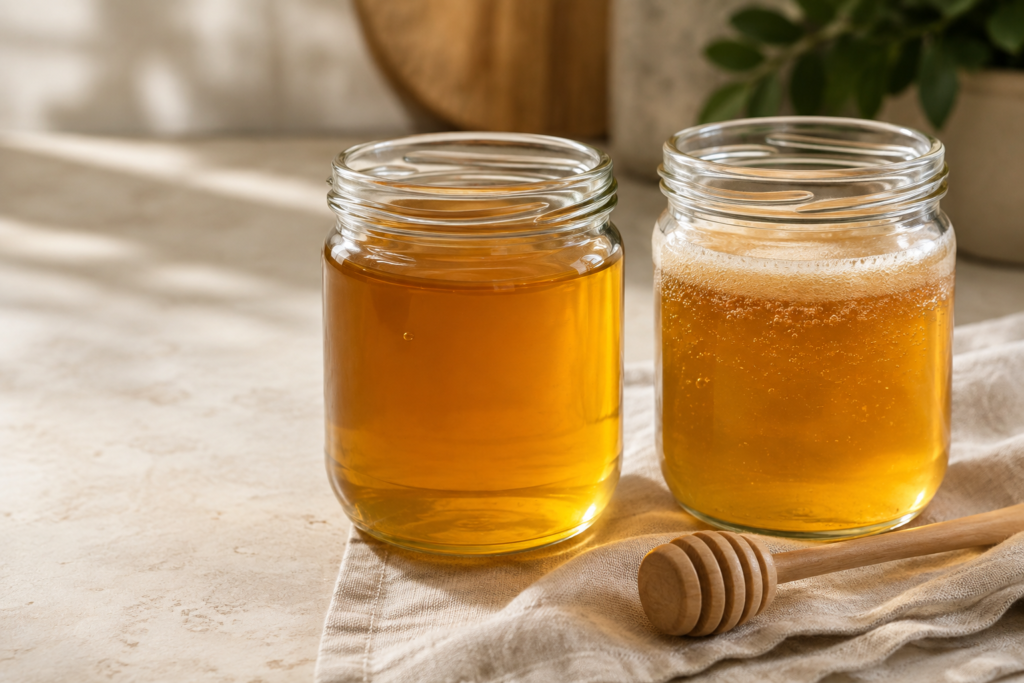
Why Is My Honey Foamy? Bubbles, Wax or Fermentation Explained
THE COMPLETE HONEY FOAM GUIDE Why Is My Honey Foamy? Bubbles, Wax or Fermentation Explained Foam on honey is not automatically spoilage.
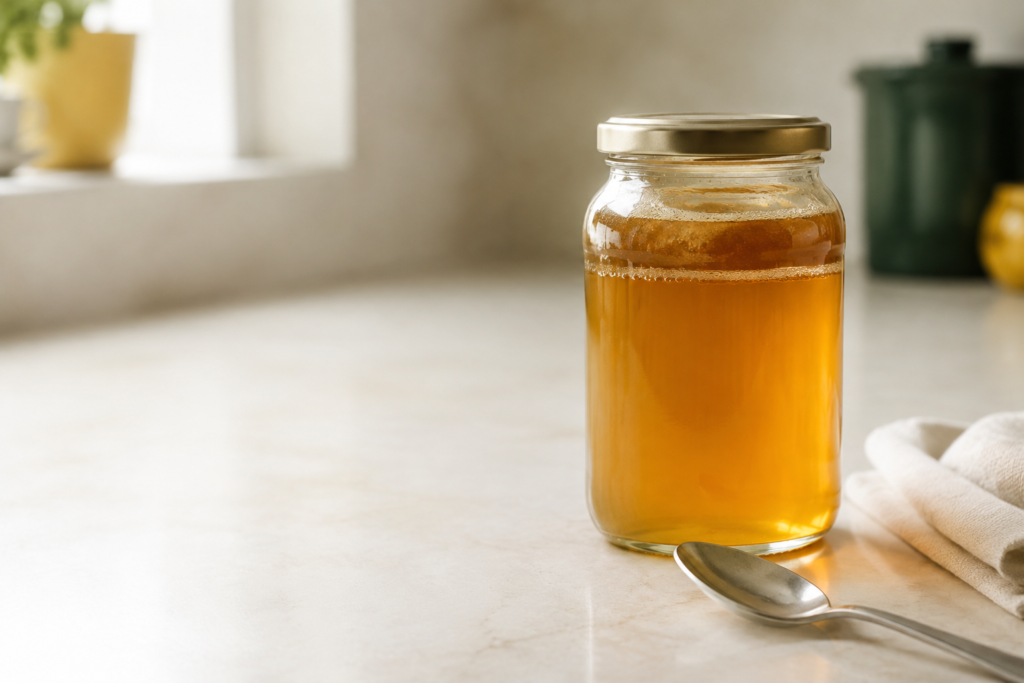
Why Does Honey Ferment? Signs, Causes and Prevention
THE COMPLETE HONEY FERMENTATION GUIDE Why Does Honey Ferment? Signs, Causes and Prevention Unintended honey fermentation usually begins when yeasts can use
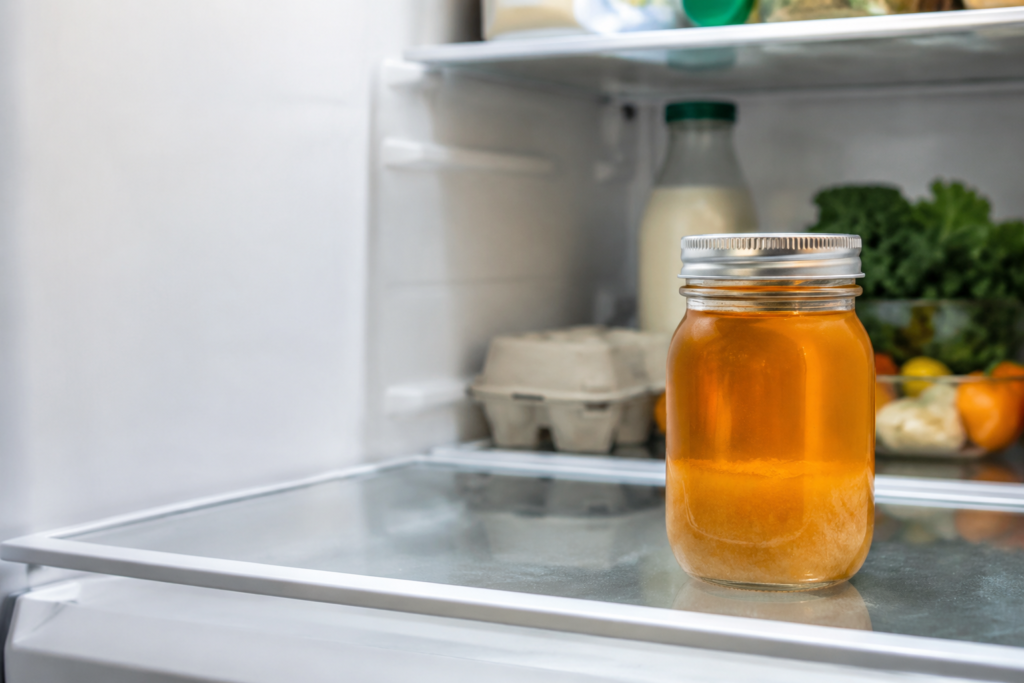
Does Honey Need to Be Refrigerated? What Happens in the Fridge
THE COMPLETE COLD-STORAGE GUIDE Does Honey Need to Be Refrigerated? What Happens in the Fridge Plain honey usually belongs in a dry
Frequently asked questions about honey vs sugar
Is honey better than sugar for weight loss?
No sweetener causes weight loss by itself. Both add energy. Honey’s stronger flavor may help some people enjoy less, but the amount and overall dietary pattern determine the result.
Is honey lower in calories than sugar?
By equal weight, usually yes because honey contains water. By tablespoon, usually no because a tablespoon of honey weighs more.
Is honey safe for people with diabetes?
Honey still contains carbohydrate and can raise blood glucose. It should be counted accordingly within an individualized care plan.
Does raw honey have less sugar?
No. “Raw” describes handling, not an absence of sugar. Raw and conventionally processed honey are both predominantly sugars.
Can honey replace sugar in every recipe?
No. Honey adds liquid and acidity and changes browning, structure, flavor and texture.
Which is sweeter?
Perceived sweetness depends on honey composition, temperature and the food around it. Many honeys taste strongly sweet because they contain substantial fructose.
Is brown sugar healthier than honey?
Brown sugar is primarily sucrose with molasses. Its trace minerals do not make it nutrient-dense at normal portions.
Can babies have honey instead of sugar?
No. Honey must never be given to children younger than 12 months because it may contain spores associated with infant botulism.
How this comparison was researched
This page separates food-composition facts from marketing claims and uses public-health guidance and peer-reviewed human research where health effects are discussed. Nutrient values are approximate and vary by product and country.
- USDA FoodData Central — reference food-composition data.
- World Health Organization — sugars intake guideline.
- WHO Healthy Diet — free-sugar definition and intake context.
- Ischayek & Kern (2006) — glycemic variation among US honeys.
- Raatz et al. (2015) — controlled comparison of honey, sucrose and HFCS.
- US CDC — honey is unsafe before 12 months.
- US FDA — added-sugars labeling.
Explore honey without the marketing myths
Learn how honey’s botanical origin, processing and form change the experience while keeping portions and evidence in view.