HIVE TO HONEY · The field journal for honey and bee knowledge
Globally sourcedEvidence ledReader first
HIVE TO HONEY · The field journal for honey and bee knowledge
HIVE TO HONEY
HONEY·BEES·BEEKEEPING
Wildflower Honey: Taste, Benefits, Uses, and Why Every Jar Is Unique
What Is Wildflower Honey?
Wildflower honey is a type of polyfloral honey produced when honeybees collect nectar from many different species of flowering plants rather than a single plant variety.
Because the nectar comes from multiple flowers, wildflower honey can vary widely in color, aroma, and flavor depending on the plants that bees visit in a specific region.
This diversity makes wildflower honey one of the most interesting honey varieties available. Each jar reflects the local environment, seasonal blooms, and natural landscape surrounding the hive.
Wildflower honey is produced across much of the world, including North America, Europe, Australia, and many parts of Asia wherever bees have access to diverse flowering plants.
Quick Answer: What Is Wildflower Honey?
Wildflower honey is honey produced by bees that collect nectar from multiple species of flowers, creating a honey with a complex flavor and color that varies depending on the region and season.
Table of Contents
Quick Facts About Wildflower Honey
Feature
Details
Honey Type
Polyfloral
Color
Light amber to dark amber
Flavor
Floral, fruity, sometimes herbal
Aroma
Sweet and fragrant
Crystallization
Moderate
Best Uses
Tea, baking, cooking, everyday sweetener
Compare Popular Honey Varieties
Understanding how wildflower honey compares to other honey types can help you choose the right honey for your taste and recipes.
Wildflower honey begins with the foraging behavior of honeybees.
Worker bees leave the hive and travel across fields, forests, gardens, and meadows collecting nectar from flowering plants.
Unlike monofloral honey, where bees gather nectar primarily from a single plant type, wildflower honey is produced when bees collect nectar from many different flowers during their foraging trips.
Common nectar sources for wildflower honey include:
Once the nectar is collected, bees return to the hive and begin transforming it into honey.
Inside the hive:
Nectar is mixed with natural enzymes
Water content is reduced through evaporation
The nectar thickens into honey
Bees seal the honey inside wax cells
Beekeepers later harvest the honeycomb and extract the finished honey.
Because multiple plants contribute nectar, the resulting honey develops a complex and layered flavor profile.
Why Wildflower Honey Tastes Different Every Time
One of the most fascinating aspects of wildflower honey is that no two batches are exactly the same.
Several natural factors influence the final flavor.
Regional Flowers
The flowers available to bees vary depending on location.
For example:
• Prairie regions may produce honey with clover and alfalfa notes • Mountain regions may include berry blossoms and herbs • Forest areas may contribute tree blossoms and wildflowers
Seasonal Bloom Cycles
Spring wildflower honey often tastes light and floral, while late-summer honey tends to be richer and darker.
Climate Conditions
Weather patterns also influence nectar production.
Warm sunny seasons often produce stronger honey flavors compared to cooler or rainy seasons.
What Does Wildflower Honey Taste Like?
Wildflower honey is known for its balanced sweetness and complex floral flavor.
Depending on the plants bees visit, the flavor may include subtle notes of:
Some wildflower honey varieties are light and delicate, while others are richer and more robust.
This variation is part of what makes wildflower honey so appealing to honey enthusiasts.
Honey Flavor Profile Guide
Honey flavor depends heavily on the plants that produce nectar.
Some honeys are extremely mild, while others have bold and distinctive flavors.
For example:
• Wildflower honey often has a layered floral flavor • Clover honey is known for its mild sweetness • Acacia honey is delicate and light • Orange blossom honey has citrus notes
These flavor differences make each honey variety suited to different culinary uses.
Wildflower Honey Color and Texture
Wildflower honey can vary widely in color depending on the nectar sources involved.
Common shades include:
• light golden • amber • deep amber • dark brown
In general:
Lighter honey tends to have milder flavors, while darker honey often has stronger and more robust flavors.
Wildflower honey usually has a smooth texture and pours easily when fresh.
Over time, natural sugars may cause the honey to crystallize, which is a normal and natural process.
Health Benefits of Wildflower Honey
Wildflower honey contains many natural compounds found in other honey varieties.
Although honey should always be enjoyed in moderation, it can offer several potential benefits.
Antioxidants
Honey contains plant-derived antioxidants that may help protect cells from oxidative stress.
Natural Energy
Honey is a natural carbohydrate source that provides quick energy.
Many athletes use honey as a natural alternative to refined sugars.
Each type of honey reflects unique plants, climates, and ecosystems.
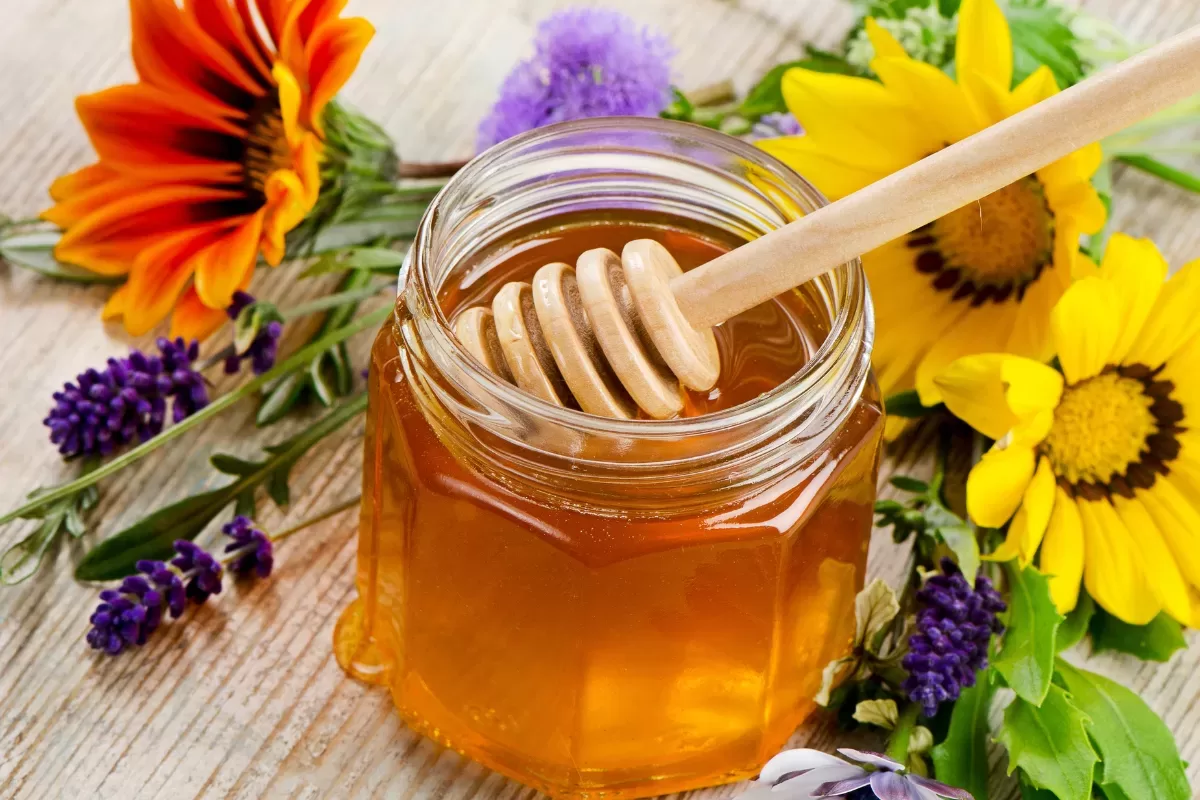
Wilflower honey produced from wild flowers
Wildflower honey is one of the most diverse and fascinating types of honey available. Because it is produced from nectar collected from many different flowers, each jar reflects the natural environment where it was created.
From delicate floral sweetness to deeper earthy flavors, wildflower honey captures the richness of the landscapes where bees forage.
Whether used in tea, baking, or everyday cooking, wildflower honey remains one of the most beloved honey varieties around the world.
THE COMPLETE HONEY FOAM GUIDE Why Is My Honey Foamy? Bubbles, Wax or Fermentation Explained Foam on honey is not automatically spoilage. Tiny air bubbles,
THE COMPLETE HONEY FERMENTATION GUIDE Why Does Honey Ferment? Signs, Causes and Prevention Unintended honey fermentation usually begins when yeasts can use enough available moisture.
THE COMPLETE COLD-STORAGE GUIDE Does Honey Need to Be Refrigerated? What Happens in the Fridge Plain honey usually belongs in a dry cupboard—not the refrigerator.
THE COMPLETE FREEZER STORAGE GUIDE Can You Freeze Honey? Storage, Thawing and Texture Explained Yes, plain honey can be placed in a household freezer—but it
A GENTLE, PRACTICAL HONEY GUIDE How to Decrystallize Honey Safely Without Damaging It Turn firm or grainy honey back into a pourable liquid with controlled
THE COMPLETE HONEY STORAGE GUIDE How to Store Honey: Best Temperature, Containers and Common Mistakes Keep honey tasting and performing its best with a practical