
Honey for Sore Throat: Evidence, Uses, Safety and Limits
Honey can temporarily coat and soothe an irritated throat, and research suggests it may reduce acute cough symptoms in adults and children older than one. It does not cure every sore throat, eliminate a bacterial infection or replace medical care when symptoms are severe or persistent.
This evidence-led guide explains how honey may help, practical ways people use it, whether one variety is “best,” important safety rules and signs that need professional assessment.
Honey may soothe symptoms, but it does not diagnose the cause
Honey for sore throat—what helps and when to seek care
Contents
Does honey help a sore throat?
Throat comfort
Honey may make a sore throat feel temporarily less scratchy or irritated. Warm fluids can also feel soothing and support hydration.
Cough relief
Its thick texture can coat the mouth and throat briefly. Individual relief varies, and the effect is temporary.
Not a cure
The better clinical evidence concerns acute cough—especially in children older than one—rather than sore-throat pain measured on its own.

What studies say about honey, cough and throat symptoms
How honey may soothe a sore throat
Several ordinary mechanisms may work together. None establishes honey as a cure for the condition causing the pain.
Coating sensation
Honey’s viscosity can create a short-lived coating sensation over irritated tissues.
Cough reduction
When throat irritation triggers coughing, honey may help calm that symptom for some people older than one.
Warm fluid
A comfortably warm drink can ease dryness and makes it easier to take fluids. Honey is optional; hydration itself matters.
Saliva and swallowing
Sweet taste can stimulate saliva and swallowing, temporarily easing a dry sensation.
Expectation and comfort
A familiar warm drink can feel reassuring. Comfort is real even when it is not disease treatment.
Temporary effect
Relief may wear off. Repeated large servings add sugar exposure without addressing the cause.
Ways people use honey for throat comfort
A small spoonful: Adults and children older than one may take a modest amount slowly when throat coating is the goal.
Warm water or caffeine-free tea: Stir in a little honey after the drink cools to a comfortable temperature.
Honey and lemon: Lemon adds flavor but can sting some irritated throats or worsen reflux symptoms. It is optional.
At night: Honey may be most relevant when cough is disrupting rest, but it is not a sleep medicine.
Afterward: Honey contains free sugars. Avoid sipping sweet drinks continuously and follow normal dental care.

What is the best honey for a sore throat?
Ordinary pure honey
No honey variety has been conclusively shown to provide superior everyday sore-throat relief. Choose a genuine honey you tolerate and enjoy.
Raw honey
Clinical cough research has used different honeys, so the broad soothing effect is not limited to one expensive origin.
Mānuka honey
Raw honey is not proven to relieve a sore throat better than filtered or pasteurized honey. It must still never be given to an infant.
Flavored honey
Mānuka has distinctive chemistry and medical-grade uses, but retail mānuka honey should not be presented as a guaranteed cure for throat infection.
Check added ingredients in infused products. Strong spices, acids or allergens may be uncomfortable or unsuitable for some people.
What can cause a sore throat?
Common infections
Sore throat can occur with a cold, influenza, COVID-19, strep throat, tonsillitis or other infections. It can also follow allergies, postnasal drip, dry air, smoke exposure, reflux, mouth breathing or heavy voice use.
Honey cannot identify which cause is present. Age, exposure, fever, cough, rash, swollen glands, duration and examination may all matter.
Non-infectious irritation
Most sore throats accompanying uncomplicated colds improve with time and supportive care.
Honey safety and important precautions
Infants
Honey is a food with real age, allergy, dental and blood-glucose considerations. “Natural” does not mean risk-free.
Hot drinks
Never give honey to a child under 12 months. Honey can contain spores that may cause infant botulism. Cooking, pasteurizing or mixing it into another food does not remove this rule.
Allergies
Use comfortably warm—not boiling—liquid. Small children should not receive drinks hot enough to scald.
Blood sugar
Avoid honey if you have been told to avoid it or have experienced a reaction to honey or its components. Urgent allergy symptoms need immediate medical help.
Honey raises blood glucose. People following a diabetes care plan should count it as sugar and use individualized professional guidance.
When a sore throat needs medical attention
Common honey and sore-throat myths
Honey may soothe symptoms, but it is not a diagnostic test or universal treatment.
“Honey cures strep throat”
False: suspected strep throat may need testing and appropriate treatment; honey cannot confirm or eradicate it.
“Antibacterial means antibiotic”
False: laboratory antimicrobial properties do not make swallowed honey equivalent to a prescribed antibiotic.
“Raw is always stronger”
Unproven: raw honey has not been established as superior for ordinary throat relief.
“More honey works faster”
False: larger or repeated servings add sugar and do not guarantee stronger relief.
“Boiling water activates it”
False: very hot liquid creates burn risk and is not required.
“Children of every age can have it”
Dangerous: honey is not safe for infants younger than one.
Is honey appropriate right now?
An adult has a mild sore throat with a cold
A modest amount of honey or a comfortably warm honey drink may provide temporary comfort alongside hydration and rest.
A child older than one is coughing
Honey may ease an acute cough for some children. Use an age-appropriate amount, avoid hot drinks and monitor the overall illness.
The child is younger than one
Do not give honey in any form. Ask a healthcare professional about age-appropriate care.
There is trouble breathing or swallowing
Do not rely on a home remedy. Obtain urgent medical assessment.
Symptoms are persistent or recurring
Honey may mask discomfort briefly without addressing the cause. Seek appropriate medical or dental evaluation.
Relevant honey, cough and evidence guides
Continue with current articles about honey before bed, honey benefits, raw versus pasteurized honey, nutrition and evidence-led natural remedies.
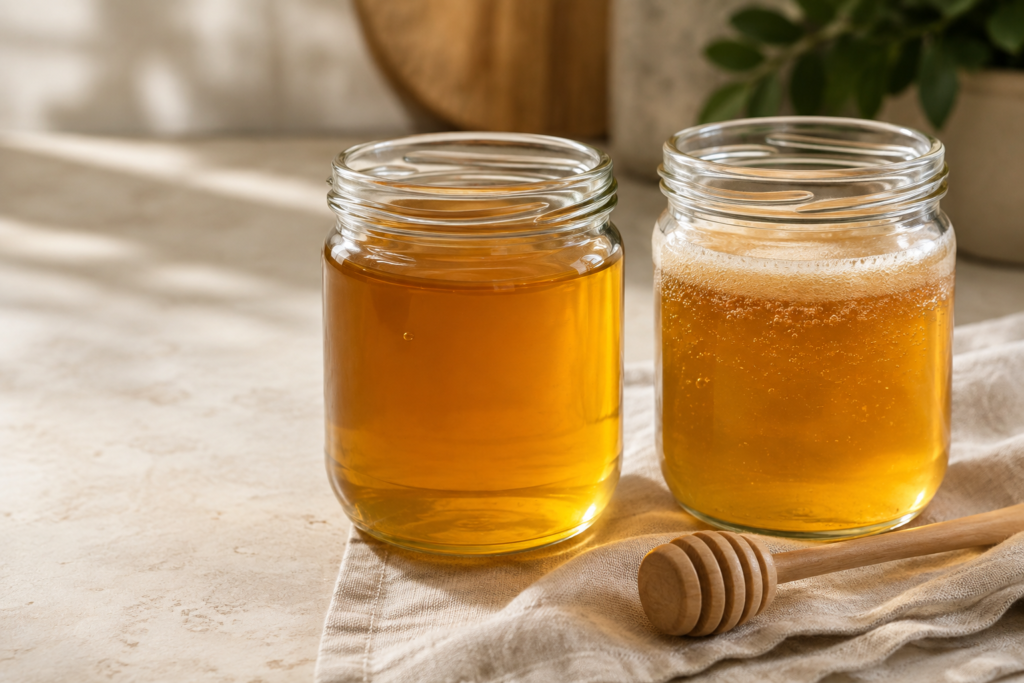
Why Is My Honey Foamy? Bubbles, Wax or Fermentation Explained
THE COMPLETE HONEY FOAM GUIDE Why Is My Honey Foamy? Bubbles, Wax or Fermentation Explained Foam on honey is not automatically spoilage.
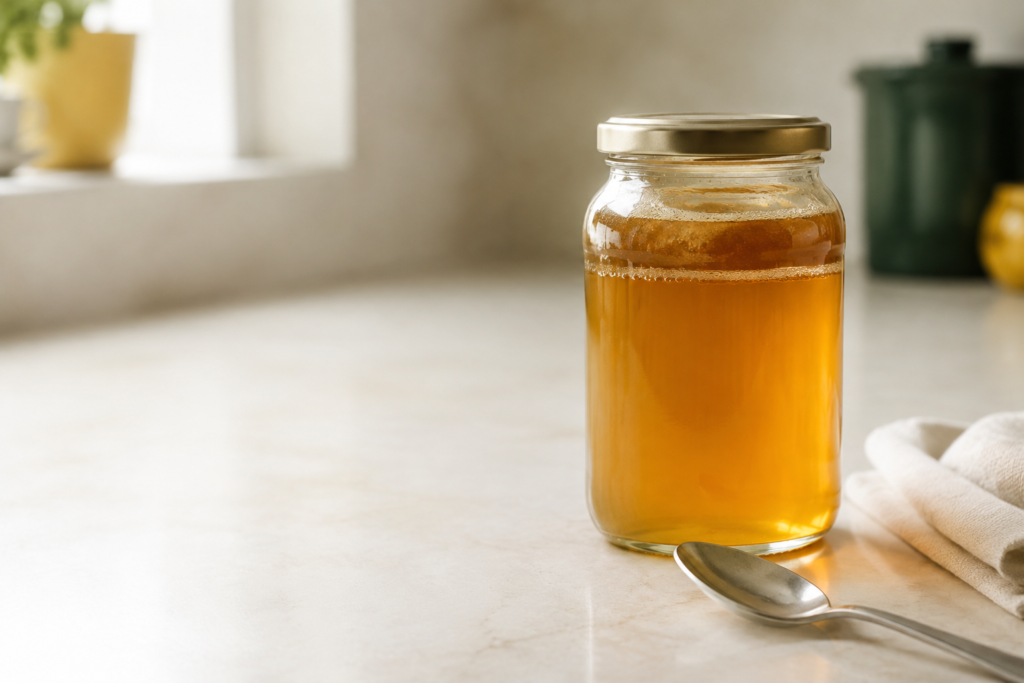
Why Does Honey Ferment? Signs, Causes and Prevention
THE COMPLETE HONEY FERMENTATION GUIDE Why Does Honey Ferment? Signs, Causes and Prevention Unintended honey fermentation usually begins when yeasts can use
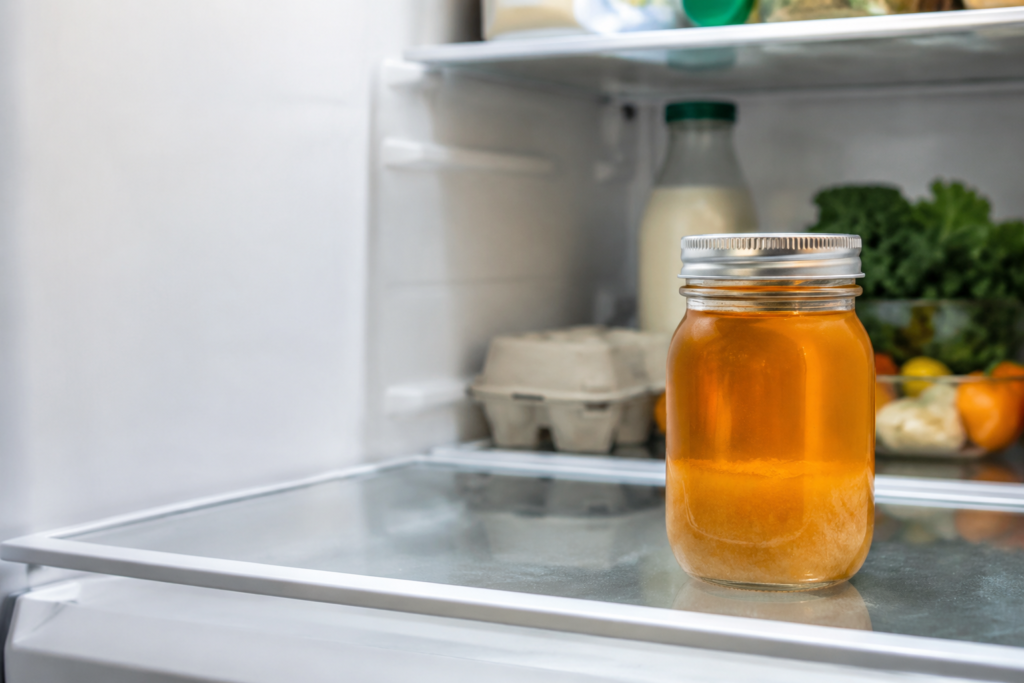
Does Honey Need to Be Refrigerated? What Happens in the Fridge
THE COMPLETE COLD-STORAGE GUIDE Does Honey Need to Be Refrigerated? What Happens in the Fridge Plain honey usually belongs in a dry
Frequently asked questions about honey for sore throat
Why is honey good for a sore throat?
Its thick texture may temporarily coat irritated tissues, while sweet taste and a warm drink can support saliva, swallowing and comfort.
Will honey cure a sore throat?
No. It may ease symptoms but does not cure every viral or bacterial cause.
Does honey help a cough?
Research suggests honey may reduce acute cough symptoms in some adults and children older than one.
How much honey should you use?
There is no universal medical dose for sore throat. Use a modest food serving rather than taking repeated large amounts.
Should honey be taken straight or in tea?
Either can feel soothing. If using a drink, keep it comfortably warm and remember that honey is optional.
Is mānuka honey better?
It has distinctive properties, but there is insufficient evidence that retail mānuka provides superior relief for an ordinary sore throat.
Can babies have honey for a sore throat?
No. Never give honey to a child younger than 12 months because of infant-botulism risk.
When should you see a doctor?
Seek care for breathing or swallowing difficulty, dehydration, severe or worsening symptoms, or illness that persists or repeatedly returns.
How this sore-throat guide was researched
This guide distinguishes direct cough evidence from the broader traditional use of honey for throat comfort. It avoids extending laboratory findings into unsupported cure claims.
- Cochrane: Honey for acute cough in children
- NHS: Common cold and sore-throat self-care
- NHS: Cough guidance and honey
- CDC: Honey and infant-botulism prevention
- Mayo Clinic: Honey as a cough remedy
Explore honey with evidence in view
Learn where honey’s evidence is strongest, how processing changes it and how to use it without turning supportive care into a cure claim.