
Clover Honey: Taste, Color, Benefits, Uses and Buying Guide
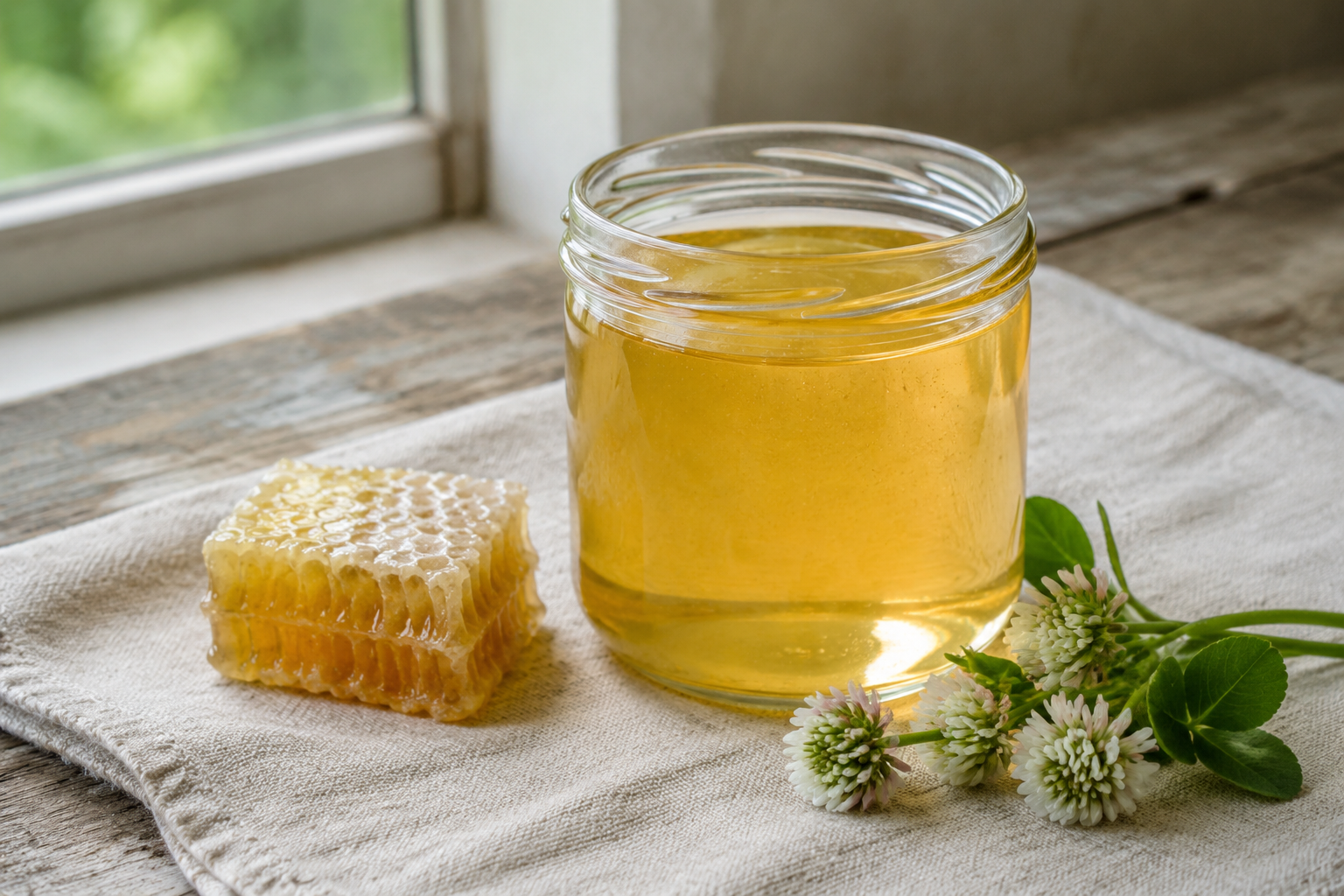
Clover honey is one of North America’s most familiar honeys—typically light, mild and remarkably versatile. Yet “clover” can refer to nectar gathered from several Trifolium species, often alongside neighboring forage. This global guide explains its floral origin, sensory profile, crystallization, nutrition, labels, storage and responsible use.
A gentle profile shaped by flower, place and harvest
- Usually pale straw to light amber, though source and season create variation.
- Commonly mild, clean and softly floral rather than intensely aromatic.
- Produced mainly where clover contributes strongly to the nectar flow—not simply where clover grows.
- Often sold liquid, creamed, raw, filtered or pasteurized; these processing terms are separate from floral origin.
- Crystallization is natural and does not by itself mean spoilage.
- Like every honey, it is primarily sugars and should never be given to an infant younger than 12 months.
Everything you need to know about clover honey
What should you expect from the jar?
Light and approachable
Naturally variable
A major agricultural honey
What is clover honey?
Clover honey is made when honey bees collect nectar primarily from clover flowers, transform it enzymatically, reduce its moisture and store it in wax comb. “Clover” is a broad market name: several plants in or associated with the clover group may contribute, and the exact botanical profile can differ by country and region.
International Codex guidance permits a floral-source designation when honey comes wholly or mainly from that source and has the corresponding sensory, physicochemical and microscopic characteristics. In practice, credible floral claims depend on producer knowledge, harvest conditions and, where required, compositional or pollen analysis.
Which clovers produce clover honey?
Common names vary by region, and not every “clover” belongs to the same botanical genus. Beekeepers may encounter several important forage plants.
White clover — Trifolium repens
Red clover — Trifolium pratense
Alsike clover — Trifolium hybridum
Sweet clover — Melilotus species
Crimson clover — Trifolium incarnatum
Mixed clover forage
Where is clover honey produced?
Climate determines whether clover actually secretes enough nectar for a harvest. Rainfall, soil moisture, temperature, mowing, grazing, acreage and competing bloom can all change what reaches the hive.
Clover honey taste, color and aroma
Color
Aroma
Flavor
Finish
Tasting temperature and texture matter. A creamed clover honey can seem less sharply sweet because its fine crystals change how it melts across the tongue.
Does clover honey crystallize?
Why crystals form
Honey is a concentrated sugar solution. Glucose can leave solution and form crystals, while fructose remains more soluble. The glucose-to-water balance, temperature, pollen particles and existing seed crystals influence speed and texture.
Clover honey commonly crystallizes, but no single timetable applies to every jar.
How to return it to liquid
Place the closed container in comfortably warm water and stir occasionally. Avoid boiling or prolonged high heat, which can darken flavor and accelerate quality changes. Microwave heating can create damaging hot spots.
Fine, even crystallization is deliberately encouraged when making creamed honey.
Nutrition, antioxidants and health evidence
Primarily carbohydrate
Minor compounds vary
Not a nutritional multivitamin
Evidence belongs to the tested honey
Honey may soothe cough in some children older than one year, but it is not suitable for infants and is not a replacement for medical assessment when symptoms are severe or persistent. People managing blood glucose or allergies should follow advice appropriate to their circumstances.
Best uses and food pairings
How to choose genuine clover honey
Start with the complete label rather than color or a “purity test.” No home water, flame, thumb or crystallization test can reliably prove botanical origin or adulteration.
Botanical claim
Country and region
Producer traceability
Processing detail
Condition
Price and scale
Raw, filtered, pasteurized and creamed clover honey
Raw clover honey
“Raw” is widely used but not uniformly defined everywhere. Ask the producer what temperatures and filtration methods were used.
Filtered clover honey
Filtration can remove wax particles and other suspended material. Degree of filtration varies and does not determine geographic origin.
Pasteurized clover honey
Controlled heating can reduce yeast activity and delay crystallization. Excessive or prolonged heat can reduce delicate aroma and alter quality indicators.
Creamed clover honey
Fine crystals are deliberately controlled to create a smooth spread. Clover’s mild flavor makes it a common base for this style.
Comb clover honey
Honey remains sealed in edible beeswax cells. A floral claim still depends on the nectar flow during production.
Organic clover honey
Organic certification concerns production and certification requirements; it does not mean the jar is sugar-free, unprocessed or nutritionally superior.
Storage, shelf life and safety
Store clover honey tightly closed in a clean, dry container at stable room temperature, away from direct sunlight and strong odors. Refrigeration is unnecessary and usually accelerates crystallization. Always use a dry utensil because introduced water can support fermentation.
Properly handled honey can remain usable for a very long time, although color, aroma and texture gradually change. Discard honey showing convincing signs of fermentation—persistent foaming, pressure, alcoholic or sour odor—or contamination.
Relevant clover honey and storage guides
Continue with current articles about floral origin, crystallization, processing, storage, authenticity and practical uses for honey.
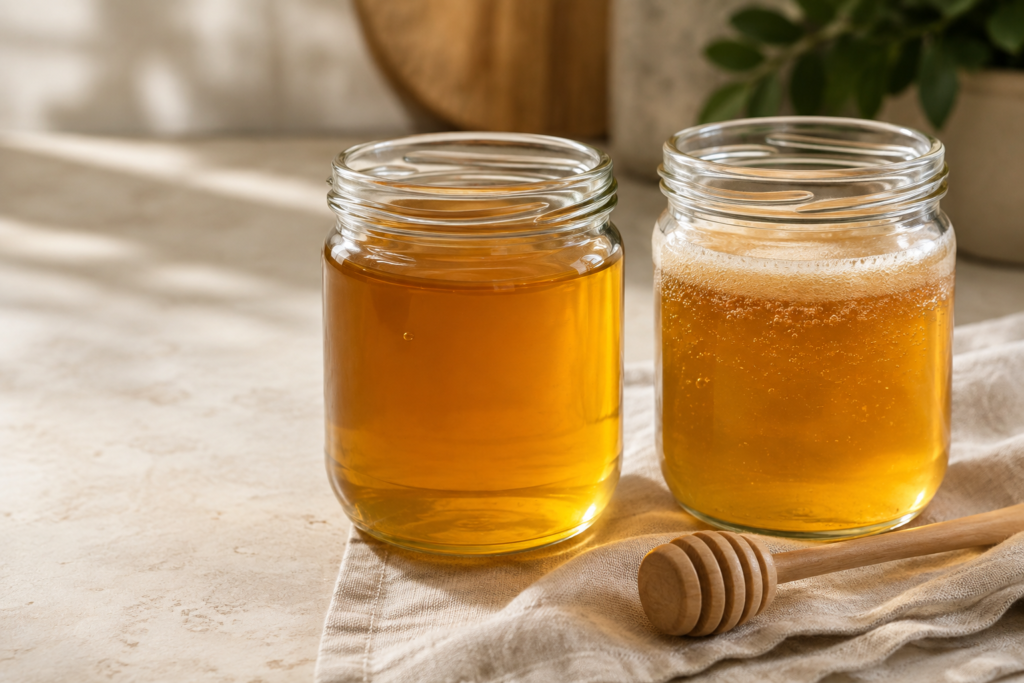
Why Is My Honey Foamy? Bubbles, Wax or Fermentation Explained
THE COMPLETE HONEY FOAM GUIDE Why Is My Honey Foamy? Bubbles, Wax or Fermentation Explained Foam on honey is not automatically spoilage.
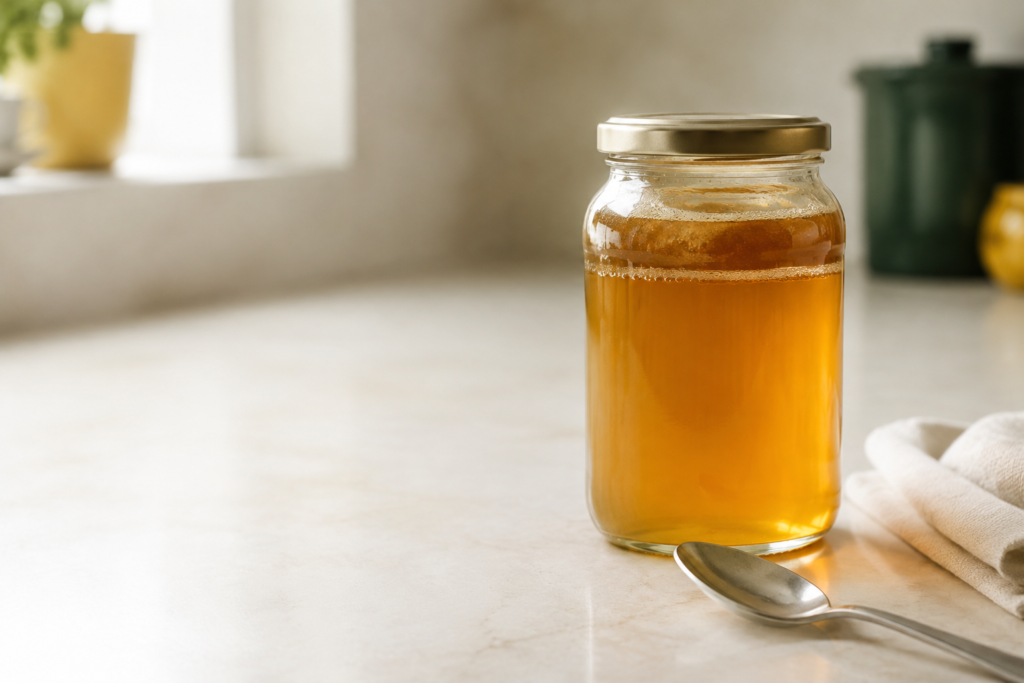
Why Does Honey Ferment? Signs, Causes and Prevention
THE COMPLETE HONEY FERMENTATION GUIDE Why Does Honey Ferment? Signs, Causes and Prevention Unintended honey fermentation usually begins when yeasts can use
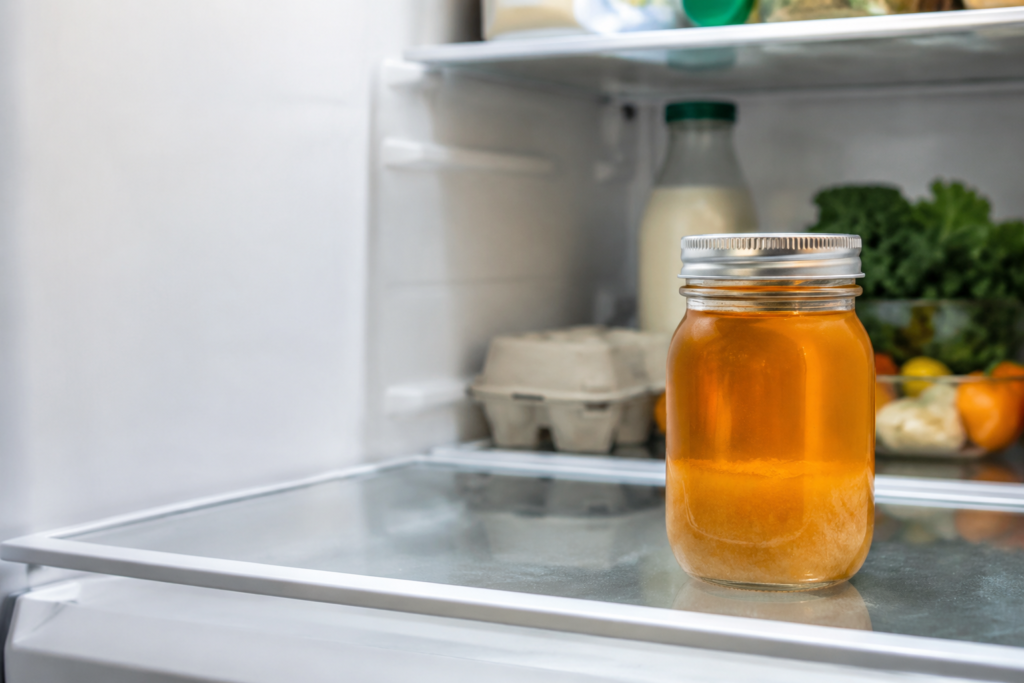
Does Honey Need to Be Refrigerated? What Happens in the Fridge
THE COMPLETE COLD-STORAGE GUIDE Does Honey Need to Be Refrigerated? What Happens in the Fridge Plain honey usually belongs in a dry
Frequently asked questions
What does clover honey taste like?
It is usually mild, clean and softly floral, sometimes with light grassy, vanilla-like or caramel notes. Region and harvest create real variation.
Is clover honey real honey?
Yes. It is a floral honey produced when clover contributes predominantly to the nectar flow. Credible labeling and traceability matter more than color alone.
Is clover honey the same as raw honey?
No. Clover describes botanical source; raw describes handling. Clover honey can be raw, heated, filtered, creamed or pasteurized.
Why did my clover honey turn solid?
Glucose formed crystals in the concentrated sugar solution. This is normal and does not, by itself, indicate spoilage.
Is clover honey healthier than regular honey?
“Regular honey” is not one scientific category. Clover honey is principally sugar and no universal evidence shows that every clover honey is clinically superior to other authentic honeys.
Can clover honey help a cough?
Honey may offer symptomatic relief for some children older than one year, but it is not appropriate for infants and does not replace medical care when needed.
Does clover honey expire?
Properly sealed, dry honey is highly stable, but its flavor, color and texture can change. Moisture contamination can permit fermentation.
How can I tell whether clover honey is pure?
Home tests are unreliable. Use complete origin labeling, lot traceability, a reputable supplier and validated laboratory testing where authenticity must be established.
How this clover honey guide was researched
This guide separates clover-specific evidence from general honey research, avoids treating laboratory findings as proven clinical outcomes, and distinguishes botanical origin from processing language.
- Codex Standard for Honey: floral-source designation
- Canadian Food Inspection Agency: honey labeling and color classes
- FAO: composition, characteristics and value-added honey products
- Rababah et al. (2024): temperature, time and honey crystallization
- CFIA: clover and other forage sources used by honey bees
Follow clover honey from flower to table
Use clover honey as a benchmark for color, flavor, texture and floral traceability—then compare it with bolder varietals from across the global honey library.