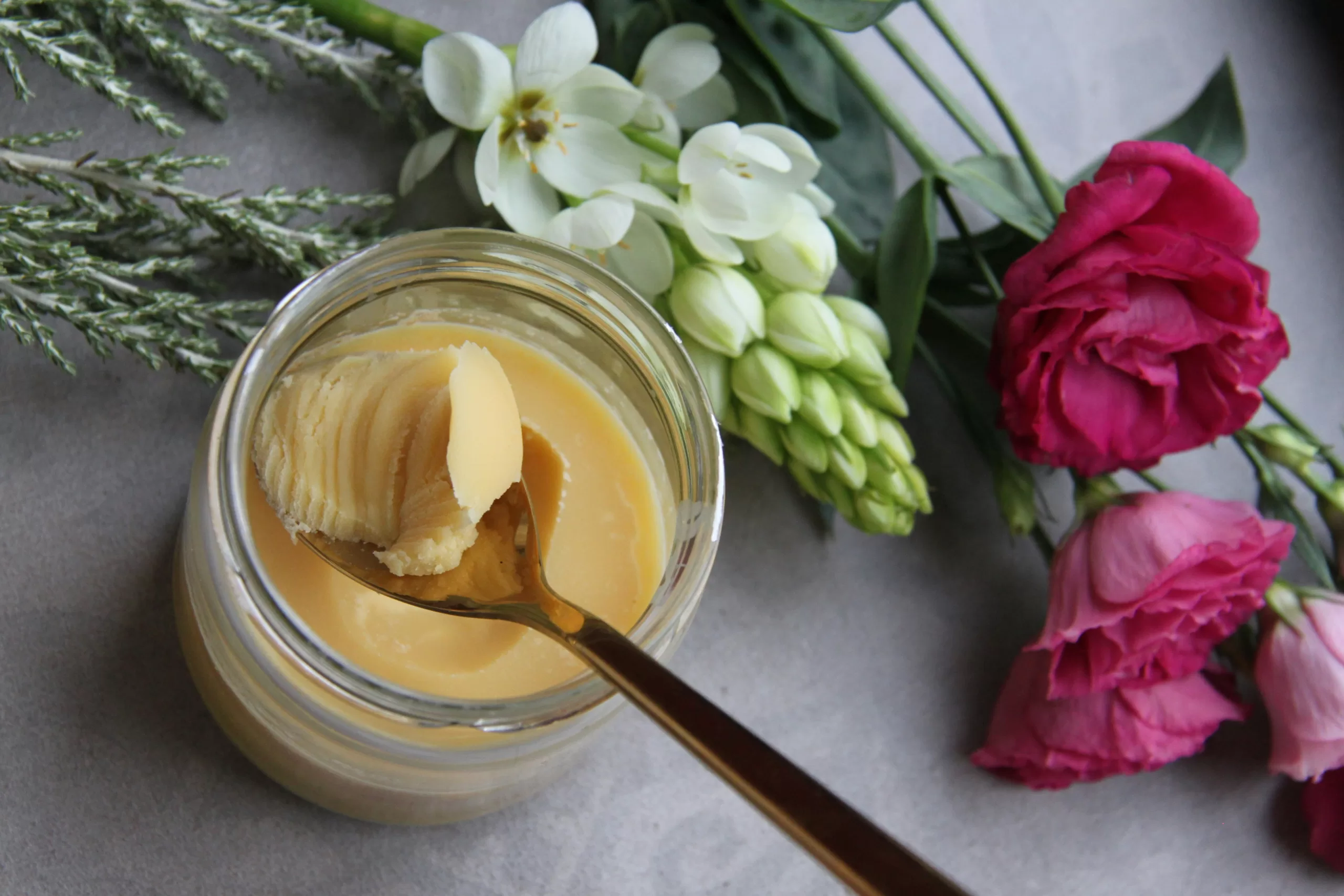
If you’ve ever seen honey that looks smooth, thick, and spreadable—almost like butter—you’ve likely encountered creamed honey. Despite its name, creamed honey contains no dairy at all. It’s simply honey that has been crystallized in a controlled way to create a unique texture.
In this guide, we’ll explain what creamed honey is, how it’s made, and why it has become a favorite for many honey lovers.
Creamed honey is just one of many forms honey can take, each offering a different experience depending on how it’s made and used.
What Is Creamed Honey?
Creamed honey (also called whipped or spun honey) is honey that has been intentionally crystallized to create fine, uniform crystals. This process gives it a smooth, spreadable consistency rather than the runny texture most people associate with liquid honey.
It’s made from pure honey—nothing is added or removed.
How Creamed Honey Is Made
The creaming process involves:
- Starting with raw or lightly processed honey
- Introducing very fine honey crystals (called “seed crystals”)
- Slowly controlling temperature and movement
This encourages honey to crystallize evenly, preventing the large, gritty crystals that sometimes form naturally.
The result is:
- A silky texture
- Easy spreading
- Consistent appearance
Is Creamed Honey Raw Honey?
Creamed honey can be raw, but not always.
If the honey used to make it is raw and the creaming process avoids high heat, it remains raw. However, some commercially produced creamed honeys may use lightly processed honey as a base.
Checking the label or source is the best way to know.
Why Does Honey Crystallize at All?
Crystallization is a natural property of honey, influenced by:
- Glucose content
- Temperature
- Floral source
Creamed honey simply takes advantage of this natural behavior and controls it for a better texture.
Crystallized honey is not spoiled or expired—it’s simply honey behaving naturally.
Why People Love Creamed Honey
Creamed honey has become popular because it:
- Doesn’t drip or run
- Is easy to spread on toast or bread
- Has a smooth mouthfeel
- Retains the flavor of the original honey
It’s especially popular for breakfast use and simple pairings.
Creamed Honey vs Liquid Honey
The main difference is texture, not quality.
- Creamed honey: Thick, spreadable, stable
- Liquid honey: Pourable, fluid, classic
Both come from the same source and can offer the same flavor, depending on the honey used.
Does Creamed Honey Go Bad?
No. Like other types of honey, creamed honey has an extremely long shelf life when stored properly. Keep it sealed and stored at room temperature, away from excess heat or moisture.
Final Thoughts
Creamed honey is a perfect example of how honey can be enjoyed in different forms without changing its natural origins. Its smooth texture, ease of use, and rich flavor make it a favorite for many households.
Understanding creamed honey is another step in exploring the wide world of honey varieties and how they’re enjoyed around the world.