What Is Honey? How Bees Make It, What It Contains and Why It Varies
Honey is a concentrated, naturally sweet food made by honey bees from flower nectar or honeydew. Bees collect the liquid, add enzymes, reduce its water content and store the ripened product in wax comb—often sealing it beneath a protective wax capping.
This global guide explains honey from hive to jar: its composition, production, varieties, color and flavor, crystallization, processing, authenticity, storage and essential safety guidance.
What exactly is honey?
Honey is mostly sugars—especially fructose and glucose—plus water and many minor compounds. Its aroma, color, texture and rate of crystallization change with floral source, region, climate, season, bee species and handling.
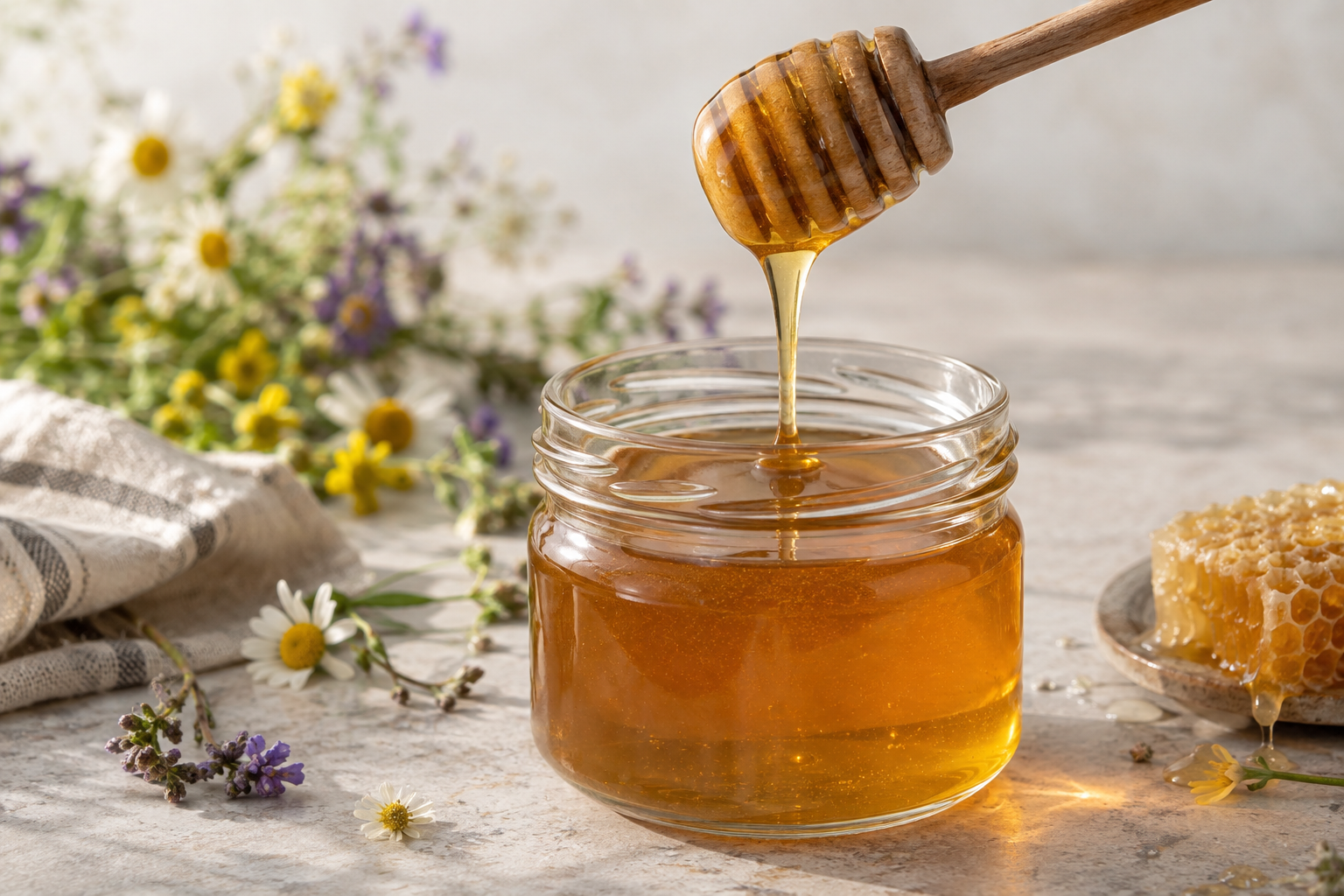
Honey’s color, aroma, flavor and texture reflect its botanical origin and handling. Pale honey is not automatically milder, purer or better than dark honey.
Honey—from floral source to comb, jar and table
Contents
What counts as honey?
Honey begins with nectar secreted by flowers or with honeydew—sugary material associated with sap-feeding insects on plants. Honey bees collect the source liquid, carry it in the crop, exchange and process it within the colony, evaporate water and place the concentrated food in comb cells.
International standards distinguish genuine honey from flavored syrups and products with added ingredients. A jar labeled simply as honey should not contain added sweeteners, colors or flavors.
Made from nectar
Botanical origin may be dominated by one plant or a changing mixture of blooms.
Made from honeydew
Often darker and less floral, though characteristics vary widely by region.
Honey in edible wax comb
Presented in the bees’ original sealed cells rather than extracted as liquid.
What honey contains
Exact composition varies, so the figures below are broad reference ranges rather than a formula for every jar.
| Component | Typical role or characteristic | Why it varies |
|---|---|---|
| Fructose and glucose | Main sugars and energy source | Botanical origin affects their ratio |
| Water | Usually a minority component; influences viscosity and stability | Ripening, humidity and handling matter |
| Other sugars | Include sucrose, maltose and oligosaccharides in varying amounts | Nectar chemistry and bee processing differ |
| Organic acids | Contribute acidity and flavor balance | Floral source and storage influence the profile |
| Enzymes | Introduced partly through bee processing | Heat and time can reduce activity |
| Aroma and phenolic compounds | Help create color, fragrance and flavor | Strongly linked to plants and geography |
| Trace pollen and particles | May provide clues about origin | Straining and filtration change abundance |
How bees make honey
Foragers draw nectar through the proboscis and carry it in the crop. Back at the nest, the load may pass among workers through trophallaxis. Bee enzymes begin modifying sugars while repeated handling and airflow reduce water content.
Workers spread liquid across open comb cells, move it as needed and fan their wings to support evaporation. When the food is sufficiently ripened for storage, bees may seal the cell with wax.
| Stage | Bee activity | Result |
|---|---|---|
| Collection | Foragers gather nectar or honeydew | Dilute sugary liquid enters the colony |
| Transfer | Workers exchange and handle the liquid | Enzymatic processing continues |
| Evaporation | Droplets, open cells and airflow expose more surface | Water content falls |
| Storage | Ripened honey remains in wax cells | A concentrated food reserve forms |
| Capping | Workers add a wax cover | Stored food is protected for later use |
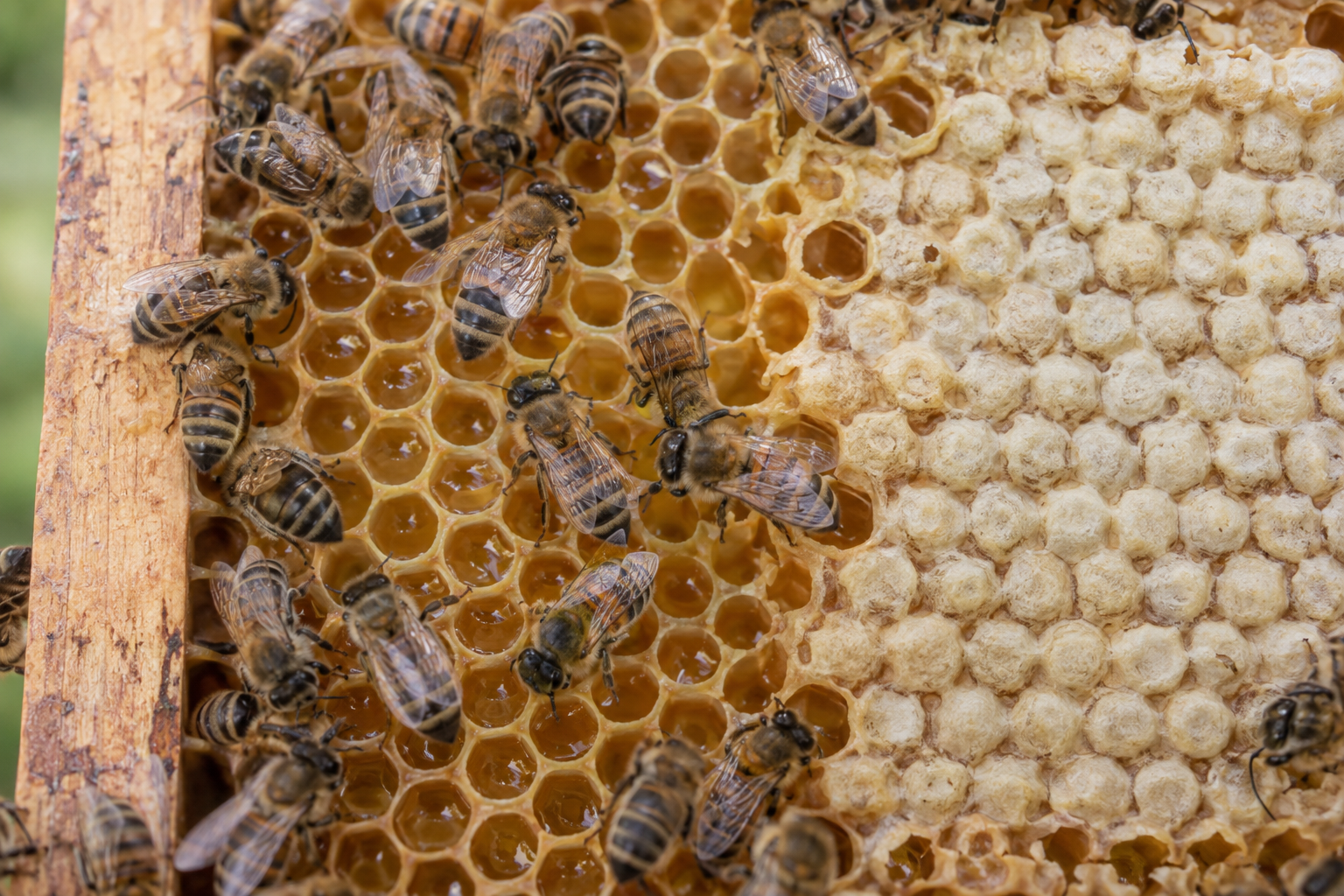
Open cells can contain nectar being concentrated, while pale wax cappings protect ripened honey stored for the colony’s future needs.
Why honey changes by flower, place and season
Beekeepers may describe honey as monofloral when one plant source strongly shapes its recognizable character, or multifloral when many blooms contribute. True origin is supported by traceability, sensory characteristics and, when needed, laboratory analysis—not by color alone.
Light honeys can be delicate or sharply aromatic; dark honeys can taste malty, mineral, smoky or medicinal. Climate, soil, colony location, harvest timing and storage add further variation.
Floral source
Controls much of the sugar, aroma and pollen profile.
Terroir
Climate, soil and surrounding vegetation shape the harvest.
Bloom timing
Spring, summer and autumn flows can yield different honeys.
Processing and storage
Heat, filtration, moisture and age influence texture and aroma.
Why honey crystallizes
Crystallization occurs when glucose separates from the liquid phase and forms crystals. The rate depends on the glucose-to-water balance, temperature, seed particles and floral source. Some honeys crystallize rapidly; others remain liquid for a long time.
Crystallized honey is not automatically spoiled or adulterated. Fine, controlled crystallization produces creamed honey, while larger crystals create a coarser texture. Gentle warming can return many crystallized honeys to liquid, though repeated or excessive heat can flatten aroma and reduce heat-sensitive qualities.
Raw, strained, filtered and pasteurized honey
“Raw honey” has no single globally uniform retail definition. It commonly means honey sold without deliberate high-heat treatment, but actual practices differ among producers and jurisdictions. Straining removes large wax particles; finer filtration can remove more suspended material and pollen.
Pasteurization or controlled heating can improve handling, delay crystallization or reduce yeast risk, but it does not turn honey into a different basic food. Processing should be evaluated by the producer’s real method rather than romantic labels.
Honey storage, spoilage and essential safety
Keep honey tightly closed in a clean, dry container at normal room temperature. Refrigeration is usually unnecessary and often speeds crystallization. Moisture introduced by wet utensils or poor storage can increase the chance of fermentation.
- Infant safety: never give honey to a child younger than 12 months because of the risk of infant botulism.
- Allergies: reactions are uncommon but possible; anyone with known sensitivities should seek qualified guidance.
- Fermentation: persistent foam, pressure, sour or alcoholic odors and leaking may indicate yeast activity.
- Packaging: use food-safe containers and avoid contamination from utensils.
Related honey guides
Continue into production, varieties, quality and storage.
How Do Bees Make Honey?
Follow every stage from flower to capped comb.
Types of Honey
Explore floral, regional and specialty honeys worldwide.
Raw Honey vs. Regular Honey
Compare practical processing differences without the hype.
Latest honey, beekeeping and storage guides
Continue with current Hive To Honey articles covering honey varieties, production, crystallization, storage, authenticity and colony biology.
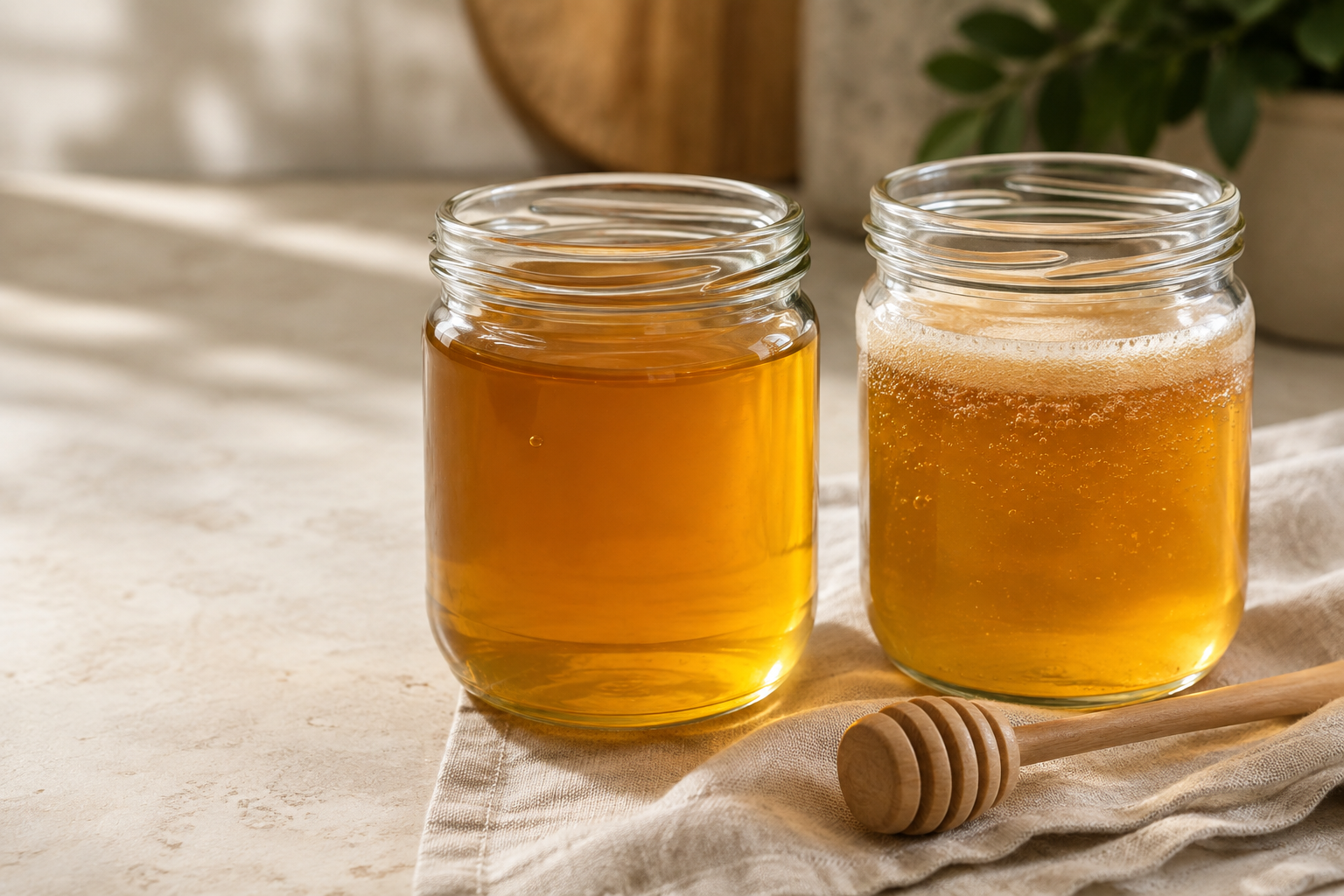
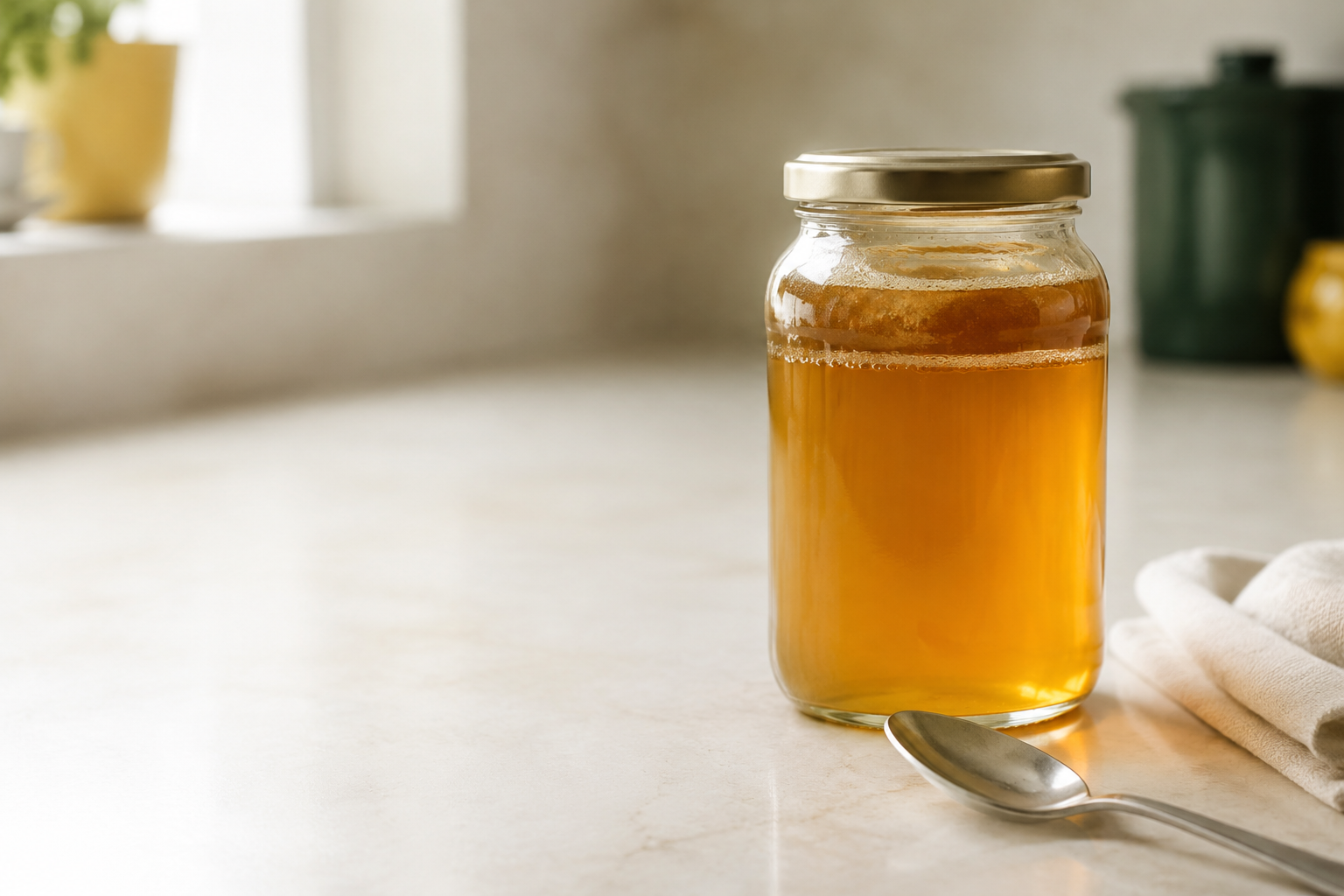
Why Is My Honey Foamy? Bubbles, Wax or Fermentation Explained
THE COMPLETE HONEY FOAM GUIDE Why Is My Honey Foamy? Bubbles, Wax or Fermentation Explained Foam on honey is not automatically spoilage.
Why Does Honey Ferment? Signs, Causes and Prevention
THE COMPLETE HONEY FERMENTATION GUIDE Why Does Honey Ferment? Signs, Causes and Prevention Unintended honey fermentation usually begins when yeasts can use
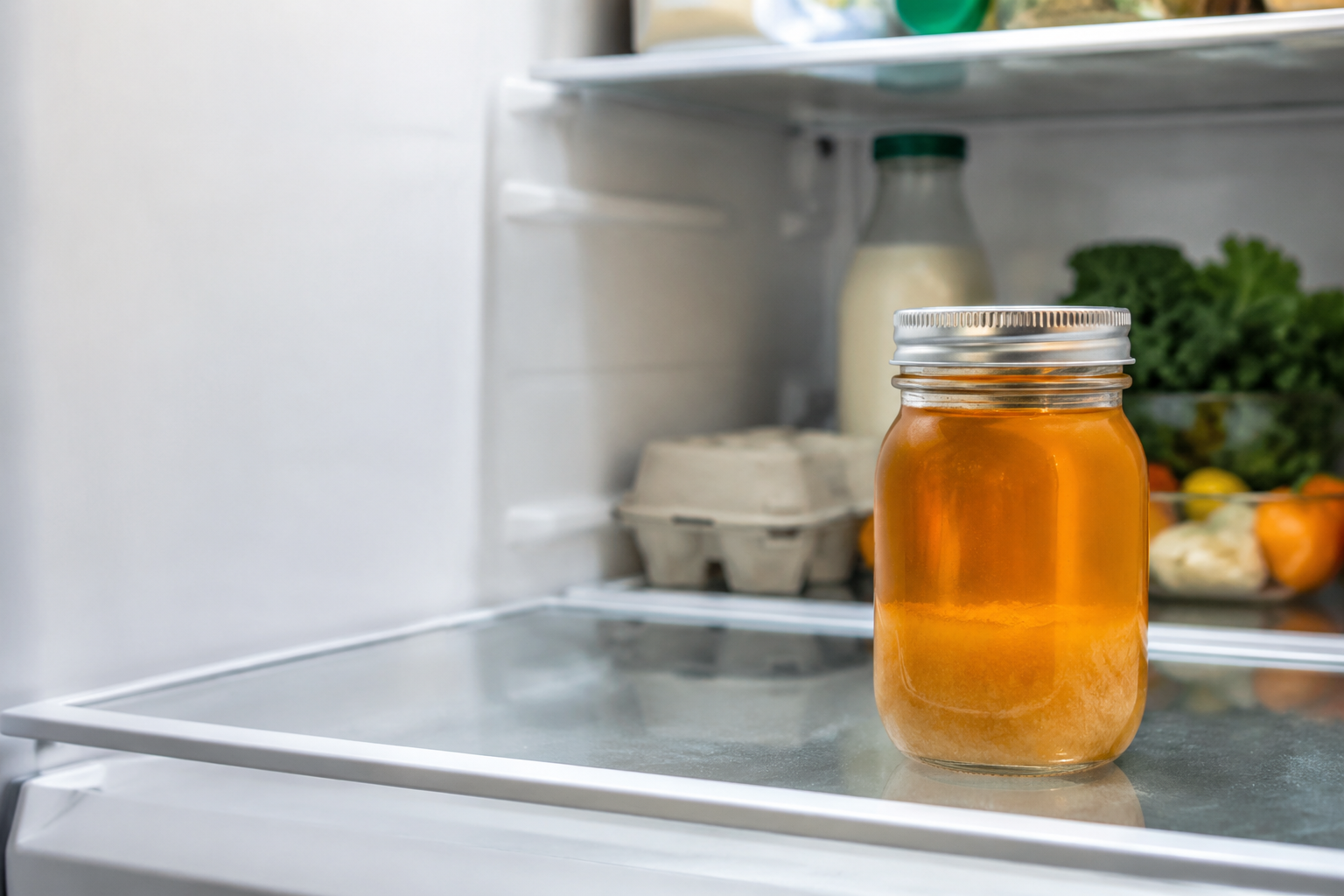
Does Honey Need to Be Refrigerated? What Happens in the Fridge
THE COMPLETE COLD-STORAGE GUIDE Does Honey Need to Be Refrigerated? What Happens in the Fridge Plain honey usually belongs in a dry
Honey: frequently asked questions
Is honey bee vomit?
No. Nectar is carried in the crop, a specialized storage organ separate from the digestive midgut, and is transferred and processed before becoming honey.
Is honey mostly sugar?
Yes. Fructose and glucose make up most of its solids, alongside water and smaller amounts of acids, enzymes, aroma compounds and other constituents.
Why are some honeys dark?
Color reflects botanical source and chemistry. Dark honey is not automatically stronger, healthier or lower quality.
Does crystallized honey mean it is fake?
No. Crystallization is a normal physical change whose speed varies by floral source, composition and storage temperature.
Can honey expire?
Properly stored honey is remarkably stable, but moisture contamination, fermentation, heat and long storage can reduce quality.
Why can’t babies have honey?
Honey should never be given before 12 months because it may contain spores that can cause infant botulism.
Honey composition, standards, production and safety sources
- Codex Alimentarius Commission. International food standards and the Standard for Honey.
- U.S. Department of Agriculture. United States Standards for Grades of Extracted Honey.
- National Center for Home Food Preservation. Food storage and preservation guidance.
- Centers for Disease Control and Prevention. Botulism prevention and infant honey safety.
- National Library of Medicine, PubMed. Research literature on honey composition and authenticity.
Honey characteristics vary by botanical origin, bee species, geography, season, processing, storage and analytical method.
Explore the world’s honey varieties
Compare floral origins, flavors, textures, regions and production traditions.
Discover types of honey →