
Orange Blossom Honey: Flavor, Origin, Uses and How to Choose It
Orange blossom honey is made when honey bees collect nectar during the flowering of orange and other citrus trees. It is usually pale gold to light amber, fragrant and gently sweet, with floral, citrus-peel and fresh-fruit impressions that vary by grove, season and handling.
This complete guide explains where orange blossom honey comes from, what it tastes like, how it compares with other light honeys, how it crystallizes, its best culinary uses and what a floral-source label can—and cannot—prove.
What is orange blossom honey?
It is a floral-source honey associated primarily with nectar collected from flowering citrus trees. The honey itself is not orange juice flavored: its aroma and flavor come from nectar, landscape and harvest conditions.
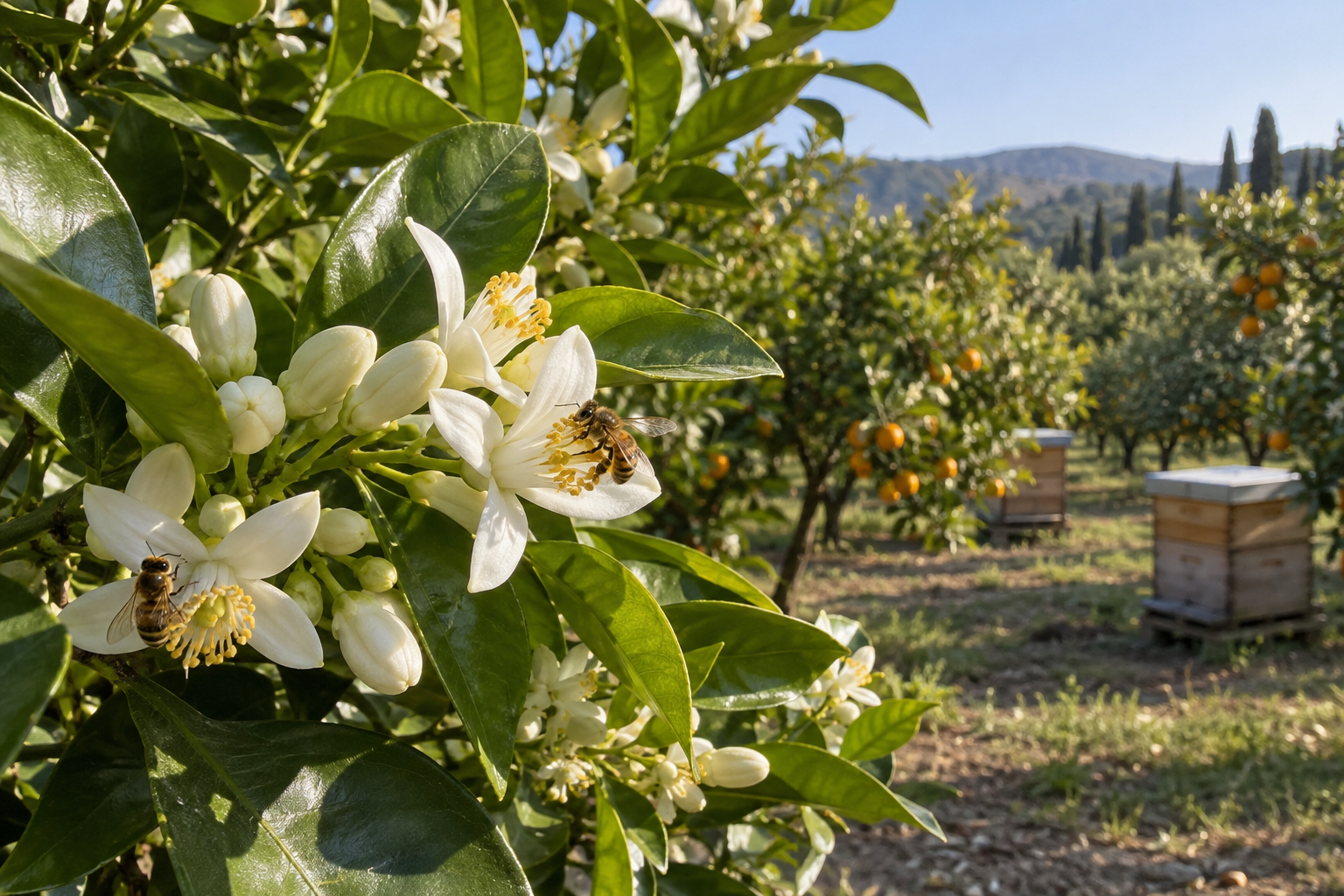
Honey bees visit fragrant citrus blossoms during a concentrated spring bloom. Grove composition, weather, competing flowers and harvest timing determine how clearly that nectar source appears in the finished honey.
Orange blossom honey—from citrus bloom to kitchen
Contents
A floral-source honey, not honey mixed with orange
Orange blossom honey is produced from nectar gathered while citrus trees are flowering. Commercial groves may contain sweet orange, mandarin, tangerine, grapefruit, lemon or other citrus, so some producers use the broader term citrus blossom honey.
Bees forage across landscapes rather than obeying crop boundaries. “Orange blossom” therefore describes the predominant sensory or botanical influence, not absolute nectar exclusivity. The strength of the citrus character depends on bloom density, alternative forage, colony placement and the point at which supers are added and removed.
Pale gold to amber
Color varies by citrus mix, location, season, age and processing.
Floral and citrus-led
Common impressions include blossoms, citrus peel, fresh fruit and soft vanilla.
Fluid or crystallized
It may be sold liquid, naturally set or deliberately creamed.
Orange blossom honey versus other light floral honeys
Light color alone cannot identify a floral source. Aroma, flavor, geography, producer records and—where used—pollen or chemical analysis provide better context.
| Honey | Typical sensory profile | Useful distinction |
|---|---|---|
| Orange blossom | Floral, fresh citrus, light fruit and sometimes a gentle peel note | Citrus-derived nectar influence; usually aromatic without tasting like juice |
| Acacia | Very mild, clean and softly floral | Often remains liquid longer because of its sugar balance |
| Clover | Mild, familiar sweetness with soft floral notes | Broadly produced and usually less citrus-aromatic |
| Alfalfa | Mild, grassy-floral and clean | Commonly associated with agricultural forage landscapes |
| Wildflower | Variable from delicate to strongly herbal | Represents multiple flowers rather than one named predominant source |
| Lavender | Floral, herbaceous and sometimes softly fruity | A different aromatic family despite similarly pale color |
Bottom line: choose orange blossom honey for fragrance and balance, not because pale color proves purity or superior quality.
How orange blossom honey is produced
Citrus flowering is seasonal and can be concentrated. Beekeepers place colonies in or near suitable groves before or during bloom, while strong colonies send foragers to the most rewarding nectar sources available. Nectar is carried home, shared among workers, enzymatically transformed and concentrated as water evaporates.
Once sufficiently ripened, the colony caps stored honey with wax. Beekeepers harvest suitable supers, extract the honey, remove wax and debris to the desired degree, allow bubbles to settle and bottle it. Some lots are gently warmed for handling; others are minimally processed or creamed.
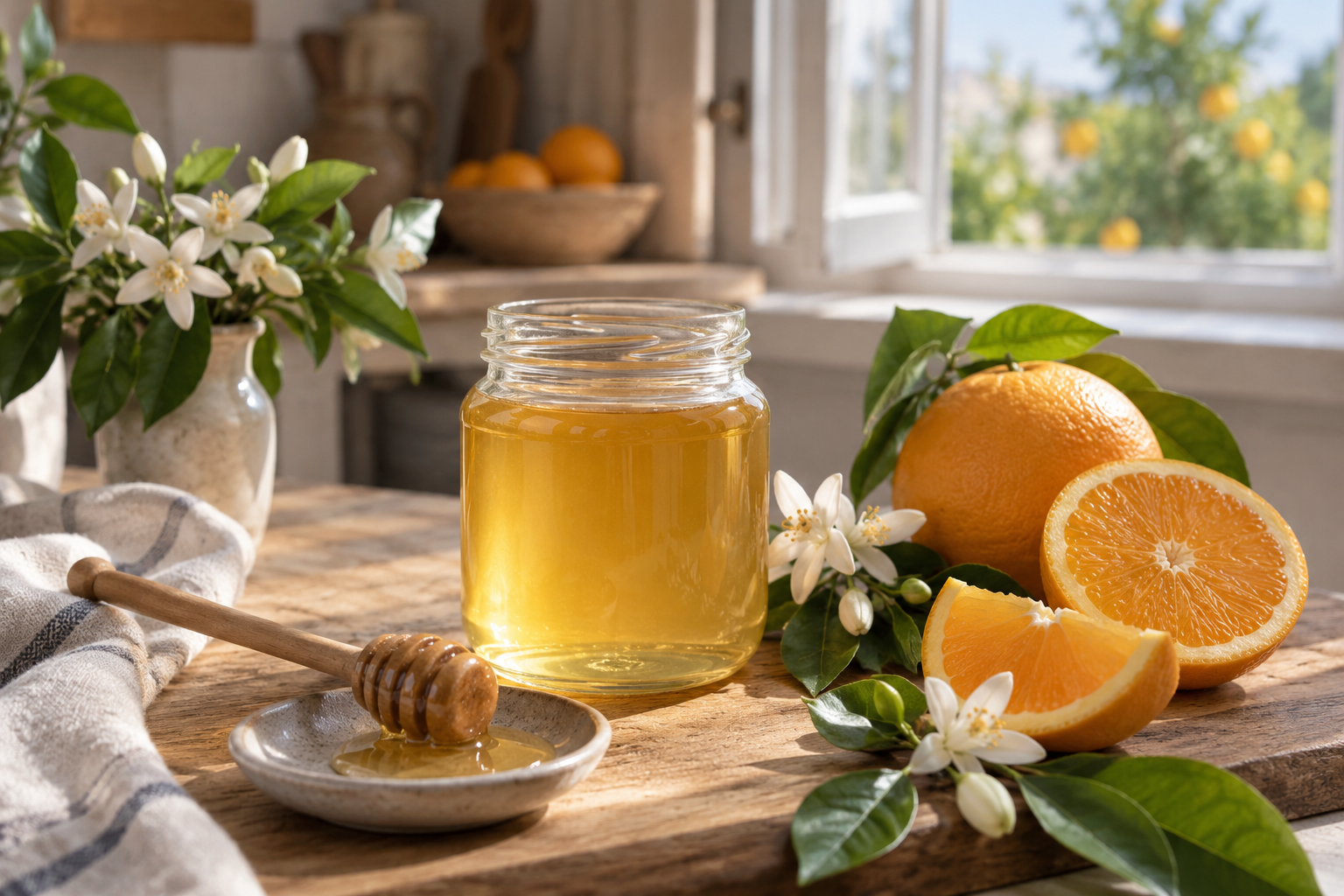
Orange blossom honey is often pale and highly aromatic. Fresh citrus and blossoms provide visual context, but authentic orange blossom honey receives its character from floral nectar—not added fruit or flavoring.
Color, aroma, flavor and crystallization
At room temperature, orange blossom honey often releases a perfume reminiscent of fresh white blossoms, sweet citrus, zest and mild fruit. The palate is typically bright and clean rather than sharply acidic because honey is not orange juice. A faint bitterness or peel-like finish can add complexity.
Its color may range from nearly colorless straw to warm amber. Storage, heat and time can deepen color and soften delicate aromas. Crystallization is a normal change caused mainly by glucose leaving solution and forming crystals; it does not mean authentic honey has spoiled.
Origin changes the final jar
Orange blossom and citrus honeys are produced wherever commercial citrus, suitable bee forage and harvest conditions overlap. Important origins include parts of the United States, Mexico, the Mediterranean basin, North Africa, the Middle East and other citrus-growing regions.
Subtropical citrus country
Historically famous for fragrant orange blossom honey, with harvests shaped by changing grove acreage and weather.
Dry-climate citrus districts
Irrigated groves and regional bloom timing create distinct production conditions.
Diverse citrus landscapes
Climate and elevation support citrus honey with significant regional variation.
Mediterranean citrus honey
Spanish citrus honeys have been studied for distinctive volatile aroma compounds.
Regional Mediterranean styles
Citrus type, mixed forage and local processing influence sensory character.
Judge the producer and lot
No country name alone guarantees flavor, authenticity or quality.
Best culinary uses for orange blossom honey
- Tea and coffee: use where a light floral aroma complements rather than overwhelms the drink.
- Yogurt and fresh cheese: drizzle over plain yogurt, ricotta, mascarpone or mild goat cheese.
- Citrus desserts: pair with orange cake, panna cotta, custards, fruit salads and shortbread.
- Salad dressings: balance lemon or vinegar with honey, olive oil, salt and herbs.
- Glazes: combine with citrus zest, mustard or spices for vegetables, poultry or fish.
- Baking: account for honey’s moisture, acidity and browning when replacing granulated sugar.
- Cheese boards: serve with fresh, creamy or lightly aged cheeses where aroma remains noticeable.
High heat can flatten its delicate floral character, so add it late when aroma matters most.
Labels, authenticity, storage and safety
- Read the ingredient list. Plain orange blossom honey should be honey—not honey with orange flavor unless clearly sold as a flavored product.
- Look for origin and traceability. Country or region, producer information and lot identification provide useful accountability.
- Expect honest variation. Color, aroma and crystallization can change between groves and harvest years.
- Do not rely on color alone. Pale honey can come from many botanical sources.
- Treat health promises carefully. Orange blossom honey remains a concentrated source of sugars and is not a disease treatment.
- Store it well. Keep tightly closed at a stable room temperature, away from moisture, direct sun and excessive heat.
Related honey guides
Compare orange blossom honey with other major floral sources and learn how to evaluate quality.
Types of Honey
Explore floral, regional and honeydew honeys from around the world.
Clover Honey
Compare a familiar mild floral honey with orange blossom’s aromatic citrus character.
Honey Grades Explained
Understand grades, labels, origin claims and what quality language actually means.
Relevant floral honey, quality and tasting guides
Continue with current Hive To Honey articles covering botanical sources, regional honeys, authenticity, storage and everyday uses.
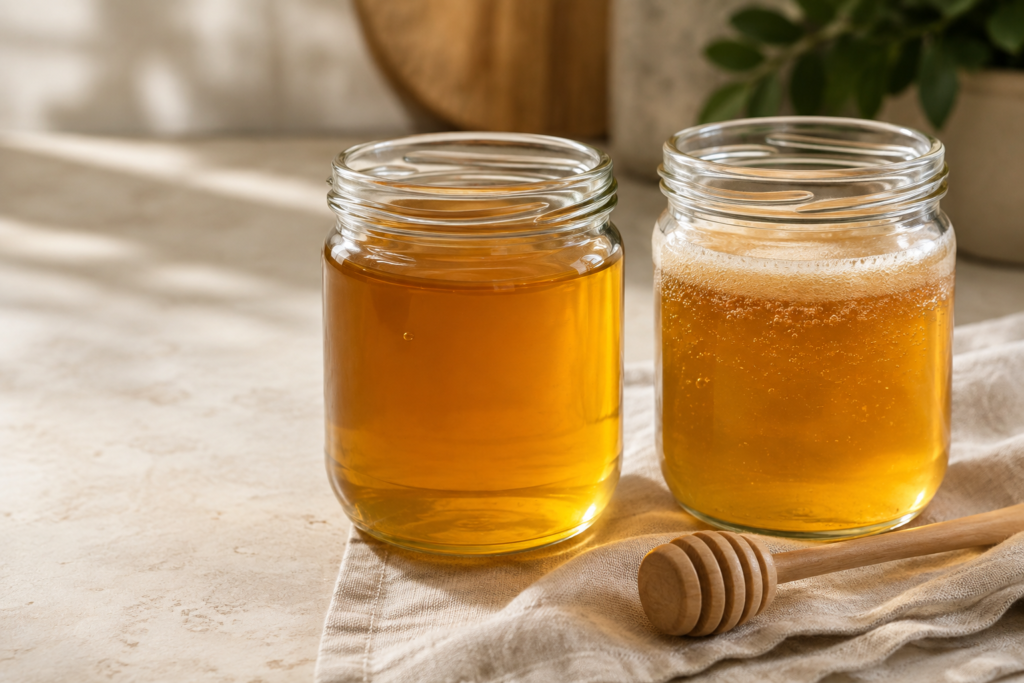
Why Is My Honey Foamy? Bubbles, Wax or Fermentation Explained
THE COMPLETE HONEY FOAM GUIDE Why Is My Honey Foamy? Bubbles, Wax or Fermentation Explained Foam on honey is not automatically spoilage.
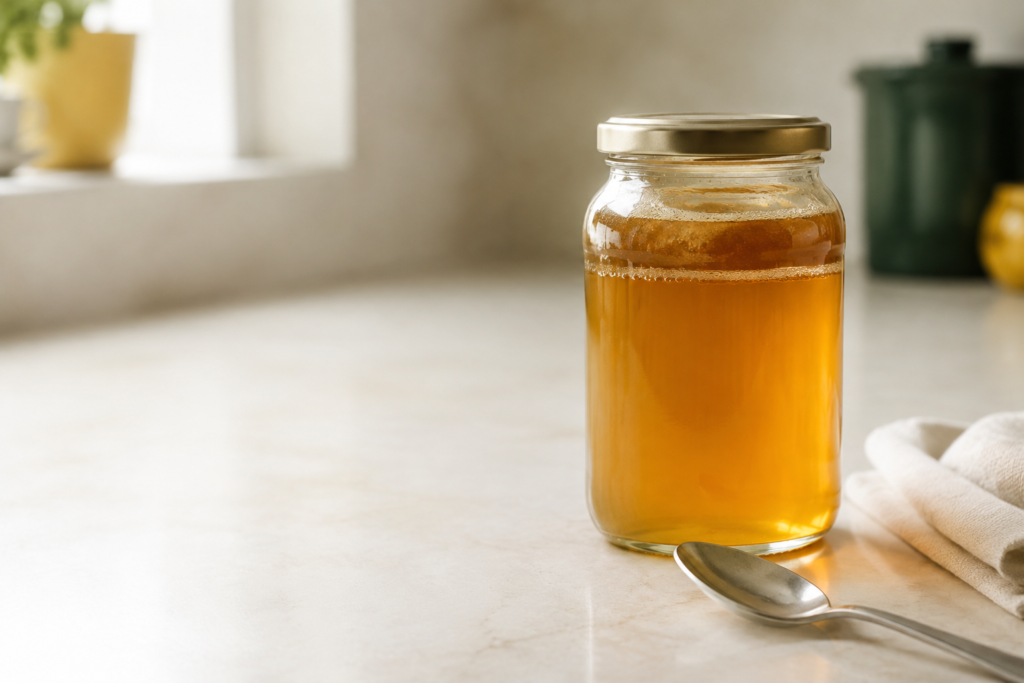
Why Does Honey Ferment? Signs, Causes and Prevention
THE COMPLETE HONEY FERMENTATION GUIDE Why Does Honey Ferment? Signs, Causes and Prevention Unintended honey fermentation usually begins when yeasts can use
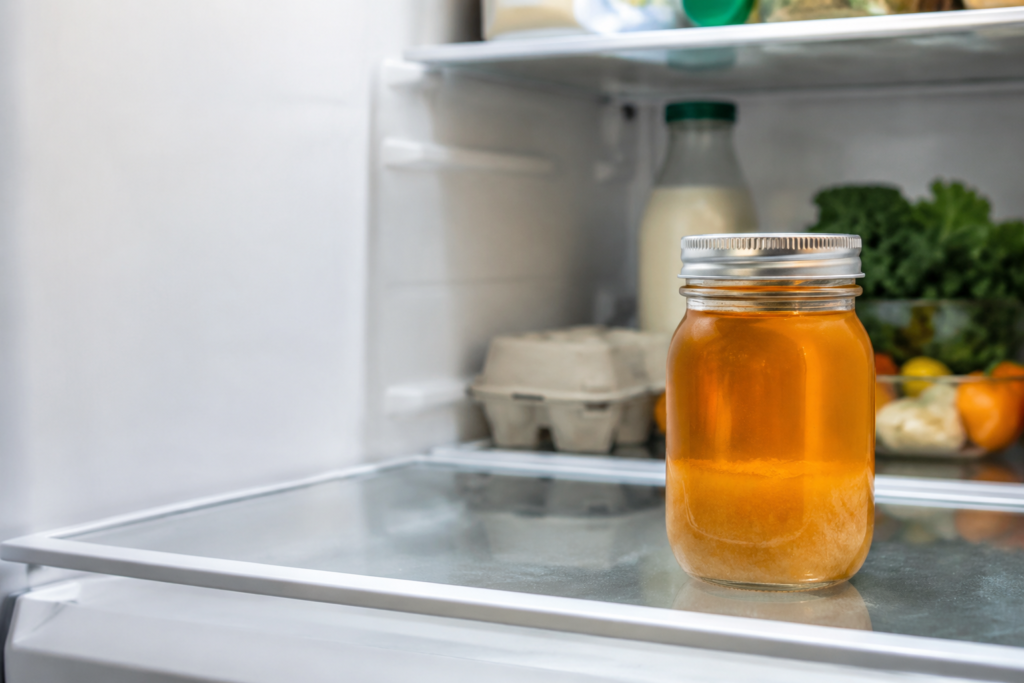
Does Honey Need to Be Refrigerated? What Happens in the Fridge
THE COMPLETE COLD-STORAGE GUIDE Does Honey Need to Be Refrigerated? What Happens in the Fridge Plain honey usually belongs in a dry
Orange blossom honey: frequently asked questions
Does orange blossom honey contain oranges?
Plain orange blossom honey is made from nectar gathered from citrus flowers. It normally does not contain orange fruit, juice or added flavoring.
What does orange blossom honey taste like?
It is usually floral and gently fruity, with impressions of fresh citrus, blossom, peel or soft vanilla. Flavor varies by region and harvest.
Is orange blossom honey monofloral?
It is sold as a floral-source honey when citrus provides the predominant influence. Bees may still visit other flowers, so monofloral does not mean absolute nectar exclusivity.
Why did my orange blossom honey crystallize?
Glucose naturally formed crystals. Floral source, water content, temperature and seed particles influence the rate. Crystallization alone is not spoilage.
Is orange blossom honey healthier than other honey?
It has a distinctive sensory profile, but it remains primarily sugars and water. Claims of superior health effects require evidence specific to the product and use.
Can babies have orange blossom honey?
No. No honey should be given to infants under 12 months.
Standards and research sources
- Codex Alimentarius Commission. Standard for Honey (CXS 12-1981).
- U.S. Food and Drug Administration. Proper Labeling of Honey and Honey Products.
- Castro-Vázquez, L. et al. Aroma composition and chemical markers of Spanish citrus honeys. Food Chemistry.
- U.S. Department of Agriculture. FoodData Central: honey nutrient data.
Floral profiles vary naturally, and labeling requirements differ by market. Consult current local rules for commercial decisions.
Explore honey through its botanical origins
Follow nectar from citrus groves, forests, meadows and wetlands into the world’s most distinctive honeys.
Explore types of honey →