Why Does Honey Ferment? Signs, Causes and Prevention
Unintended honey fermentation usually begins when yeasts can use enough available moisture. Learn how it differs from crystallization, what warning signs to notice, how contamination happens and how careful storage reduces the risk.
Moisture can allow naturally present yeasts to become active
- Properly ripened plain honey normally contains too little available water for most microorganisms to grow.
- Higher moisture, dilution, humid storage or wet utensils can make fermentation more likely.
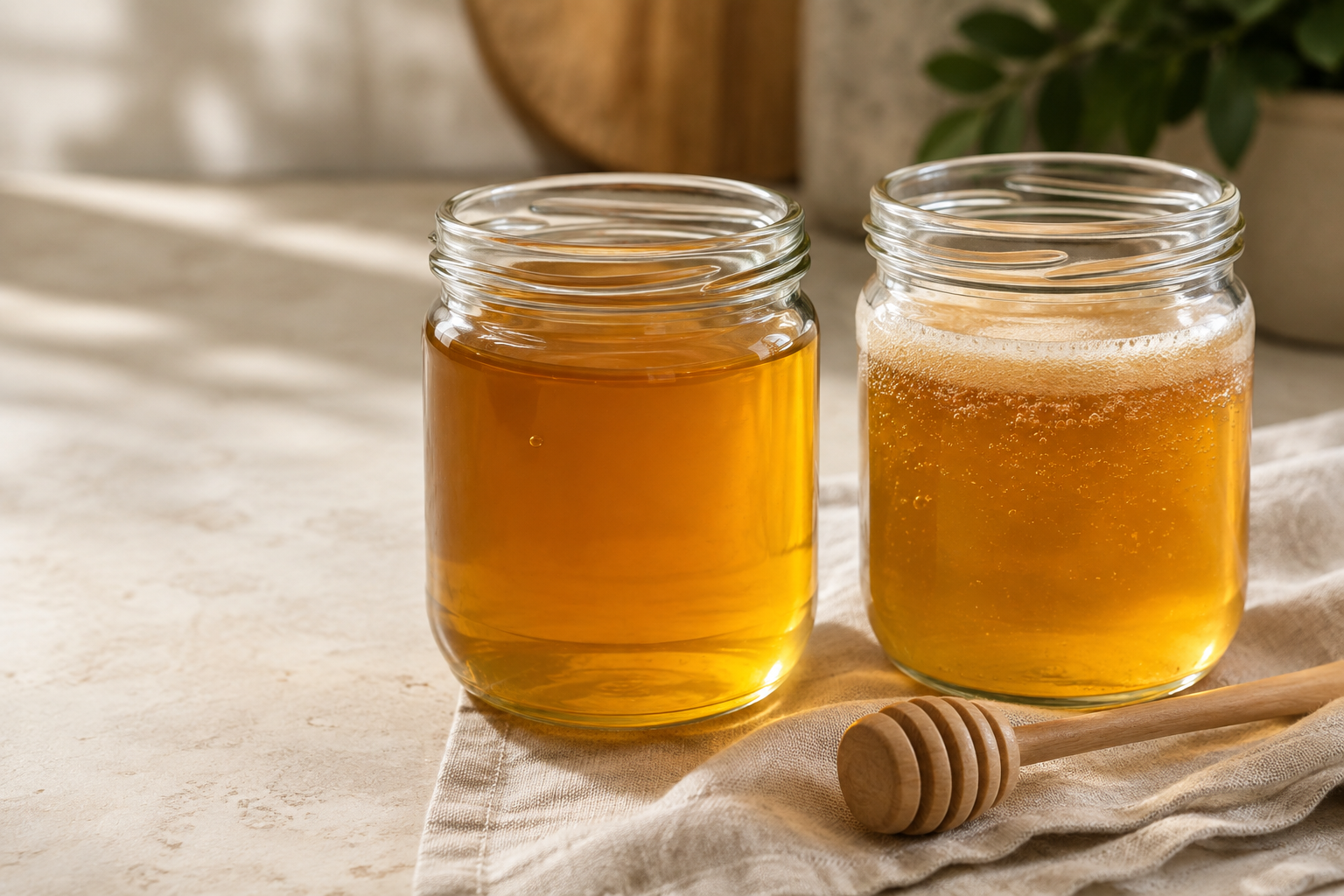
- Persistent bubbles, foam, pressure and a changed sour or yeast-like odor deserve attention.
- Crystals alone are normal and are not evidence of fermentation.
- Do not taste-test honey that appears contaminated or has an uncertain history.
- Discard questionable household honey rather than attempting to repair it.
Understand unintended honey fermentation
Possible signs that honey is fermenting
Gas and persistent bubbles
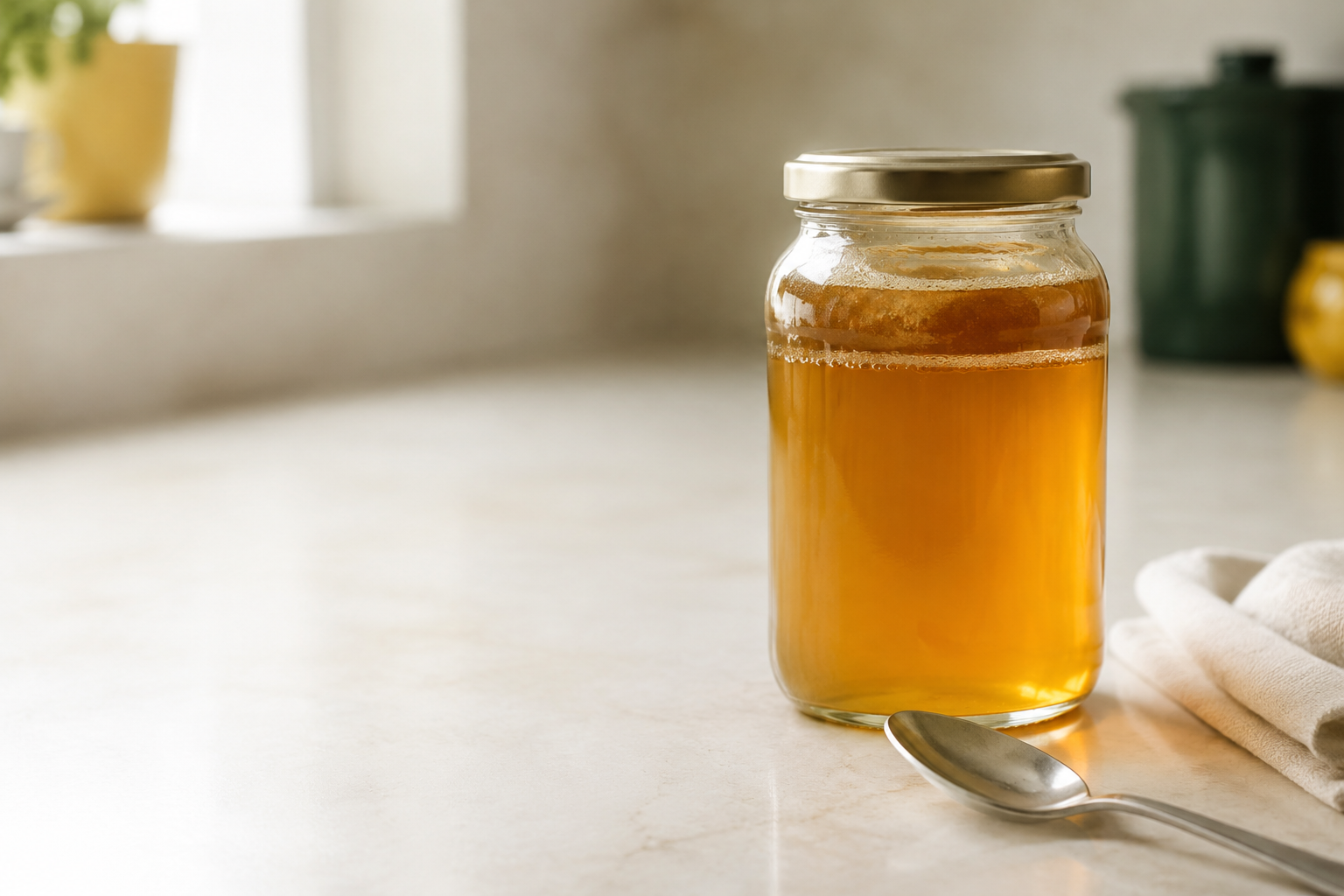
Foam and changed consistency
Changed odor
Fermented honey vs. crystallized honey
| Observation | Crystallization | Possible fermentation |
|---|---|---|
| Texture | Grainy, creamy, cloudy or firm crystals | May become thinner, foamy or separated |
| Bubbles | Occasional trapped air can occur | Gas bubbles may continue forming |
| Odor | Normal floral or honey aroma | New sour, sharp or yeast-like odor may develop |
| Pressure | Not expected from crystals alone | Gas production may pressurize a closed package |
| Meaning | Usually a normal physical change | Microbial activity associated with suitable conditions |
| Household response | Use as is or warm gently | Do not taste-test; discard when fermentation or contamination is suspected |
Honey can crystallize and ferment in the same jar, so crystals do not rule fermentation in or out. Look at the complete pattern.
What causes honey to ferment?
Yeasts may be present in honey without causing visible change. Fermentation becomes more likely when moisture and storage conditions allow them to grow.
Honey harvested too early
Water entering the jar
A loose or damaged seal
High-moisture honey
Crystallization and liquid separation
Warm storage conditions
How moisture and yeast interact in honey
Codex sets general compositional limits for honey, but product assessment also depends on the honey type and applicable national standards.
Can crystallized honey ferment?
Crystals are not microbes
Liquid can separate
Use the full set of signs
Prevention stays the same
If normal crystals are the only issue, the honey can be used as a spread or reliquefied gently. Do not warm a pressurized or suspicious jar.
What should you do with fermented honey?
For household honey
When unintended fermentation or contamination is suspected, do not taste-test the honey. Keep it away from children and pets, avoid opening a pressurized container near your face, and discard it according to local household-waste guidance.
Heating, straining or refrigeration should not be treated as a household method for making questionable honey safe.
When you are unsure
Check the ingredient list, product label, seal, lot code, recalls and storage history. Contact the producer or relevant food-safety authority when a commercial product appears abnormal.
For producers, a measured moisture result or laboratory assessment is more reliable than appearance alone. Follow applicable processing and regulatory controls.
How to prevent unintended honey fermentation
Buy sound, properly packaged honey
Keep the lid firmly closed
Use clean, dry utensils
Store in a stable dry cupboard
Beekeepers and packers also manage ripeness, moisture measurement, clean extraction, suitable containers and processing controls. Household storage cannot correct honey that entered the jar with unsuitable moisture or contamination.
For households, beekeepers and honey businesses
Important honey safety reminders
Honey’s natural stability does not make every jar or honey-based product safe in every circumstance.
Never for infants
Do not taste-test suspicious honey
Treat pressure cautiously
Discard damaged packaging
Check additional ingredients
Food honey is not wound-care honey
Frequently asked questions about fermented honey
Why does honey ferment?
Unintended fermentation occurs when yeasts can grow in honey, usually because enough moisture is available through high initial moisture, dilution, humidity or contamination.
How can you tell if honey is fermenting?
Possible signs include continuing gas bubbles, persistent foam, pressure, thinning or separation and a new sour or yeast-like odor. Consider several signs and the storage history together.
Is fermented honey safe to eat?
Do not taste-test honey that fermented unintentionally or may be contaminated. For ordinary household use, discard questionable honey rather than attempting to repair it.
Are bubbles always fermentation?
No. Pouring can trap ordinary air bubbles. Continuing bubble formation combined with foam, pressure or changed odor is more concerning.
Can crystallized honey ferment?
It can, but crystallization alone is normal. Partial crystallization may change the water balance of the remaining liquid phase, so evaluate other warning signs separately.
Can fermented honey be fixed by heating?
Households should not rely on heating to make questionable honey safe. Commercial processing controls belong to trained producers operating under applicable rules.
Does raw honey ferment more easily?
Fermentation risk depends strongly on moisture, yeast level, handling and storage. “Raw” by itself does not diagnose or guarantee fermentation.
How can I prevent honey fermentation?
Buy properly packaged honey, keep the lid tight, use clean dry utensils and store plain honey in a stable dry cupboard away from humidity and contamination.
Latest Honey Storage & Care guides
Continue with evidence-led guides covering shelf life, moisture, crystallization, refrigeration, freezing and responsible storage.
Why Is My Honey Foamy? Bubbles, Wax or Fermentation Explained
THE COMPLETE HONEY FOAM GUIDE Why Is My Honey Foamy? Bubbles, Wax or Fermentation Explained Foam on honey is not automatically spoilage.
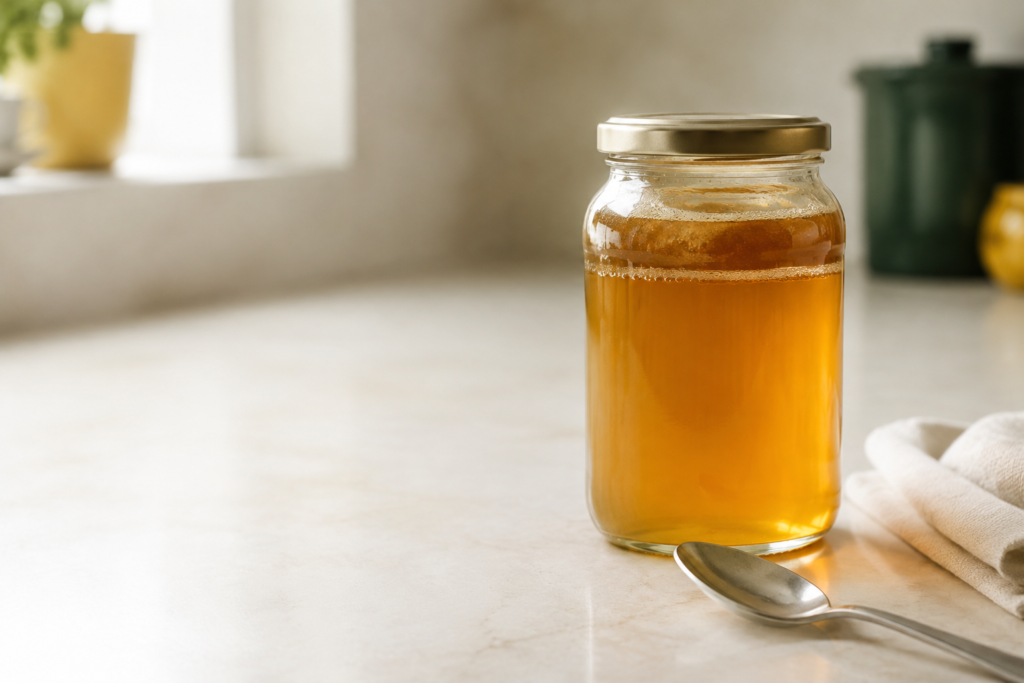
Why Does Honey Ferment? Signs, Causes and Prevention
THE COMPLETE HONEY FERMENTATION GUIDE Why Does Honey Ferment? Signs, Causes and Prevention Unintended honey fermentation usually begins when yeasts can use
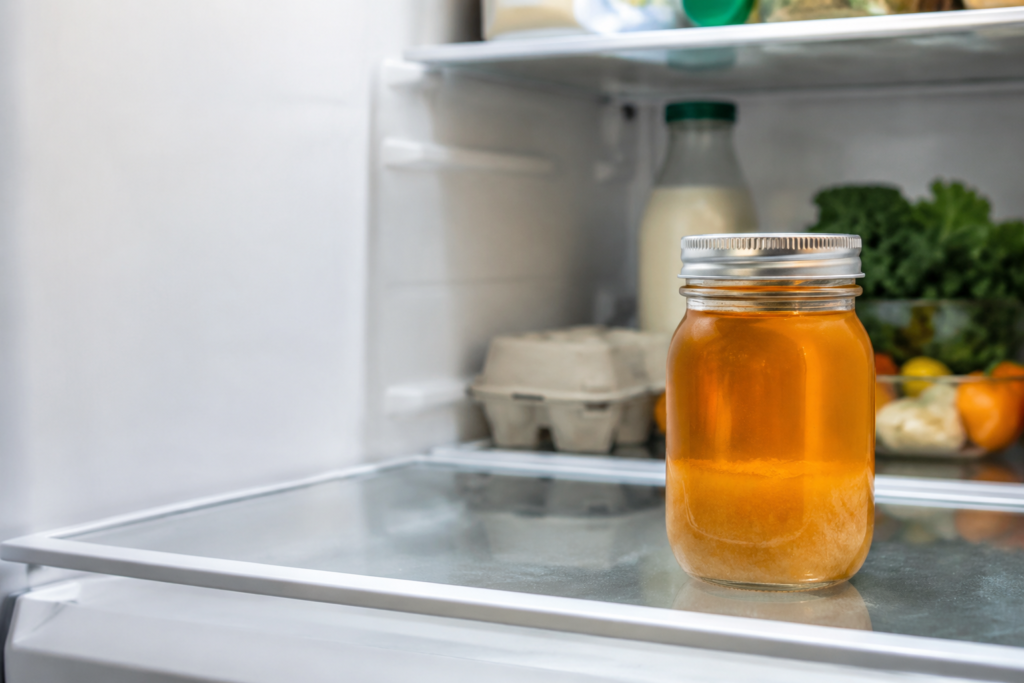
Does Honey Need to Be Refrigerated? What Happens in the Fridge
THE COMPLETE COLD-STORAGE GUIDE Does Honey Need to Be Refrigerated? What Happens in the Fridge Plain honey usually belongs in a dry
Continue with the complete care library
How this fermentation guide was researched
This guide prioritizes international honey references and university extension guidance. It does not provide a recipe for intentional fermentation and does not treat visual inspection as a laboratory diagnosis.
- FAO: Honey moisture, yeasts and processing
- FAO: Honey storage and quality control
- FAO: Honey processing and fermentation risk
- FAO/WHO Codex Standard for Honey
- Penn State Extension: Yeast spoilage signs
- Penn State Extension: Moisture and honey stability
- Utah State University Extension: Storing Sugars
- Canadian Food Inspection Agency: Honey labeling requirements
Keep water out and take unusual changes seriously
Plain honey stays remarkably stable when properly ripened, sealed and kept dry. Persistent gas, foam, pressure or changed odor call for caution—not a taste test or household repair attempt.