Why Is My Honey Foamy? Bubbles, Wax or Fermentation Explained
Foam on honey is not automatically spoilage. Tiny air bubbles, wax and pollen can rise after extraction or pouring, while persistent bubbling, expanding froth, pressure and a changed odor can point toward fermentation. This guide helps you tell the patterns apart safely.
Most foam is either trapped material or a warning pattern
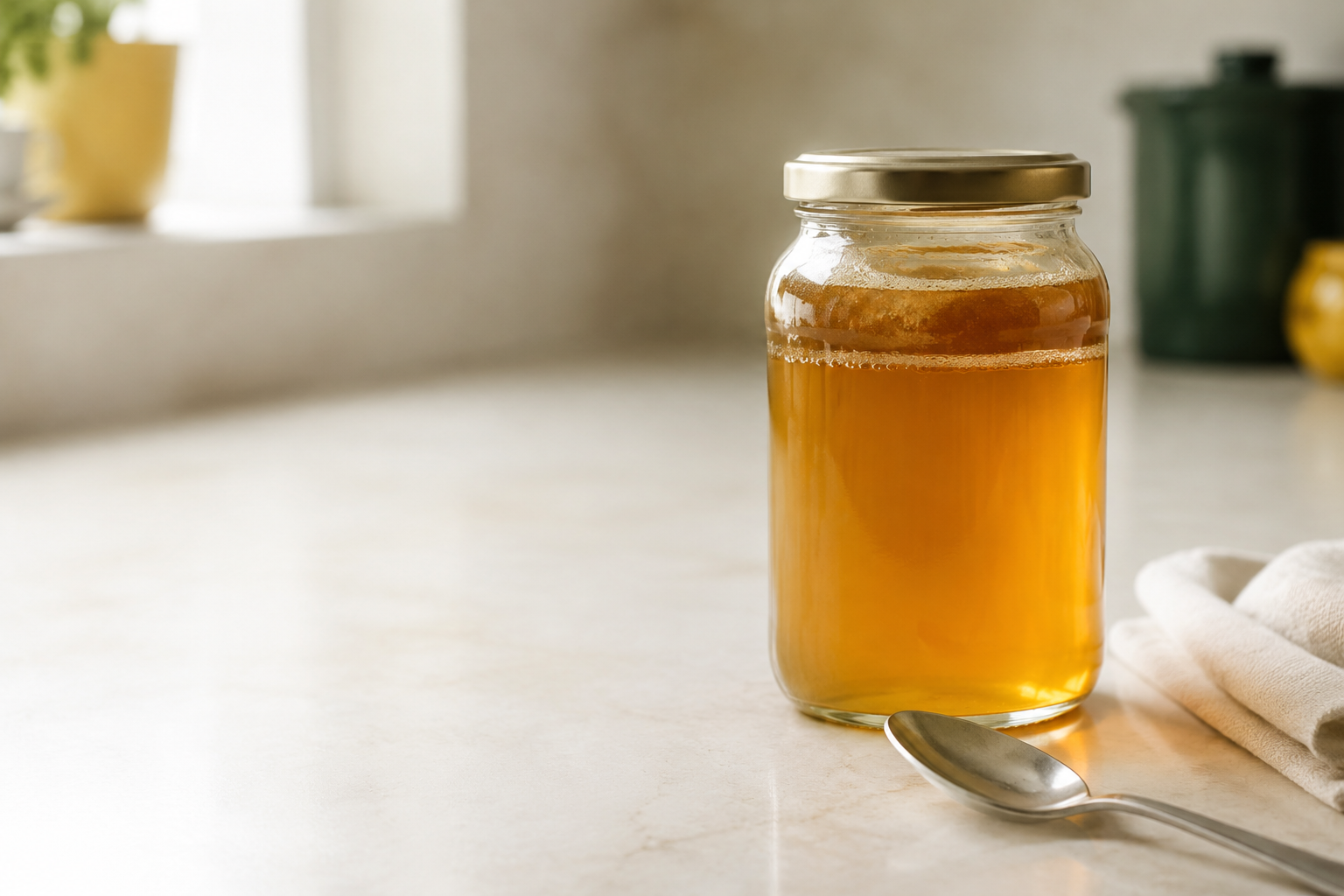
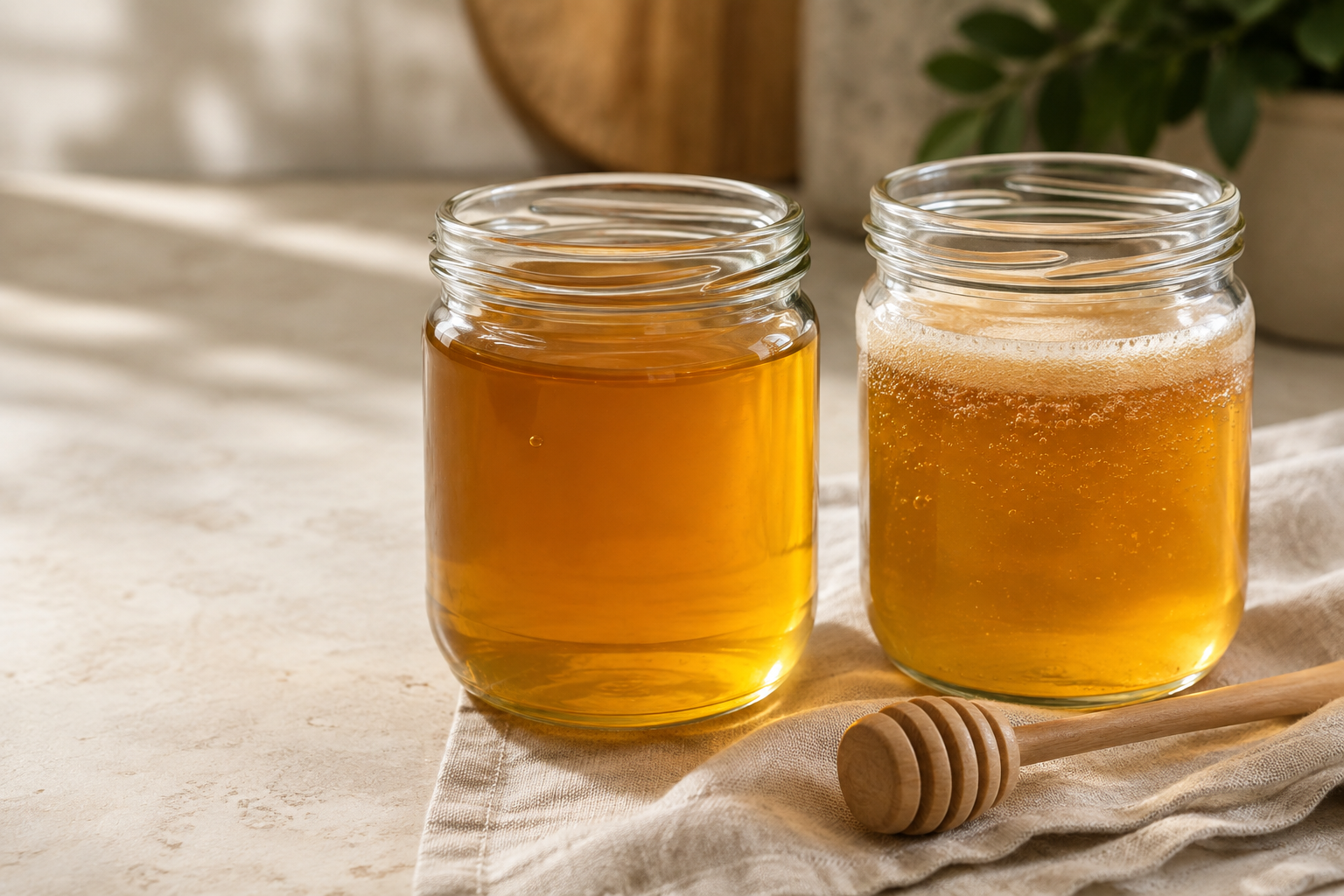
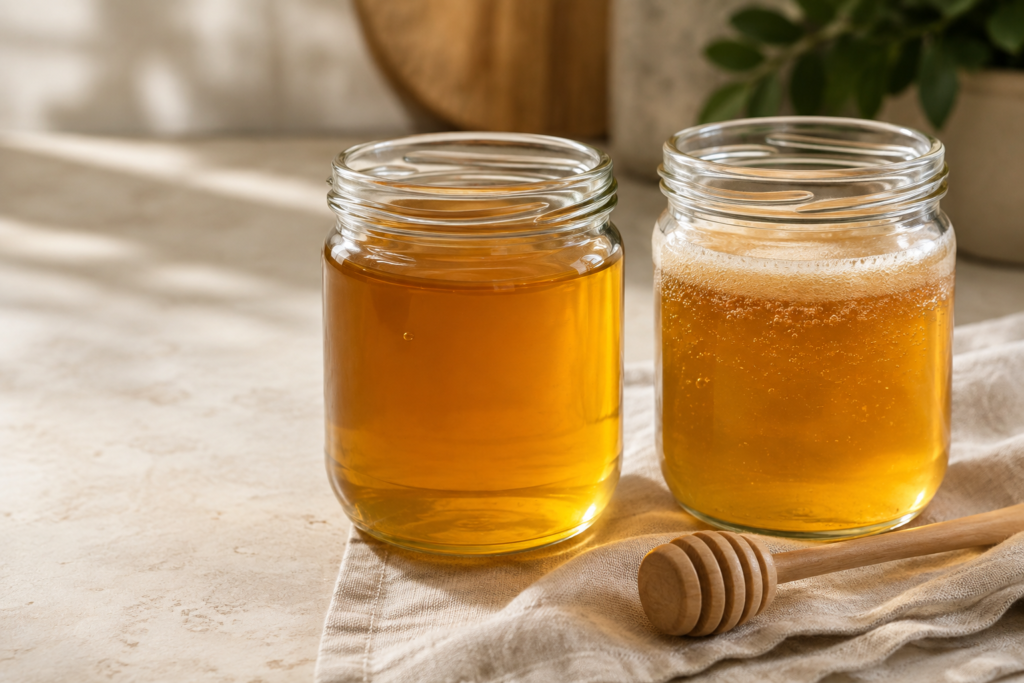
- A thin, stable layer of fine bubbles after pouring is often trapped air.
- Wax, pollen and other fine particles can collect in surface foam, especially in minimally filtered honey.
- Crystallization may make honey cloudy or grainy but does not create fermentation by itself.
- New bubbles that keep forming, expanding foam, pressure, thinning and sour or yeast-like odors are more concerning.
- Appearance alone cannot confirm safety or moisture content.
- Do not taste-test suspicious honey; discard questionable household honey.
Diagnose honey foam without guessing
A quick check for foam on honey
Did it appear after pouring?
Does it stay the same?
Are there other warning signs?
What kind of foam or bubbles are you seeing?
| Pattern | Likely explanation | What distinguishes it | Response |
|---|---|---|---|
| Fine surface bubbles | Air incorporated during handling | Appears after pouring or bottling and gradually settles | Let the sealed jar rest; monitor |
| Pale flecked foam | Air mixed with wax, pollen or fine particles | More common in minimally filtered honey; usually stable rather than active | Confirm normal odor and sound packaging |
| Cloudy or grainy layer | Crystallization | Solid or creamy crystals without gas pressure | Safe physical change when no spoilage signs exist |
| Growing froth or recurring bubbles | Possible fermentation | May occur with pressure, thinning, separation or changed odor | Do not taste-test; discard suspicious household honey |
These observations are practical clues, not laboratory confirmation. Several signs occurring together matter more than one isolated bubble.
When foam is simply trapped air
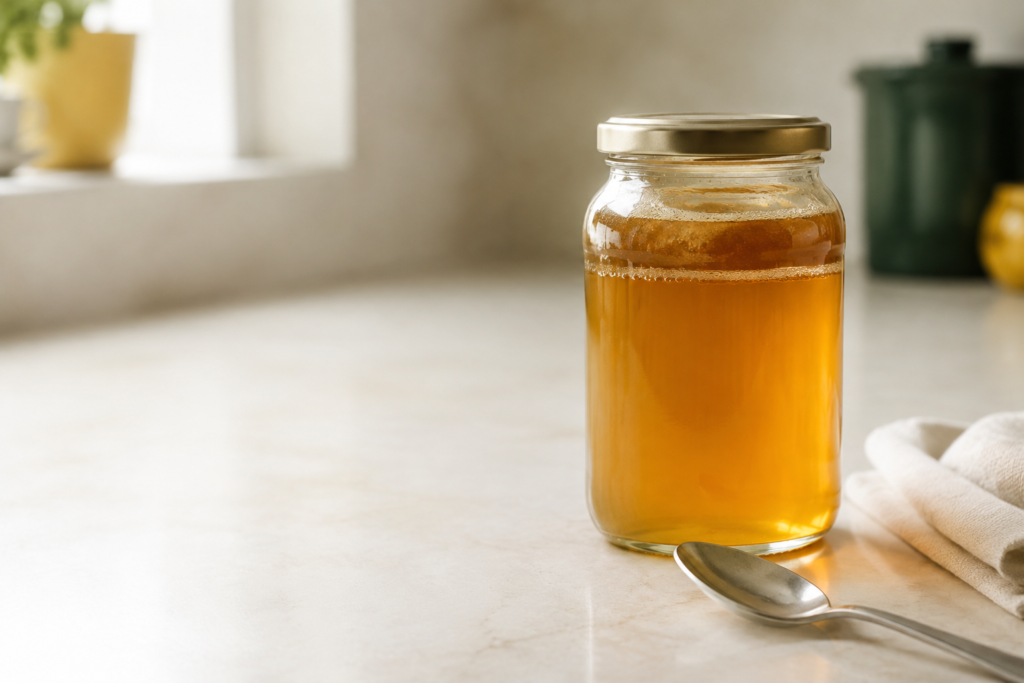
Honey is viscous, so mixing, pumping, straining and pouring can trap tiny air bubbles. The bubbles rise slowly and can form a light-colored cap because countless reflective surfaces make the layer look pale.
Freshly extracted honey
Recently bottled honey
Whipped or creamed honey
Temperature changes
The settling test
What air does not explain
Wax, pollen and fine material in surface foam
Color, particle load and surface appearance vary among honeys. Use the product label and producer information instead of relying on appearance as an authenticity test.
When foam may indicate honey fermentation
Bubbles keep returning
Foam grows or pushes upward
The odor changes
Texture becomes unusual
Fermentation becomes more likely when yeasts have enough available moisture. High initial moisture, dilution, humid exposure, condensation and wet utensils can all affect stability.
Foam, crystallization and liquid separation
Normal crystallization
Glucose can form crystals that make honey cloudy, grainy, creamy or firm. Pale crystals along the wall or surface may look suspicious, but crystals do not generate gas or pressure.
If the honey smells normal, the package is sound and no other warning signs exist, crystallization is generally a quality and texture change rather than spoilage.
Why separation deserves context
Partially crystallized honey may develop a liquid layer above or around crystals. Separation alone is not proof of fermentation, but the remaining liquid phase can have a different moisture balance.
Evaluate continuing bubbles, foam growth, pressure and odor separately. Do not warm a suspicious or pressurized jar.
What should you do with foamy honey?
Only fine bubbles after pouring
Stable foam with fine particles
Normal crystals only
Growing foam or pressure
Heating, skimming, straining or refrigeration should not be treated as ways to make suspicious honey safe. Contact the producer when a newly purchased commercial jar appears abnormal, retaining the label and lot code.
How to prevent unwanted foam and fermentation
For beekeepers, packers and retailers
Professional controls go beyond letting a jar settle. Harvest maturity, measured moisture, sanitary equipment, settling or clarification, suitable processing, package integrity, traceability and storage conditions all affect finished quality.
Measure rather than guess
Allow air to escape
Control the filling process
Separate abnormal lots
Retain traceability
Follow market rules
Frequently asked questions about foamy honey
Why is there white foam on top of my honey?
A pale surface layer can be made from fine trapped air bubbles, sometimes carrying wax, pollen or other tiny particles. Persistent growth, pressure or a changed odor deserves more caution.
Does foam mean honey is bad?
No. Foam alone may result from extraction, stirring, straining or bottling. Consider whether it is settling or increasing and whether gas, leakage, thinning or abnormal odor is also present.
Why are bubbles moving through my honey?
Bubbles introduced during handling can rise slowly because honey is viscous. Bubbles that continue appearing in an undisturbed jar may indicate gas production and warrant caution.
Can raw honey be foamy?
Yes. Lightly strained honey may retain more fine wax and other particles, and extraction can incorporate air. “Raw” does not by itself establish whether foam is harmless or fermented.
Is crystallized honey foamy?
Crystals can look pale or cloudy but do not create gas. A jar can contain both crystals and bubbles, so assess each observation separately.
Can I skim foam off honey?
Producers sometimes remove ordinary surface foam during controlled processing. Skimming does not make fermented or contaminated household honey safe.
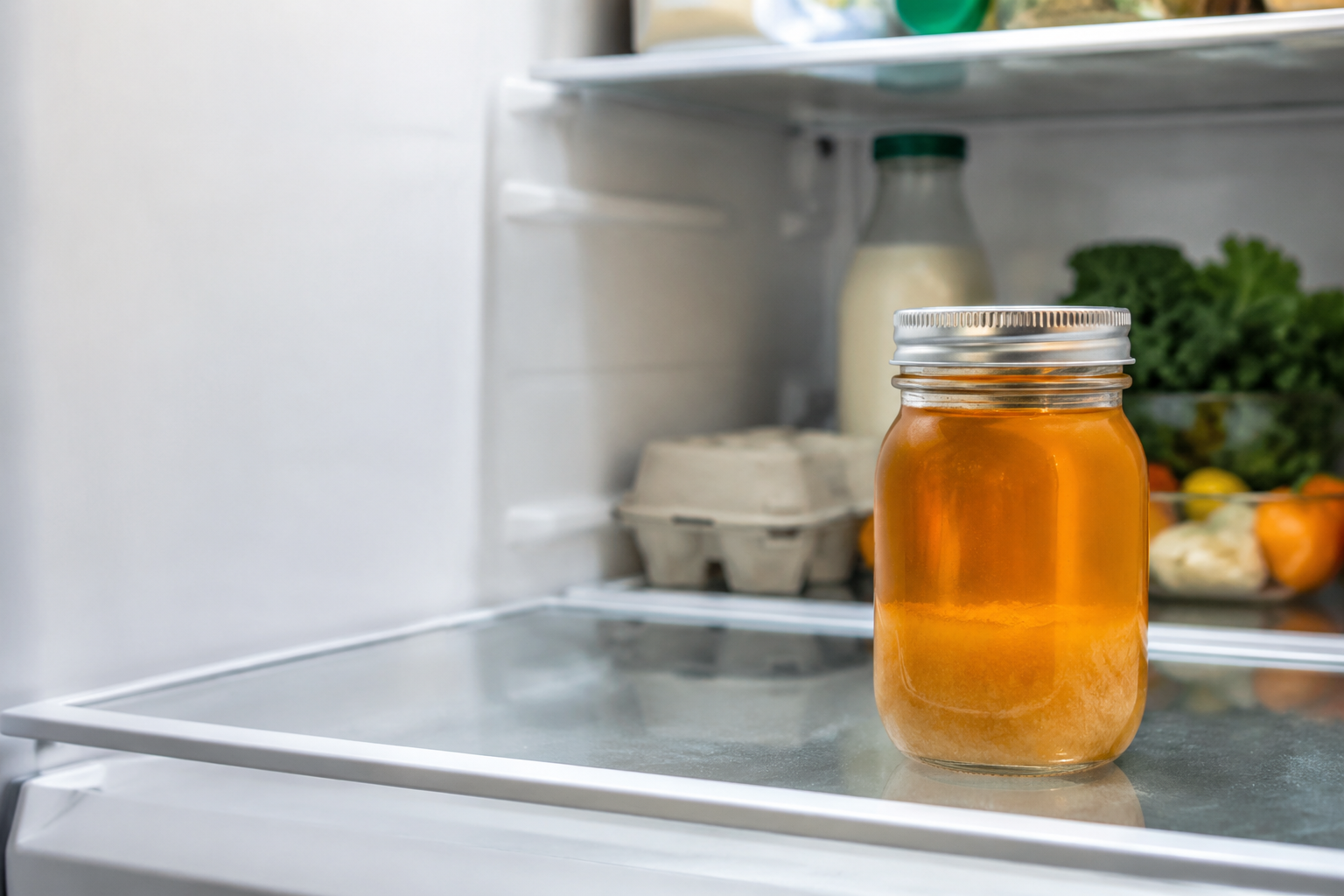
Should I refrigerate foamy honey?
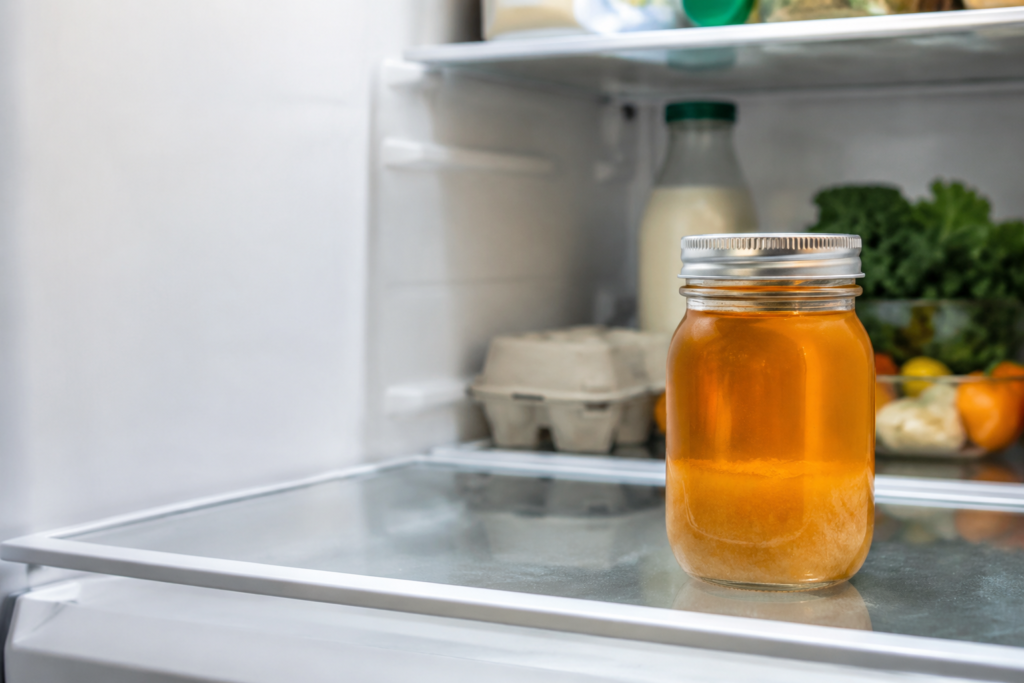
Refrigeration is not a repair for suspicious honey and can accelerate crystallization. Identify why the foam is present and discard honey showing fermentation or contamination warning signs.
Is it safe to taste honey to check it?
No. Do not taste-test honey that appears fermented, contaminated or comes from compromised packaging.
Latest Honey Storage & Care guides
Continue with evidence-led guides covering fermentation, moisture, shelf life, crystallization, refrigeration and responsible storage.
Why Is My Honey Foamy? Bubbles, Wax or Fermentation Explained
THE COMPLETE HONEY FOAM GUIDE Why Is My Honey Foamy? Bubbles, Wax or Fermentation Explained Foam on honey is not automatically spoilage.
Why Does Honey Ferment? Signs, Causes and Prevention
THE COMPLETE HONEY FERMENTATION GUIDE Why Does Honey Ferment? Signs, Causes and Prevention Unintended honey fermentation usually begins when yeasts can use
Does Honey Need to Be Refrigerated? What Happens in the Fridge
THE COMPLETE COLD-STORAGE GUIDE Does Honey Need to Be Refrigerated? What Happens in the Fridge Plain honey usually belongs in a dry
Continue with the complete care library
How this foamy honey guide was researched
This guide prioritizes international honey standards, FAO technical references and university extension guidance. It distinguishes visual clues from confirmed testing and does not treat appearance as a purity test.
- FAO: Honey composition, moisture and quality
- FAO: Honey processing, settling and crystallization
- FAO/WHO Codex Standard for Honey
- Penn State Extension: Yeast spoilage signs
- Utah State University Extension: Storing Sugars
- UK Food Standards Agency: Honey risk profile
- Canadian Food Inspection Agency: Honey labeling requirements
Watch whether the foam settles—or keeps changing
Fine bubbles and hive-derived particles often create harmless surface foam after handling. Continuing gas, expanding froth, pressure, leakage or an abnormal odor form a different pattern that calls for caution.