
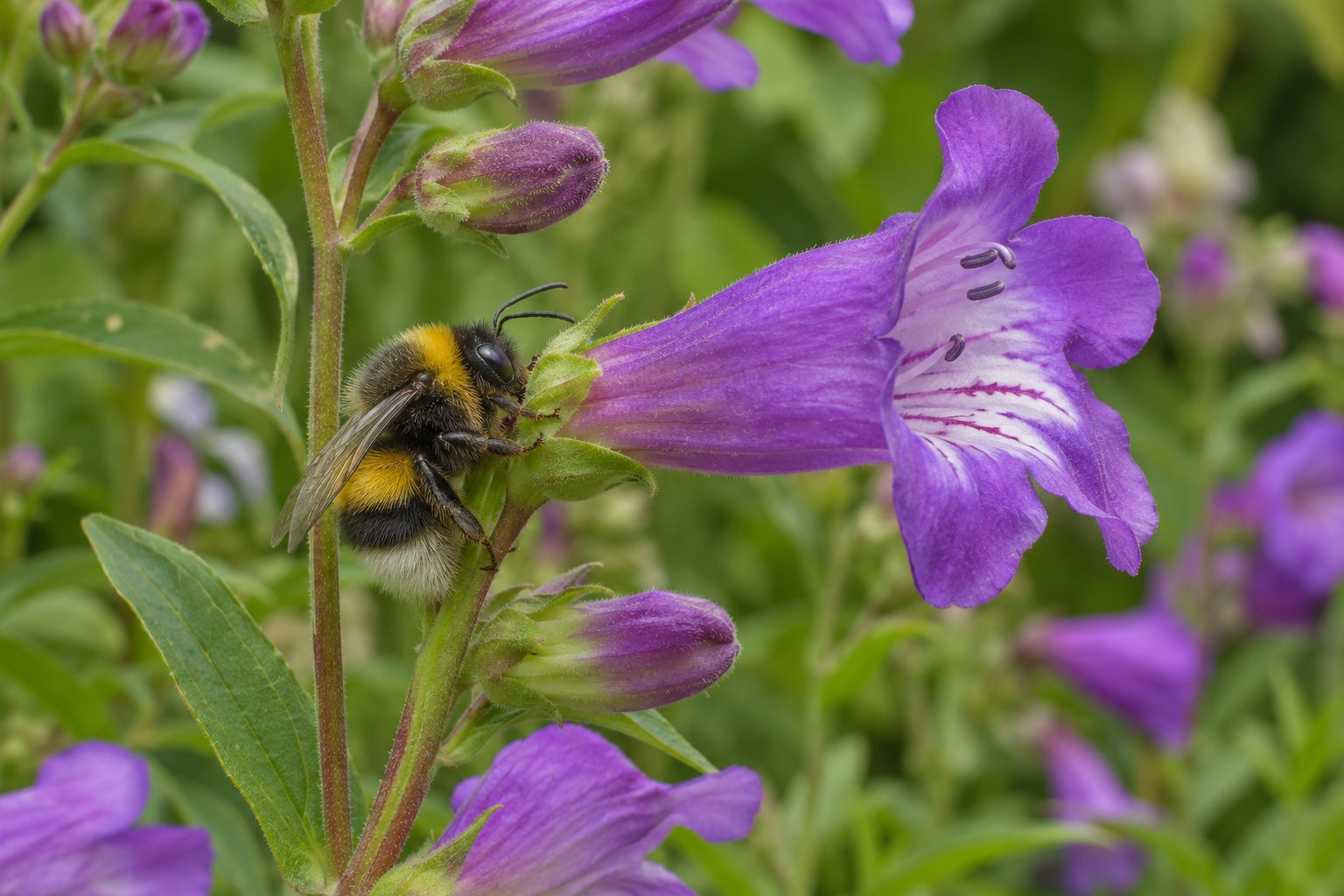
Watch a bee arrive at a tubular flower and you might see it head straight for the wrong end. It lands near the green base, pauses and moves to the same spot on the next bloom. The bee may be taking nectar through a small opening in the flower wall. Biologists call this nectar robbing. The odd route makes sense once you picture where the reward sits.
A shortcut to the nectar
From the open mouth of a deep flower, nectar can be a long reach. A bee visiting from outside can sometimes reach it through a small slit or puncture near the base. Some bumble bees and carpenter bees make such openings. Other visitors, including honey bees, can return to an opening that already exists.
There are names for the two behaviours. A primary nectar robber makes the hole. A secondary robber uses it. Seeing a bee drinking beside a hole is enough to record a side visit. To credit that individual with making the opening, you need to see it work on intact tissue. An old slit may have served quite a queue of bees before you arrived.
How to watch without taking the flower apart
Start with several open flowers on the same plant. Pick a spot where you can see the base of each tube and the ordinary entrance. Follow one visitor through a few stops. Does it land on the lip and go in headfirst, or cling to the side and probe the same small area again and again?
When the bee leaves, look for a short tear near the base. A visible opening plus repeated side visits is a stronger clue than either observation alone. Wind damage and feeding insects can leave marks too. Try a side-on photo that shows the hole’s position on the flower, then a wider one that identifies the plant. Those two views will make your observation much easier to interpret later.
Does the flower still get pollinated?
A side visit can bypass the pollen-bearing or pollen-receiving parts a visitor would normally brush. The effect varies with the plant, the bee and the other visits that flower receives. Blueberry research offers a useful caution here. Even visits classified as nectar robbing can contribute to pollination in that crop. A tiny hole cannot tell you whether a particular flower will set fruit.
For a garden notebook, keep two columns for five minutes, one for visits through the mouth and one for visits at the base. Record a visit in each column if a bee tries both. You’ll end up with something a photograph alone can’t show: how often the shortcut is actually used in your patch.
Read one patch of flowers over two visits
Choose a small cluster you can recognize again. On the first visit, photograph one intact flower tube and one with a side opening. Include the base where the petals meet the green calyx. On your return, watch where an insect places its head. A bee disappearing into the open mouth and one reaching through the base are taking different routes, even if both leave dusted with pollen.
A torn edge alone cannot tell you who made it. Write down what you saw in sequence: an insect cutting intact tissue, an insect using an existing hole, or a hole with no visitor present. Only the first observation identifies the hole-maker. Keeping those three records apart makes a short garden watch more informative than counting damaged blossoms.
Further reading · Blueberry pollination manual
Related reading: how bees pollinate flowers.