
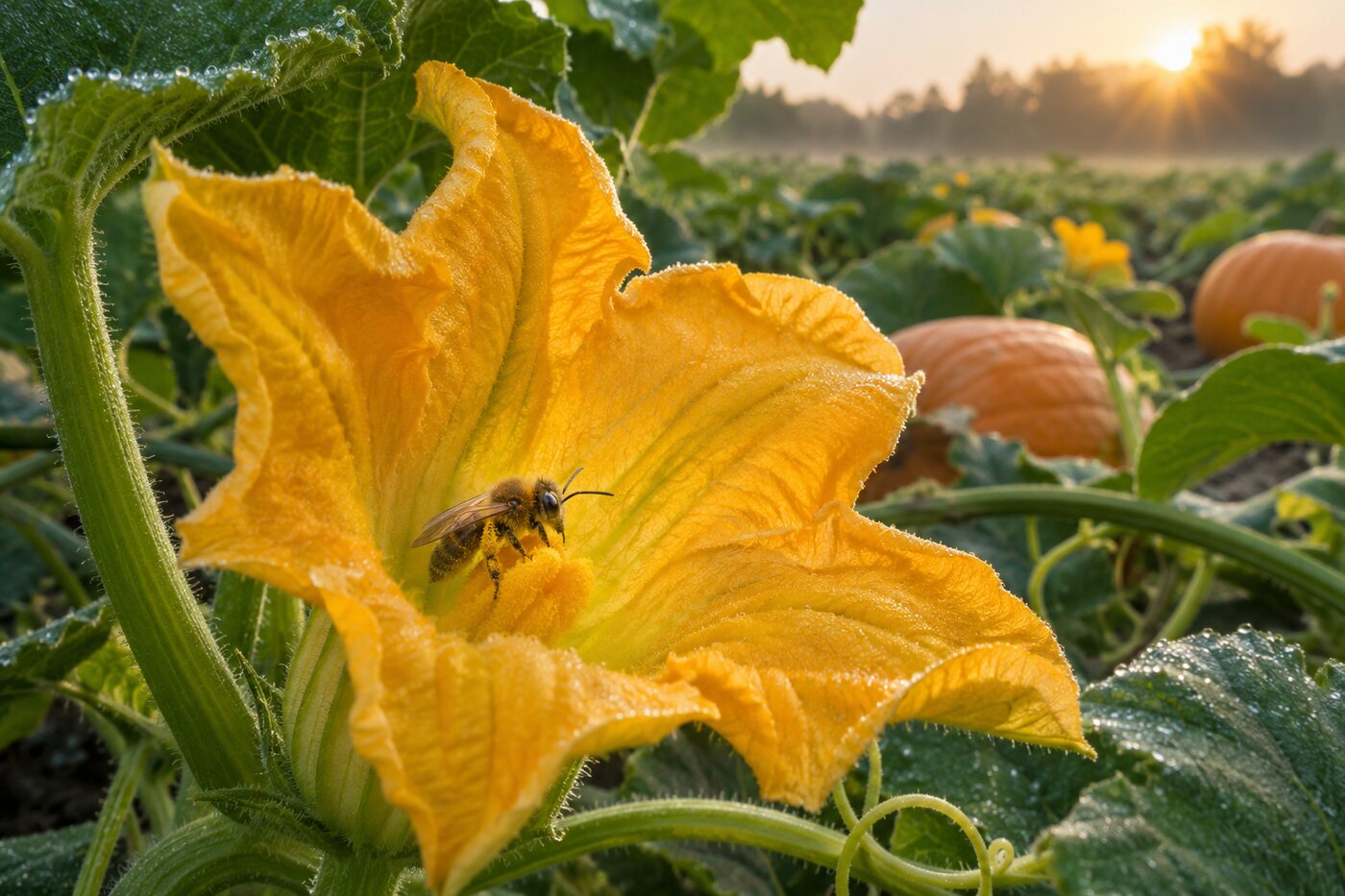
If a zucchini blossom folds around a small bee in the afternoon, leave the flower on the vine. Male squash bees often spend the afternoon and night tucked into spent squash flowers. A resting bee can be easy to overlook until you reach for a blossom to cook.
Why that particular flower?
Squash, pumpkins and zucchini belong to the genus Cucurbita. Their large flowers open early, and female squash bees collect their pollen to provision underground nests. Males also visit the flowers, where they can find mates and shelter. A gardener walking through the patch at breakfast and again after lunch may see two quite different sides of the same bee’s day.
A flower used for shelter and a nest serve different purposes. Each nesting female excavates tunnels in soil and stocks individual brood cells. Several females can nest near one another. A curled blossom with a sleeping occupant is an overnight shelter above that much less visible part of the bees’ lives.
Can you identify the visitor by where it sleeps?
Location and timing are clues. In eastern Canada, the hoary squash bee is a plausible visitor. Look for a medium-sized, hairy bee with a banded abdomen. Honey bees and bumblebees also visit squash flowers, so a single glimpse of a striped back inside a blossom gives you limited evidence. For a closer comparison, use the photographs and drawings in Pollinator Partnership Canada’s squash bee guide.
To get a useful photograph, visit when flowers are open and frame the head, body and hind legs from beside the vine. Record the plant, approximate time and location. Leave closed flowers folded. Tomorrow’s open blooms give you a better view without disturbing a resting insect.
Picking squash blossoms when bees are present
Check inside each open blossom before you cut it. If there’s a visitor, move to another flower and look again later. A male squash flower grows on a slender stalk. A female has a miniature squash directly behind the petals. If you also want fruit, leave the female flowers on the plant and enough male flowers to supply pollen.
When clearing the vines at season’s end, remember the bees may still be underground. Where possible, leave the soil around known nest entrances undisturbed. For a documented example of a male resting in a flower, see the University of California’s Squash Blossom Special.