Royal Jelly and Its Properties: Composition, Queen Development, Evidence and Safety
Royal jelly is a nutrient-rich glandular secretion produced by young worker honey bees. Nurse bees feed it to larvae, and queen-destined larvae receive it in distinctive queen cells as part of a developmental system involving diet, cell environment and colony regulation.
This evidence-led guide explains where royal jelly comes from, what it contains, how it differs from honey and bee bread, why fresh and freeze-dried products are not identical, what human research can—and cannot—support, and the allergy and storage risks consumers should understand.
What is royal jelly?
Royal jelly is a pale, acidic, protein-containing secretion made mainly by nurse bees’ head glands. It is essential within honey bee brood nutrition, but its biological role in queen development does not prove broad anti-aging, fertility or disease-treatment effects in humans.
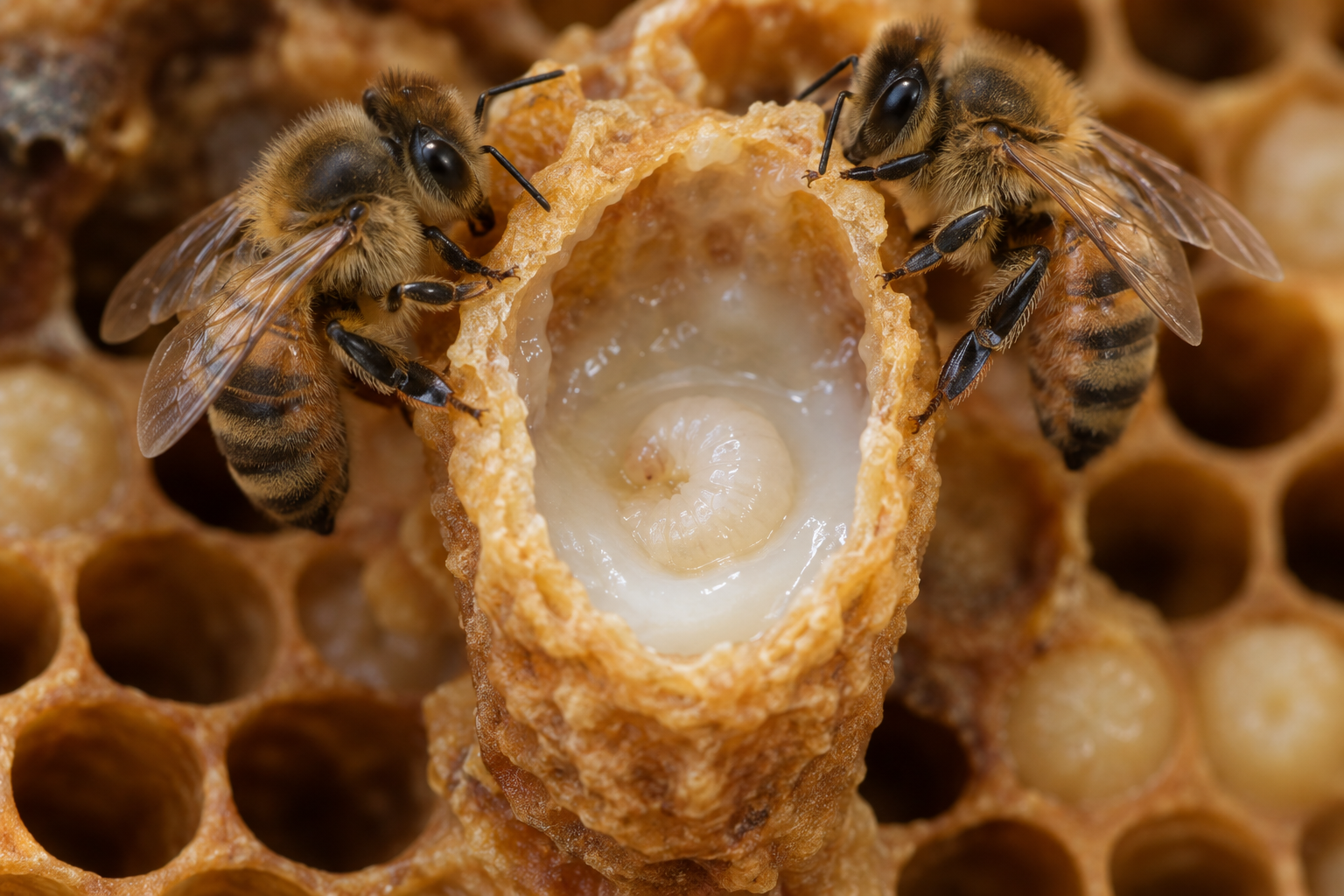
A developing queen larva rests in a generous pool of royal jelly while nurse workers attend the queen cell. Continuous feeding and the queen-cell environment support a different developmental pathway.
Royal jelly—from nurse-bee secretion to queen development
Contents
What is royal jelly?
Royal jelly is produced primarily by the hypopharyngeal and mandibular glands of young worker bees performing nursing duties. It is typically pale white to cream, thick, slightly acidic and distinctive in aroma and taste.
All young honey bee larvae receive glandular food, but queen-destined larvae are provisioned abundantly in elongated queen cells. The queen phenotype emerges through a complex interaction of nutrition, gene regulation, physiology and the social environment—not from a simple ingredient that transfers queen-like effects to people.
Nurse worker bees
Young workers synthesize brood food using glandular secretions and nutrients obtained within the colony.
Pale, creamy and acidic
Fresh royal jelly does not look or flow like clear golden honey.
Larval and queen nutrition
Its most firmly established properties concern honey bee development.
Royal jelly versus honey, pollen, bee bread and propolis
These materials may appear together in commercial blends, but they perform different biological jobs.
| Bee product | Main origin | Primary colony role | Typical physical character |
|---|---|---|---|
| Royal jelly | Glandular secretion produced by nurse bees | Brood food and sustained queen-larva provisioning | Pale, creamy, acidic and moisture-rich |
| Honey | Nectar or honeydew transformed and concentrated by bees | Long-term carbohydrate reserve | Sweet liquid or crystallized food |
| Bee pollen | Plant pollen collected and packed by foragers | Raw material for protein- and lipid-rich nutrition | Fresh loads or stabilized granules |
| Bee bread | Pollen packed and stored in comb cells | Stored colony food used by developing workers and nurses | Moist, compacted cell contents |
| Propolis | Plant resins modified and mixed by bees | Seal and coat the nest environment | Sticky when warm; hard or brittle when cool |
Bottom line: royal jelly is neither honey nor a plant pollen product, and evidence about one bee product cannot be transferred automatically to another.
How honey bees produce and use royal jelly
Young adult workers consume pollen and bee bread and develop active brood-food glands. They produce secretions used to feed larvae and adult colony members. Queen-rearing workers build or extend queen cells and repeatedly provision queen-destined larvae with abundant royal jelly.
Commercial production usually encourages colonies to start many artificial queen cups. Royal jelly is harvested from the cups before the queen larvae consume it. Timing, hygiene, colony health, traceability and cold-chain management strongly influence the finished material.
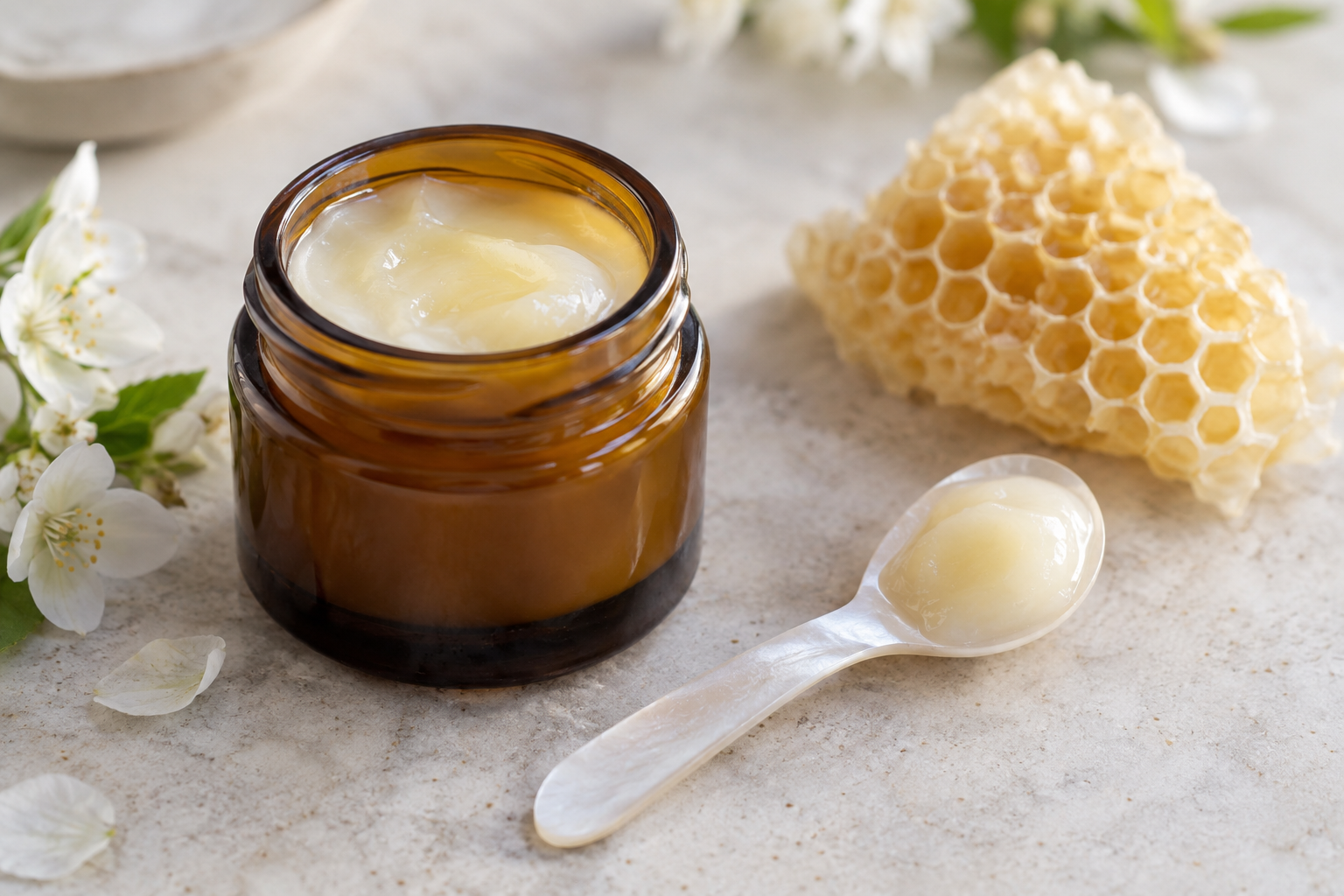
Fresh royal jelly is usually pale, glossy and creamy rather than transparent like honey. Because it is moisture-rich and perishable, product-specific storage directions matter.
Composition and physical properties of royal jelly
Fresh royal jelly is largely water, with proteins, carbohydrates, lipids, minerals and smaller amounts of other compounds. Major royal jelly proteins—often abbreviated MRJPs—are a prominent research focus. One characteristic fatty acid is commonly known as 10-HDA.
High-moisture material
Moisture contributes to texture and perishability and makes storage control important.
MRJPs and other proteins
Protein profiles support bee nutrition but vary with biology and processing.
Glucose and fructose
Carbohydrates contribute energy without making royal jelly equivalent to honey.
Distinctive fatty acids
10-HDA is frequently measured as one royal-jelly quality or identity marker.
Sharp sensory profile
Fresh royal jelly has an acidic taste and characteristic aroma that some consumers find intense.
Source and handling matter
Bee genetics, feed, season, harvest timing and storage influence composition.
Fresh, frozen, freeze-dried and blended royal jelly
Royal jelly is sold in several forms, and equal weights are not necessarily compositionally equivalent. Water removal concentrates dry matter, while blending changes the amount actually delivered.
| Form | What it is | What to verify |
|---|---|---|
| Fresh refrigerated | Moist royal jelly with minimal water removal | Cold-chain history, harvest date and use-by guidance |
| Frozen | Fresh product held frozen for stability | Thawing instructions and whether refreezing is permitted |
| Freeze-dried powder | Water removed at low temperature, concentrating solids | Fresh-equivalent ratio and final serving amount |
| Capsule or tablet | Powdered royal jelly with carriers or other ingredients | Actual royal-jelly content, complete ingredients and batch testing |
| Honey blend | Royal jelly dispersed in honey or another food base | Percentage of royal jelly rather than total jar weight |
| Cosmetic product | Royal-jelly-derived ingredient in a cream or serum | Full ingredient list, concentration and skin-allergy warnings |
Labels should make clear whether a number refers to fresh royal jelly, dried powder or a fresh-equivalent calculation.
Potential benefits and the strength of evidence
Laboratory and animal studies have explored antioxidant, antimicrobial, anti-inflammatory and metabolic effects of royal-jelly components. Small human trials and reviews have examined outcomes such as lipid markers, menopausal symptoms, glucose control, oral health and skin-related applications.
These research areas are not equally supported. Many studies use small samples, different preparations, short follow-up or outcomes that do not establish disease treatment. Royal jelly should not be presented as proven to reverse aging, boost fertility, prevent cancer, cure infections or replace prescribed care.
Allergies, interactions, storage and responsible buying
Royal jelly can trigger allergic reactions, particularly in people with asthma, pollen sensitivity or previous reactions to bee products. Reactions may be severe. Anyone with relevant allergies, pregnancy, breastfeeding, childhood use, medication concerns or a medical condition should seek individualized professional advice before use.
- Verify the form: fresh, dried and blended products deliver different amounts of royal-jelly solids.
- Protect the cold chain: follow the manufacturer’s refrigeration or freezing directions exactly.
- Read every ingredient: blends and cosmetics can contain additional allergens.
- Look for traceability: origin, batch identity, storage history and a responsible manufacturer improve accountability.
- Avoid miracle claims: disease-treatment and anti-aging promises require evidence and appropriate authorization.
- Discard compromised products: damaged packaging, temperature abuse or abnormal appearance deserves caution.
Related royal-jelly and bee biology guides
Follow the connected systems of brood food, pollen nutrition, worker anatomy and queen development.
Pollen and Its Nutritional Value
Learn how pollen supports nurse bees and brood-food production.
Bee Life Cycle
Follow eggs, larvae, pupae and adults through the colony cycle.
Honey Bee Anatomy
See how nurse-bee glands and mouthparts support colony nutrition.
Relevant queen, colony nutrition and bee-product guides
Continue with current Hive To Honey articles covering queen biology, worker roles, pollen, brood development and hive products.
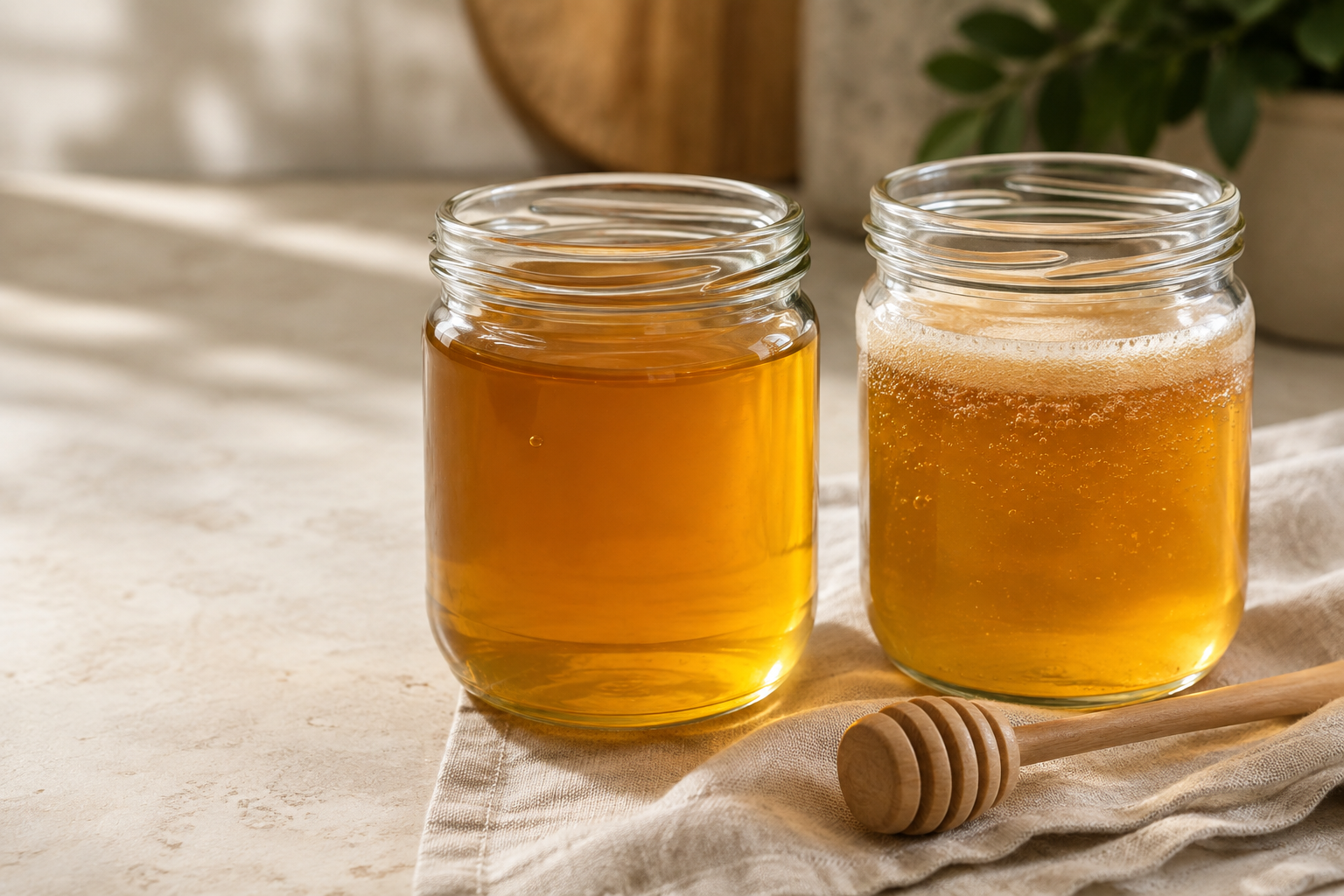
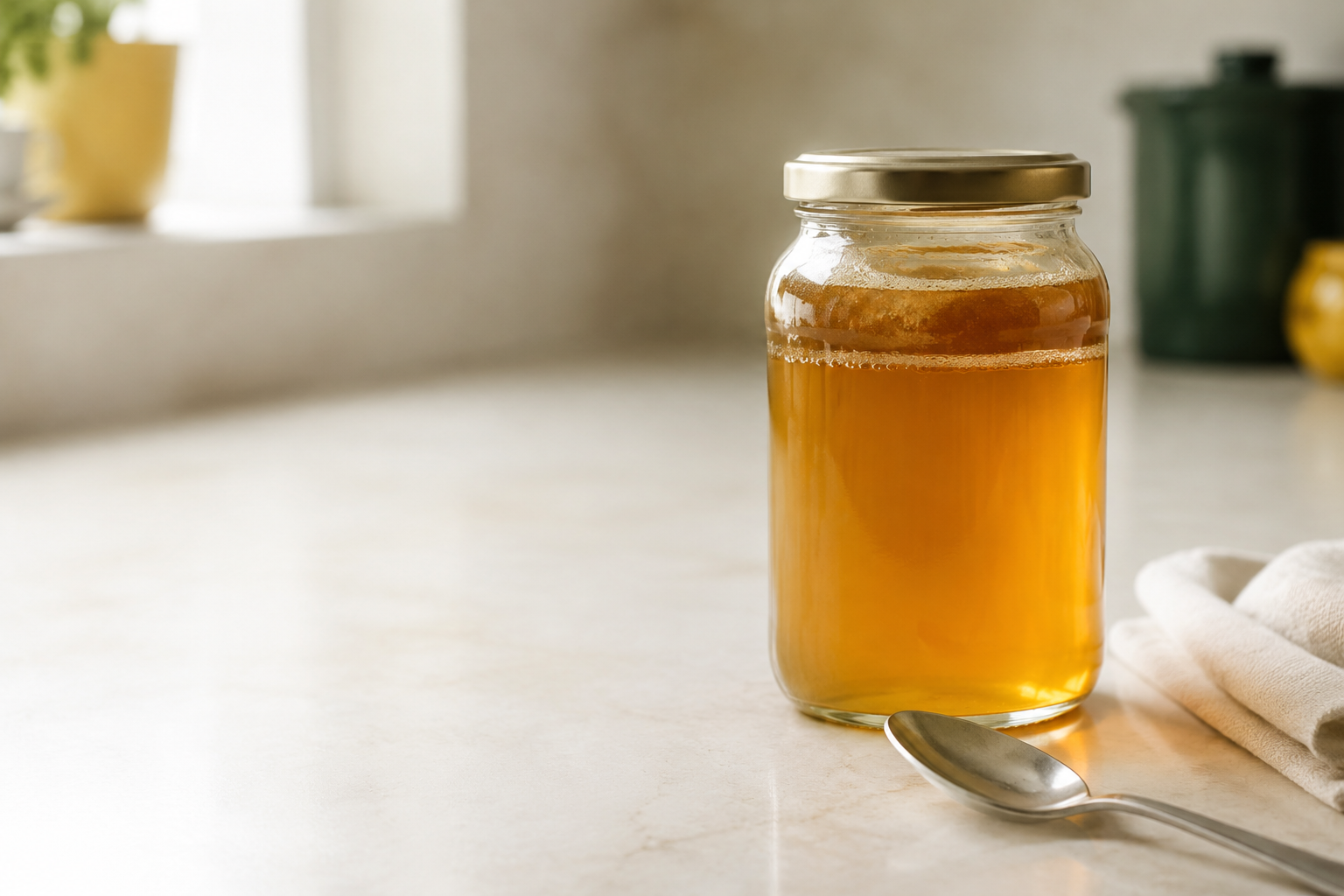
Why Is My Honey Foamy? Bubbles, Wax or Fermentation Explained
THE COMPLETE HONEY FOAM GUIDE Why Is My Honey Foamy? Bubbles, Wax or Fermentation Explained Foam on honey is not automatically spoilage.
Why Does Honey Ferment? Signs, Causes and Prevention
THE COMPLETE HONEY FERMENTATION GUIDE Why Does Honey Ferment? Signs, Causes and Prevention Unintended honey fermentation usually begins when yeasts can use
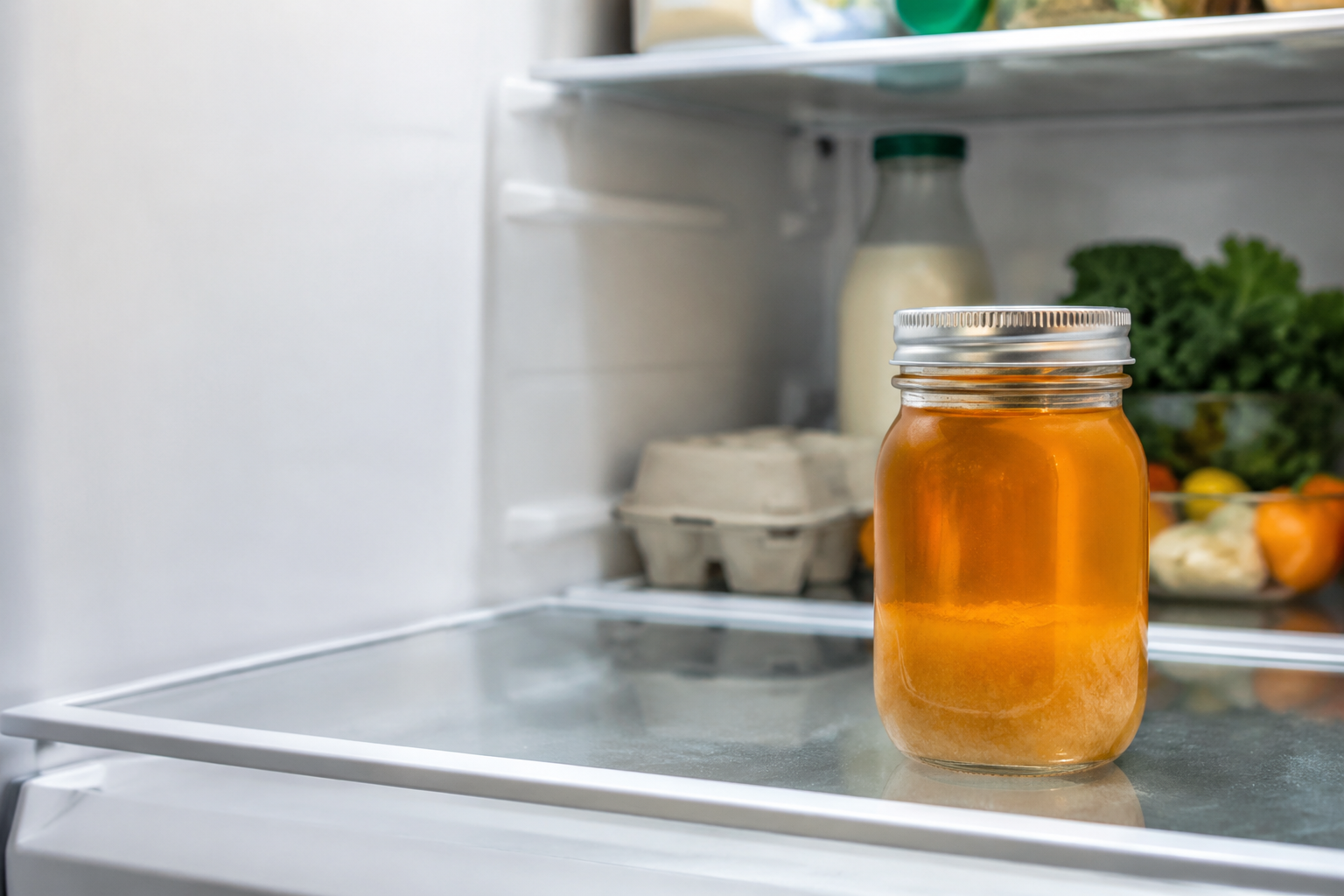
Does Honey Need to Be Refrigerated? What Happens in the Fridge
THE COMPLETE COLD-STORAGE GUIDE Does Honey Need to Be Refrigerated? What Happens in the Fridge Plain honey usually belongs in a dry
Royal jelly and its properties: frequently asked questions
What is royal jelly made from?
It is a moisture-rich glandular secretion produced mainly by nurse bees. It contains proteins, sugars, lipids, minerals and other compounds in proportions that vary with source and handling.
Is royal jelly the same as honey?
No. Honey is made from nectar or honeydew and serves mainly as stored carbohydrate. Royal jelly is produced by worker glands and functions as brood food.
Do all bee larvae eat royal jelly?
Young larvae receive glandular brood food, while queen-destined larvae are provisioned abundantly and continuously in queen cells. Simplified descriptions vary, so “only queens ever eat royal jelly” is misleading.
Does royal jelly have proven health benefits?
Some small human studies have explored specific outcomes, but evidence is not strong or consistent enough to support sweeping anti-aging, fertility or disease-treatment claims.
Can royal jelly cause an allergic reaction?
Yes. Rare reactions can be serious, particularly in people with asthma or sensitivities to pollen and bee products.
How should fresh royal jelly be stored?
Follow the producer’s instructions, which commonly require refrigeration or freezing. Keep the container sealed and protect it from heat, light and contamination.
Research, safety and regulatory sources
- National Library of Medicine, LiverTox. Royal Jelly.
- National Library of Medicine, PubMed Central. Honey, Propolis and Royal Jelly: A Comprehensive Review.
- National Library of Medicine, PubMed Central. Biomedical literature on royal-jelly composition and human studies.
- U.S. Food and Drug Administration. Dietary supplement regulation and safety.
- U.S. Food and Drug Administration. Royal-jelly supplement manufacturing and labeling compliance example.
Royal-jelly preparations differ in water content, concentration and formulation. Product-specific evidence and current local rules should be assessed separately.
Explore how nutrition shapes honey bee life
Continue into worker roles, queen biology, pollen nutrition and the complete honey bee life cycle.
Explore the bee life cycle →