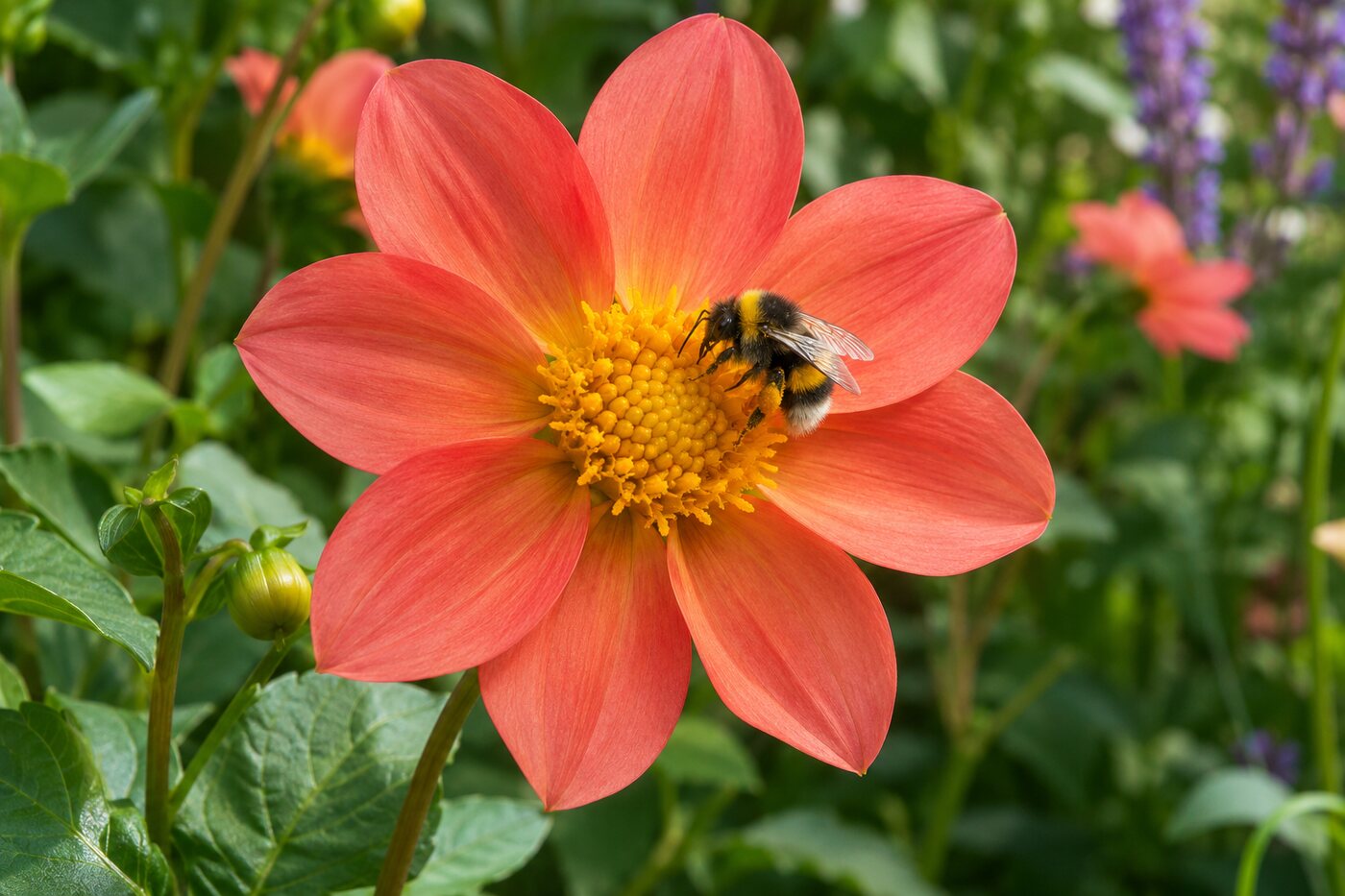
If you’re choosing between two dahlias for bees, look past the petal colour and find the centre. A single dahlia with a broad, exposed disk gives a visitor easy access to the tiny florets that offer pollen and nectar. A beautifully round pompon can hide that entire feeding area beneath layers of petals.
Three flower shapes to recognize
- Single. A ring of broad outer petals frames a conspicuous central disk. This is the easiest form to recognize from a packet photograph.
- Collarette. A short inner collar of petal-like structures sits inside the outer ring. Look for a clearly visible disk inside that collar.
- Fully double. Petals crowd the bloom all the way to the middle. Ball and pompon types often look almost spherical. Choose these for cut stems if you enjoy them and give an open-centred variety space alongside.
How to choose from a catalogue
Use a face-on picture of a mature bloom. A side view can make even an open flower look packed. If the listing says only “mixed dahlias,” the photograph of one bee-friendly flower may represent just one plant in the mix. A named single-flowered cultivar gives you a clearer idea of the shape you’re buying.
One example to look up is ‘Hawaiian Sunrise’. The Royal Horticultural Society shows it in flower in its guide to dahlias for pollinators. Use the picture as a reference even if your nursery carries different names. Also read the mature height on the tag. An open centre tells you about access for bees, while height helps you choose between a patio pot and the back of a border.
A five-minute comparison in the garden
Pick a warm, calm spell when both varieties have fresh open flowers. Stand where you can see both and count visits in which a bee lands and works the centre. Write down the number of open blooms on each plant as well. Eight visits to a plant with twenty flowers tell a different story from eight visits to a plant with two.
Repeat on another day before drawing conclusions. Weather, bloom age and whatever else is flowering nearby can change the traffic. The most useful result for next season is a specific note on the plant tag, such as “three open blooms, bumblebees working the disks on two mornings.”