
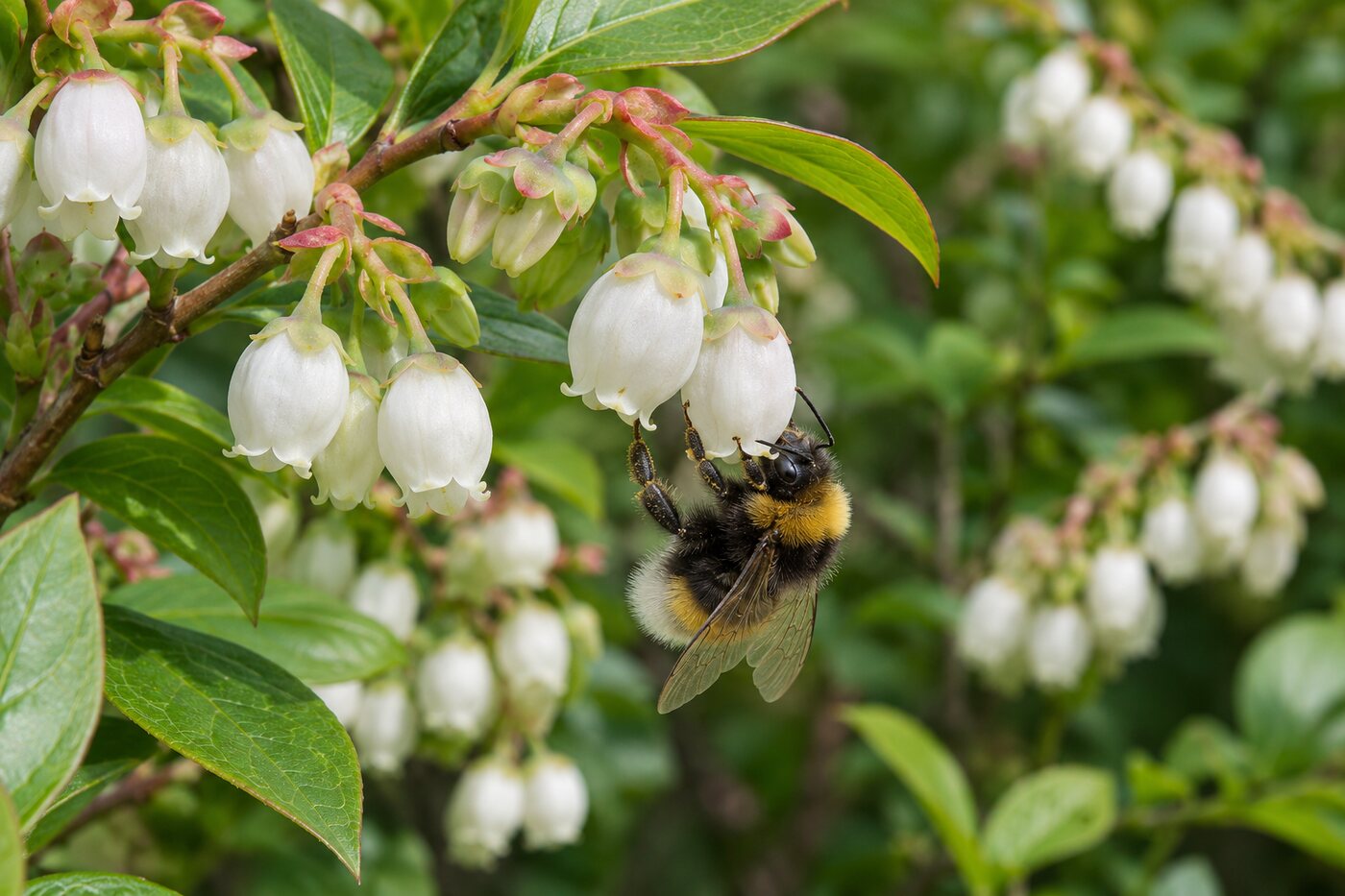
Before you buy a second blueberry bush, look at the tag on the first one. Many northern highbush blueberries can set berries on their own. A different, compatible variety flowering alongside the first can give you more fruit and larger berries. For rabbiteye blueberries, plan on a compatible partner for reliable crops. The choice of partner matters more than the number of pots in your cart.
How to choose a blueberry pollination partner
- Identify the blueberry type. Look for northern highbush, southern highbush, half-high or rabbiteye on the label. Start with varieties recommended together for your region. A rabbiteye pairing recommended for Mississippi may be a poor choice for a cold Ontario garden.
- Read the cultivar name. Two plants with the same cultivar name are usually copies of the same selection. If you have ‘Bluecrop’, a second ‘Bluecrop’ adds flowering branches. A different compatible cultivar supplies a new pollen source.
- Ask about bloom, specifically. “Early” on a nursery tag often describes the harvest. What you need to know is whether both bushes carry open flowers during the same stretch of spring.
If the first bush has lost its label, take photos when the first bells open and again at peak bloom. Bring the dates, photos and your location to a local fruit nursery. That gives the grower something more useful to work with than the month you picked the berries.
What the bees contribute
Picture a bee arriving dusted with pollen from the neighbouring bush. As it works the next cluster, some of that pollen can touch the receptive tip inside another flower. Blueberry pollen sheds through small openings in the anthers. Bumble bees can vibrate the blossom to release it. Honey bees also move pollen between blossoms, even though they cannot produce that floral buzz.
What to watch next spring
Choose a flowering branch on each bush and mark the stems loosely. Record the dates when both have open bells. On a mild day, spend five minutes looking for bees moving between the two plants. Revisit those branches after petal fall and look for small green berries beginning to swell. One quiet observation tells you very little. Repeated observations help distinguish a mismatch in bloom time from a day when bees stayed home.
If your bushes produced hardly any flowers, start there. A newly planted bush may need time to establish. Adding pollen cannot turn a bare shoot into a fruiting branch this season.
For regional planting guidance, see the University of Maryland blueberry guide and Mississippi State’s cultivar notes. Penn State explains what happens inside the flower.