
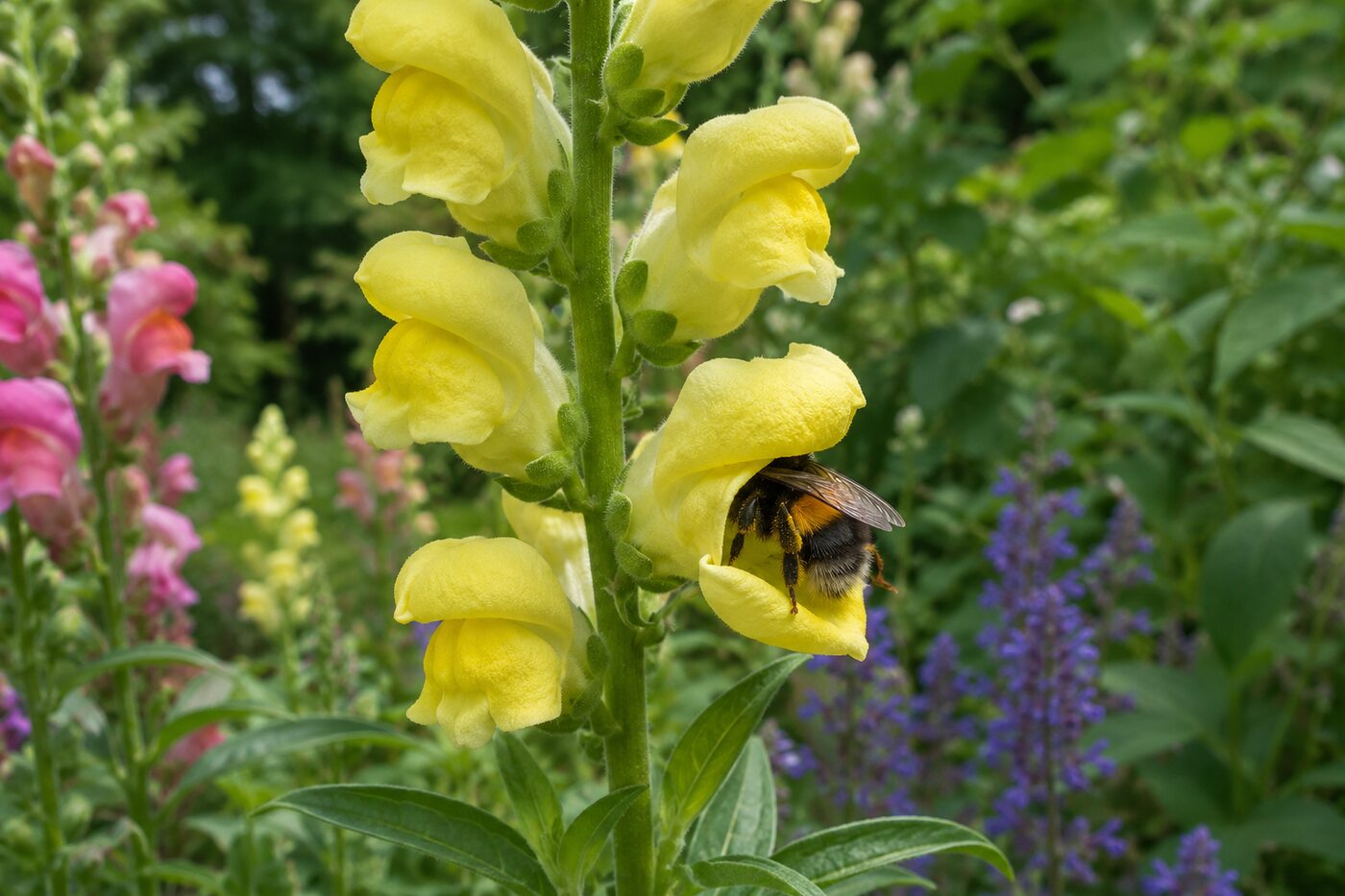
A snapdragon can look tightly shut right up to the moment a bumble bee disappears inside. Watch the lower lip of the flower. As the bee lands and pushes forward, that lip bends down, opening a gap beneath the hood. The bee can reach the nectar deep inside. When it backs out, the lower lip springs up again.
A landing place that moves
Choose one of the familiar, two-lipped garden snapdragons and look at an individual blossom from the side. The lower petal forms a padded lip. Above it, the flower arches into a roof. Their edges meet closely enough that the route to the nectar can be hard to see from the front.
A bumble bee has the weight and strength to press the lips apart. It lands facing the opening, braces against the flower and works its head inside. A small visitor may land on exactly the same spot and leave again with the flower barely moving. Watch a second visit before deciding what the first insect was trying to do.
Where the pollen goes
The flower holds its pollen-bearing parts under the hood. As a bee squeezes through the opening, its head or back can brush the anthers and pick up loose pollen. On a later visit, some can touch the receptive stigma of another snapdragon. That narrow passage makes repeated contact with a similar part of the bee’s body possible.
A bee drinking at a hole in the side is using another route. It may reach nectar without moving through the flower mouth. In your notes, describe the entrance the bee used. A count of ten visits leaves out an important detail if half the bees went around the side.
How to watch a visit from start to finish
Stand slightly to one side of a flower spike, far enough back to include the next few blossoms. Start filming before the bee lands. When you replay the clip, look first at the lower lip and then at the bee. The change in the gap between the lips can be easier to follow than the legs of a moving insect. Finally, watch for the instant the lip lifts after the bee leaves.
The San Diego Zoo Wildlife Alliance’s illustrated flower guide includes a bee using the lip as a perch. For more detail about which flower parts touch the visitor, see the University of Virginia’s illustrated snapdragon activity.