
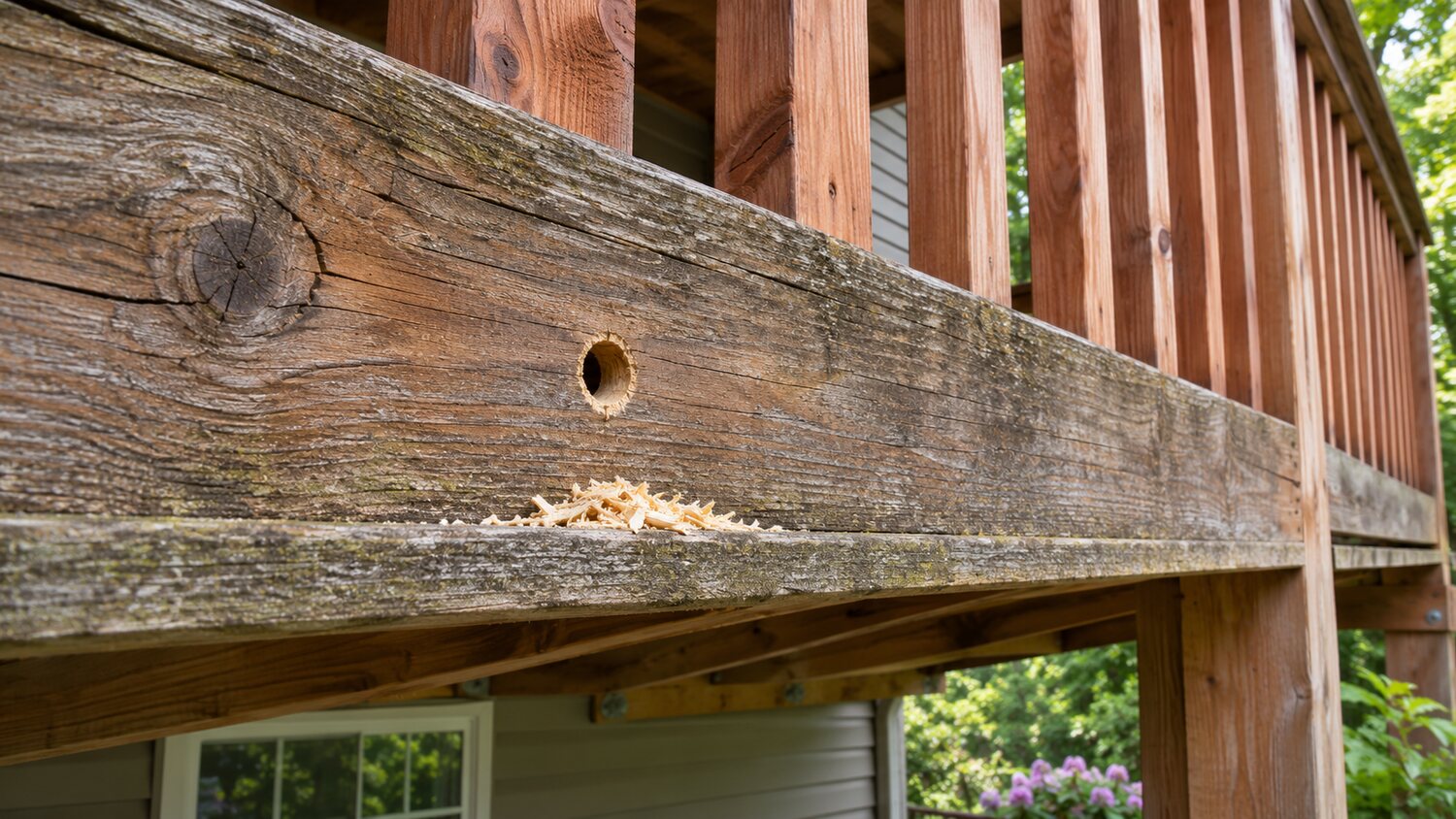
The first thing you notice may be a teaspoonful of pale wood shavings on a dark deck board. Look above it. A nearly circular hole about the width of a pencil eraser or a little larger, tucked under a rail or joist, is a familiar sign of a large carpenter bee. The round opening is one clue. Fresh shavings and repeated visits to that exact spot make the case stronger.
Read the wood beneath the hole
A female carpenter bee cuts into wood with her jaws and pushes the debris outside. Look for coarse, fresh-looking shavings below the opening. The pile can land some distance from the entrance if a ledge catches it. A windy afternoon or a recent rain can clear it away. An empty patch of decking tells you less than a fresh pile directly below a hole.
An opening around a centimetre across is typical of the large carpenter bees seen around wooden structures in parts of North America. Many small pinholes spread over a board suggest a different starting point for identification. Predrilled screw holes can also look convincing. Look at adjacent rails: a tidy row of identical holes at matching joints may belong to the builder.
Where does the tunnel go?
The bee can turn after entering and excavate along the grain. Seen from the outside, a short round opening can therefore conceal a much longer passage. Inside, the female separates spaces for her offspring, each with a food supply. She removes wood to create room. She visits flowers for food.
Old galleries may be used again. This matters when you find one hole on a board that has been there for years. Its diameter gives little indication of when the opening was made, how far the passage extends or whether anything is inside today.
Watch one entrance for a few minutes
Stand off to one side where you can see the underside of the rail. A large bee hovering near the porch is an interesting sighting. A bee entering the hole, disappearing and returning to that same opening is better evidence that the hole is in use. If you see shavings being pushed out, note the time and the exact board.
Take two photographs: one close enough to show the rim and another wide enough to locate it on the structure. On a later visit, photograph from the same position. Leave the opening clear while observing. A probe or plug can disturb occupants and still tells you little about the length of the gallery.
When does a hole deserve a closer look?
One opening in a scrap of fence wood and several years of activity in a load-bearing rail raise different questions. For repeated activity, softened wood or a visibly weakened structural piece, give the photos to a qualified local professional who can assess the timber in person. For a garden sighting, a dated note of a bee actually carrying shavings out is already an excellent identification clue.
Further reading: University of Georgia Extension’s illustrated guide to carpenter bee entrances and galleries.