
Honey Skin and Beauty Benefits: Evidence, Products and Safe Use
Honey appears in cleansers, masks, creams, balms and professional wound products—but those categories are not interchangeable. A finished cosmetic depends on its complete formula, while medical-grade honey is prepared and used for a regulated clinical purpose.
This evidence-led guide explains what honey may contribute to skincare, where research is promising but limited, how to read a cosmetic label, and why plain kitchen honey should not replace acne, eczema, infection or wound care.
Is honey good for your skin?
Honey can contribute humectant, sensory and formulation properties to some cosmetics. Research also supports specific medical-grade honey products in selected wound-care settings. Neither point proves that raw honey is a universal facial treatment or that every honey-labelled product has the same effect.
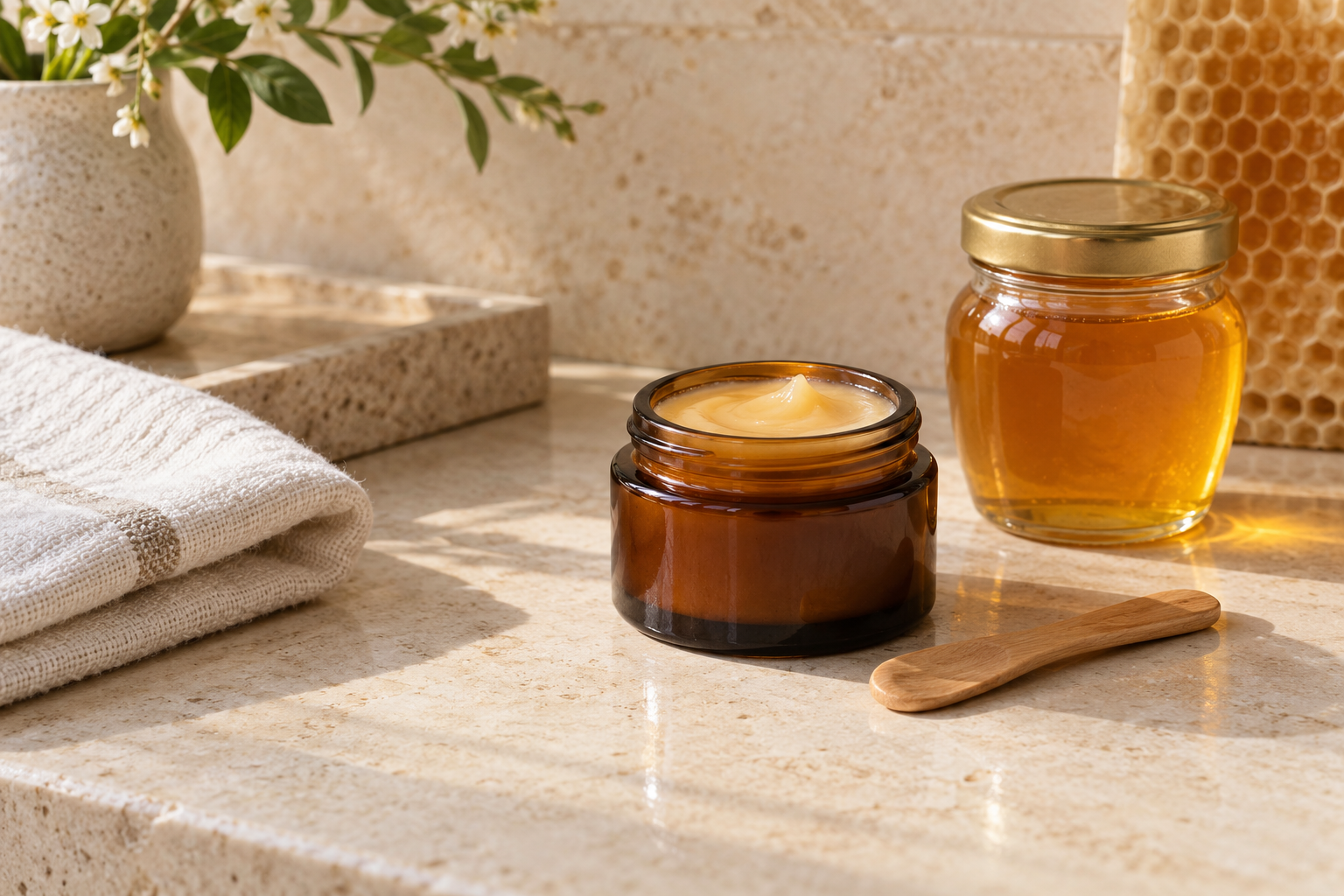
A finished honey-based moisturizer and plain honey may share an ingredient story, but they are different products. Texture, preservatives, concentration, packaging and the rest of the formula shape how a cosmetic performs.
Honey in skincare—from ingredient story to responsible routine
Contents
What does “honey skincare” actually mean?
On an ingredient list, honey may appear as mel or as a honey-derived ingredient. Its position in the formula, concentration and combination with water, oils, emulsifiers, preservatives, fragrances and active ingredients all matter.
Plain food honey is not the same as a preserved cosmetic, and neither is equivalent to a sterile or otherwise controlled medical-grade honey dressing. Product claims also matter: in the United States, a product marketed only to beautify or alter appearance is regulated differently from one intended to treat disease or affect body structure or function.
Finished formula
Designed for cleansing, moisturizing or appearance, with performance shaped by every ingredient.
Kitchen honey
Produced for eating, not validated as a preserved facial or wound-care formula.
Medical-grade honey
A purpose-made healthcare product used for defined indications and professional wound protocols.
Cosmetic honey, honey-based formulas and medical-grade honey
The word “honey” can describe an ingredient, a marketing theme or the functional basis of a clinical product. Check the category and intended use before comparing claims.
| Product type | Designed for | What determines performance | Responsible expectation |
|---|---|---|---|
| Rinse-off cosmetic | Cleansing or short-contact masking | Surfactants, contact time, pH and complete formula | Comfort and cleansing—not disease treatment |
| Leave-on honey cosmetic | Moisturizing, feel or appearance | Honey level plus humectants, emollients, occlusives and preservatives | Judge the finished formula and skin compatibility |
| Plain food honey | Eating | Floral source, water content and food handling | Not a substitute for a tested cosmetic or wound product |
| Medical-grade honey product | Specific wound-care indications | Manufacturing controls, product design and clinical instructions | Use for its labeled purpose with appropriate care |
| Propolis or beeswax cosmetic | Formula-specific skin feel or barrier properties | Different bee-derived ingredient and full formulation | Do not transfer honey evidence automatically |
Bottom line: ingredient identity alone cannot predict a product’s safety, stability or clinical effect.
Why honey appears in skincare
Honey contains sugars, water, organic acids and many minor compounds that vary with botanical source and processing. In a cosmetic, its sugars can participate in water-binding and its color, aroma and origin can support the sensory story. But hydration after application depends on the entire vehicle and how it interacts with the skin barrier.
Laboratory antioxidant or antimicrobial findings can help researchers form hypotheses. They do not establish that every honey cream clears acne, fades scars or reverses aging in people.
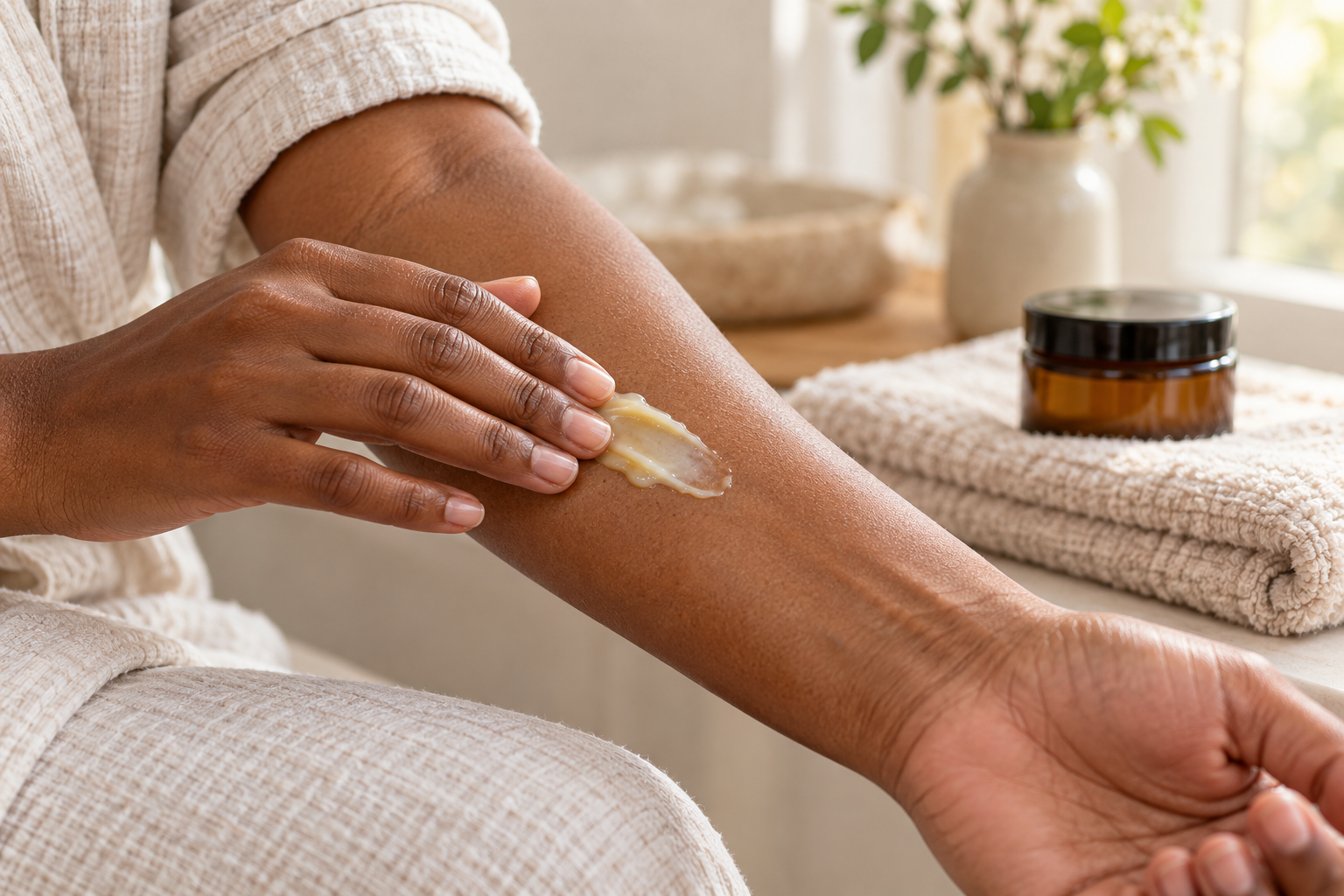
Apply a finished moisturizer according to its label and test unfamiliar products on a small area first. Stop if redness, swelling, burning or persistent itching develops.
Potential skin and beauty benefits: what the evidence means
Honey-related skincare research spans basic chemistry, laboratory models, small clinical studies and medical wound care. Those evidence levels answer different questions.
Formula-dependent moisture support
Honey sugars may contribute humectant properties, but lasting comfort depends on the whole moisturizer and skin type.
A sensory ingredient, not automatically a cleanser
In wash-off products, surfactants and pH usually determine cleansing performance.
Temporary softness and glow
Hydrated surface skin may look smoother; this is not proof of structural rejuvenation.
Interesting chemistry, limited translation
Measured compounds and lab activity do not guarantee a visible benefit in a retail formula.
Product and context matter
Medical-grade preparations cannot be generalized to food honey or every cosmetic.
No universal anti-aging proof
Sun protection and a consistent gentle routine have a clearer practical role than miracle claims.
Honey for acne, eczema, scars and wounds
Acne, eczema and persistent rashes have different causes and can worsen with unsuitable products. Honey-containing cosmetics may feel comfortable for some users, but they should not be framed as proven substitutes for diagnosis or treatment. Fragrance, essential oils, propolis and preservatives can also influence tolerance.
| Concern | What honey claims often imply | More responsible approach |
|---|---|---|
| Dry or tight-feeling skin | Honey “locks in” moisture | Choose a fragrance-free moisturizer suited to your skin and evaluate the complete formula |
| Acne | Antibacterial honey clears breakouts | Use non-comedogenic products and evidence-based acne care; seek help for painful or scarring acne |
| Eczema or dermatitis | Natural honey calms every rash | Avoid known triggers, patch-test new cosmetics and follow a clinician’s plan |
| Dark marks or scars | Honey erases discoloration | Protect from sun and get appropriate advice; improvement claims require product-specific evidence |
| Open or infected wounds | Any honey can be applied | Do not use kitchen honey; obtain appropriate wound assessment and use only indicated medical products |
Urgent or worsening problems: spreading redness, severe pain, fever, pus, facial swelling, breathing difficulty or a deep wound needs prompt medical attention.
How to choose and use a honey-based cosmetic
Start with the purpose: cleanser, moisturizer, lip balm or mask. Then read the full ingredient list and directions instead of assuming the front-label honey image tells the whole story.
- Match the format to your skin: gels and lotions often feel lighter; creams and ointment-like products are more occlusive.
- Prefer fragrance-free for sensitive skin: “unscented” can still contain masking fragrance.
- Test first: the American Academy of Dermatology recommends trying a product on a small test area twice daily for 7–10 days before broader use.
- Introduce one product at a time: this makes reactions easier to identify.
- Follow contact-time directions: a rinse-off mask and a leave-on cream are not used the same way.
- Use daily sun protection: a broad-spectrum SPF 30+ sunscreen supports prevention of sun-related skin damage and discoloration.
Allergy, irritation and safe use
Honey, pollen residues, propolis, fragrance and other formula ingredients can cause irritation or allergic contact dermatitis. People with known bee-product allergy, eczema, highly reactive skin or a history of severe allergy should be especially cautious and seek professional advice when appropriate.
- Use products only on the areas and for the duration stated on the label.
- Keep cosmetics out of the eyes and stop immediately if significant burning or swelling occurs.
- Do not apply food honey to open, surgical, deep, infected or poorly healing wounds.
- Do not share jars or add water or kitchen ingredients; both practices can compromise preservation.
- Discard products with changed odor, color, texture or damaged packaging.
- Seek a dermatologist for persistent acne, rashes, pigment changes or suspected allergy.
Related honey, propolis and beeswax guides
Explore the connected ingredients, their different origins and the evidence behind common wellness claims.
Honey for Skin
Take a focused look at topical honey claims, formulation and safe use.
Propolis and Its Benefits
Learn how bees make propolis and why allergy context matters.
Beeswax and Its Uses
See how beeswax contributes structure and occlusion in balms.
Latest honey wellness and natural-care guides
Continue with current Hive To Honey articles covering product quality, safe use, bee-derived ingredients and evidence-led natural care.
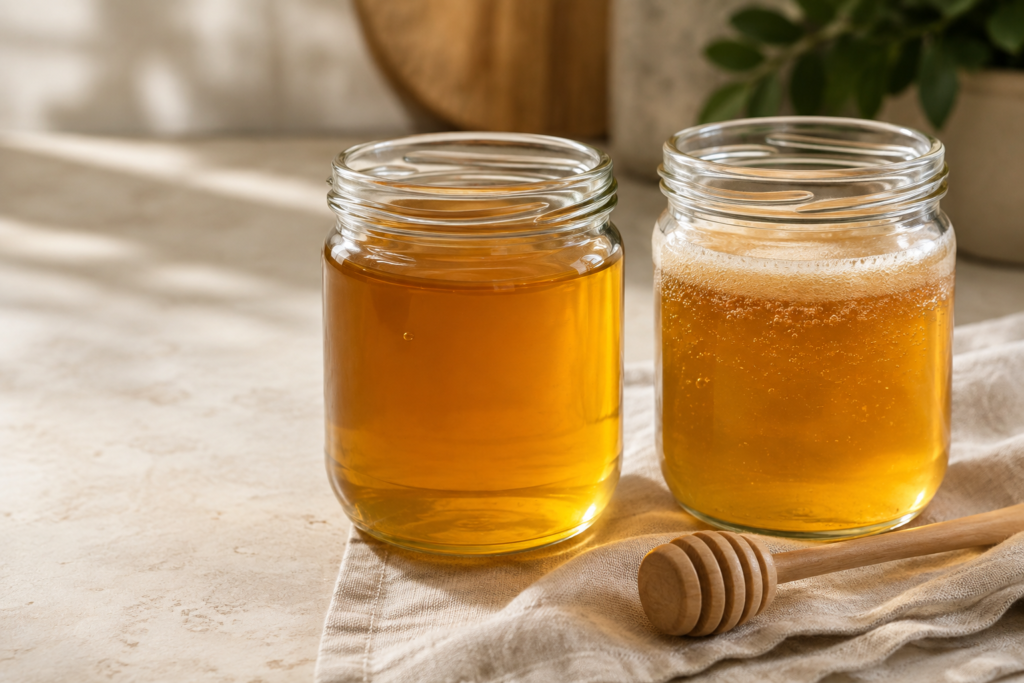
Why Is My Honey Foamy? Bubbles, Wax or Fermentation Explained
THE COMPLETE HONEY FOAM GUIDE Why Is My Honey Foamy? Bubbles, Wax or Fermentation Explained Foam on honey is not automatically spoilage.
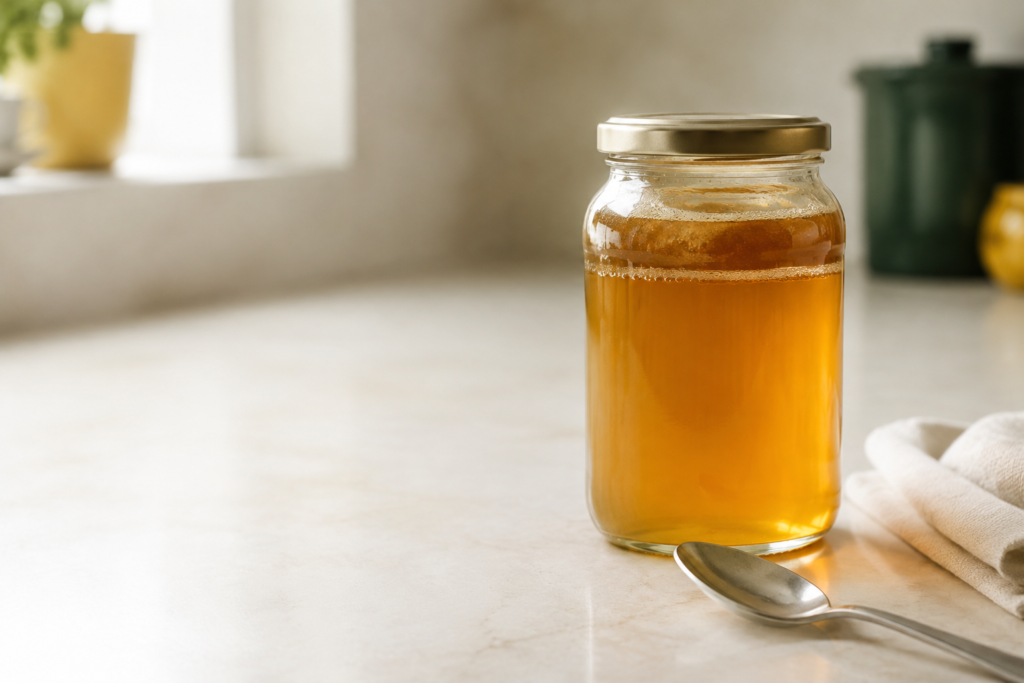
Why Does Honey Ferment? Signs, Causes and Prevention
THE COMPLETE HONEY FERMENTATION GUIDE Why Does Honey Ferment? Signs, Causes and Prevention Unintended honey fermentation usually begins when yeasts can use
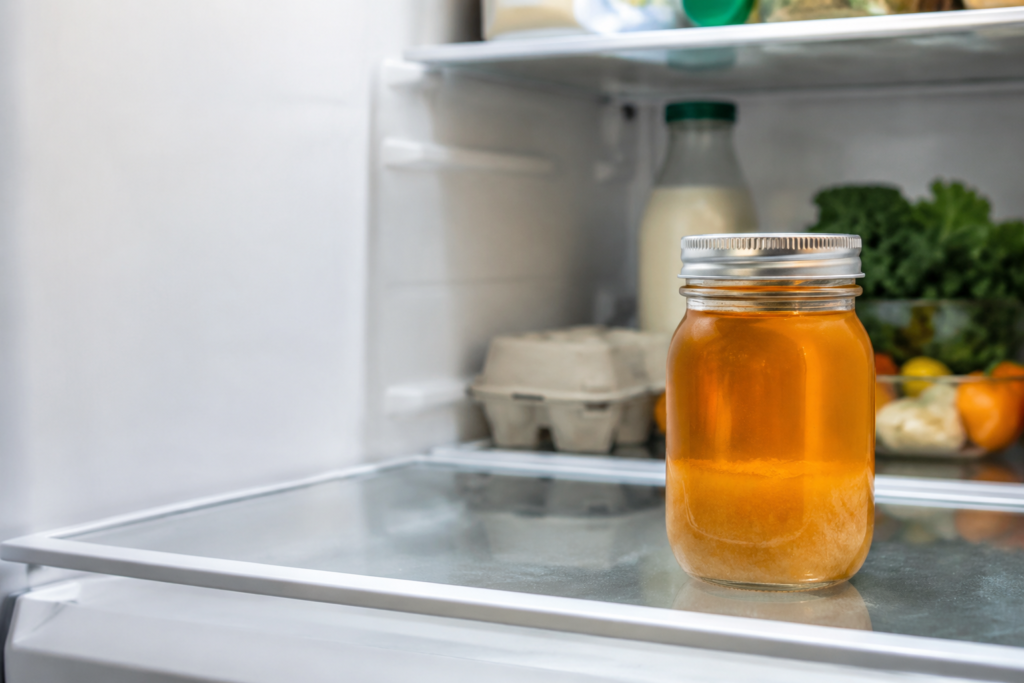
Does Honey Need to Be Refrigerated? What Happens in the Fridge
THE COMPLETE COLD-STORAGE GUIDE Does Honey Need to Be Refrigerated? What Happens in the Fridge Plain honey usually belongs in a dry
Honey skin and beauty benefits: frequently asked questions
Can I put raw honey directly on my face?
Food honey is not formulated or preserved as a facial cosmetic. A finished product gives clearer directions, ingredients and safety information. Patch-test unfamiliar skincare and do not use food honey on wounds.
Does honey moisturize skin?
Honey sugars can contribute water-binding properties in a formula, but the finished product’s humectants, emollients, occlusives and preservation system determine its real-world performance.
Can honey cure acne?
No universal acne cure has been established for honey. Acne can scar and may need evidence-based treatment; choose non-comedogenic skincare and consult a clinician for persistent, painful or scarring breakouts.
Does honey fade dark spots or scars?
Broad claims are not supported for ordinary honey. Sun protection and condition-specific care are more dependable starting points, and product-specific evidence should support any treatment claim.
Is medical-grade honey the same as store-bought honey?
No. Medical-grade products are manufactured and labeled for clinical use. Pantry honey should not be used as a wound-care substitute.
How should I test a new honey skincare product?
Apply the product as directed to a small area twice daily for 7–10 days. Stop if redness, itching, swelling or burning develops, and seek help for a severe reaction.
Dermatology, cosmetic regulation and honey research sources
- American Academy of Dermatology. How to test skin care products.
- U.S. Food and Drug Administration. Is it a cosmetic, a drug, or both?
- U.S. Food and Drug Administration. Cosmetics labeling claims.
- PubMed. Honey: an immunomodulator in wound healing.
- National Library of Medicine, PubMed Central. Honey, propolis and royal jelly: a comprehensive review.
Evidence for a medical product, purified compound or laboratory model should not be generalized to every cosmetic or food honey. Regulations and authorized claims vary by country.
Explore honey with evidence—not hype
Learn how honey, propolis and beeswax differ before choosing the right product for your routine.
Read the honey for skin guide →