Honey comes in more than one form, and two of the most common you’ll encounter are comb honey and liquid honey. While both come from the same source—bees—the way they’re presented and used can be very different.
In this guide, we’ll explore what sets comb honey apart from liquid honey, how each is produced, and which one might be better for your preferences and everyday use.
What Is Comb Honey?
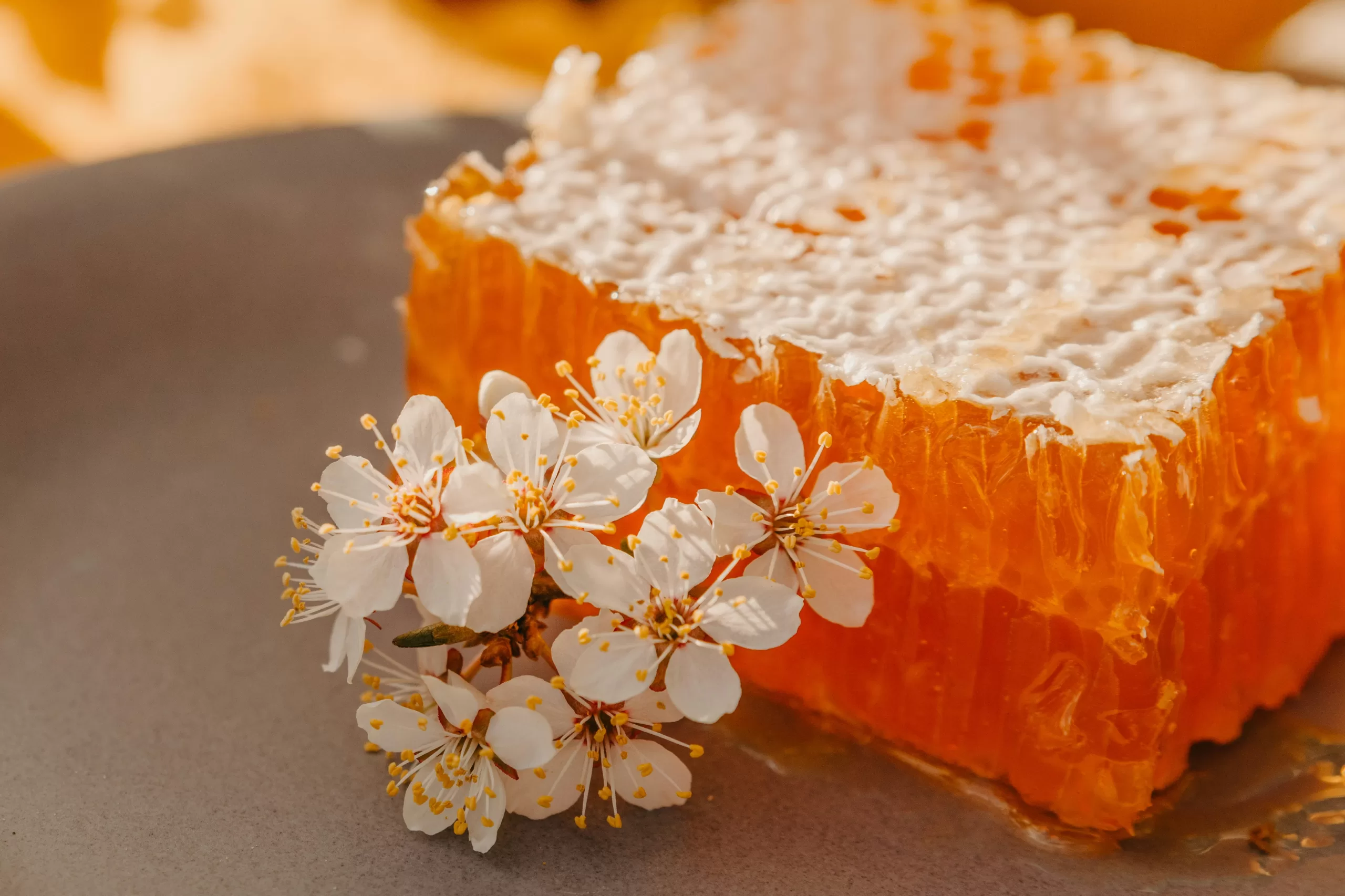
Comb honey is honey that is still inside the beeswax comb. The honeycomb is removed directly from the hive and cut into sections or frames without extracting the honey.
Everything is edible:
- Honey
- Beeswax
- Natural pollen traces
Comb honey is considered one of the purest forms of honey available because it undergoes virtually no handling.
What Is Liquid Honey?
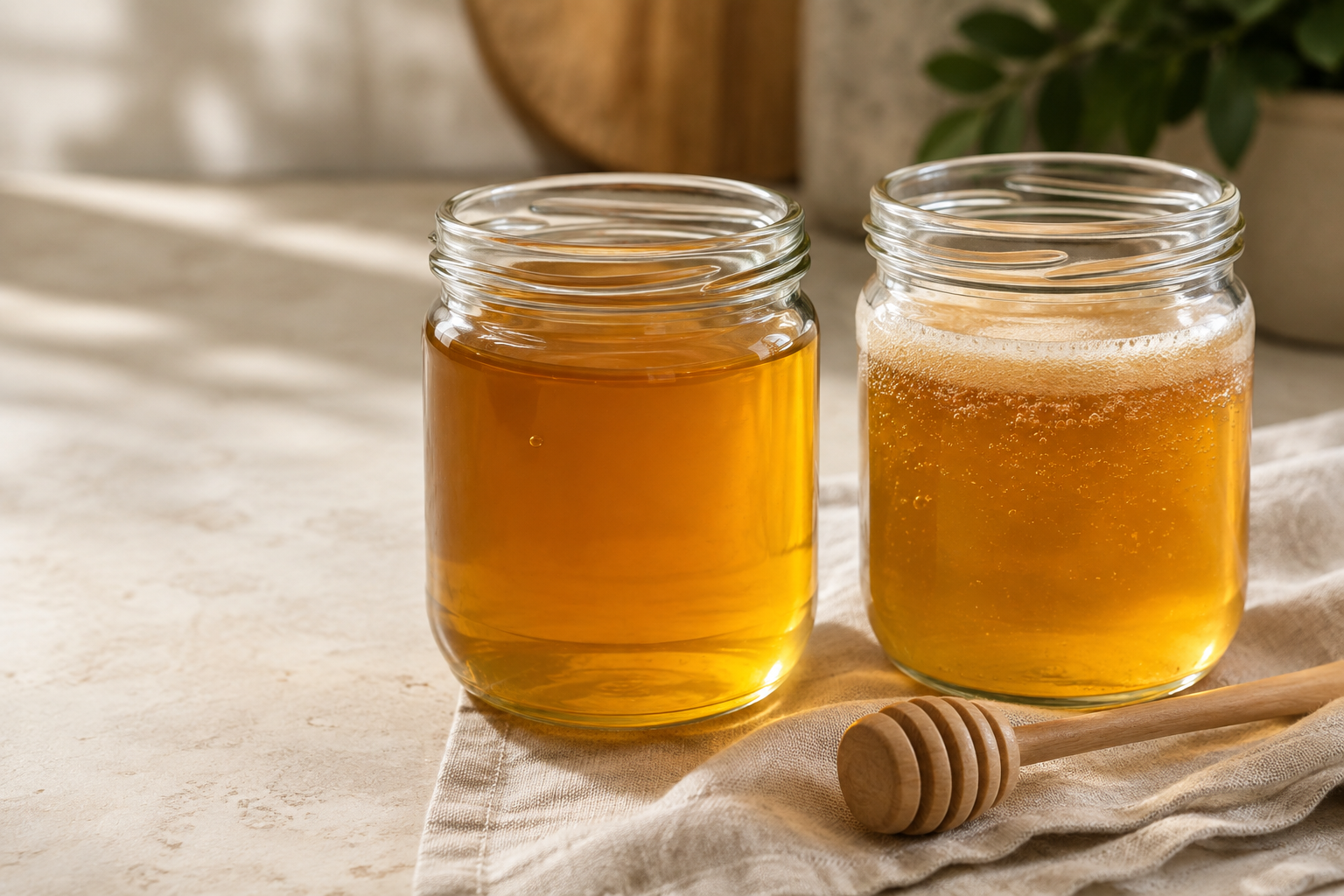
Liquid honey is honey that has been extracted from the honeycomb, usually by spinning the frames in an extractor. The honey is then strained and bottled.
This is the most common form of honey and is widely used for:
- Sweetening drinks
- Baking
- Cooking
- Everyday use
Liquid honey may be raw or processed, depending on how it’s handled after extraction.
Key Differences Between Comb Honey and Liquid Honey
1. Processing
- Comb honey: Minimal to no processing
- Liquid honey: Extracted and strained
Comb honey remains exactly as the bees made it.
2. Texture and Experience
- Comb honey: Chewy wax with liquid honey inside
- Liquid honey: Smooth and pourable
Eating comb honey is often described as a more immersive, natural experience.
3. Flavor
- Comb honey: Often perceived as richer and more aromatic
- Liquid honey: Flavor varies depending on floral source and processing
Because comb honey is unhandled, it can retain subtle aromas more clearly.
4. Convenience
- Comb honey: Best enjoyed as-is
- Liquid honey: Easier to measure, pour, and cook with
Liquid honey is generally more practical for daily kitchen use.
Is Comb Honey Better Than Liquid Honey?
Neither is better — they simply serve different purposes.
Comb honey may be right for you if you:
- Enjoy honey as a tasting experience
- Want the most natural form possible
- Appreciate traditional beekeeping methods
Liquid honey may be right for you if you:
- Use honey regularly in recipes
- Want convenience and versatility
- Prefer easy storage and handling
Many people enjoy both, depending on the occasion.
Does Comb Honey Go Bad?
Like liquid honey, comb honey has an extremely long shelf life when stored properly. Keep it sealed, dry, and away from excessive heat or moisture.
The beeswax itself acts as a natural preservative.
Final Thoughts
Comb honey and liquid honey each offer a unique way to enjoy one of nature’s most remarkable foods. Whether you prefer the purity of honeycomb or the convenience of liquid honey, understanding the difference helps you choose what best fits your lifestyle.
Both forms are part of the broader world of honey varieties, each shaped by how honey is harvested and enjoyed.
Comb honey and liquid honey are just two examples of the many ways honey can be harvested, prepared, and enjoyed.