
New Zealand Honey: Varieties, Mānuka, Production and What Makes It Unique
New Zealand honey is shaped by island geography, native flowering plants and one of the world’s most closely watched honey-export systems. Mānuka is the best-known name, but the country also produces distinctive kānuka, rewarewa, kāmahi, tawari, pōhutukawa, clover and native bush honeys.
This guide explains the major varieties, the government science behind authentic New Zealand mānuka honey, how production and export traceability work, and what buyers should look for on a label.
What makes New Zealand honey different?
Its character comes from a diverse native flora, highly varied landscapes and carefully controlled supply chains. Export mānuka honey must meet New Zealand’s five-attribute scientific definition, while other varietals express nectar sources found across forests, scrubland, farms and coastal regions.
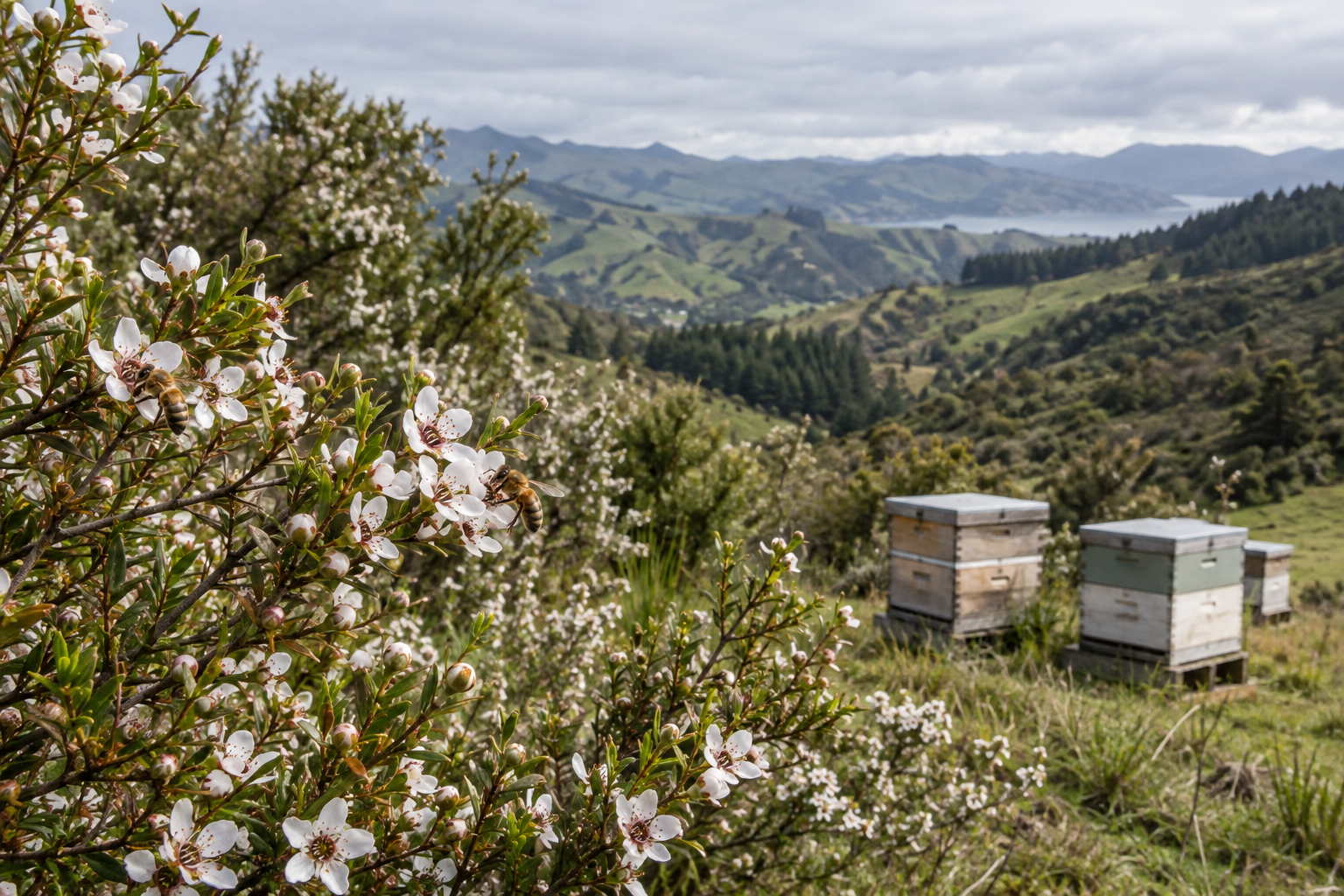
Flowering mānuka in New Zealand hill country provides nectar for foraging honey bees. Landscape, bloom timing, weather and hive placement all influence the honey ultimately harvested.
New Zealand honey—from native flowers to verified export jars
Contents
New Zealand honey is much more than mānuka
New Zealand’s two main islands, offshore islands and varied elevations create many overlapping nectar seasons. Colonies may forage native forest, shrubland, pasture, orchards and coastal vegetation. The result is a broad spectrum of pale, delicate honeys through to dark, strongly aromatic varieties.
A floral name describes a predominant nectar source, not a guarantee that bees visited only one plant. Beekeepers use hive location, bloom timing, sensory characteristics, pollen and chemical evidence, and—where required—laboratory tests to support origin claims.
Distinctive nectar sources
Mānuka, kānuka, rewarewa, kāmahi, tawari and pōhutukawa contribute recognizable regional honeys.
Clover remains important
White clover has long supported pale, mild honey in agricultural landscapes.
Science and traceability
Export mānuka claims require recognized laboratory testing and documented movement through the supply chain.
Major New Zealand honey varieties at a glance
Flavor and color change by season, place and blend. These profiles are useful orientation—not rigid grading standards.
| Honey | Typical character | Botanical source |
|---|---|---|
| Mānuka | Often dark cream to amber; aromatic, mineral, herbal or slightly bitter notes | Leptospermum scoparium |
| Kānuka | Generally mild, floral and less assertive than many mānuka honeys | Kunzea species |
| Rewarewa | Amber to deep amber; malty, herbaceous or gently caramel-like | Knightia excelsa |
| Kāmahi | Pale to amber; clean, floral and sometimes slightly buttery | Weinmannia racemosa |
| Tawari | Very pale and smooth with a delicate floral or vanilla-like impression | Ixerba brexioides |
| Pōhutukawa | Pale, softly floral and often finely crystallized or creamed | Metrosideros excelsa |
| White clover | Pale, mild and clean with familiar floral sweetness | Trifolium repens |
| Native bush blend | Highly variable; may combine forest, shrub and honeydew influences | Multiple nectar sources |
Bottom line: botanical source guides expectations, but harvest conditions and handling make every lot individual.
How New Zealand authenticates export mānuka honey
New Zealand’s Ministry for Primary Industries (MPI) finalized a scientific definition for export mānuka honey after a multi-year research program. Every export batch labelled mānuka must be tested by an MPI-recognized laboratory against five attributes: four nectar-derived chemical markers and one DNA marker from mānuka pollen.
The thresholds distinguish monofloral mānuka from multifloral mānuka. A monofloral result indicates a stronger mānuka signature under the official definition; multifloral mānuka still meets all five attributes but has a lower concentration of the defining 3-phenyllactic acid marker.
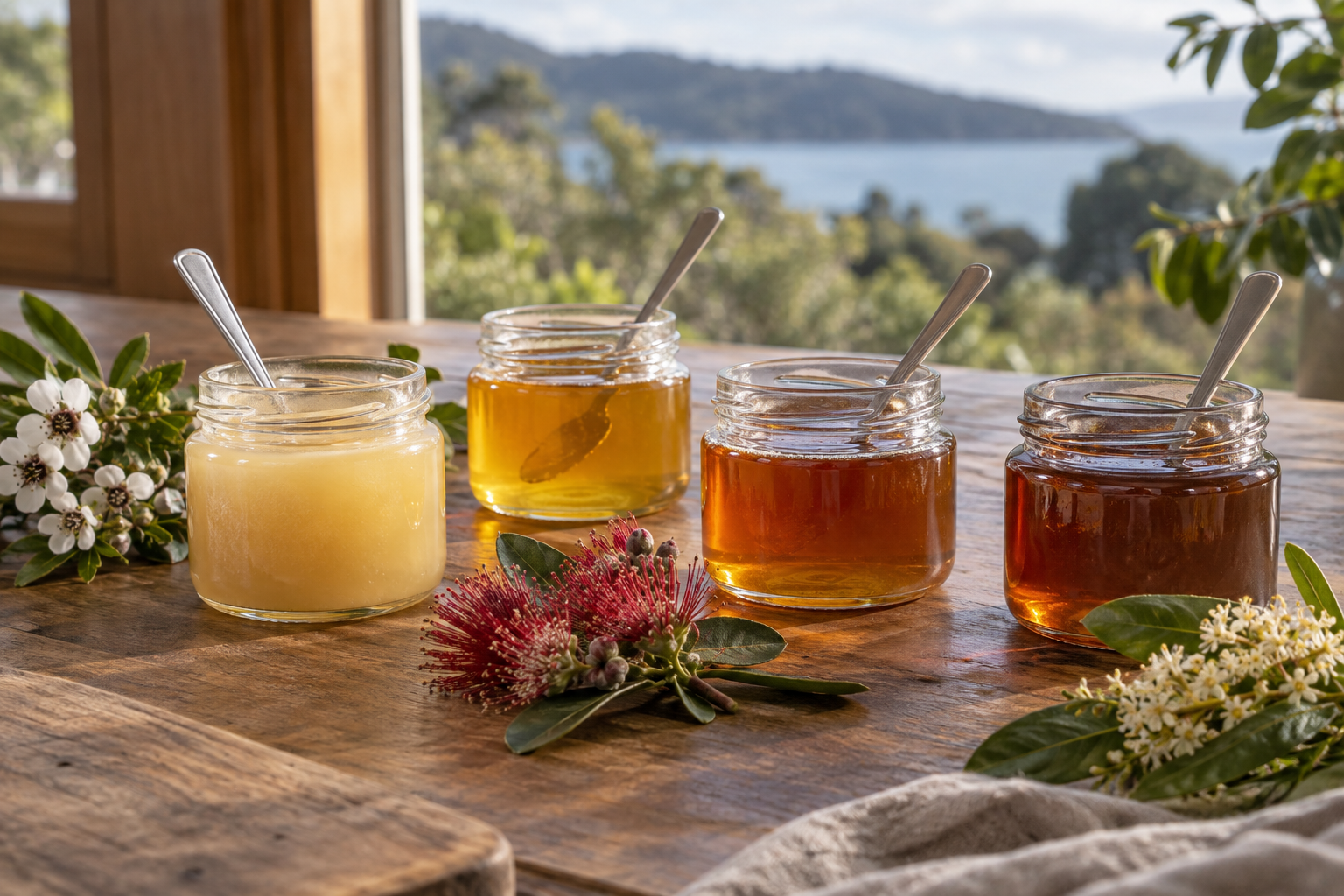
New Zealand honeys can range from pale, softly crystallized tawari or pōhutukawa styles to amber rewarewa and darker native bush or mānuka profiles. Color alone cannot prove floral origin or quality.
Color, aroma, flavor and texture vary naturally
Honey color reflects nectar source, mineral composition, age and handling. Pale honey is not automatically mild, and dark honey is not automatically stronger or more authentic. Aroma may suggest flowers, herbs, malt, caramel, minerals or native forest, while texture ranges from fluid to naturally crystallized.
Crystallization is a normal physical change. Many New Zealand producers deliberately cream honey to create a fine, spreadable texture. A smooth opaque jar may therefore be carefully crystallized honey rather than a different product or a sign of spoilage.
Where New Zealand honey character begins
Flowering dates and yields shift with latitude, altitude, rainfall, wind and temperature. Bees also respond to the complete forage landscape, not a map boundary or human label.
Mānuka and kānuka
Widespread native shrubs and small trees support regionally varied harvests across New Zealand.
Rewarewa and kāmahi
Forest blossoms can produce aromatic honeys whose yield changes sharply from year to year.
Pōhutukawa
Coastal flowering can support pale, delicate honey where hive access and weather align.
Tawari
This native forest tree is associated with very pale honey and a delicate flavor profile.
White clover
Clover remains an important mild honey source in agricultural districts.
Native bush blends
Multiple nectar flows can create complex regional honeys that do not fit a single-flower label.
How New Zealand honey moves from hive to jar
- Apiary placement: beekeepers position colonies near anticipated floral resources without exceeding what the landscape can support.
- Harvest declaration: export supply chains require records connecting honey to listed beekeepers and harvest details.
- Extraction and processing: honey is removed from comb, strained or filtered as intended, settled, blended or creamed, and packed under applicable food-safety controls.
- Testing: mānuka export claims require validated results from recognized laboratories; other testing may address composition, residues or destination requirements.
- Controlled movement: documentation follows export honey between approved premises and supports certification where required.
- Destination compliance: exporters must meet New Zealand rules plus the importing market’s requirements.
MPI reports that New Zealand produces roughly 15,000–20,000 tonnes of honey in a year, depending on climatic conditions. Harvest volume and floral composition can therefore vary substantially.
How to evaluate a New Zealand honey label
- Confirm origin. Look for a clear New Zealand origin statement and an identifiable producer or packer.
- Read the floral claim precisely. “Mānuka,” “multifloral mānuka,” “native bush” and “clover” describe different products.
- Look for batch traceability. Lot numbers and test references help connect a jar to documented production.
- Separate authentication from strength ratings. A private grade, MGO number and MPI floral definition answer different questions.
- Reject cure-all language. Honey remains a concentrated sugar food; medical claims require appropriate evidence and regulation.
- Expect variation. Genuine honey may crystallize, darken gradually or differ between harvests.
Related honey guides
Compare New Zealand honey with other floral, regional and quality-focused guides.
Honey by Country
Explore how climate, flora and production traditions shape honey worldwide.
Types of Honey
Compare monofloral, multifloral and honeydew honeys across major varieties.
Honey Grades Explained
Understand what grades, labels, tests and quality terms can—and cannot—tell you.
Relevant honey origin, quality and variety guides
Continue with current Hive To Honey articles covering floral sources, regional honeys, authenticity, storage and responsible production.
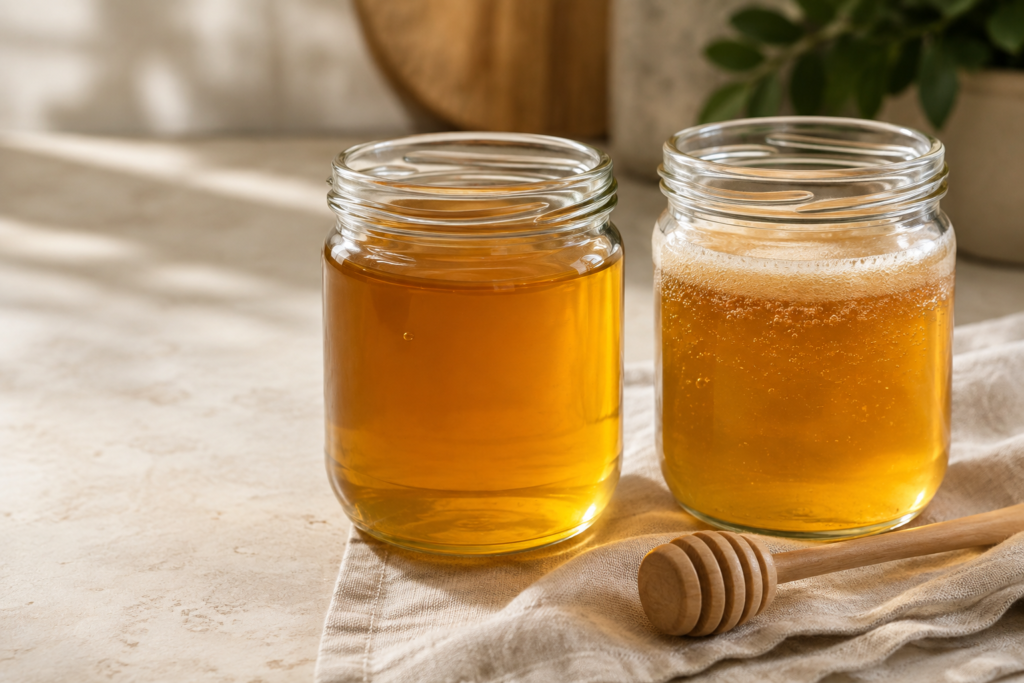
Why Is My Honey Foamy? Bubbles, Wax or Fermentation Explained
THE COMPLETE HONEY FOAM GUIDE Why Is My Honey Foamy? Bubbles, Wax or Fermentation Explained Foam on honey is not automatically spoilage.
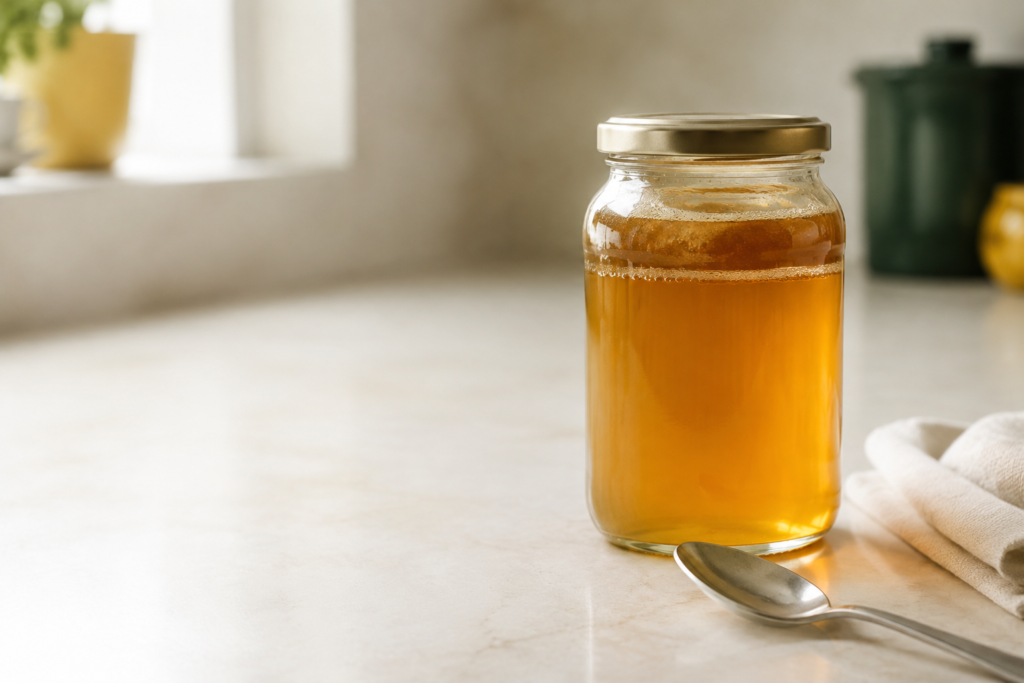
Why Does Honey Ferment? Signs, Causes and Prevention
THE COMPLETE HONEY FERMENTATION GUIDE Why Does Honey Ferment? Signs, Causes and Prevention Unintended honey fermentation usually begins when yeasts can use
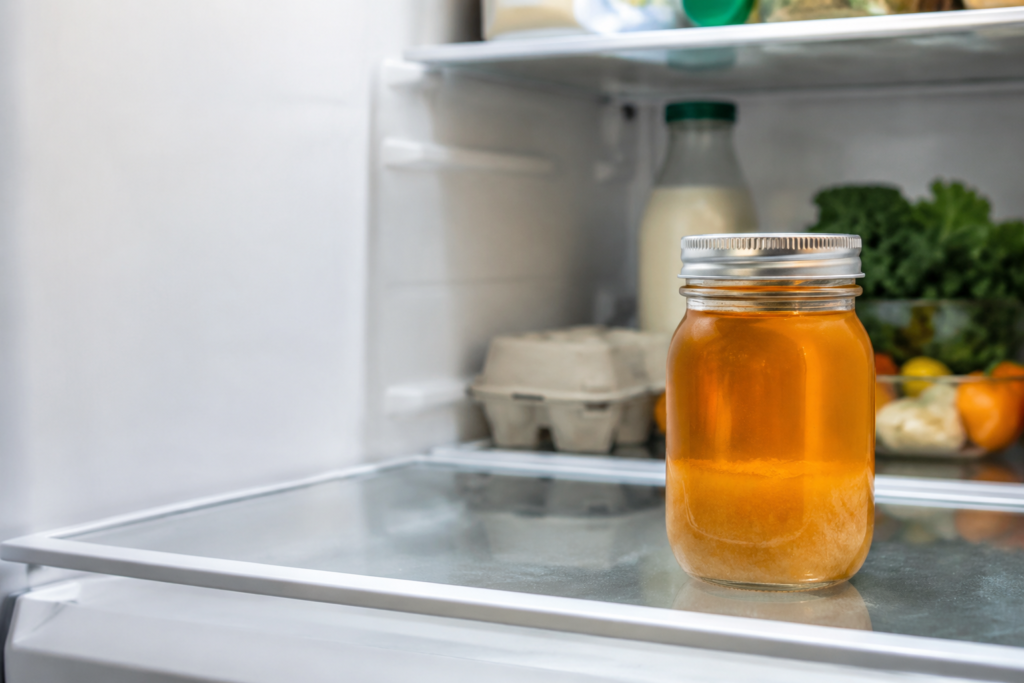
Does Honey Need to Be Refrigerated? What Happens in the Fridge
THE COMPLETE COLD-STORAGE GUIDE Does Honey Need to Be Refrigerated? What Happens in the Fridge Plain honey usually belongs in a dry
New Zealand honey: frequently asked questions
Is all New Zealand honey mānuka honey?
No. New Zealand produces many honeys, including kānuka, rewarewa, kāmahi, tawari, pōhutukawa, clover and mixed native bush varieties.
What makes export mānuka honey authentic?
Honey labelled mānuka for export must be tested by an MPI-recognized laboratory and meet a five-attribute definition comprising four chemical markers and one mānuka pollen DNA marker.
What is the difference between monofloral and multifloral mānuka?
Both must meet all five MPI attributes. The official thresholds—especially for 3-phenyllactic acid—distinguish the stronger monofloral signature from multifloral mānuka.
Are MGO and UMF the same as the MPI definition?
No. They are different systems. MPI determines whether export honey qualifies as New Zealand monofloral or multifloral mānuka; private ratings and MGO values communicate other product measurements or quality criteria.
Why does New Zealand honey crystallize?
Glucose naturally forms crystals over time. Floral source, water content, seed crystals and storage temperature affect the rate. Crystallization alone does not indicate spoilage.
What is tutin in honey?
Tutin is a natural toxin associated with tutu plants. It can enter honey through contaminated honeydew, so New Zealand applies a maximum permitted level and requires producers to manage the risk.
New Zealand government and research sources
- New Zealand Ministry for Primary Industries. Ensuring mānuka honey is authentic.
- New Zealand Ministry for Primary Industries. Steps to exporting honey and bee products.
- New Zealand Ministry for Primary Industries. Managing tutin contamination in honey.
- Manaaki Whenua — Landcare Research. The Honey Landscape.
- Apiculture New Zealand. New Zealand apiculture industry information.
Floral profiles vary naturally by region and harvest. Regulatory requirements can change; consult the current New Zealand authority for commercial decisions.
Explore the world one floral source at a time
Discover how plants, place, weather and careful production shape the identity of every jar.
Explore honey by country →