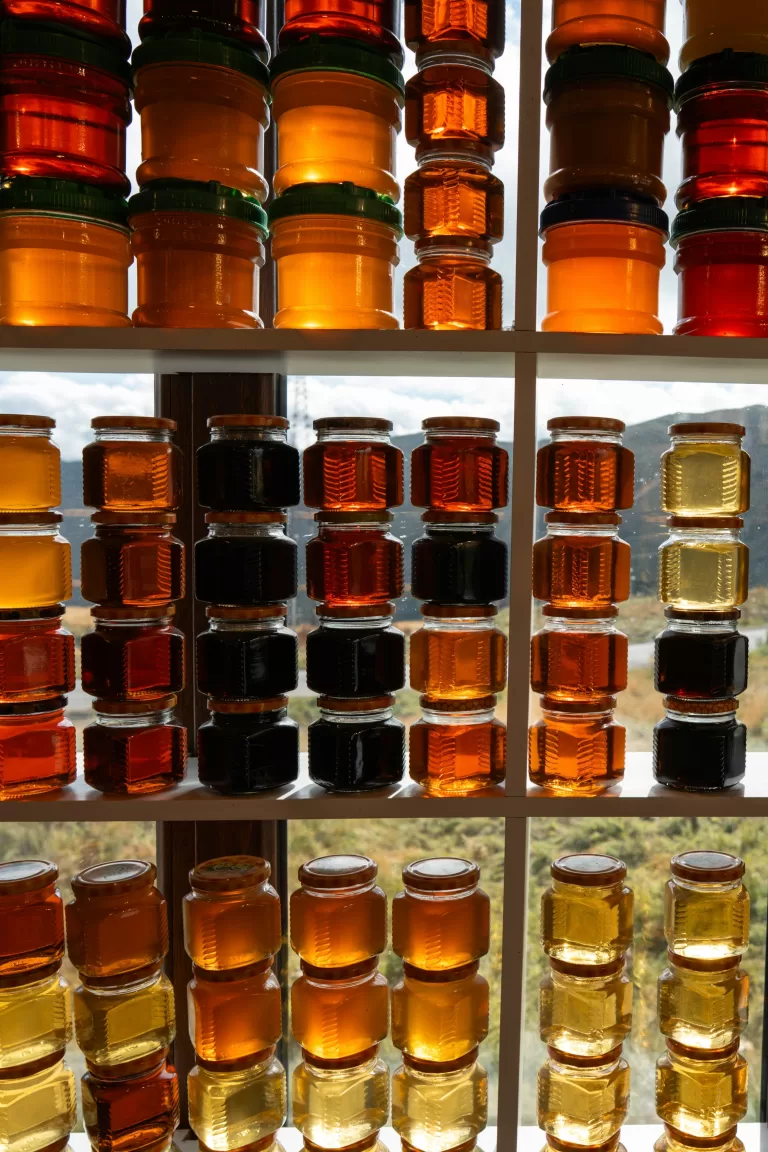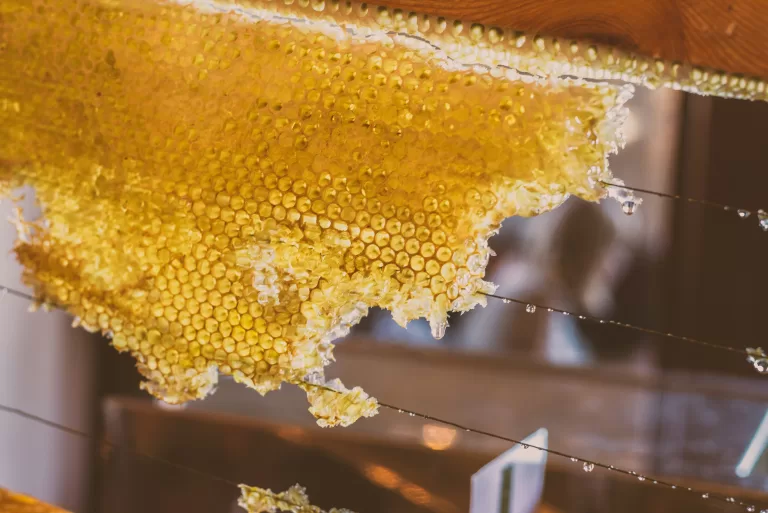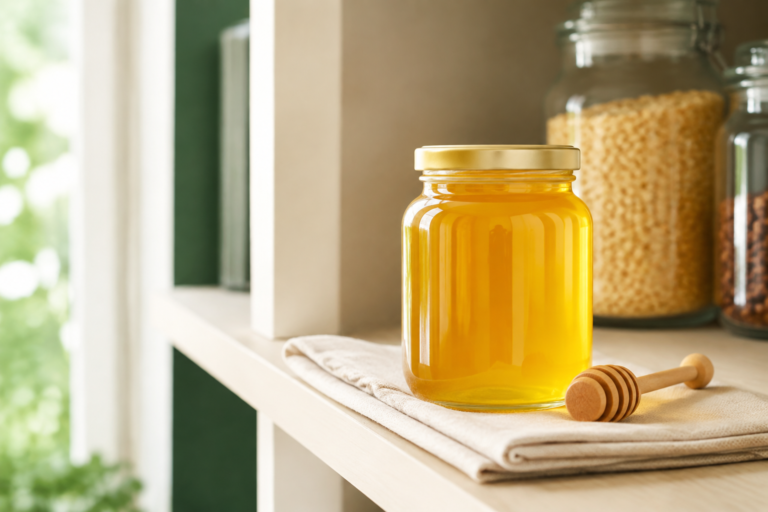

Salcâm (acacia honey)
European acacia honey generally refers to black locust, Robinia pseudoacacia, also called false acacia. It is often pale and mild, making it a useful option when you want sweetness without a dominant aroma. Clarity is not proof of purity, and the floral name does not promise that every jar will stay liquid indefinitely. Record the producer and harvest when comparing it with another acacia honey.
Fir and forest honeydew
Fir-associated honey is honeydew honey, not nectar from resinous fir blossoms. Bees collect sugary honeydew associated with living trees, often produced by sap-feeding insects. A resin-like aroma can be a tasting impression; it does not mean bees simply turn tree resin into honey. Ask what supports a specific fir claim, and choose a pronounced batch for hearty bread or a savory glaze rather than as a respiratory remedy.
Tei (linden honey)
Linden or lime honey refers to Tilia trees, not citrus lime fruit. Its aroma can be distinctive, sometimes described as herbal or mint-like. Use those words as a prompt to taste the actual batch rather than expecting one exact flavor. It can sweeten a drink or dessert, but its name is not evidence of therapeutic effects.
Sunflower blossom honey
Sunflower is a documented Romanian floral source. A golden appearance or a set texture may be part of a particular batch, but neither is a stand-alone identity test. Crystallization does not automatically indicate adulteration. Try its actual sweetness and texture on toast or in baking, rather than assuming every jar is equally mild, nutty or liquid.
Mountain blossom and mixed forage
Mountain blossom describes a place and mixed floral forage rather than one botanical species. Ask about the locality and season, and whether the producer identifies a principal source or a multifloral harvest. Different batches may taste quite different. A mountain label does not establish purity, certification or a superior nutrient profile.
Compare Romanian honeys by source, harvest and the food you plan to use them with. For a simple tasting, keep the food and serving temperature the same, compare small portions and note the aroma before and after tasting. Keep producer and lot details beside your notes so you can look for a similar harvest later.
Separate the tree, the landscape and the texture
Source descriptions answer different questions. A honeydew harvest can be associated with a forest tree, while a mountain label describes geography. Liquid or set describes physical form; it is not another country or floral category.
| Name on the jar | What it describes | A useful next question |
|---|---|---|
| Acacia / salcâm | Usually black locust floral source | Which producer and harvest? |
| Linden / tei | Tilia floral source | How pronounced is this batch’s aroma? |
| Sunflower | A crop-blossom source | Is the offered texture liquid or set? |
| Fir / honeydew | A honeydew-source claim | What supports identification of the tree source? |
| Mountain blossom | Regional mixed-flower wording | Which locality and season? |
Four Romanian labels to take to the market
Miere de salcâm means acacia honey. If you enjoyed a jar sold as black locust honey in English, look for salcâm when exploring Romanian harvests.
Miere de tei means linden honey. Miere de floarea-soarelui means sunflower honey. If a seller offers both, taste them on separate spoons and note which aroma lingers. The names identify the plants even if the jars happen to look alike.
Miere de mană means honeydew honey. Bees can collect sugary material deposited by sap-feeding insects on trees. If you want a specifically fir-associated harvest, ask what the beekeeper knows about the trees and collection site. The word mană by itself does not specify fir.
Practical reader questions
Does fir honey come from fir flowers?
Fir-associated honey is honeydew honey, rather than blossom nectar.
Is linden the citrus lime tree?
No. Here lime means Tilia, also called linden.
Does clear acacia honey prove purity?
No. Appearance alone cannot authenticate a honey.
Is crystallized sunflower honey necessarily spoiled?
No. Crystallization alone is not spoilage; texture and spoilage signs are separate questions.
Sources and context
These sources document honey categories, botanical origin or safety. Laboratory measurements are not evidence that eating a particular variety treats disease. Flavor and texture vary by harvest and handling. Honey contributes dietary sugar; never give it to an infant under 12 months.