
Algarrobo honey
Algarrobo is a more useful local starting point than assigning every Argentinian harvest a generic mesquite profile. It is a common name that needs botanical and regional context. Government descriptions include pale algarrobo honeys, so a universally dark, smoky style is misleading. Ask which plant and locality the producer means, then taste the actual batch before using it with cheese or in a dressing.
Eucalyptus honey
Eucalyptus-source honey appears in Argentina’s official honey map. This covers different possible species and harvest conditions; it is not one fixed light-amber, gently herbal product. Ask for the tree source where known and compare the aroma of the jar in front of you. Use a small portion in a recipe first, especially when you want the honey to remain noticeable.
What a Patagonian origin tells you
Patagonian identifies a large region, not exclusively pristine forest or one floral blend. A particular harvest may reflect quite different forage from another sold under the same regional name. Ask about the locality, flowering season and botanical account. Do not infer a guaranteed golden color, delicate flavor, purity or environmental certification from the name alone.
Quebracho honey
Quebracho is a documented Argentinian honey-source name, including quebracho colorado chaqueño in the official honey map. Common names and different tree sources need context; the label should not be treated as a single universal flavor or color. If you enjoy a pronounced batch, try it with a strongly flavored food. Laboratory antioxidant measurements do not establish a medical benefit from eating that variety.
Girasol (sunflower honey)
Sunflower honey concerns nectar from crop blossoms. The source name does not require a smooth, creamy texture: crystallization and handling also matter. Check whether the seller offers liquid, naturally set or creamed honey. A set batch can be convenient for spreading, while a liquid one may be easier to measure into a dressing; neither texture alone proves its botanical identity.
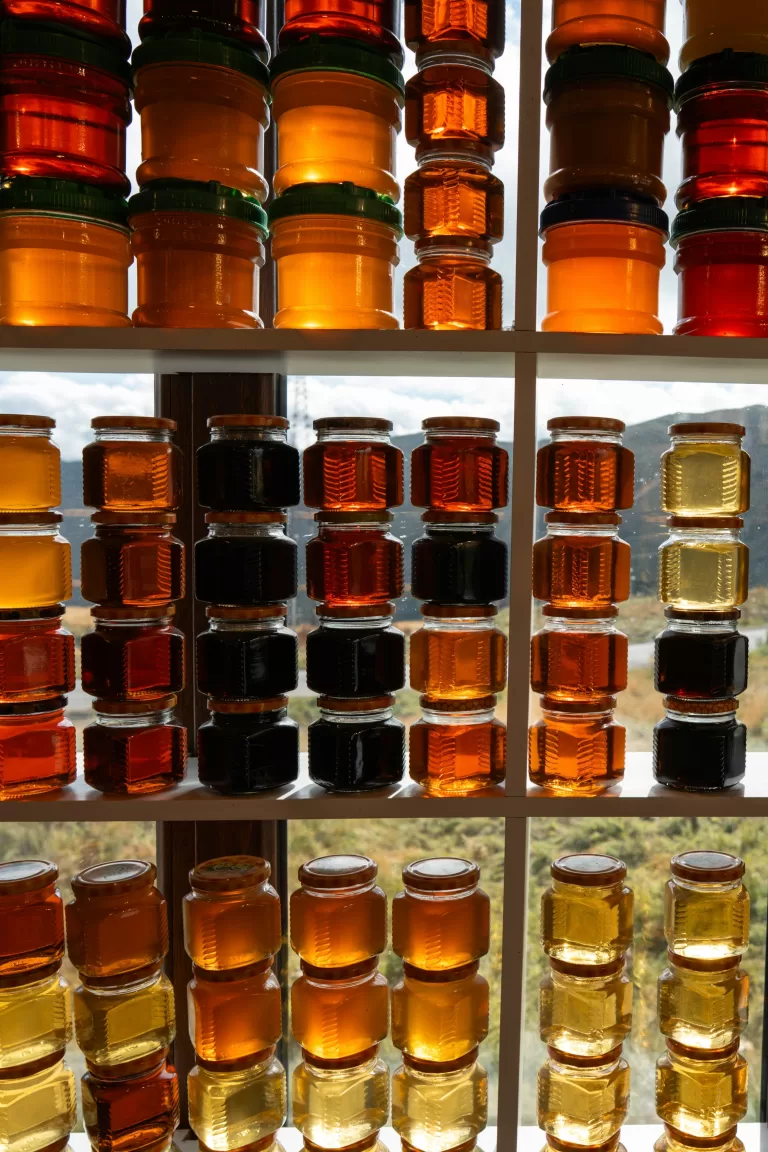
Explore Argentina’s variety one traceable harvest at a time. Start with a mild and a more pronounced batch, use the same plain food for both, and note aroma, sweetness and texture. Keeping the producer, lot and locality with your tasting notes makes it easier to find a style you want to buy again.
Use the label as a set of questions
Argentina’s characterization work uses botanical, physicochemical and sensory information. At home you can compare flavors, but a spoon test cannot authenticate origin or purity. Ask for supporting information when a specific source or regional claim is important.
| Name on the jar | What it describes | A useful next question |
|---|---|---|
| Algarrobo | A local plant-source name | Which botanical source and region? |
| Eucalyptus | A tree-source category | Which species or forage account is available? |
| Quebracho | A source name needing tree context | Which quebracho does the label mean? |
| Patagonian | Geographic origin | Which locality and harvest? |
| Sunflower | A crop-blossom source | What texture is offered? |
Read the place and the plant on an Argentine jar
Start with the Spanish words. Girasol means sunflower and eucalipto means eucalyptus. On a jar marked miel de algarrobo or miel de quebracho, keep the local tree name in your notes. Ask the producer which tree they mean and where it flowers.
Then look at the map. Find the harvest area on Argentina’s regional honey map, linked below. A region can have several nectar sources. If the jar says only “Patagonia”, ask for the locality and season before choosing it as a particular floral honey.
Make a useful comparison. If the stall has two sunflower honeys, compare their harvest areas and taste them side by side. If it has two honeys from the same locality, compare their flowering periods instead. Either pairing gives you a more revealing question than which jar looks darker.
Practical reader questions
Is Patagonian honey one flavor?
No. A large geographic region can contain different forage and harvest conditions.
Must algarrobo honey be smoky and dark?
No. Official regional descriptions include pale algarrobo honeys. Taste the actual batch.
Does a creamy texture identify sunflower honey?
No. Texture also reflects crystallization and handling.
Can tasting prove a floral claim?
No. Tasting is useful for choosing food, while authentication requires appropriate supporting evidence.
Sources and context
These sources document honey categories, botanical origin or safety. Laboratory measurements are not evidence that eating a particular variety treats disease. Flavor and texture vary by harvest and handling. Honey contributes dietary sugar; never give it to an infant under 12 months.