
Akácméz (acacia honey)
Hungarian acacia honey refers to black locust, Robinia pseudoacacia. It is commonly pale and mild, a useful choice when you want sweetness without a dominant aroma. It often remains liquid for a long time, but no floral name guarantees permanent liquidity or authenticates a jar by appearance. Use its actual aroma to judge whether it suits a drink, a simple dessert or bread.
Hársméz (linden honey)
Lime or linden honey concerns Tilia trees, not citrus lime fruit. A distinctive floral, herbal or mint-like aroma may be part of a batch’s tasting profile. Those impressions can make it interesting in a drink or dressing; they do not establish that linden honey treats coughs or another medical condition. Compare a small portion with a milder honey before sweetening a whole recipe.
Sunflower honey
Sunflower honey describes a crop-blossom source. A golden appearance may be familiar, but texture depends on crystallization and handling as well as composition. Ask whether the offered jar is liquid, naturally set or creamed. A spreadable batch can suit toast, while a liquid batch may be convenient for measuring into a dressing; neither form proves the source or purity.
Forest harvests
Forest is a broad forage description that can include honeydew associated with trees as well as nectar contributions. Honeydew is different from flower nectar and may be produced by sap-feeding insects on living plants. Ask what the seller means for the specific harvest rather than assuming every forest honey is a fixed blend of tree blossoms. Taste the batch before using it with strongly flavored foods.
Meadow and mixed-flower honey
Meadow or mixed-flower honey can reflect several plant sources rather than one principal blossom. Seasonal conditions and local forage shape the result, so a meadow name is not a fixed recipe. Record the harvest locality and producer alongside your tasting notes. Choose a mild batch for a delicate food or a more pronounced one where its aroma will remain noticeable.
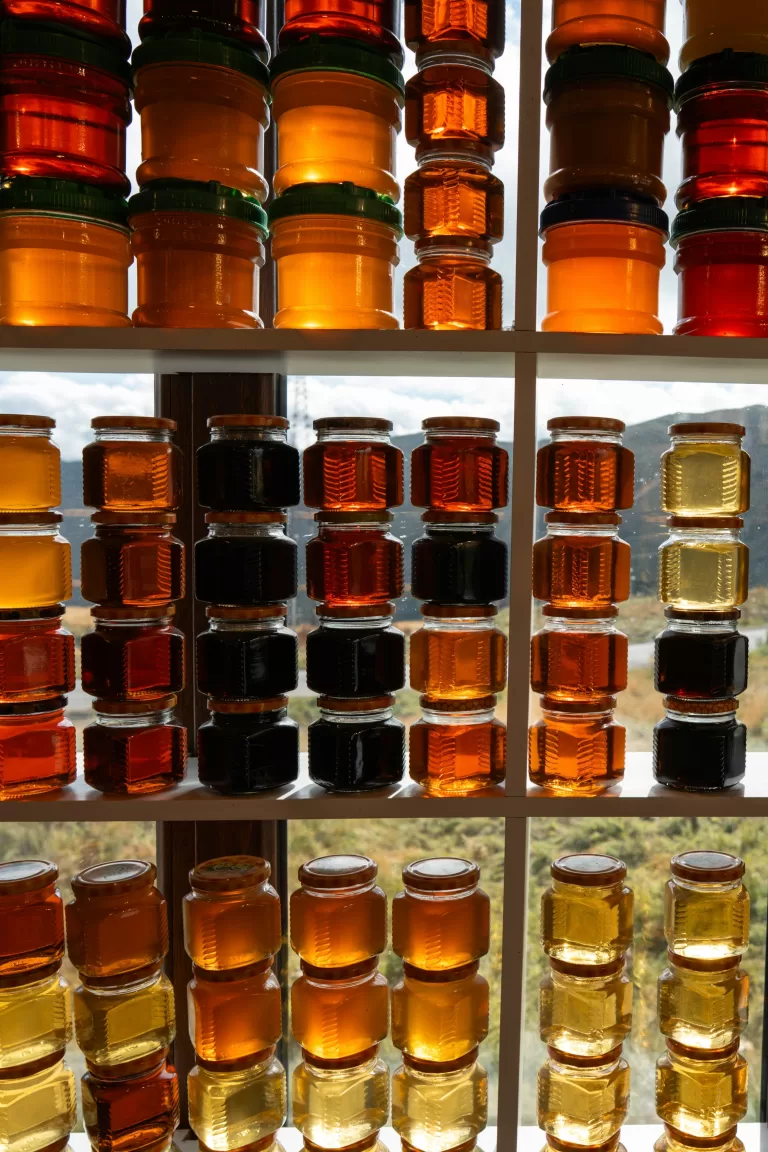
To compare Hungarian honeys, use small portions at the same serving temperature and try them on the same plain food. Note which aroma appears first, how long it lasts and whether the texture suits spreading or drizzling. Save the producer and lot information with your notes; that is a practical route back to a harvest style you enjoyed.
Build a small tasting reference
Compare a gentle honey with a more pronounced one, rather than trying to rank an entire country’s production. Keep botanical source, harvest locality and handling as separate fields. A tasting preference is useful kitchen information, while authentication needs supporting evidence.
| Name on the jar | What it describes | A useful next question |
|---|---|---|
| Acacia / akác | Usually black locust floral source | Which producer and harvest? |
| Linden / lime | Tilia floral source | How intense is the actual batch? |
| Sunflower | Crop-blossom source | What texture is sold? |
| Forest | Broad forest forage, potentially honeydew | What source does the producer identify? |
| Meadow | Mixed floral forage | Which season and locality? |
A two-cup tasting for acacia and linden honey
Brew one pot of plain tea and divide it between two cups. Let both reach the same comfortable drinking temperature. Stir half a teaspoon of acacia honey into one and the same amount of linden honey into the other.
Smell each cup before sipping. In which can you still pick out the tea most clearly? Which leaves a floral note after you swallow? If the tea masks both honeys, taste a little of each on plain bread before deciding which you prefer.
Keep the word akácméz with your acacia tasting note and hársméz with your linden note. The English name “lime blossom” on a Hungarian jar also points to linden. It refers to the flowering tree and carries no promise of citrus flavour.
Practical reader questions
Is Hungarian acacia a true Acacia species?
The familiar honey name generally refers to black locust, Robinia pseudoacacia.
Does lime honey contain citrus lime?
The floral name refers to linden trees, Tilia. Added citrus would be a separate ingredient.
Does acacia honey have to stay liquid forever?
No. Long liquidity is common, but appearance and texture alone do not authenticate a jar.
Can a laboratory antioxidant result prove health benefits?
No. A chemical measurement does not establish a clinical benefit from eating that honey.
Sources and context
These sources document honey categories, botanical origin or safety. Laboratory measurements are not evidence that eating a particular variety treats disease. Flavor and texture vary by harvest and handling. Honey contributes dietary sugar; never give it to an infant under 12 months.