
Acacia from black locust
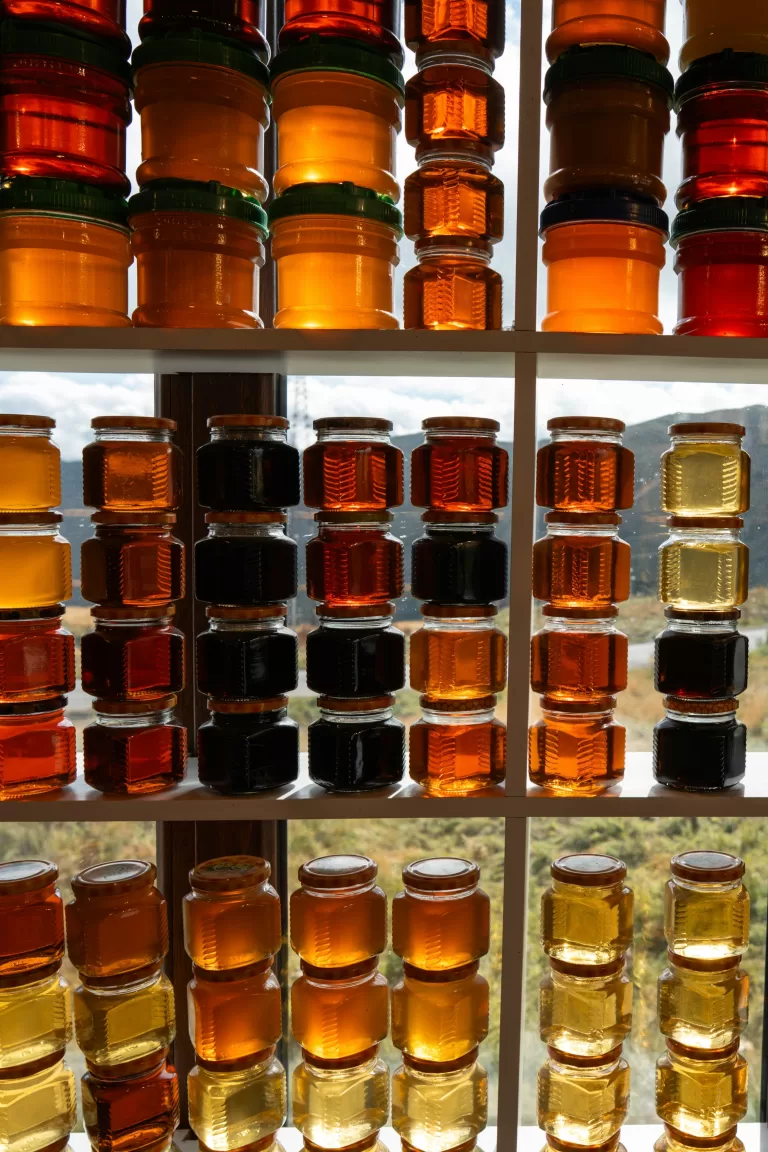
Acacia honey here usually means nectar from black locust, Robinia pseudoacacia, rather than a true Acacia species. It is often pale and gentle in aroma, which can suit foods where you want sweetness without much added intensity. Treat those notes as a starting point for tasting; ask for the producer and harvest rather than expecting every jar to look or taste identical.
Forest honey and honeydew
Forest honey in the Slovenian classification includes honeydew honey, not simply a mixture of flower nectars. Honeydew can be produced by sap-feeding insects on trees and collected by bees. Fir and spruce are important associated tree sources. The actual flavor varies; woody or resin-like impressions describe aroma, not a claim that the honey is tree resin. Try a pronounced batch on hearty bread or in a glaze.
Chestnut honey
Chestnut honey has a reputation for a more pronounced taste, which can include bitter or astringent impressions. Its source is distinct from the aroma of roasted nuts or an added nut ingredient. Taste the actual batch with cheese or another food that can stand beside its intensity. A botanical name or measured antioxidant content is not proof of respiratory benefits.
Blossom honey
Blossom or floral honey concerns flower nectar, often from mixed forage. Its character depends on which plants were available, where the bees foraged and when the harvest took place. It is a useful everyday option when you choose a batch you like. Keep its source description separate from liquid, set or creamed texture.
Alpine harvest areas
Alpine flower is a geographic and forage description, not one universally defined flavor. Ask which locality and season the producer means and whether the honey is a mixed-flower harvest. Mountain scenery does not verify purity, organic production or a protected designation. Use the actual aroma and texture to choose a pairing with yogurt, bread or a dessert.
Compare source names before comparing tasting notes. A gentle floral honey and a pronounced honeydew harvest can offer very different kitchen experiences without either being medically superior. Keep notes on the producer, lot, aroma and pairing so that a memorable jar becomes something you can look for again.
Read origin and protected names separately
A general statement that honey comes from Slovenia is different from a named certified product. When a protected name or logo matters, check the producer and certification information rather than treating national origin as automatic qualification.
| Name on the jar | What it describes | A useful next question |
|---|---|---|
| Acacia | Usually black locust nectar | Which harvest is this? |
| Chestnut | A distinct floral source | How pronounced or bitter is this batch? |
| Blossom / floral | Flower nectar, often mixed forage | What location and season? |
| Forest / honeydew | Honeydew-associated forage | Which trees and source evidence? |
| Slovenski med | A named protected geographical indication | Is this product certified under that specification? |
Choose between three Slovenian honey labels
Cvetlični med · blossom honey. Choose this to explore a nectar harvest. Ask which flowers were in bloom around the apiary. A beekeeper’s account of that season tells you more about this jar than a list of everything that grows in the area.
Kostanjev med · chestnut honey. If you enjoy a bitter finish, ask to taste this one. Try a dab beside a piece of aged cheese and notice how long the honey’s flavour lasts.
Gozdni med · forest honey. Here the useful question is which trees contributed honeydew. For a tasting, pair this jar with the blossom honey. If either also carries the protected name Slovenski med, read that designation separately from the harvest type.
Practical reader questions
Is forest honey always flower nectar?
No. Slovenian forest honey includes honeydew harvests.
Are fir and spruce honeys made from tree resin?
No. These source categories concern honeydew associated with trees, rather than collected resin.
Does all Slovenian honey automatically qualify as Slovenski med?
No. The protected name has its own specification and certification requirements.
Is alpine flower a single botanical species?
No. Ask for the specific locality and forage information.
Sources and context
These sources document honey categories, botanical origin or safety. Laboratory measurements are not evidence that eating a particular variety treats disease. Flavor and texture vary by harvest and handling. Honey contributes dietary sugar; never give it to an infant under 12 months.