How to Decrystallize Honey Safely Without Damaging It
Turn firm or grainy honey back into a pourable liquid with controlled warmth—not boiling water, added moisture or repeated overheating. This guide explains the safest household method for glass and plastic containers.
Stand the jar in warm water and give the crystals time to dissolve
- Confirm that the change is ordinary crystallization, not fermentation or contamination.
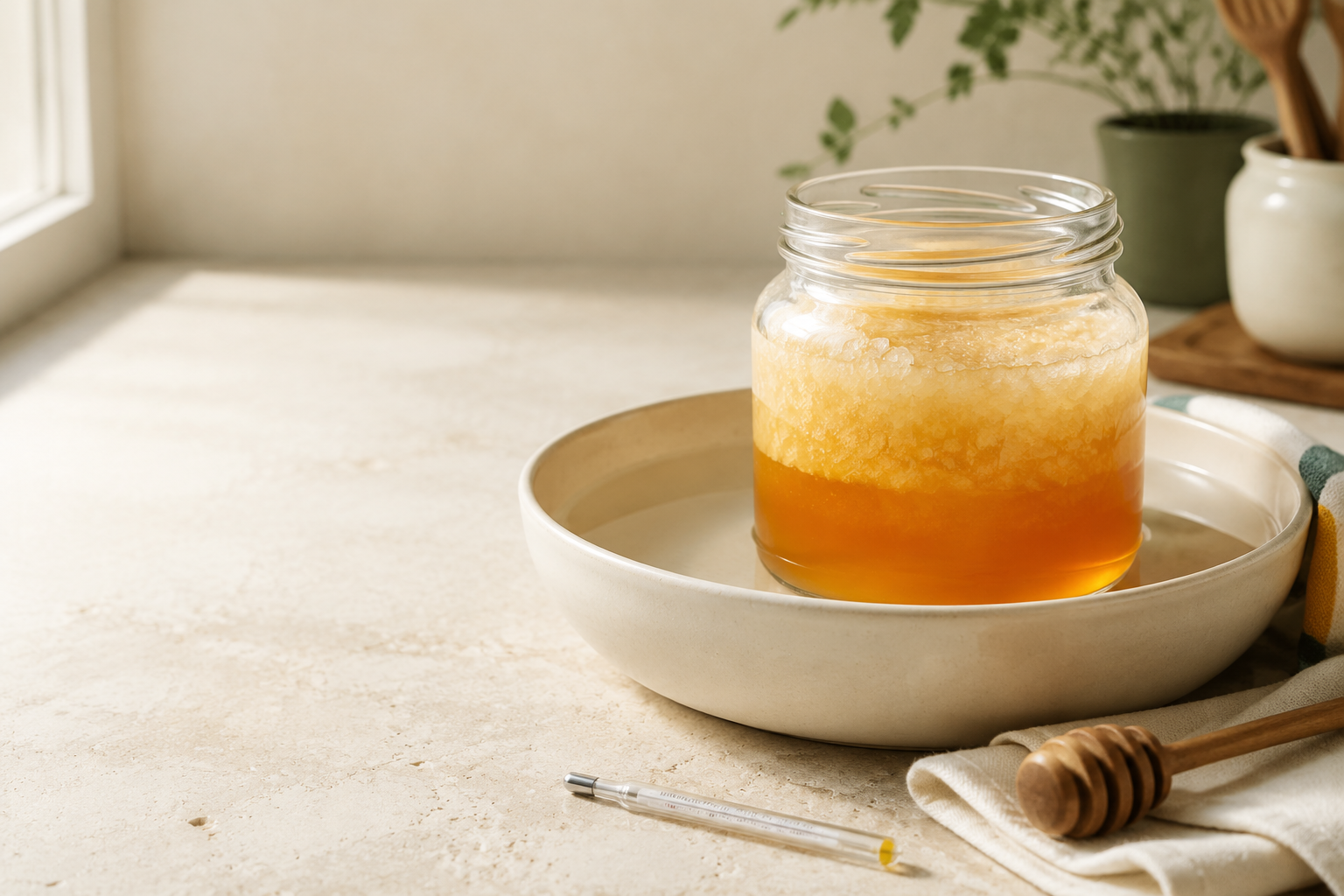
- Place a tightly closed glass jar in a bowl or saucepan of warm—not boiling—water.
- Keep the water below the lid and prevent all water from entering the honey.
- Stir with a clean, completely dry utensil when practical.
- Refresh the warm water as it cools and stop once the crystals dissolve.
- Let the jar cool, dry it and return it to a stable cupboard.
Restore crystallized honey with confidence
Before you warm the jar
Look for crystals
Check the container
Check for warning signs
How to decrystallize honey in warm water
For a large jar: reliquefy only the amount you expect to use when practical. Smaller portions warm more evenly and reduce repeated heating of the full supply.
How warm should the water be?
There is no single household time because jar size, starting temperature, crystal size and honey variety differ. The goal is the lowest practical heat for the shortest necessary time—not a race to make the honey hot.
Warm, not boiling
Slow and even
Avoid prolonged high heat
Use a thermometer if desired
Expect variation
Stop when liquid
Glass jars, plastic bottles and honeycomb
| Container or form | Best approach | Important caution |
|---|---|---|
| Glass jar | Warm-water bath | Avoid thermal shock; do not move very cold glass directly into very hot water |
| Food-grade plastic bottle | Use comfortably warm water or transfer to suitable glass | Follow package limits; avoid very hot water that can soften or deform plastic |
| Metal container | Use indirect, controlled warming | Metal transfers heat rapidly, so monitor it carefully |
| Honeycomb | Usually leave in its natural form | Warming can soften wax and alter the comb structure |
| Creamed honey | Do not liquefy unless that is your goal | Its fine crystals create the intended smooth, spreadable texture |
Never heat a sealed container in a way that could create pressure, and never place an unsuitable package directly on a stovetop.
Should you microwave crystallized honey?
Why it is difficult to control
The gentler choice
Never microwave metal
Do not boil or add water
Best default: use indirect warm water. It protects the package from direct heat and lets you stop as soon as the desired texture returns.
Why honey crystallizes
What is happening
Honey is a concentrated sugar solution. Over time, glucose can separate from the liquid phase and form glucose-monohydrate crystals. The process is natural and reversible with warmth.
Floral origin, glucose-to-fructose balance, moisture, pollen and other particles, storage temperature and previous crystals all influence how quickly a honey sets.
What it tells you
Crystallization alone does not prove purity, processing level or quality, and liquid honey is not automatically fresher. Different authentic honeys behave differently.
Very fine crystals are deliberately encouraged in creamed honey to produce a smooth, spreadable texture.
Will honey crystallize again?
Yes, it may return
Dissolve the full crystal network
Store consistently
Choose the texture you enjoy
Repeated warming is usually avoidable: portion bulk honey into smaller clean, dry jars, then warm only the jar you are actively using.
Decrystallizing honey troubleshooting
Do not force the process
Large jars can take time. Gentle reheating cycles are preferable to a single burst of extreme heat.
Safety checks before eating the honey
Warming can change texture, but it cannot make contaminated or fermented honey safe.
Discard damaged packages
Watch for fermentation
Keep water out
Never give honey to infants
Respect specialty products
Use food-safe equipment
Frequently asked questions about decrystallizing honey
What is the best way to decrystallize honey?
Use indirect, gradual warmth: stand the jar in warm—not boiling—water, keep water below the lid and refresh the bath until the crystals dissolve.
Is crystallized honey safe to eat?
Crystallization by itself is a normal texture change. Evaluate the package, odor and storage history separately, and discard honey with signs of contamination or fermentation.
Can I microwave honey?
A microwave can create uneven hot spots and may not suit the container. A warm-water bath offers better household control.
Can I add water to dissolve the crystals?
No. Added water changes honey’s moisture balance and can reduce its storage stability.
How long does decrystallizing honey take?
Time varies with jar size, honey variety, starting temperature and crystal structure. Continue gradual warming and stop when the crystals dissolve.
Can raw honey be decrystallized?
Yes. Use gentle, controlled warmth and avoid prolonged high heat if preserving the honey’s original aroma and minimally processed character matters to you.
Why did my honey crystallize again?
Its natural sugar composition remains unchanged, and any remaining crystals can seed new growth. Recrystallization is normal.
Does decrystallizing honey ruin it?
Gentle warming used only as needed can restore texture. Excessive or prolonged heat can change color, aroma, flavor and heat-sensitive quality indicators.
Latest honey storage and quality guides
Continue with practical, evidence-led guides to honey texture, storage, processing, quality and everyday use.
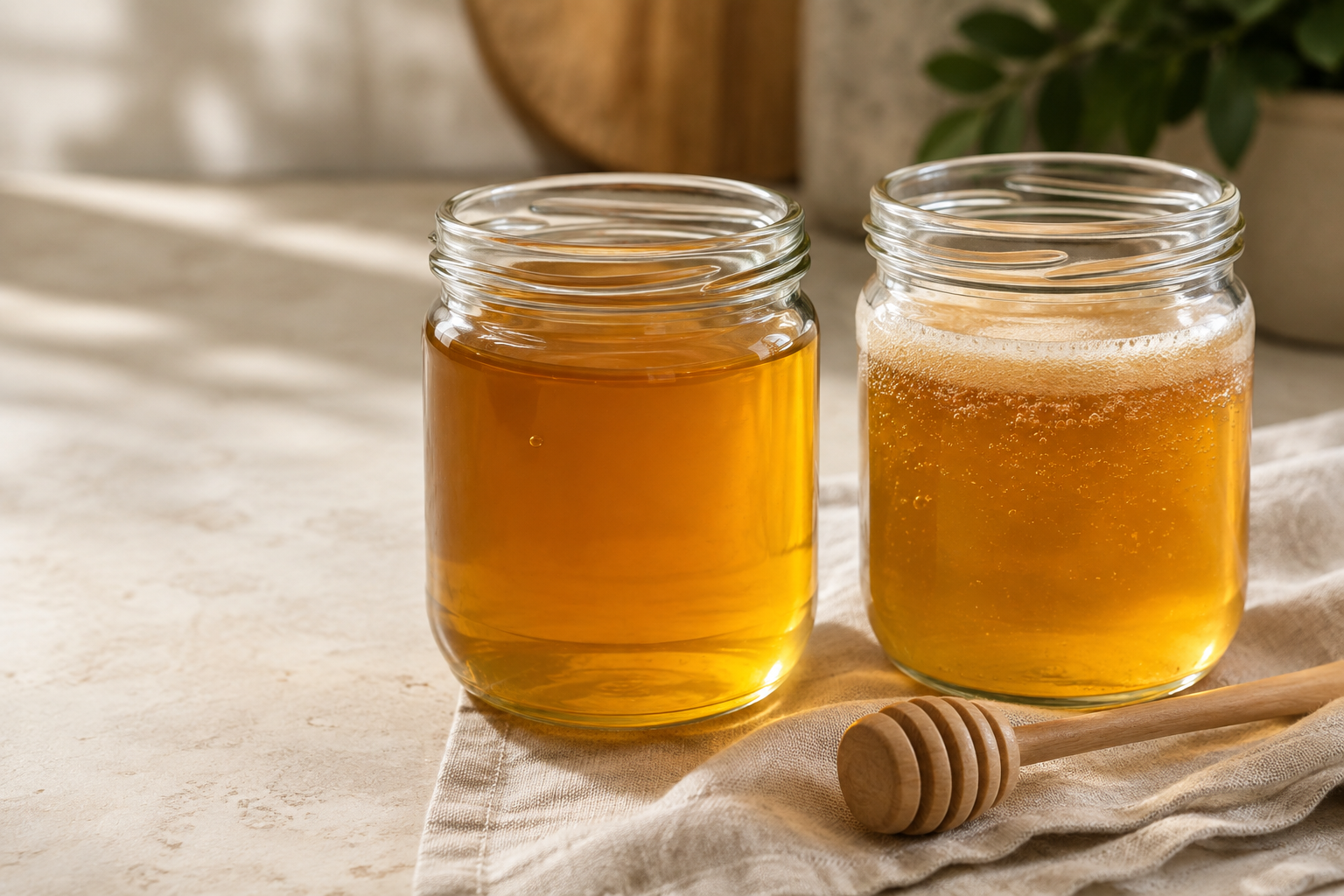
Why Is My Honey Foamy? Bubbles, Wax or Fermentation Explained
THE COMPLETE HONEY FOAM GUIDE Why Is My Honey Foamy? Bubbles, Wax or Fermentation Explained Foam on honey is not automatically spoilage.
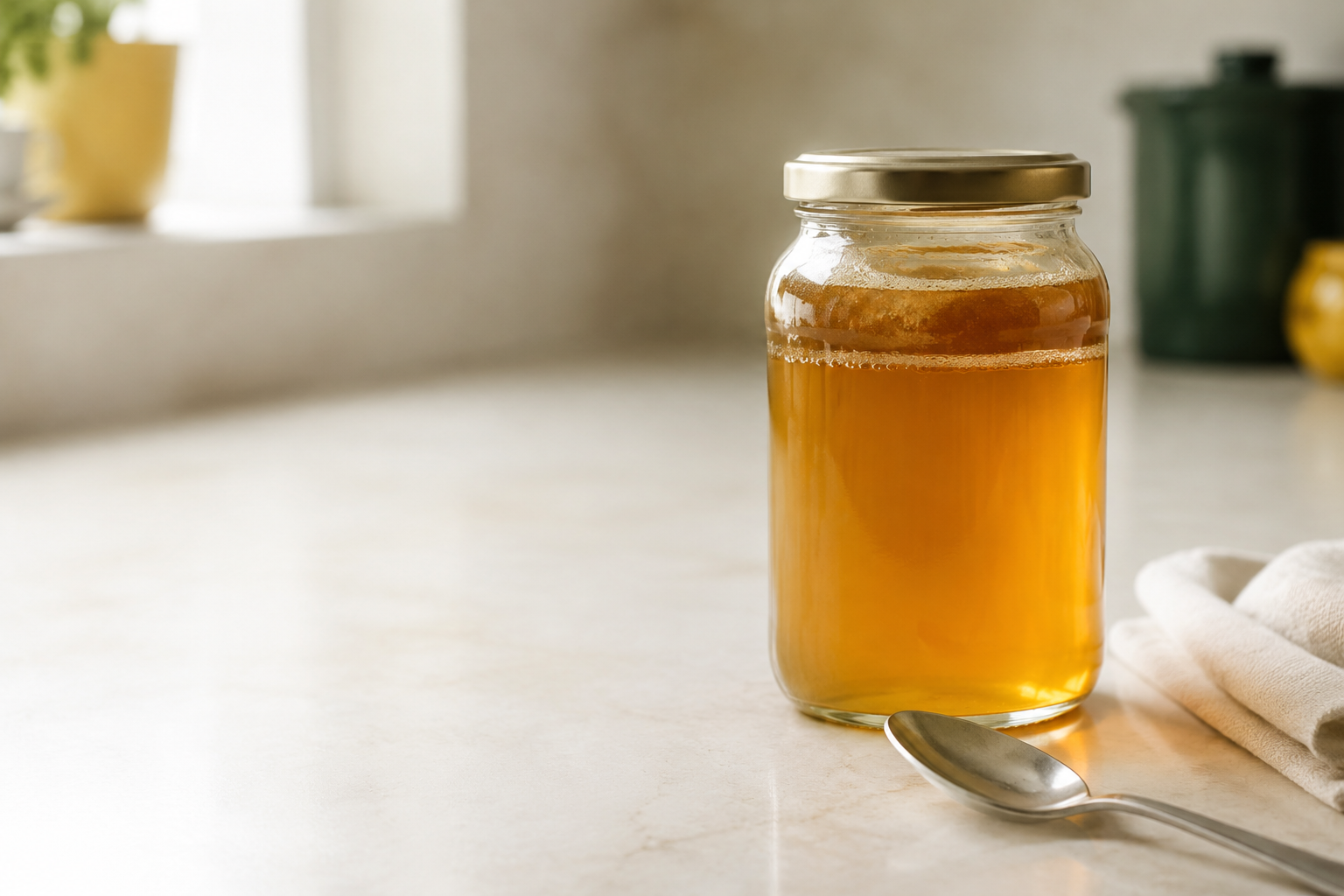
Why Does Honey Ferment? Signs, Causes and Prevention
THE COMPLETE HONEY FERMENTATION GUIDE Why Does Honey Ferment? Signs, Causes and Prevention Unintended honey fermentation usually begins when yeasts can use
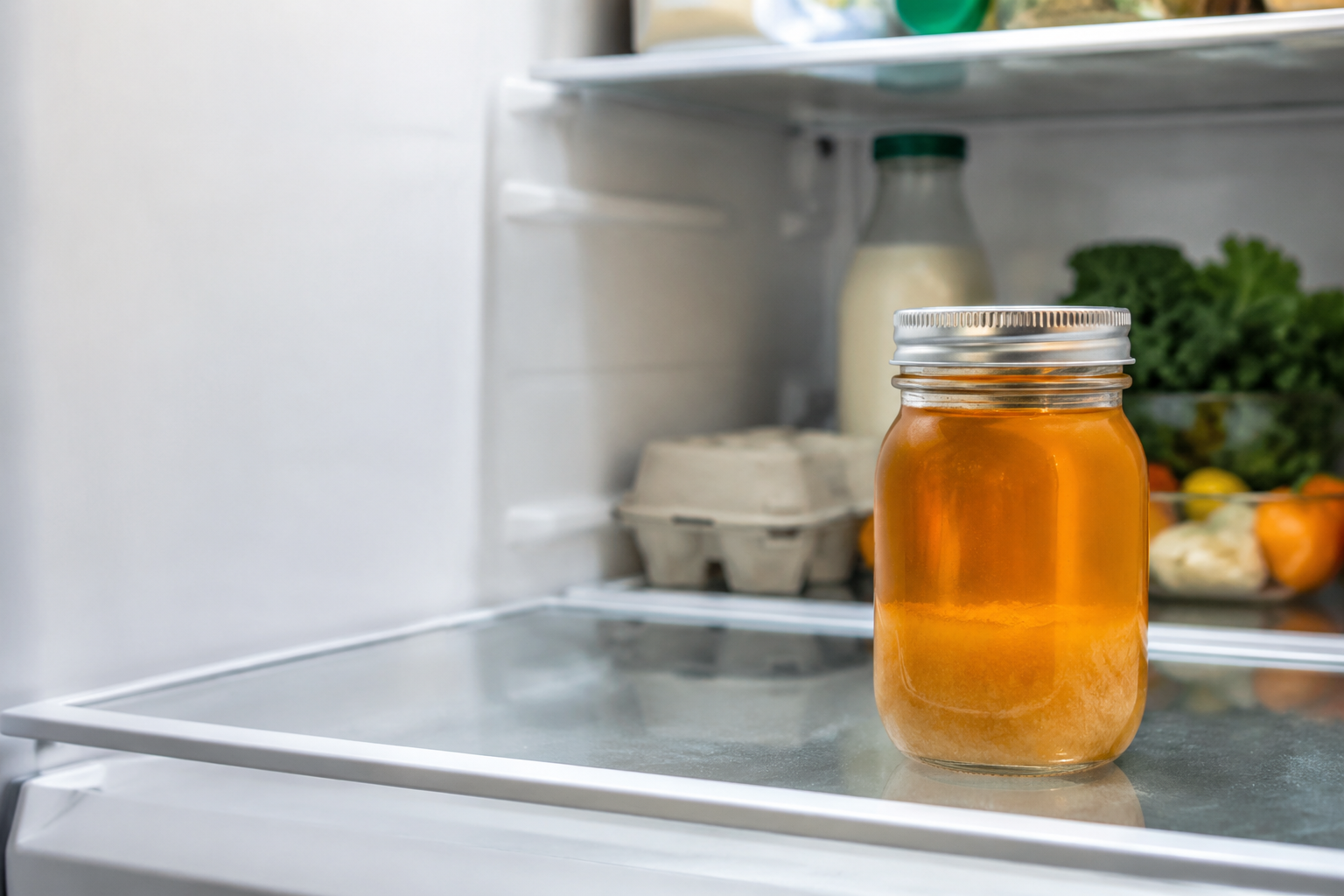
Does Honey Need to Be Refrigerated? What Happens in the Fridge
THE COMPLETE COLD-STORAGE GUIDE Does Honey Need to Be Refrigerated? What Happens in the Fridge Plain honey usually belongs in a dry
How this decrystallizing guide was researched
This guide prioritizes university extension guidance, international honey references and the Codex standard. Recommendations distinguish normal crystallization from food-safety warning signs and favor the least aggressive practical household method.
- Penn State Extension: Storing Staple Ingredients in the Kitchen
- Penn State Extension: Canning and Freezing Questions and Answers
- Utah State University Extension: Making Products With Honey
- FAO: Honey composition and crystallization
- FAO: Honey storage and temperature
- FAO: Honey processing and controlled crystallization
- FAO/WHO Codex Standard for Honey
Use patience, indirect warmth and a completely dry jar
Crystallized honey usually needs time—not extreme heat. A warm-water bath restores a pourable texture while giving you control over the jar, the temperature and the finished result.