
Honey Storage & Care: The Complete Guide
Learn how to store honey, understand shelf life, manage crystallization, choose containers and recognize changes that deserve attention—with practical guidance for households around the world.
Keep plain honey sealed, dry and protected from unnecessary heat
- Store plain honey in a clean, food-safe container with a tight lid.
- Choose a dry cupboard away from sunlight, ovens and temperature swings.
- Use clean, completely dry utensils and never add water to the jar.
- Plain honey generally does not require refrigeration unless the label says otherwise.
- Crystallization is a normal texture change—not an expiration signal.
- Follow product-specific directions for infused, blended or formulated honey.
Find the honey-care answer you need
The three rules behind good honey storage
Seal it
Keep it dry
Avoid unnecessary heat
Choose the guide that matches your question
Coming next: freezing honey, storing comb honey and caring for infused honey products will expand this library without forcing unrelated topics into one article.
Where should honey be stored?
The best household location is normally a clean, dry cupboard with reasonably stable room conditions. Keep the jar away from direct sunlight, cooking heat, steam and strongly scented products.
Pantry or cupboard
Countertop
Refrigerator
Freezer
Bulk-storage area
Travel or shipping
The best containers for honey
| Container | Best use | What to check |
|---|---|---|
| Glass jar | Everyday and long-term household storage | Food-safe lid, intact glass, clean interior and reliable seal |
| Food-grade plastic | Lightweight retail or working container | Food compatibility, damage, odor and exposure to heat |
| Stainless steel | Bulk handling by producers or food businesses | Food-grade surface, sanitation and secure cover |
| Decorative honey pot | Short-term serving | Many do not seal tightly; return honey to closed storage |
| Previously used jar | Only after appropriate cleaning and complete drying | Never use containers that held chemicals, fuels or persistent odors |
A wide opening can make firm honey easier to scoop. Whatever the material, the seal and cleanliness are as important as the jar itself.
Honey storage temperature explained
Moderate room conditions
Excessive warmth
Cool conditions
Temperature swings
The FAO’s technical honey reference discusses temperature as one factor affecting both quality and crystallization. Household advice should still defer to the product label, especially when honey contains other ingredients.
Crystallization, texture and gentle care
Why crystals form
Honey is a concentrated sugar solution. Glucose can separate from the liquid phase and form crystals. Floral source, glucose-to-fructose balance, moisture, particles and temperature influence how quickly this happens.
A jar may become cloudy, grainy, creamy or completely firm. Different authentic honeys crystallize at very different rates.
What to do
Use crystallized honey as a spread or return it to a pourable texture with gradual indirect warmth. A warm-water bath is easier to control than direct heat. Keep water out of the jar and stop once the crystals dissolve.
Crystals may return because warming does not change the honey’s underlying sugar composition.
Does honey expire or go bad?
Plain honey is unusually stable
Quality changes over time
Best-before is not always use-by
Added ingredients change the answer
Do not rely on age alone. Evaluate the label, ingredient list, package condition, recalls and storage history. When safety cannot be assessed confidently, discard the product rather than taste-testing it.
Storage guidance by honey form
When honey deserves closer attention
Crystals, cloudiness or firmness alone are generally normal. Use more caution when changes involve the package, odor, gas or known contamination.
Damaged packaging
Unusual fermentation signs
Water or food introduced
Recall or traceability concern
Unknown specialty mixture
Uncertain history
Honey storage guidance around the world
| Reference | How it helps readers |
|---|---|
| Codex Alimentarius | Provides an international compositional and quality benchmark for honey traded as honey |
| United States extension guidance | Offers practical household storage and warm-water crystallization advice |
| Canadian Food Inspection Agency | Explains Canadian honey labeling, grading and country-of-origin requirements |
| Food Standards Australia New Zealand | Clarifies storage instructions, date marking and general food-safety principles |
| Product label | Controls the storage instructions for the specific jar or formulated product in front of you |
Hive To Honey uses global sources while clearly separating international standards, national regulations and practical household guidance. Regulations and label terminology can differ across markets.
Frequently asked questions about honey storage
What is the best way to store honey?
Keep plain honey tightly sealed in a clean, food-safe container in a dry cupboard away from direct sunlight and unnecessary heat.
Does honey need to be refrigerated?
Plain honey generally does not require routine refrigeration unless its label says otherwise. Refrigeration commonly makes crystallization faster or firmer.
How long does honey last?
Plain honey can remain usable for a long time, but quality and safety depend on moisture, ingredients, packaging, handling and storage history. Read the dedicated shelf-life guide for a condition-based answer.
Is crystallized honey spoiled?
No. Crystallization is usually a natural physical change. Evaluate unusual odors, gas, foam, contamination and package damage separately.
Can honey be stored in plastic?
Clean, undamaged food-grade plastic can be suitable. Keep it away from excess heat and follow the package directions.
Can honey be frozen?
Freezing is possible for specialized long-term storage but is rarely necessary for an everyday household jar. Use suitable packaging and prevent condensation during thawing.
Can water be added to crystallized honey?
No. Use indirect warmth instead. Added water changes the honey’s moisture balance and can reduce storage stability.
Does raw honey need special storage?
Raw honey still needs a tight seal, clean dry utensils and protection from moisture and unnecessary heat. Follow any instructions on its label.
Latest Honey Storage & Care guides
New articles will expand this hub with deeper answers about storage conditions, textures, containers and product-specific care.
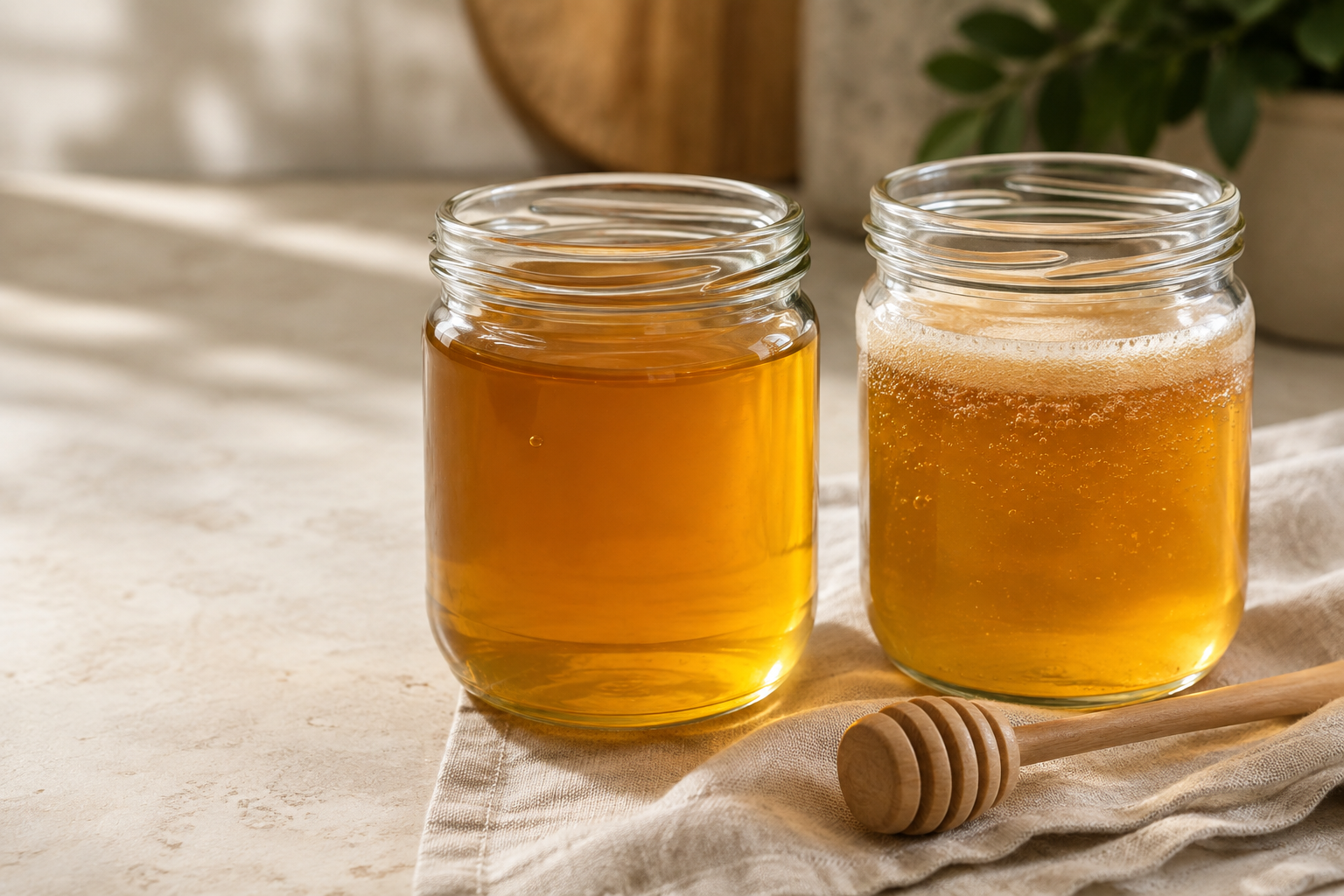
Why Is My Honey Foamy? Bubbles, Wax or Fermentation Explained
THE COMPLETE HONEY FOAM GUIDE Why Is My Honey Foamy? Bubbles, Wax or Fermentation Explained Foam on honey is not automatically spoilage.
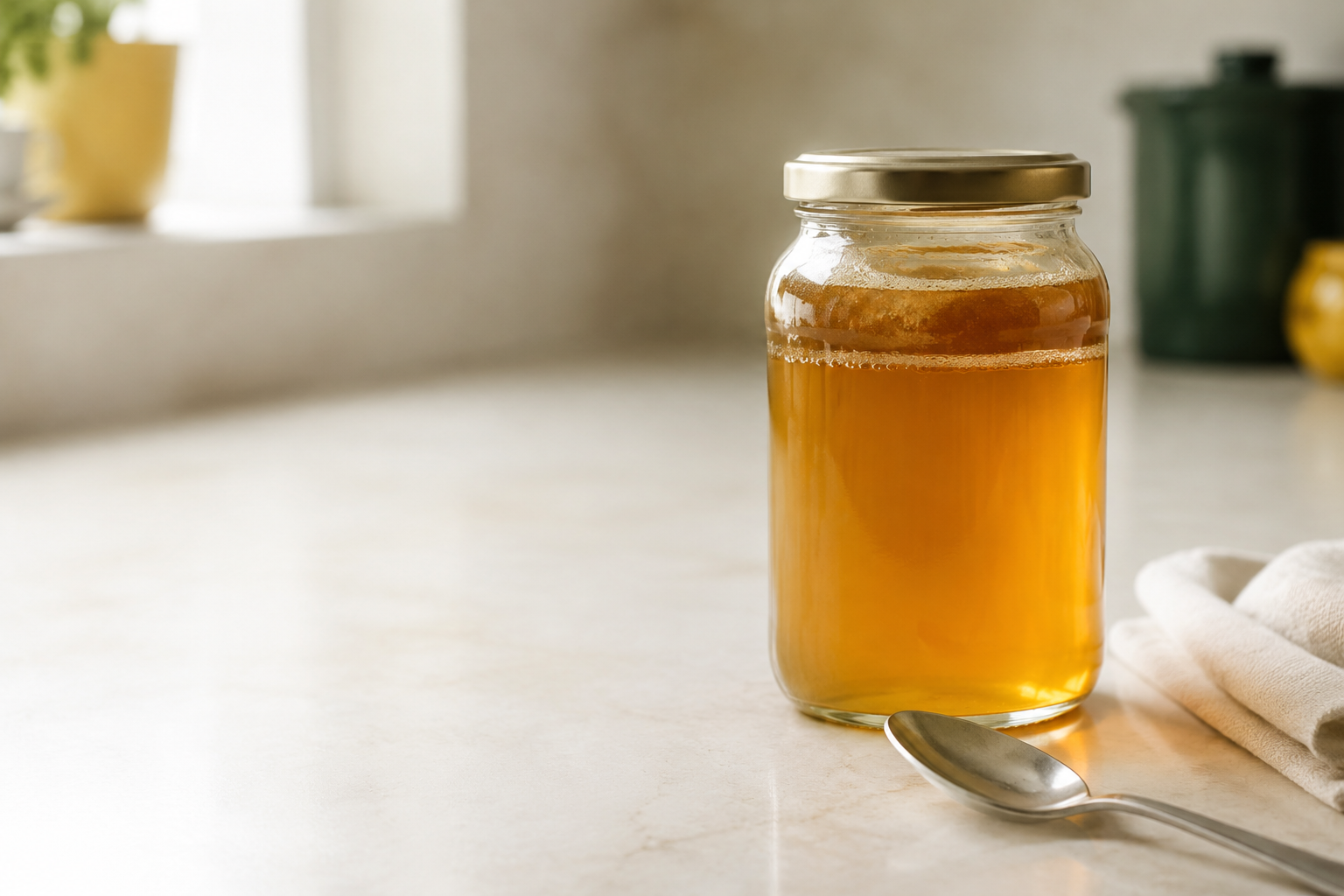
Why Does Honey Ferment? Signs, Causes and Prevention
THE COMPLETE HONEY FERMENTATION GUIDE Why Does Honey Ferment? Signs, Causes and Prevention Unintended honey fermentation usually begins when yeasts can use
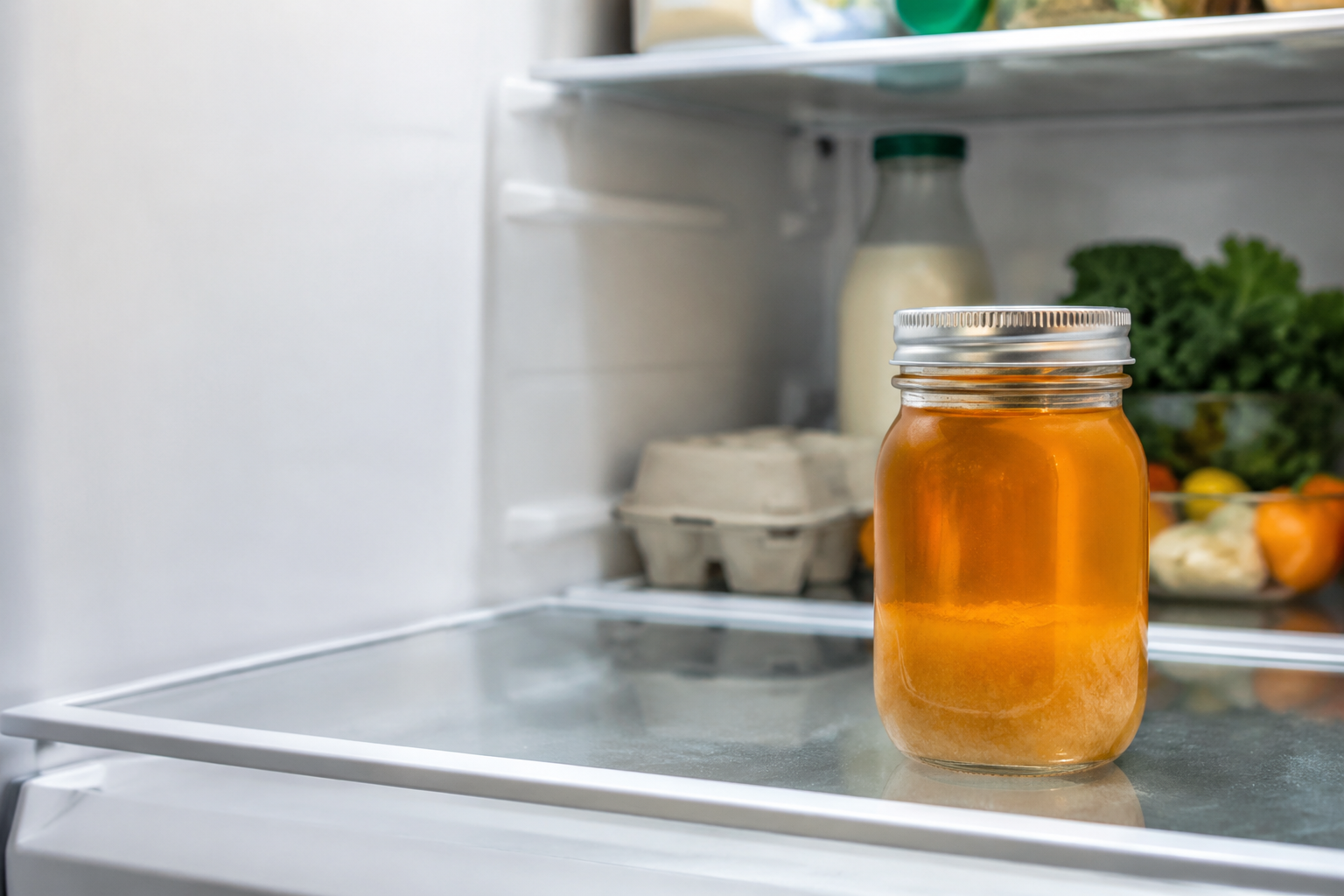
Does Honey Need to Be Refrigerated? What Happens in the Fridge
THE COMPLETE COLD-STORAGE GUIDE Does Honey Need to Be Refrigerated? What Happens in the Fridge Plain honey usually belongs in a dry
Related guides beyond storage
How this storage hub was researched
This hub prioritizes international standards, government food authorities and university extension guidance. It distinguishes plain honey from formulated honey products and separates normal quality changes from warning signs.
- FAO: honey composition and crystallization
- FAO: honey moisture, processing and storage characteristics
- FAO: containers, temperature, light and storage
- FAO/WHO Codex Standard for Honey
- Penn State Extension: storing staple ingredients
- Penn State Extension: reliquefying crystallized honey
- Canadian Food Inspection Agency: honey labeling requirements
- Food Standards Australia New Zealand: storing food safely
- FSANZ: use-by and best-before dates
Start with the guide that answers your question
Store the jar well, understand normal changes and use product-specific advice when honey contains additional ingredients. The complete collection below takes you from the everyday basics to deeper answers.