Can You Freeze Honey? Storage, Thawing and Texture Explained
Yes, plain honey can be placed in a household freezer—but it is rarely necessary for an everyday jar. Learn when cold storage makes sense, how to package honey correctly and how to thaw it without introducing moisture.
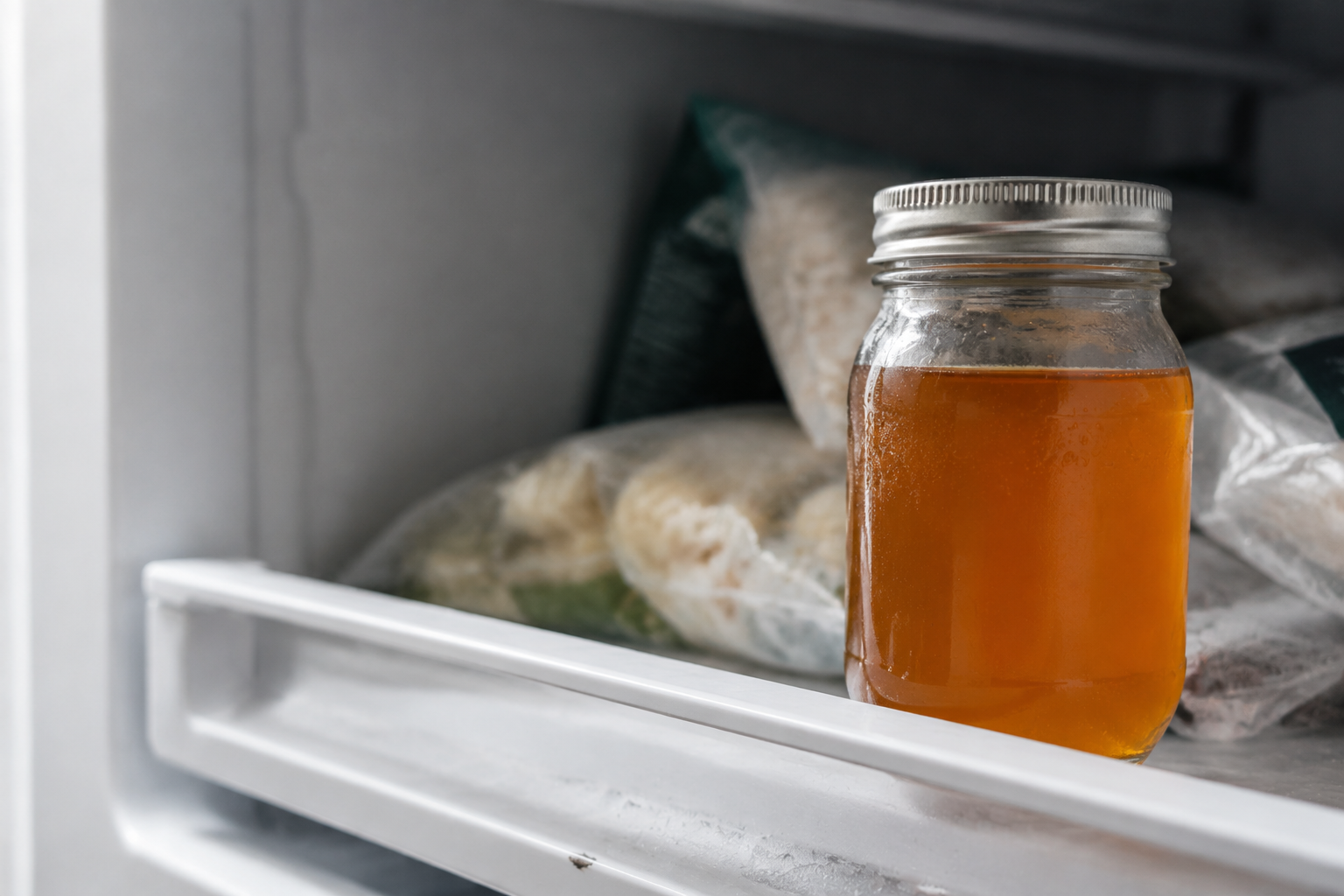
Honey can be frozen, but pantry storage is usually simpler
- Freeze only plain honey or products whose labels permit it.
- Use a clean, freezer-safe container with a dependable seal.
- Leave some empty space rather than filling the container to the rim.
- Freeze smaller portions so you thaw only what you need.
- Thaw the sealed container gradually and protect the honey from condensation.
- Expect the texture and crystallization behavior to vary by honey.
Understand honey freezing from jar to table
Should you freeze honey at all?
Usually unnecessary
Useful for special situations
Not universal advice
How to freeze honey correctly
For bulk honey: multiple small containers are easier to manage than one very large jar and reduce repeated exposure of the entire supply.
Freezer-safe containers and headspace
Cold honey becomes extremely viscous. The package must tolerate low temperatures, maintain its seal and allow you to handle the honey after thawing.
Freezer-safe glass
Freezer-safe plastic
A dependable lid
Reasonable headspace
A useful portion size
Clear identification
What happens to honey in the freezer?
Freezing does not sterilize honey, reverse contamination or make an unsafe formulated product safe.
How to thaw frozen honey
Keep it sealed
Use gradual temperature change
Allow enough time
Stir only with a dry utensil
If crystals remain after thawing and you prefer liquid honey, use the separate warm-water method. Do not place very cold glass directly into very hot water.
Does freezing prevent honey crystallization?
Cold changes crystal behavior
Crystallization depends on honey composition, temperature, moisture, particles and existing crystals. Very cold storage slows molecular movement, while moving through different temperature ranges can affect the crystal pattern seen after thawing.
Utah State University Extension advises against allowing honey and sugar syrups to freeze because freezing can encourage crystallization. This is one reason freezing should be treated as optional storage—not the default for every jar.
Crystals are still normal
A grainy, cloudy or firm texture after thawing does not automatically mean spoilage. Use the honey crystallized or reliquefy it gradually when a pourable texture is preferred.
Freezing does not permanently change the glucose-to-fructose balance, so future crystallization remains possible.
Can you freeze raw, creamed or comb honey?
Raw honey
Creamed honey
Comb honey
Infused honey
Important: advice for plain honey should not automatically be applied to sauces, beverages, fermented products, whipped blends or homemade mixtures containing honey.
Common honey-freezing mistakes
Safety and quality checks
Freezing is a storage choice, not a corrective treatment. Begin with properly handled honey in a sound package.
Never for infants
Discard broken glass
Watch the seal
Do not taste-test suspicious honey
Check specialty ingredients
Follow local labels and recalls
Frequently asked questions about freezing honey
Can honey be frozen?
Yes. Plain honey can be stored in a household freezer in a suitable sealed container, although freezing is rarely necessary for an everyday jar.
Does honey freeze solid?
Honey becomes extremely viscous and may appear solid at household-freezer temperatures, but its concentrated sugar-and-water composition behaves differently from plain water.
How long can honey stay frozen?
There is no single universal household duration supported for every honey and package. Use sound freezer-safe packaging, label the date and prioritize quality rather than treating freezing as indefinite storage.
Does freezing honey destroy nutrients?
Cold storage is generally less associated with heat-driven quality changes, but broad “nutrient preservation” claims depend on the compound, honey and testing conditions. Honey remains primarily a sugar-rich food.
Can honey be frozen in a glass jar?
Use glass specifically suitable for freezing, leave headspace, protect it from impact and avoid sudden temperature changes.
Can honey be frozen in plastic?
Use clean food-grade plastic designed for freezer storage. Check the package maker’s directions and discard damaged containers.
How do I thaw honey?
Keep it sealed and allow it to warm gradually. Prevent condensation from entering and never move very cold glass directly into very hot water.
Why did the honey crystallize after thawing?
Temperature changes and existing crystals can affect crystallization. The change is usually physical rather than spoilage.
Latest Honey Storage & Care guides
Continue with evidence-led guides covering shelf life, pantry storage, crystallization, containers and honey quality.
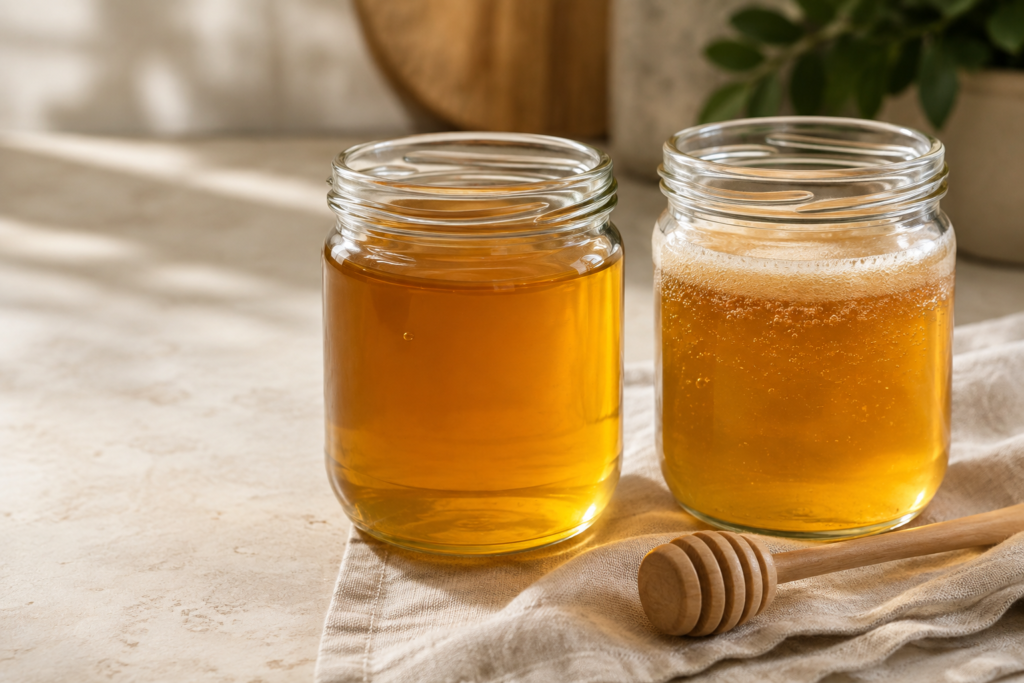
Why Is My Honey Foamy? Bubbles, Wax or Fermentation Explained
THE COMPLETE HONEY FOAM GUIDE Why Is My Honey Foamy? Bubbles, Wax or Fermentation Explained Foam on honey is not automatically spoilage.
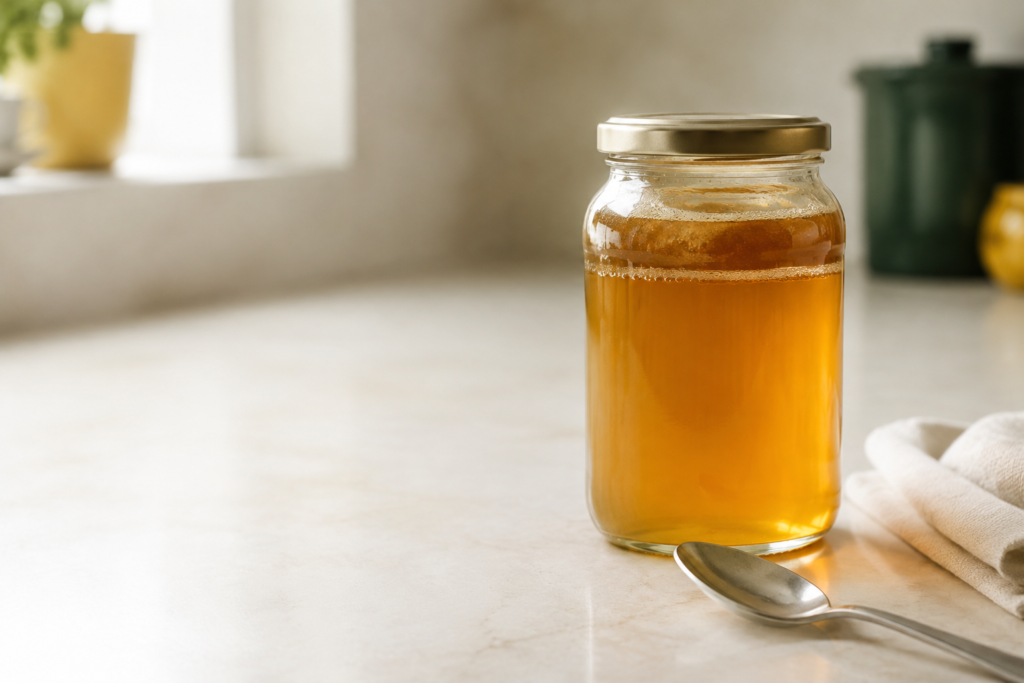
Why Does Honey Ferment? Signs, Causes and Prevention
THE COMPLETE HONEY FERMENTATION GUIDE Why Does Honey Ferment? Signs, Causes and Prevention Unintended honey fermentation usually begins when yeasts can use
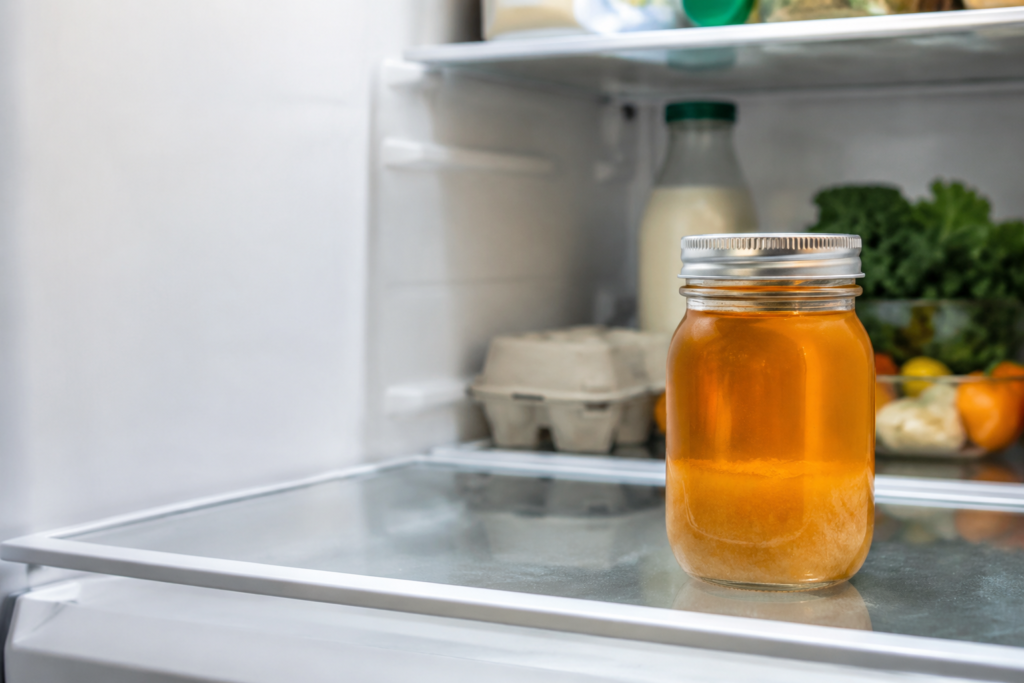
Does Honey Need to Be Refrigerated? What Happens in the Fridge
THE COMPLETE COLD-STORAGE GUIDE Does Honey Need to Be Refrigerated? What Happens in the Fridge Plain honey usually belongs in a dry
Continue with the complete care library
How this honey-freezing guide was researched
Direct government and university guidance specifically addressing frozen household honey is limited. This guide therefore distinguishes established honey-storage principles from practical inferences about freezer-safe packaging, condensation and gradual temperature changes.
- Utah State University Extension: Storing Sugars
- Penn State Extension: Storing Staple Ingredients in the Kitchen
- Penn State Extension: Canning and Freezing Questions and Answers
- FAO: Honey composition and crystallization
- FAO: Honey storage and temperature
- FAO/WHO Codex Standard for Honey
- Canadian Food Inspection Agency: Honey labeling requirements
- Food Standards Australia New Zealand: Storing food safely
Freeze only when it serves a clear purpose
Most household honey needs only a tight lid and dry cupboard. When freezing is useful, choose a suitable container, leave headspace, portion intelligently and thaw the sealed jar gradually.